Automated Smoothie Station K-12 School Cafeteria Guide
Learn how an automated smoothie station K-12 school cafeteria setup aligns with USDA school meal compliance, nutrition standards, and operational budgets.
Navigating Nutrition Standards in the Modern Cafeteria
Imagine a school lunch line where students enthusiastically choose a nutrient-dense beverage without increasing the workload for a stretched nutrition team. For many districts, the goal is to provide fresh, appealing options while adhering to strict federal guidelines and managing tight budgets.
Integrating an automated smoothie station K-12 school cafeteria setup offers a way to modernize the beverage program. However, nutrition directors must balance student demand with the complex requirements of the National School Lunch Program (NSLP) and School Breakfast Program (SBP).
With the NSLP serving lunches to 29.4 million children daily and the SBP serving breakfast to 15.4 million children across the United States during the 2023–2024 school year PMC / National Institutes of Health, the scale of school foodservice technology must be matched by rigorous compliance.
Ensuring USDA School Meal Compliance Smoothie Standards
Compliance is the primary concern for any school nutrition program smoothie machine. The USDA has established clear rules regarding how smoothies are categorized and counted toward daily requirements.
According to USDA guidance, any pureed fruit or vegetable included in a smoothie is counted as juice toward the daily and weekly fruit requirements USDA Food and Nutrition Service. This means program operators must limit juice to no more than 50 percent of the weekly fruit or vegetable offerings USDA Food and Nutrition Service.
Furthermore, as of July 1, 2024, no more than half of the fruit or vegetable offerings may be in the form of juice, and all juice must be 100 percent full-strength U.S. Code of Federal Regulations. Smoodi supports these goals by using real frozen fruit with no syrups or concentrates, avoiding the prepackaged sugary purees found in many other systems.
Managing Added Sugar Limits
The regulatory landscape is shifting toward lower sugar intake. On April 25, 2024, the USDA finalized a rule updating nutrition standards for reimbursable school meals to align with the 2020–2025 Dietary Guidelines for Americans Congressional Research Service.
A critical change is the introduction of the first-ever added sugar limits for school meals. Starting in the 2027–2028 school year (July 1, 2027), added sugars must be less than 10 percent of total calories per week for both school lunch and breakfast across all grade levels Center for Science in the Public Interest.
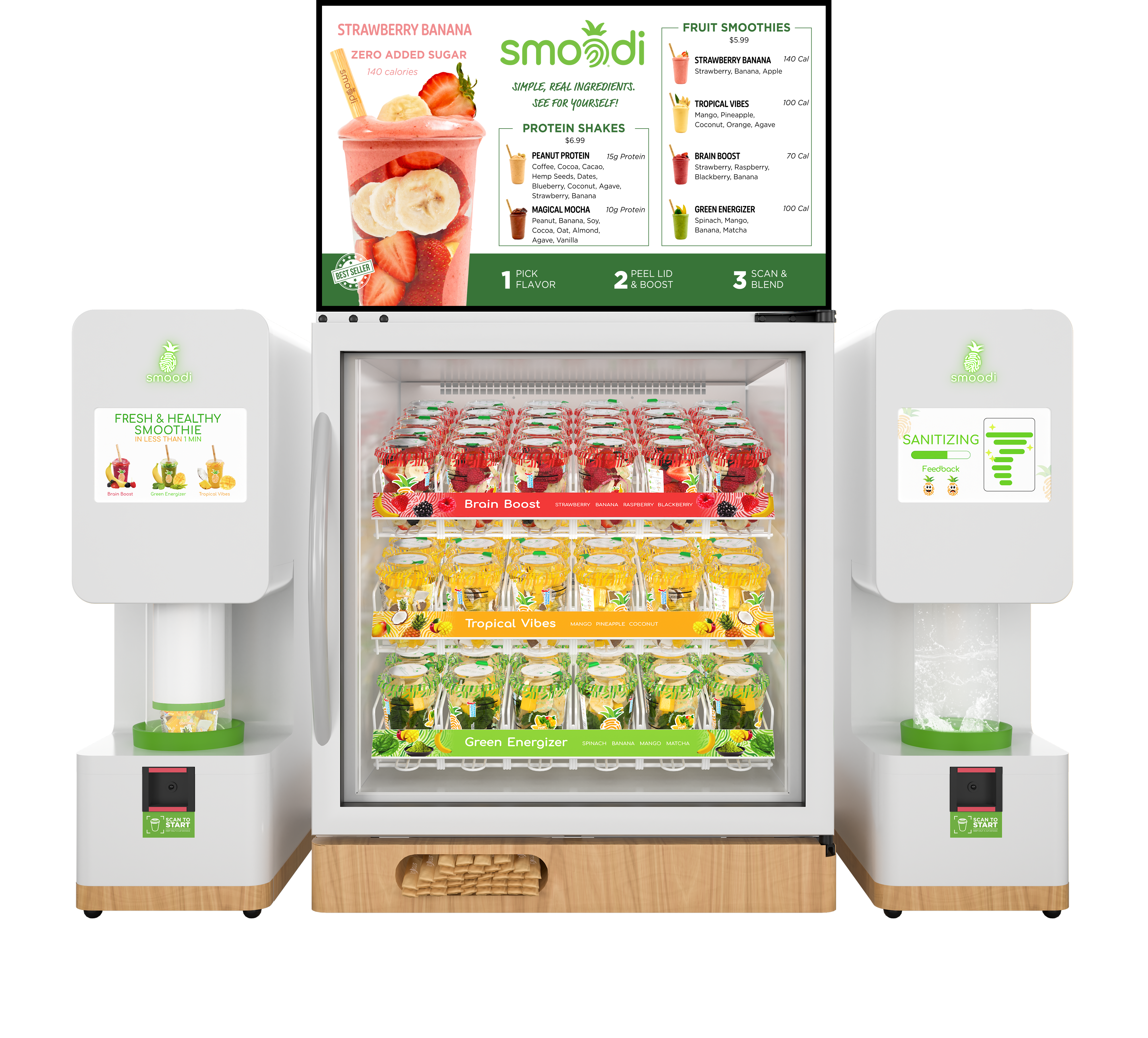
Smoodi provides options that align with these wellness goals. For example, the Brain Boost flavor contains zero added sugar, while the Green Energizer also features zero added sugar.
Solving Labor and Operational Challenges
K-12 cafeteria beverage automation is often driven by the need to reduce labor. Most commercial smoothie machines require significant manual prep and cleaning, which is unsustainable in a high-volume school environment.
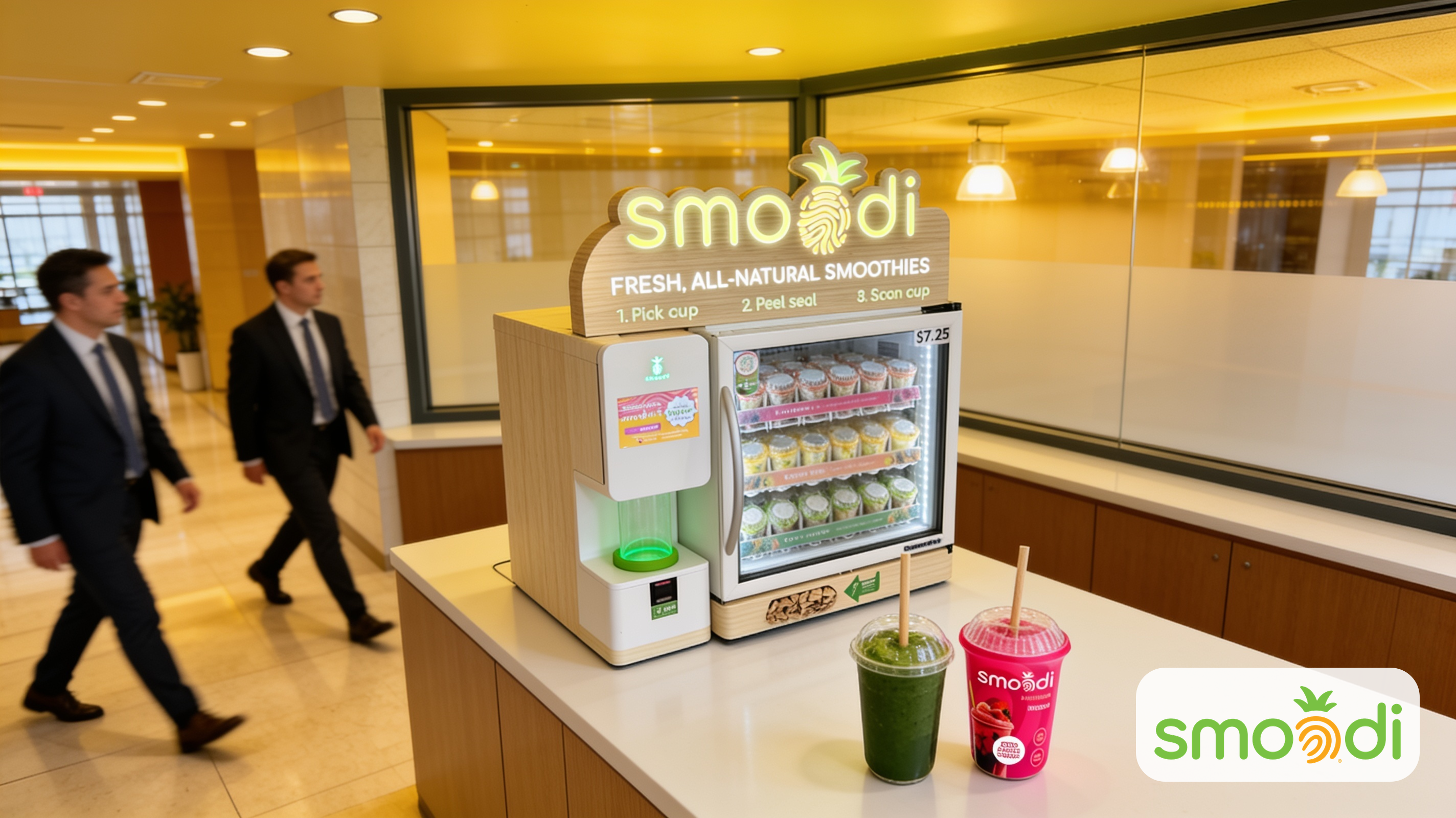
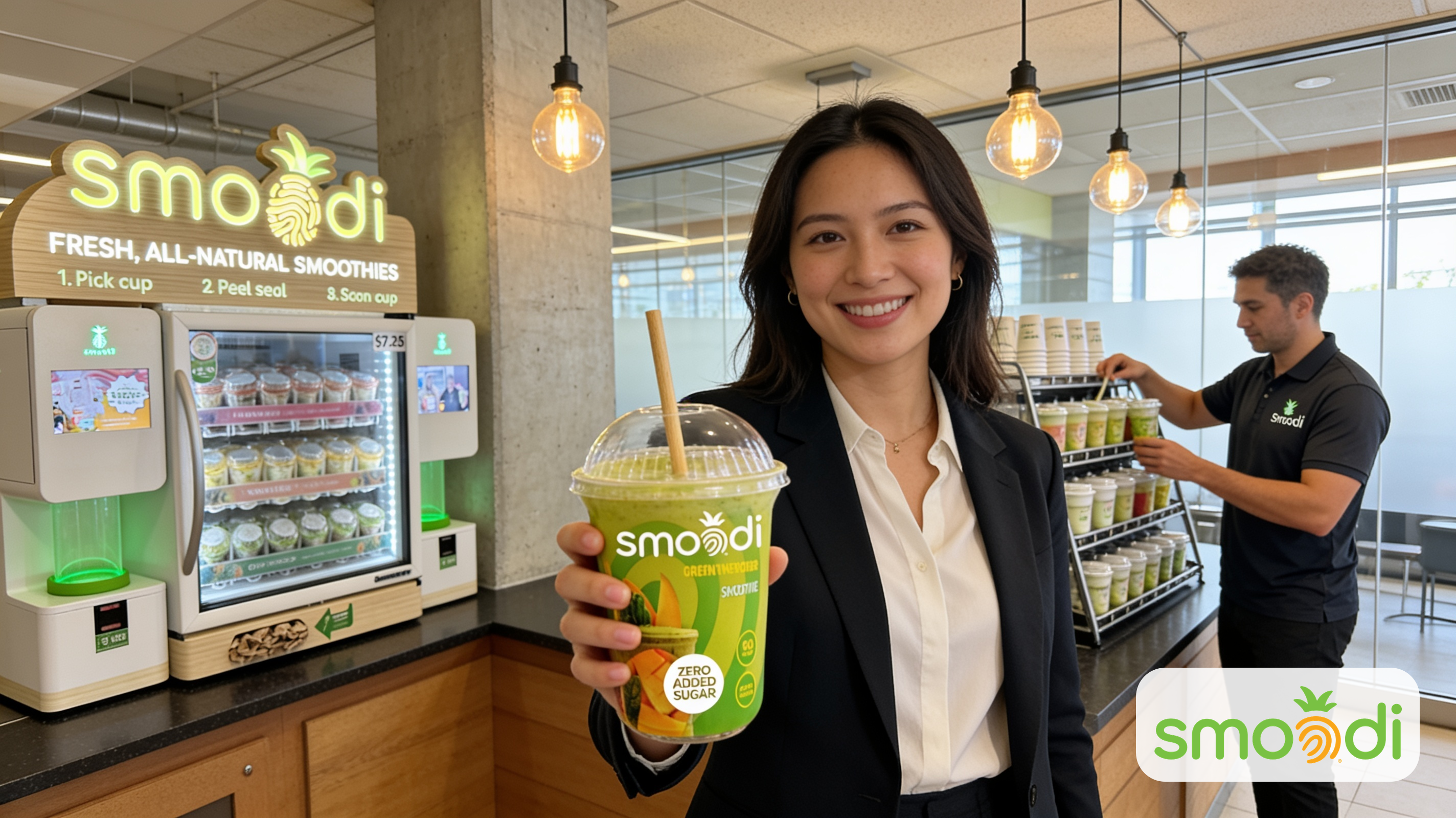
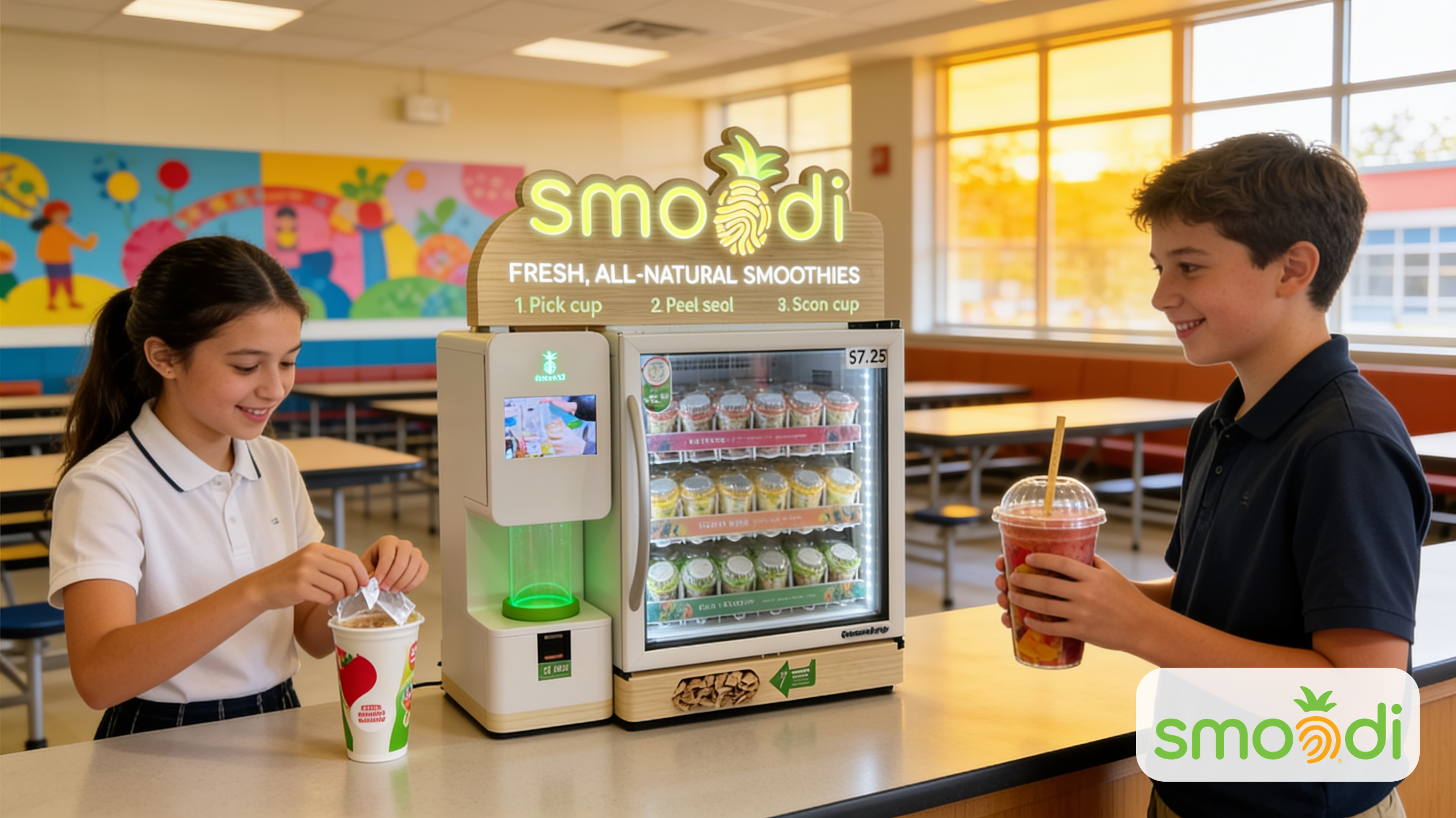
Smoodi operates as a self-serve robotic smoothie machine, requiring no on-site labor beyond restocking cups and keeping surfaces clean. The process is streamlined: guests pick a sealed frozen fruit cup, peel the tamper-evident seal, scan the barcode, place the cup in the machine, and the machine blends the drink in under 60 seconds.
Maintenance is handled through a patented self-cleaning cycle after every serve and an automatic deep sanitation cycle that runs overnight using food-safe sanitizers. This ensures a high standard of hygiene without adding to the staff's daily checklist.
Space and Utility Requirements
School footprints are often limited. Smoodi offers a countertop model and a floor model with a freestanding freezer, measuring approximately 40 in wide x 33 in high x 30 in deep. The system uses standard 110-120V power and a 3/8 in push-to-connect water line at about 60 psi.
Because the Smoodi team handles installation, schools do not need to hire outside contractors. The machine operates at a noise level under 65 dB, ensuring it does not disrupt the cafeteria environment.
Managing Budgets and Reimbursement Gaps
Financial sustainability is a major hurdle for school nutrition directors. Many programs are operating at a larger fiscal deficit than ever because reimbursement rates have not kept pace with inflation for food and operational costs Society of Behavioral Medicine.
Currently, schools receive approximately $4.30 in federal reimbursement for each free lunch served, yet fewer than 1 in 5 school nutrition directors feel this is sufficient to cover production costs School Nutrition Association.
To mitigate financial risk, Smoodi offers multiple programs, including Placement, Monthly Lease, or Purchase options. The website says many partners price cups at $4.99–$7.99 and cite 40–50% gross margin; districts should use the ROI calculator to determine the specific financial impact for their program.
Addressing Allergen Documentation and Safety
Student safety is paramount. USDA guidelines require school food authorities to check food labels and specifications to ensure items do not contain a student's allergens Food Allergy Awareness.
Smoodi assists in this documentation process by labeling allergen and nutrition information on every cup and displaying it on the touch screen during selection. The closed prep path is designed to minimize cross-contact, though the system is not allergen-free.
For directors needing specific data, the system provides clear visibility into ingredients. Most flavors are plant-based and lactose-free, though whey protein shakes and dairy-based flavors are also available, allowing directors to curate a menu that meets their students' needs.
Implementing a Commercial Smoothie Machine in Schools
Successful deployment requires planning for throughput. Because blending cycles are a consistent 60 seconds, busy sites—particularly large K-12 campuses—are often advised to use two machines to prevent long queues.
The technology includes a cloud dashboard for tracking sales, inventory, and machine health. This allows nutrition directors to monitor usage remotely. Furthermore, over 95% of service queries are solved remotely, reducing the need for on-site technical visits.
To get started, districts can explore the demo video or contact the sales team at Sales@getsmoodi.com to discuss a customized setup.
Conclusion
Adding an automated smoothie station K-12 school cafeteria setup requires a careful balance of student appeal and federal compliance. By focusing on real fruit, zero added sugar options, and automated sanitation, Smoodi helps nutrition directors meet USDA standards without increasing labor burdens. While reimbursement challenges persist, the shift toward beverage automation allows schools to provide dietitian-approved, healthy options to students efficiently. Directors can evaluate their specific needs through Smoodi's various leasing and purchase programs to find a sustainable fit.
Ready to bring Smoodi to your location?
Join hundreds of operators delivering fresh, automated smoothies with zero labor.
Get Started