4 Campus Dining Trends Reshaping University Foodservice in 2026
Chartwells data shows high-protein meals and functional beverages dominate student preferences. Here are four trends reshaping campus dining in 2026.
University dining programs are under more pressure than ever to keep pace with what students actually want. The Chartwells Higher Education 2026 Campus Dining Index, based on responses from more than 107,000 students, faculty, and staff across 231 campuses, reveals a student population that has moved well beyond the traditional dining hall model. High-protein meals, functional beverages, clean ingredient labels, and around-the-clock access through automation now define what campus dining trends 2026 looks like in practice. For dining directors navigating these shifts, the data points to four trends that are already reshaping operations.
High-Protein, Performance-Driven Nutrition Is the Top Priority
High-protein meals now rank as the number one dining preference among college students, cited by 28% of respondents in the 2026 Campus Dining Index, a 36% increase year over year. Dining preferences tied to athletic performance ranked second overall, reflecting a generation that views food as fuel for both physical and academic demands.
This is not a niche interest limited to student athletes. Gen Z has broadly embraced performance-oriented nutrition, driven by social media fitness culture, increased awareness of macronutrient balance, and a practical desire for sustained energy across long class schedules. Protein-rich smoothies, grain bowls, and high-protein snack options are now baseline expectations, not premium add-ons.
For dining operators, the implication is clear: menus that default to carbohydrate-heavy comfort food are falling out of step with student demand. Programs that offer accessible, protein-forward options, especially in grab-and-go formats that fit between lectures, are seeing stronger utilization and higher satisfaction scores.
"College dining in 2026 is increasingly defined by performance, personalization, and functional benefits, with students prioritizing high-protein meals, clean ingredients, and beverages that support energy and wellness."
— Chartwells Higher Education, 2026 Campus Dining Index
Functional Beverages Are the Fastest-Growing Category
For the first time, the 2026 Campus Dining Index analyzed food and beverage preferences as separate categories, and the beverage findings are striking. Beyond smoothies and bubble tea, students report rapidly growing interest in beverages that deliver functional benefits: electrolytes for hydration, prebiotics for gut health, adaptogens for stress management, and added protein for recovery.
This tracks with broader market data. The global smoothie market is growing from $19.8 billion to $21.3 billion in 2026 at a 7.7% compound annual growth rate, and protein beverages specifically are projected to reach $10.7 billion by 2034. On campus, this demand manifests as students seeking out smoothie stations, functional juice bars, and enhanced beverage options that traditional dining halls have historically not provided.
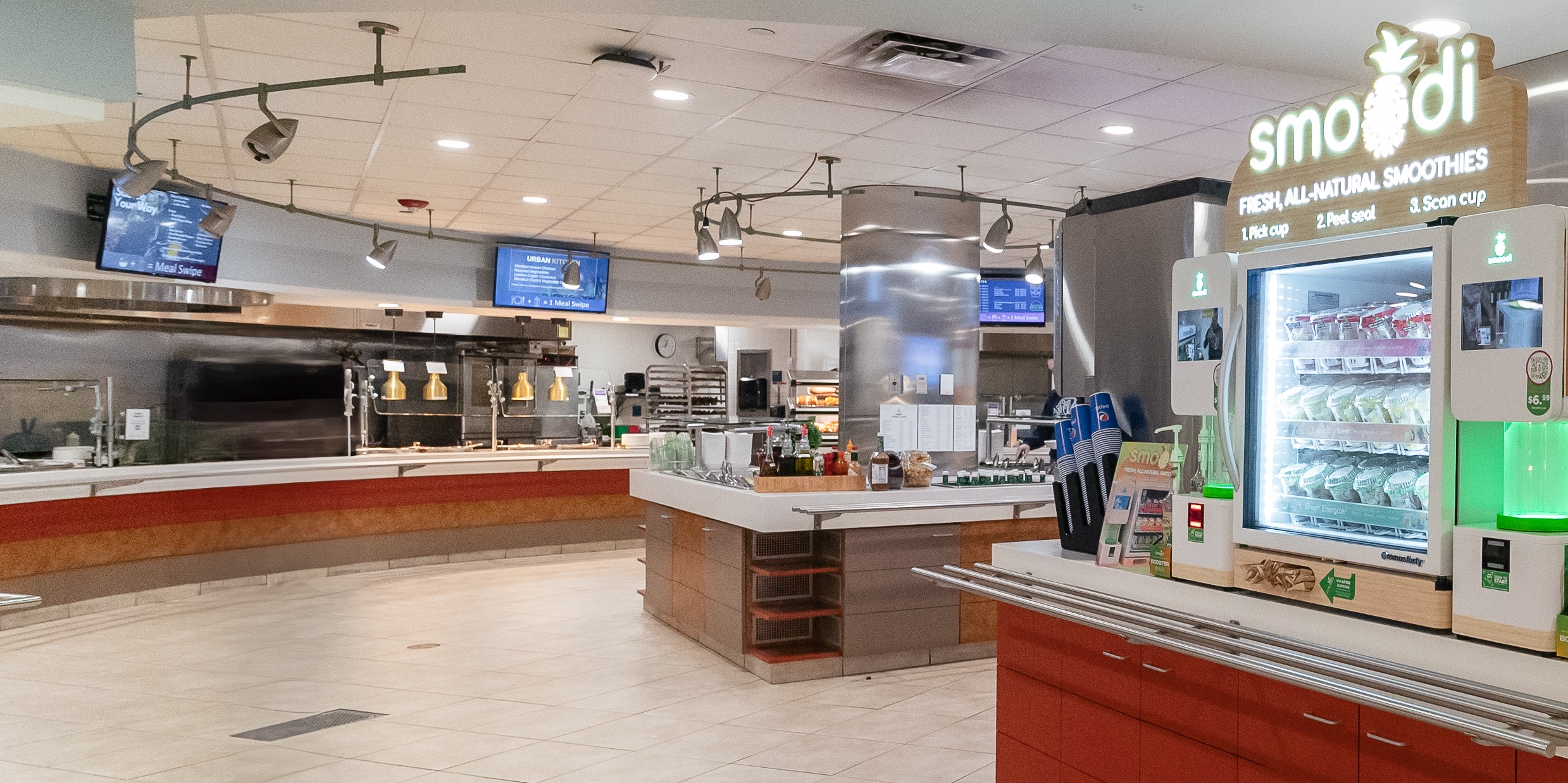
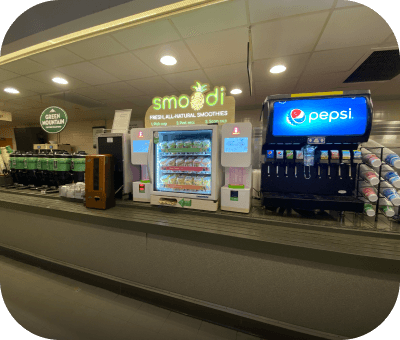
As Smoodi's own campus deployment data confirms, detailed in the blog post covering how smoothies became the number one most requested food on college campuses, this demand is not speculative. Smoodi machines on university campuses consistently see their highest utilization during the exact hours when traditional dining is least accessible: early morning, mid-afternoon, and late evening. Students are seeking functional nutrition at the moments conventional dining programs leave unserved. Learn more about Smoodi's campus solutions at https://www.getsmoodi.com/university today.
Clean Ingredients and Transparency Are Non-Negotiable
Interest in clean, minimally processed foods recorded the largest year-over-year increase of any dietary preference in the 2026 Campus Dining Index, rising 40%. Students are reading labels, questioning ingredient sourcing, and making purchasing decisions based on what is, and is not, in their food.
This shift extends beyond individual food choices to institutional expectations. A narrative review examining climate labeling across university dining settings found that 86% of studies reported a decrease in selections of high-emissions foods once labels were introduced, with approximately two-thirds seeing a corresponding increase in low-emissions choices. Students are not just passively preferring cleaner food, they are actively responding to transparency when it is provided.
Aramark's CampusPulse platform has responded with concepts like REVIVE, a wellness-focused residential dining concept built around a "Nourish to Flourish" philosophy with health-forward culinary programming. Chartwells has expanded plant-forward and allergen-friendly menus across its managed campuses. The common thread is that dining programs treating ingredient transparency as an operational priority, not a marketing afterthought, are earning stronger student engagement.
For automated food and beverage programs, this trend plays to a structural advantage. Machines that use pre-portioned, single-ingredient packs with visible contents, real frozen fruit, no powder concentrates, no artificial additives, deliver the transparency that students now expect as standard. Every ingredient is visible before it goes into the blend, and the nutritional profile is consistent from the first smoothie to the last.
Automation and Self-Service Are Expanding Campus Dining Access
Perhaps the most operationally significant trend is the growing role of automation in campus dining. Technomic's 2025 research found that 36% of students are not using their meal plans, and 60% of student food and beverage spending now happens off campus, up from a 30% off-campus retail share just two years earlier. Students are voting with their wallets, and the message is consistent: traditional dining hall hours, formats, and locations are not meeting their needs.
Universities are responding with expanded self-service infrastructure. Grab-and-go micromarkets, smart vending machines, self-checkout kiosks, and automated food stations are appearing in residence halls, libraries, student centers, and athletic facilities. Digital ordering platforms have reduced peak-hour queues by up to 40% at campuses that have deployed them, while simultaneously increasing average order values through personalized recommendations.
The operational appeal is straightforward: automated stations extend food availability to 24 hours a day, seven days a week, without increasing staffing costs. For universities facing the same labor market pressures as the broader foodservice industry, where turnover exceeds 73% annually, the ability to serve students around the clock with zero incremental labor is a meaningful advantage.
- Automated smoothie machines serve fresh, real-fruit beverages on demand with no dedicated staff
- Self-cleaning cycles between each use eliminate manual sanitation requirements
- Pre-portioned ingredients remove produce management, spoilage, and food waste from the equation
- Remote monitoring allows dining administrators to track usage, inventory, and machine health from a central dashboard
- Compact footprints allow placement in non-traditional locations, libraries, rec centers, residence halls, where building a staffed station is not feasible
Universities that have deployed automated smoothie stations report high utilization precisely during off-peak hours, filling the service gap that drives students off campus. The combination of functional nutrition, clean ingredients, and 24/7 access aligns directly with the four trends identified in this analysis.
What These Trends Mean for Dining Directors
The four trends identified in the 2026 Campus Dining Index are not isolated shifts, they are interconnected aspects of a generation that approaches food with intention. Students want nutrition that supports performance, beverages that deliver functional benefits, ingredients they can trust, and access that fits their schedule rather than requiring them to fit the dining hall's.
For university dining directors, the strategic response involves both menu innovation and infrastructure investment. Adding protein-forward options and functional beverages to existing menus addresses the first two trends. Improving ingredient transparency and labeling addresses the third. And deploying automated, self-service solutions in locations and at hours where traditional dining falls short addresses the fourth, while simultaneously reducing the labor burden that makes expanded service difficult to sustain.
Campus dining programs that adapt to these trends position themselves to recapture the 60% of student food spending currently flowing off campus. The data suggests that students are not leaving campus dining because they prefer restaurant food, they are leaving because campus dining has not kept pace with their expectations for quality, transparency, and convenience.
Dining directors interested in exploring how automated smoothie stations can support these goals can use the ROI calculator at https://www.getsmoodi.com/roi to model the financial impact for their campus, or visit https://www.getsmoodi.com/university to see how Smoodi serves more than 200 campuses with zero labor overhead.
Ready to bring Smoodi to your location?
Join hundreds of operators delivering fresh, automated smoothies with zero labor.
Get Started