What Food Options Work for Conference Centers?
Conference and convention centers struggle to offer healthy food across large venues with variable attendance. Self-service stations fill the gap without adding catering staff.
Conference and convention centers host millions of attendees annually, ranging from multi-day trade shows with 10,000 or more visitors to single-day corporate meetings serving 50 to 200 people. These venues generate substantial food and beverage revenue, yet the F&B experience is consistently one of the lowest-rated aspects of event attendance. Overpriced sandwiches, stale pastries, and limited healthy options are common complaints that appear in post-event surveys across the industry.
The operational challenge behind this reputation is structural. Convention centers are large, multi-zone facilities where demand is extremely variable. A venue might host three overlapping events in different halls on Tuesday and sit empty on Wednesday. The economics of staffing traditional food service for this pattern are difficult, and most venues rely on contracted catering companies that focus their labor on scheduled meal functions rather than continuous concession coverage.
Why Is Food a Persistent Problem at Conference Venues?
The root cause is a mismatch between attendee expectations and operational reality. Attendees expect food availability throughout the event day, typically 8 to 12 hours. They expect variety beyond the standard concession fare. They expect speed, because a 45-minute breakout session leaves perhaps 10 minutes for a food run. And increasingly, they expect healthy options that align with dietary preferences they maintain in their daily lives.
Venue operators face constraints at every level. Staffing food stations across multiple halls, lobbies, and breakout areas requires significant labor, and that labor must be present during all event hours regardless of actual traffic. Kitchen infrastructure is centralized, meaning satellite food options far from the main kitchen require either pre-made items (which degrade in quality) or additional prep areas (which require capital investment). Perishable inventory ordered for a projected 5,000 attendees becomes waste when actual attendance is 3,500.
The contracted catering model compounds the issue. Catering companies make their margins on scheduled banquet functions: plated dinners, coffee breaks, boxed lunches. Continuous concession service in hallways and lobbies is lower-margin work that competes for the same limited labor pool. The result is that the areas where attendees most need quick food access (near registration, between exhibit halls, outside breakout rooms) are the areas least likely to be staffed.
Where Do Self-Service Food Stations Fit in Venue Operations?
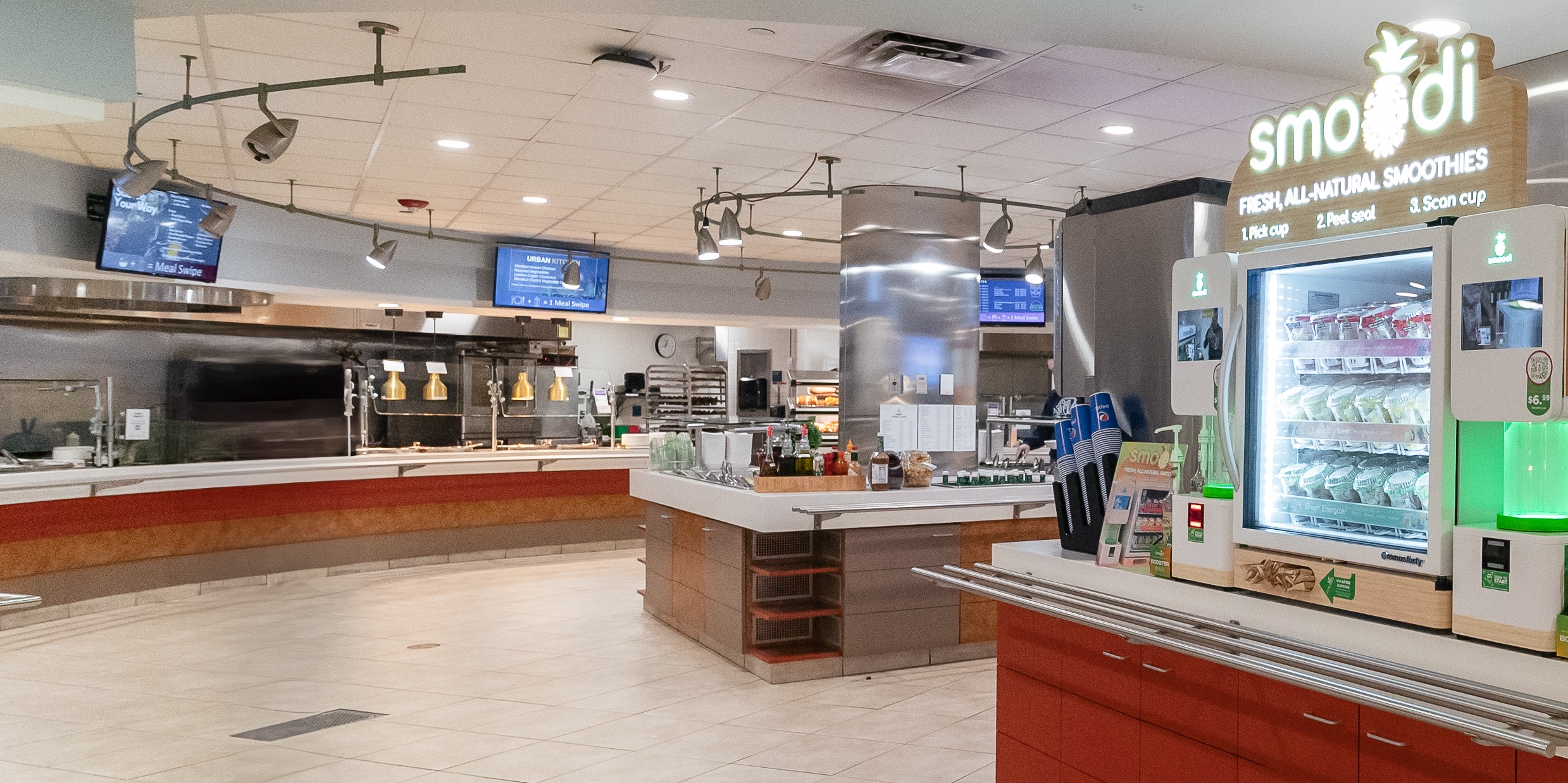
Self-service food and beverage stations address the specific operational constraints that make conference venue food programs difficult. They require no dedicated catering staff, which eliminates the labor bottleneck for satellite food locations. They operate continuously during event hours without sanitation breaks, shift changes, or overtime considerations. They occupy compact footprints that fit hallway alcoves, foyer corners, and lobby spaces too small for a full concession stand but too valuable to leave empty.
For venue operators who manage the building infrastructure (as opposed to the contracted caterer who manages meal functions), a self-service station is a common-area amenity that the venue controls directly. It operates on the venue's schedule, serves the venue's guests, and generates revenue for the venue rather than the catering contractor. This is a meaningful distinction in an industry where catering contracts often give the caterer exclusive food service rights but leave gaps in coverage that the venue must address.
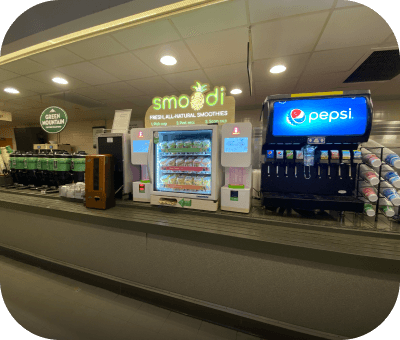
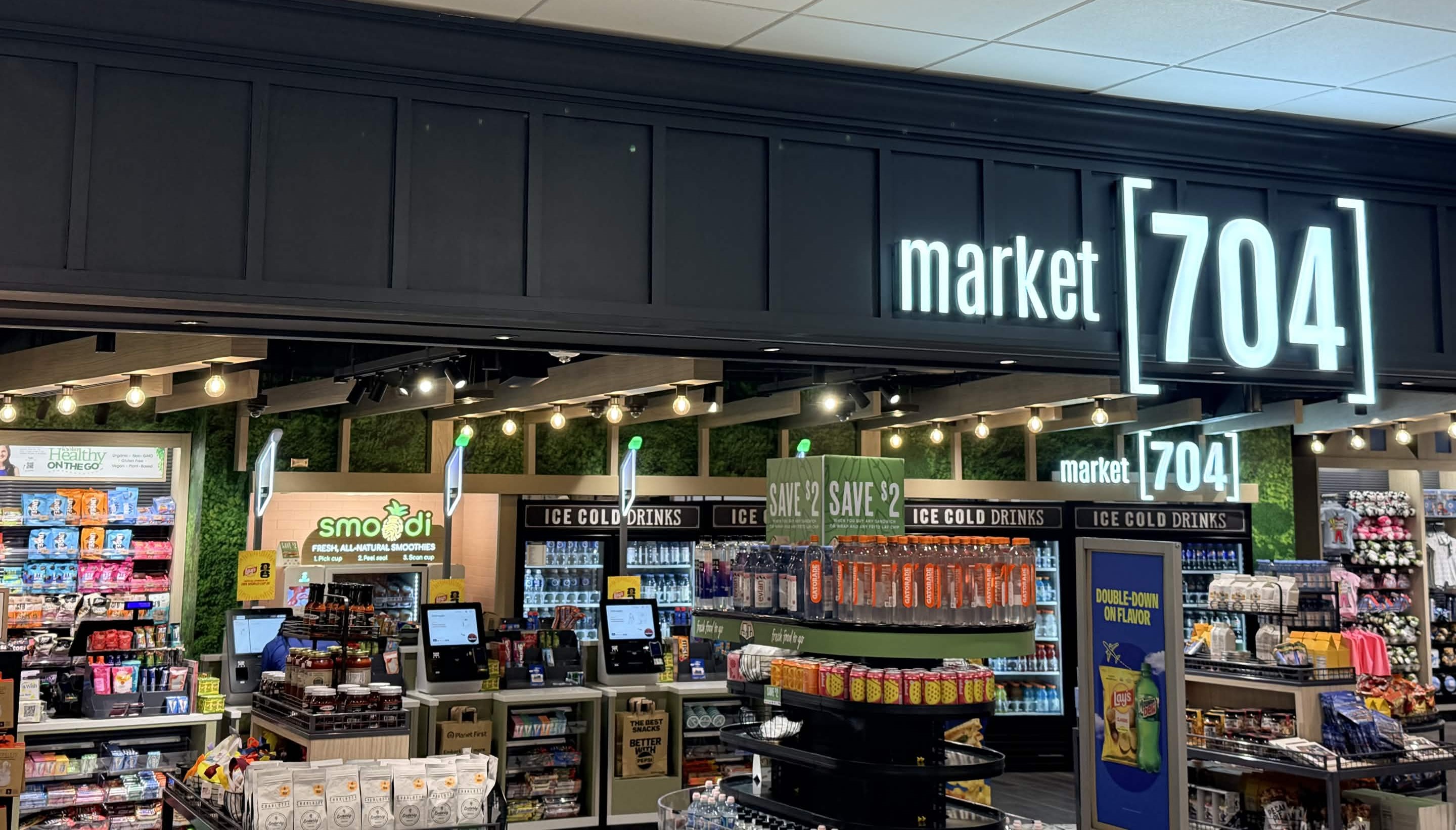
An automated smoothie station placed near a registration area, an exhibit hall entrance, or a breakout room corridor provides a healthy grab-and-go option that attendees can access in under 60 seconds. The machine self-cleans between every use, maintaining hygiene standards throughout 10 or 12 hour event days without requiring environmental services support.
How Does Variable Attendance Affect Food Economics?
Demand variability is the defining operational challenge of convention center food programs. A venue might serve 8,000 attendees on the first day of a trade show, 12,000 on the second day, and 4,000 on the third. Between events, the venue may sit dormant for days or weeks. Traditional food programs must staff and stock for projected peaks, absorbing waste and labor costs when actual traffic falls short.
IQF (individually quick frozen) fruit cups with a shelf life of up to two years eliminate the waste problem entirely. The cups remain frozen and viable whether they are used today, next week, or next quarter. There is no spoilage from low-attendance days, no over-ordering for projected peaks, and no disposal costs. The venue stocks a freezer at the start of the event season and draws from it as needed. This is fundamentally different from perishable concession inventory that must be ordered, received, stored under temperature control, and discarded if unused.
The financial model is equally straightforward. Smoodi's operational lease starts at $299 per month for a 48-month term, scaling to $499 per month for a 12-month term. The purchase option is $14,999. For a convention center generating millions in annual event revenue, the station cost is a rounding error that produces incremental healthy-option revenue in previously underserved areas of the facility.
What Placement Strategies Work for Large Venues?
Effective placement in conference venues follows attendee traffic patterns rather than kitchen proximity. The highest-value locations are the spaces where attendees congregate during transitions: near registration counters where early arrivals wait for events to begin, at exhibit hall entrances where attendees enter and exit throughout the day, in breakout room corridors where people gather between sessions, and in lobby areas where attendees meet, network, and check their phones between programmed activities.
- Registration and pre-function areas: attendees arriving early or between sessions seek quick food options while they wait
- Exhibit hall entrances and exits: high foot traffic with attendees who have been walking the floor for hours
- Breakout room corridors: 10 to 15 minute windows between sessions create concentrated demand for fast food options
- Lobby and lounge areas: networking zones where a healthy beverage complements informal meetings
- Second-floor or mezzanine areas: zones far from the main kitchen where traditional concession coverage is sparse
The compact footprint of approximately 40 inches of floor space allows placement in each of these locations without obstructing traffic flow, violating fire codes, or requiring construction. Installation requires a standard 120 VAC outlet, water connection, sanitizer inlet, and drain. For temporary or seasonal placement, some venues position stations on casters for easy relocation between event configurations.
How Does This Align with Attendee Wellness Expectations?
Event attendee expectations have shifted measurably toward healthier food options. Conference organizers report that wellness-oriented food programming (plant-based menus, functional beverages, allergen-transparent labeling) is increasingly requested in event RFPs. Attendees who maintain healthy eating habits at home do not want to abandon them for three days at a trade show, and the availability of healthy options influences their perception of the event experience overall.
A whole-fruit smoothie, blended from IQF fruit cups with water only (no syrups, concentrates, or artificial ingredients), provides a healthy option that appeals to this growing segment without alienating traditional concession customers. The booster bar (protein powder, collagen, and functional supplements) adds customization that attendees at health, fitness, and wellness conferences particularly value. Smoodi operates in more than 300 locations across the United States, with over 2 million smoothies served. The company was founded at Harvard Innovation Labs, and IQF fruit cups are distributed nationally through Dot Foods.
For venue operators and contracted caterers interested in adding a self-service healthy option to their facility, visit getsmoodi.com/get-started to request a site assessment. To evaluate the financial impact for your venue, visit getsmoodi.com/roi.
Ready to bring Smoodi to your location?
Join hundreds of operators delivering fresh, automated smoothies with zero labor.
Get Started