How Are Food Halls Using Self-Service to Scale?
Food halls gather multiple vendors under one roof but struggle to staff every station. Self-service technology fills gaps in common areas and underutilized spaces without adding headcount.
Food halls are one of the fastest-growing foodservice formats in the United States, with new developments continuing to open in urban and suburban markets. The format gathers multiple independent food vendors under one roof, creating a curated dining experience that attracts diverse customer segments: office workers at lunch, families on weekends, tourists exploring a city's food scene, and event attendees looking for pre-show dining. The appeal is variety, quality, and atmosphere, all in a single location.
The operational model behind this experience is more complex than it appears. A food hall management company oversees the shared infrastructure (seating, utilities, common areas, restrooms, marketing) while individual vendors manage their own stations (menu, preparation, staffing, inventory). This creates a dual-layer operation where the management company bears responsibility for the overall guest experience but controls only part of it.
What Operational Challenges Do Food Hall Operators Face?
The management company's primary challenge is maintaining consistent quality and coverage across all vendor stations and common areas. When a vendor station is closed (off-hours, between shifts, during the vendor's day off), the food hall has a visible gap in its offering. Customers who visit specifically for that vendor leave disappointed. Other vendors pick up some of the overflow, but the overall experience suffers.
Staffing is the constraint. Individual vendors are small operators, often single-unit restaurants or first-time food entrepreneurs, running lean teams of 2 to 4 people per shift. When an employee calls out sick or quits, the vendor may close for the day. The management company has limited ability to fill this gap because each vendor's station requires specialized knowledge of that vendor's menu and preparation methods.
Common areas present a different coverage challenge. The seating area, bar, and shared spaces between vendor stations are the management company's domain. These are the areas where guests linger, meet friends, and make impulse purchases. Yet most food halls have limited food options in common areas beyond a central bar or coffee counter. The spaces between vendor stations, near entrances, and in secondary seating areas are underutilized because they are too small for a full vendor lease but too visible to leave empty.
How Can Self-Service Fill Common Area Gaps?
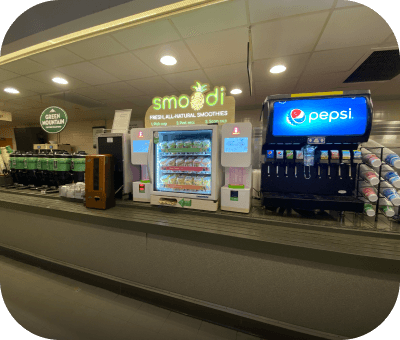
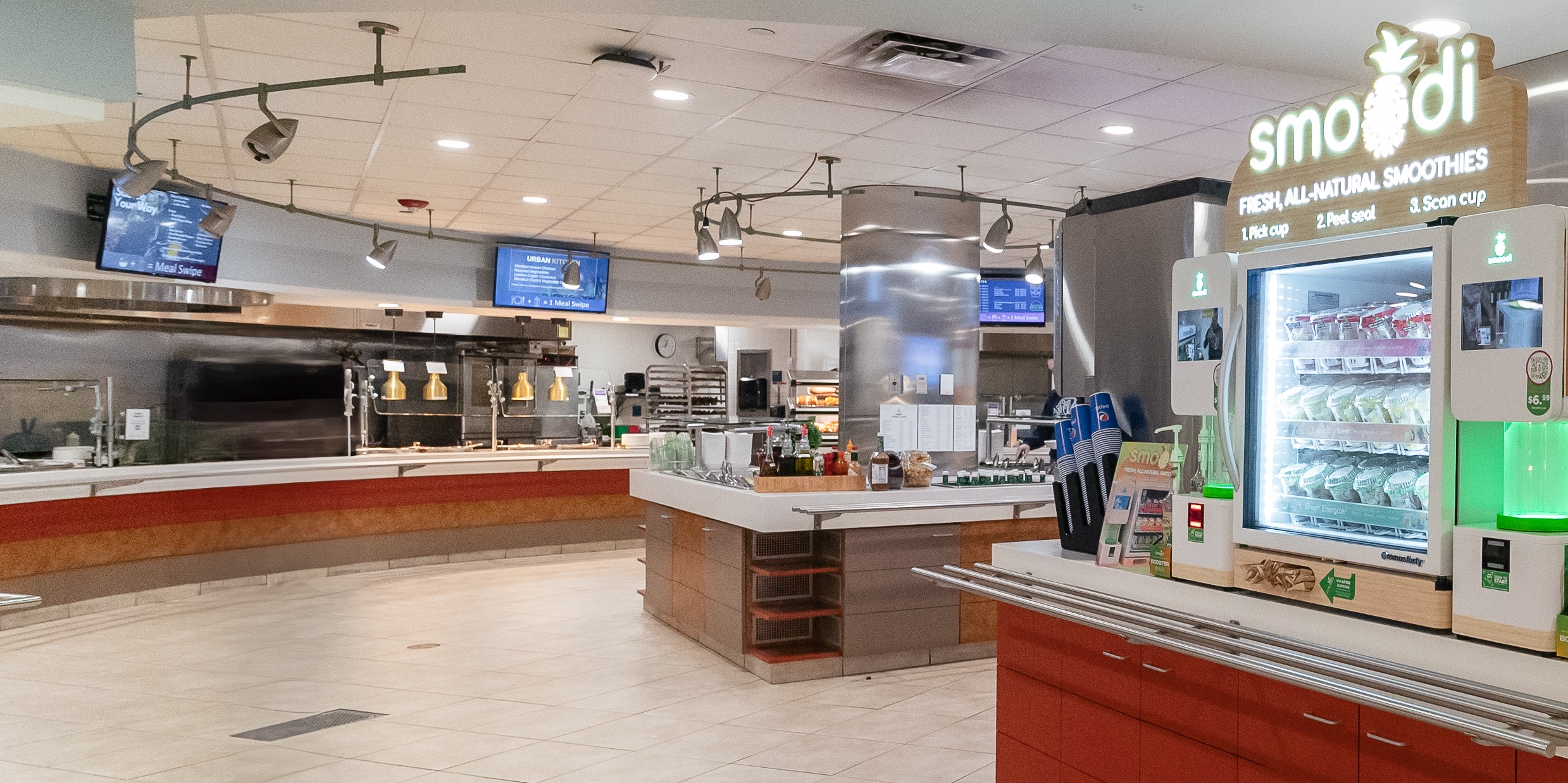
A self-service smoothie station in a food hall's common area operates as a standalone offering that the management company controls directly. It does not require a vendor lease, a dedicated vendor team, or specialized food preparation knowledge. The management company adds it to the common infrastructure alongside the bar, the coffee station, and the communal seating, and it operates autonomously.
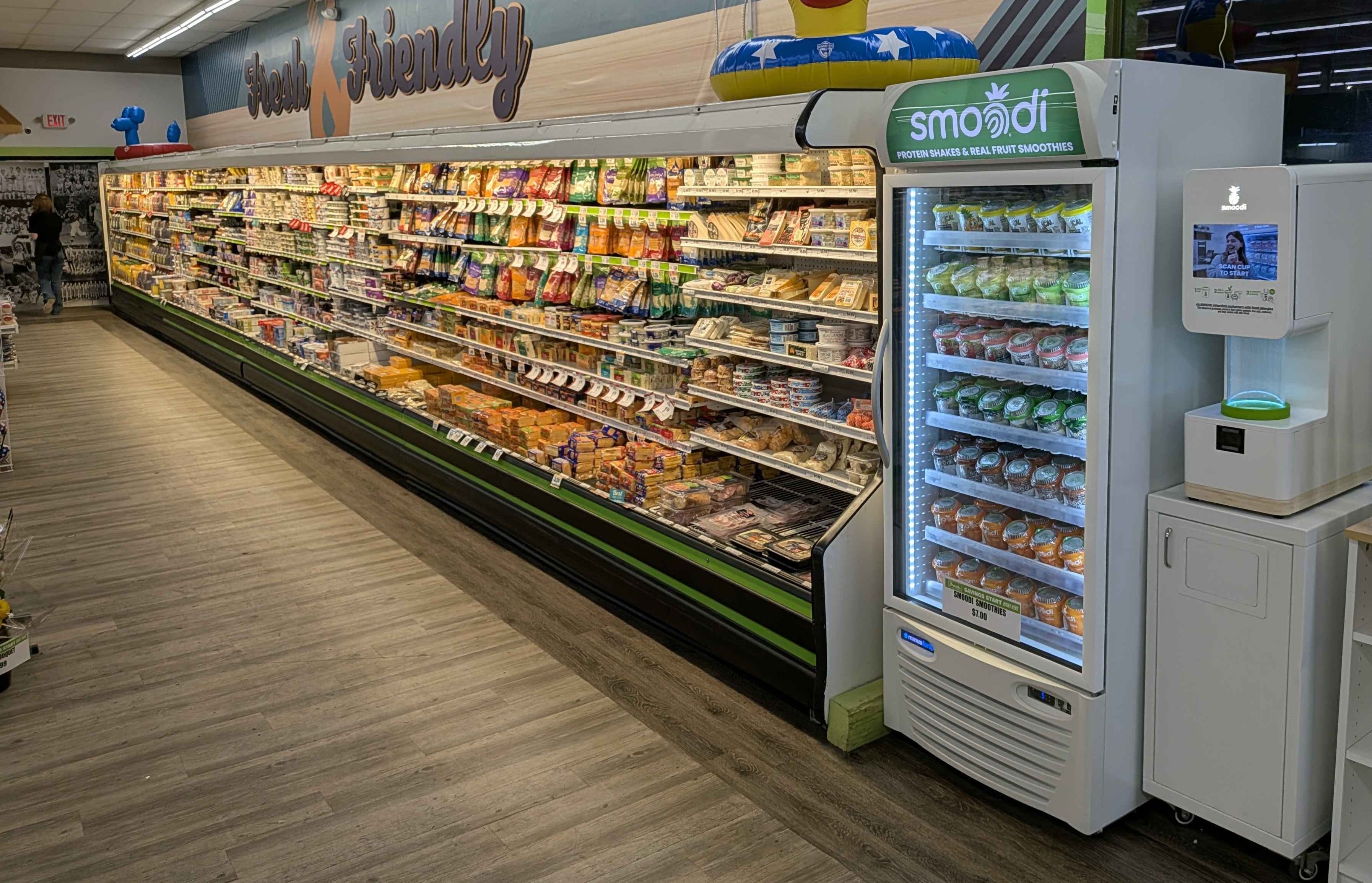
The compact footprint (approximately 40 inches of floor space) fits the spaces that are too small for vendor stations but too valuable to leave empty: hallway niches between vendor counters, entrance corridors, corners near restrooms or exits, and secondary seating areas on upper levels or mezzanines. In a format where square footage is premium and every unused corner represents lost revenue, a self-service station monetizes these spaces without construction or staffing.
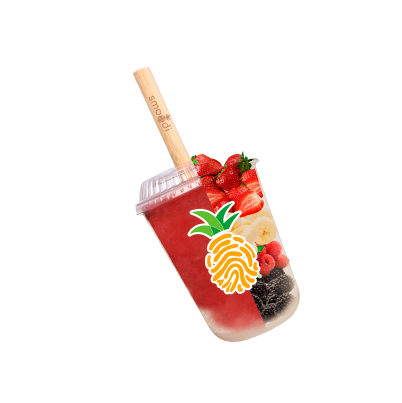
The product category matters for food halls. A whole-fruit smoothie complements rather than competes with the vendor mix. Most food halls feature savory options (tacos, burgers, ramen, pizza, poke) with limited healthy beverage offerings. A smoothie station fills a gap in the category mix, providing variety that strengthens the overall food hall proposition without cannibalizing vendor sales. The booster bar (protein powder, collagen, functional supplements) adds a wellness dimension that appeals to the health-conscious segment of food hall customers.
What Does the Financial Model Look Like for Management Companies?
Food hall management companies generate revenue from vendor rent, percentage-of-sales fees from vendors, and direct revenue from management-operated outlets (bars, coffee stations, event programming). A self-service smoothie station adds a direct revenue stream to the third category without the labor cost that makes staffed outlets expensive to operate.
Smoodi's operational lease starts at $299 per month for a 48-month term, scaling to $499 per month for a 12-month term. The purchase option is $14,999. The station requires no dedicated staff. Restocking the freezer with IQF fruit cups is the only regular task, and it takes minutes. IQF cups have a shelf life of up to two years, distributed through Dot Foods, eliminating waste from the variable daily traffic that food halls experience.
For food halls with multiple levels, courtyards, or satellite seating areas, multiple stations can be deployed. Smoodi operates in more than 300 locations across the United States, with over 2 million smoothies served. The company was founded at Harvard Innovation Labs. Each station occupies its own compact footprint, and multiple machines can be installed side by side to handle peak traffic periods when the food hall is at full capacity.
How Does This Affect the Overall Guest Experience?
Food hall guests evaluate their experience holistically. The quality of the vendors, the atmosphere of the space, the availability of seating, and the range of food options all contribute to whether a guest returns. Adding a healthy, self-service beverage option enhances the overall proposition in several ways.
It provides a quick option for guests who do not want a full meal. Not every food hall visit involves sitting down for a vendor's entree. Some guests stop by for a drink, a snack, or a quick pick-me-up between errands. A smoothie fills this role without requiring the guest to wait in a vendor's line. It extends the food hall's appeal to health-conscious customers who may not find a suitable option among the savory vendor mix. It provides a family-friendly option: parents visiting with children can offer a fruit smoothie as a nutritious alternative to the sugary options that dominate most food court environments.
The self-service format also aligns with the broader consumer trend toward autonomous food experiences. Food hall customers are already comfortable ordering at counters, busing their own tables, and navigating multiple vendor options independently. A touchscreen smoothie station fits this self-directed dining model naturally.
What Should Food Hall Operators Consider?
Operators evaluating a self-service smoothie station for their food hall should consider three factors: placement (high-traffic common areas where no vendor currently operates), category fit (does the food hall lack a healthy beverage option?), and operational bandwidth (does the management team have capacity to restock a freezer, or should this be delegated to existing bar or facilities staff?).
Installation requires a standard 120 VAC outlet, water connection, sanitizer inlet, and drain. The machine self-cleans between every use, blends a smoothie in under 60 seconds, and requires no food preparation skills to operate. For food hall management companies, this is a low-complexity addition to the common area infrastructure that produces direct revenue, fills a category gap, and utilizes underperforming space.
For food hall developers and management companies interested in adding a self-service healthy beverage station, visit getsmoodi.com/get-started to request a space assessment. To explore the revenue model, visit getsmoodi.com/roi.
Ready to bring Smoodi to your location?
Join hundreds of operators delivering fresh, automated smoothies with zero labor.
Get Started