How Does Automation Reduce Foodservice Labor Costs?
Labor runs 25 to 35% of revenue in 2026 as wages rise across 22 states. Automated equipment gives operators a way to reduce costs without reducing service quality.
Foodservice labor costs reached a pressure point in 2026. Minimum wages rose across 22 states, reaching $15 to $20 per hour in key markets. California's fast-food minimum wage increase raised operator labor costs by approximately 25%, adding roughly 9% to overall operating costs. Fast casual restaurants now carry labor costs in the high 20s to low 30s as a percentage of total sales. For operators already running on thin margins, the question is no longer whether to adopt labor-saving technology, but which technology delivers the best return.
How Much Do Foodservice Labor Costs Really Total in 2026?
The headline wage rate tells only part of the story. A foodservice employee earning $16 per hour and working 40 hours per week costs approximately $2,560 per month in base wages alone. That number does not include payroll taxes (typically 7.65% for the employer's share of FICA), workers' compensation insurance, health benefits for full-time employees, paid time off, training costs for new hires, and the administrative overhead of scheduling, compliance, and HR management.
When these costs are fully loaded, the true cost of a single foodservice employee ranges from $3,200 to $4,500 per month depending on the market, benefit structure, and position. For a staffed smoothie bar or juice station requiring two employees to cover a full operating day, the monthly labor cost alone reaches $6,400 to $9,000 before ingredient costs, equipment maintenance, or waste are considered.
Industry benchmarks confirm the scale of the challenge. Fast casual labor costs run 25 to 35% of revenue in 2026. Full-service restaurants often exceed 30%. Even limited-service operations, which have historically maintained lower labor ratios, are seeing increases as wage floors rise and competition for workers intensifies. The National Restaurant Association's 2026 data shows labor as the top operational concern for the majority of foodservice operators.
What Does a Staffed Beverage Station Actually Cost?
A staffed smoothie or juice bar within a larger foodservice operation illustrates the labor cost challenge at the station level. A single staffed position covering 10 hours of operation requires at least 1.5 to 2 FTEs when accounting for breaks, shift overlap, and coverage for days off. At $16 per hour fully loaded to $20 per hour with benefits, the station's monthly labor cost falls between $3,800 and $6,400.
Beyond wages, staffed beverage stations carry hidden costs: ingredient waste from inconsistent portioning (typically 5 to 15% of ingredient cost), training time for new hires (the foodservice industry's 73% annual turnover rate means retraining is constant), cleaning labor between customers and at end of day, and management time for scheduling and supervision. These costs do not appear on a labor line item but directly reduce the station's profitability.
What Does Process-Specific Automation Replace?
Process-specific automation targets a single, repeatable task rather than attempting to replicate the full range of human kitchen labor. This distinction matters because it defines realistic expectations. A process-specific automated station does not replace a chef, a line cook, or a full-service kitchen. It replaces one specific staffed process: in the case of beverage stations, the process of making a smoothie from ingredients, serving it, and cleaning the equipment.
The automation spectrum in foodservice ranges from simple (self-ordering kiosks that reduce cashier labor) to complex (robotic kitchen systems that replicate cooking processes). Process-specific automated beverage stations sit in a practical middle ground: they eliminate all labor for one high-demand product category while producing a fresh, customizable result. The global food automation market reached $14 billion in 2024, and a 69% increase in AI and robotics adoption is projected by 2027, signaling that operators across all segments are moving toward automation where the economics justify it.
How Does Lease-Based Equipment Change the Math?
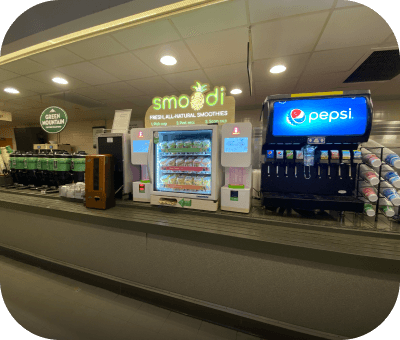
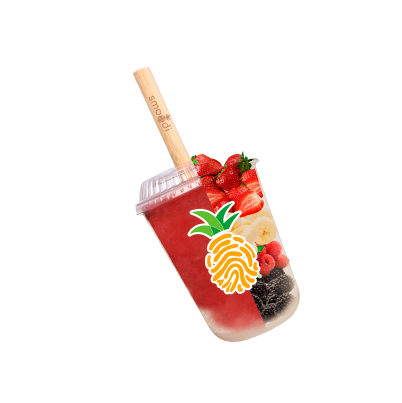
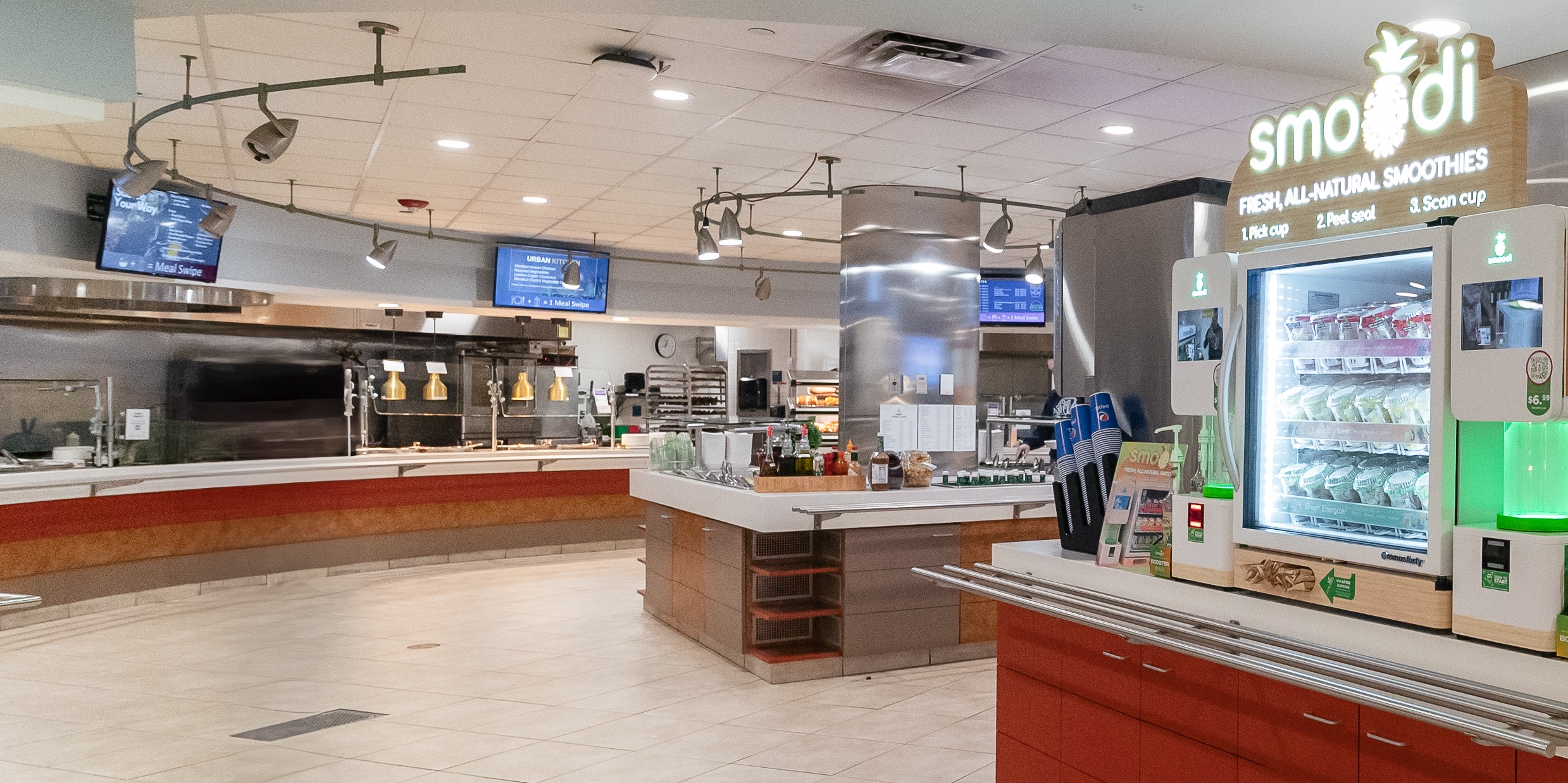
The financial comparison between a staffed station and an automated alternative becomes stark when the numbers are placed side by side. A Smoodi automated smoothie station operates at $299 to $499 per month on an operational lease. The machine blends IQF (individually quick frozen) fruit cups with water in under 60 seconds, self-cleans between every use, and requires no dedicated staff. Zero labor cost. Zero benefits cost. Zero turnover cost. Zero training cost.
Compare that to the staffed alternative: a single employee at $16 per hour working 40 hours per week costs approximately $2,560 per month in wages alone, before benefits, payroll taxes, training, and turnover expenses. At the low end, one staffed position costs five to eight times more per month than an automated station producing the same product. The purchase option at $14,999 reaches payback within months when compared to the ongoing cost of a staffed position.
- Automated station lease: $299 to $499 per month, zero labor, self-cleaning, no benefits or turnover
- Single staffed position: $2,560 to $4,500+ per month fully loaded, plus training, scheduling, and management overhead
- Two-position coverage (full-day operation): $5,100 to $9,000+ per month for the staffed alternative
- Smoodi purchase option: $14,999 one-time, with payback typically within the first few months of operation
Smoodi operates in more than 300 locations across the United States, with over 2 million smoothies served. The company was founded at Harvard Innovation Labs. IQF fruit cups have a shelf life of up to two years and are distributed through Dot Foods. The machine occupies approximately 40 inches of floor space and requires a standard 120 VAC outlet and water connection.
"It's been a day and a half and we've sold over 1,000 pieces. It's been great. Install was very fast. Our guys love it."
— Hector Ortiz, Food Service Operations Manager, Baptist Health
What Is the Total Cost Comparison?
When all costs are included, the automated station delivers a fundamentally different economic profile. A staffed smoothie station generating $3,000 per month in revenue may retain less than $500 after labor, ingredients, waste, and overhead. An automated station generating the same revenue retains the majority after a $299 to $499 lease payment and ingredient costs, because the labor line item is zero.
For multi-site operators, the savings compound. A hospital network, university system, or fitness chain operating smoothie stations at 10 locations saves $30,000 to $60,000 per month in labor costs by switching from staffed to automated stations. Over a year, that represents $360,000 to $720,000 in labor cost reduction across the portfolio, without reducing product quality or customer experience.
Where Should Operators Start?
Operators evaluating automation for labor cost reduction should start with the stations and processes where the labor-to-revenue ratio is least favorable. Beverage stations are often the best starting point because they require dedicated staff for a single product category, generate moderate revenue per station, and can be automated with compact, low-cost equipment. The lease model eliminates capital risk: an operator can test the automated alternative at one location for $299 to $499 per month and evaluate results over 60 to 90 days before expanding.
To calculate the labor cost savings for your specific operation, visit getsmoodi.com/roi. To explore lease and purchase options, visit getsmoodi.com/get-started.
Ready to bring Smoodi to your location?
Join hundreds of operators delivering fresh, automated smoothies with zero labor.
Get Started