Grow Gym Smoothie Bar Revenue and Non-Dues Income
Learn how automated beverage programs drive gym smoothie bar revenue and non-dues income for boutique and big-box fitness clubs.
Diversifying Income Beyond Membership Dues
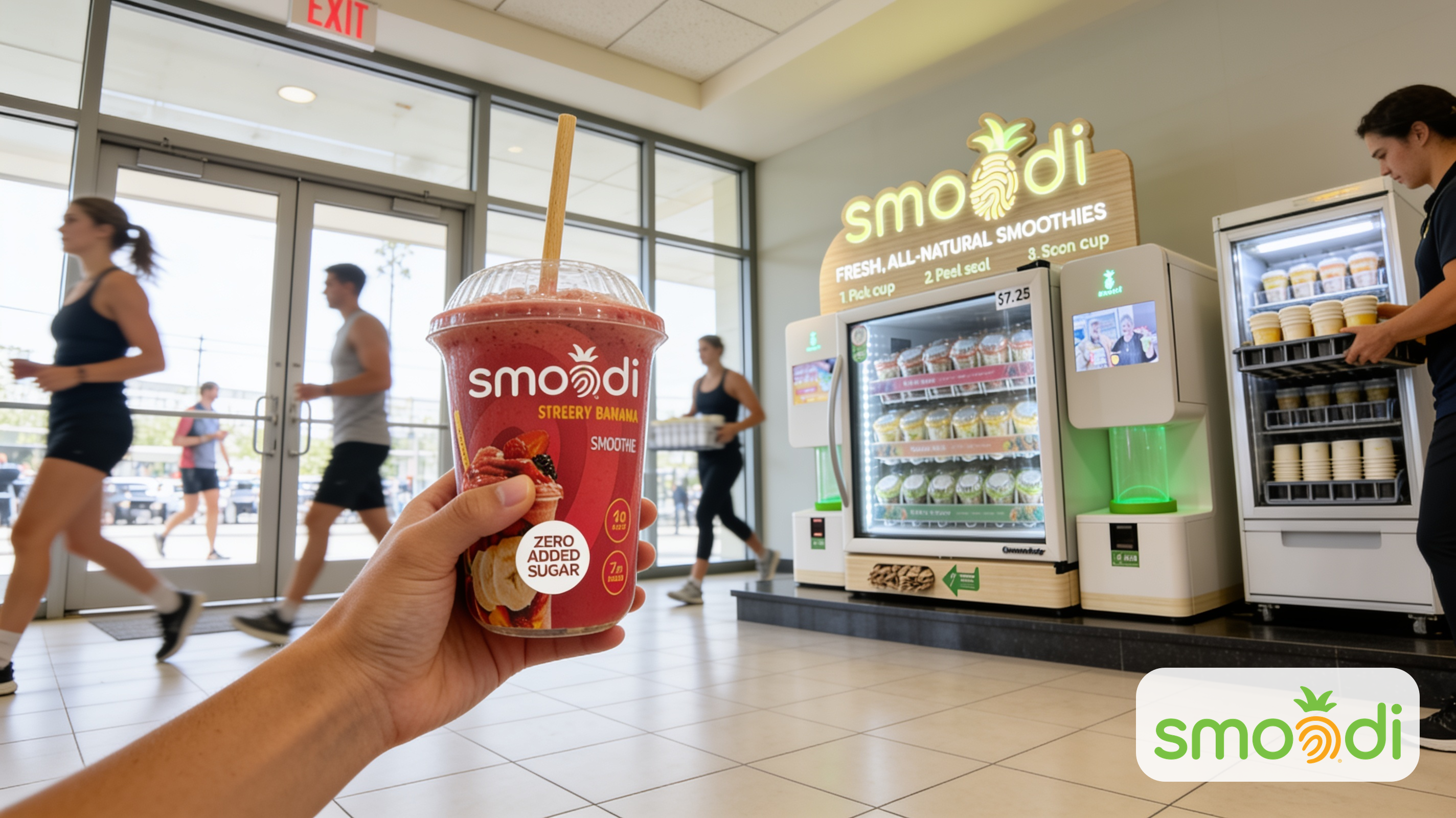
A gym owner watches the morning rush. Members finish their final sets and head straight for the exit, taking their post-workout hunger and thirst with them to a nearby cafe or convenience store. This represents a missed opportunity to capture value from a captive audience already focused on health and wellness.
For many operators, the challenge has always been labor. Traditional beverage programs require trained staff, constant prep, and significant cleanup. However, the financial incentive for diversification is clear. For U.S. fitness club respondents, non-dues sources accounted for 29.5 percent of total revenue, which is higher than the global average of 23.5 percent, according to the Health & Fitness Association's 2025 Fitness Industry Benchmarking Report as reported by SGB Online.
Integrating a gym smoothie bar revenue stream allows facilities to capitalize on this trend without the operational headaches of a full-service kitchen.
The Financial Impact of Non-Dues Revenue Gym Strategies
The ability to generate income outside of monthly memberships often scales with the size of the operation. U.S. fitness clubs with over $5 million in annual sales generate 36.4 percent of revenue from non-dues activities, whereas clubs with less than $1.5 million in annual sales generate 21.2 percent, according to the Health & Fitness Association's 2025 Fitness Industry Benchmarking Report as cited by Huzzard.
This gap suggests that smaller boutique studios may be underutilizing their space for ancillary income. A fitness facility beverage program provides a low-barrier entry point to increase the average revenue per member (ARPM). By offering high-value, health-focused products, operators can move closer to the diversification levels seen in larger clubs.
The market demand for these products is expanding. According to Verified Market Reports, the global Protein Smoothie Market was valued at USD 14.6 billion in 2025 and is estimated to reach USD 30.2 billion by 2033, exhibiting a CAGR of 9.5 percent from 2026 to 2033 Verified Market Reports. Positioning a facility as a one-stop shop for both training and nutrition aligns with these global consumption trends.
Removing the Labor Barrier with Automation
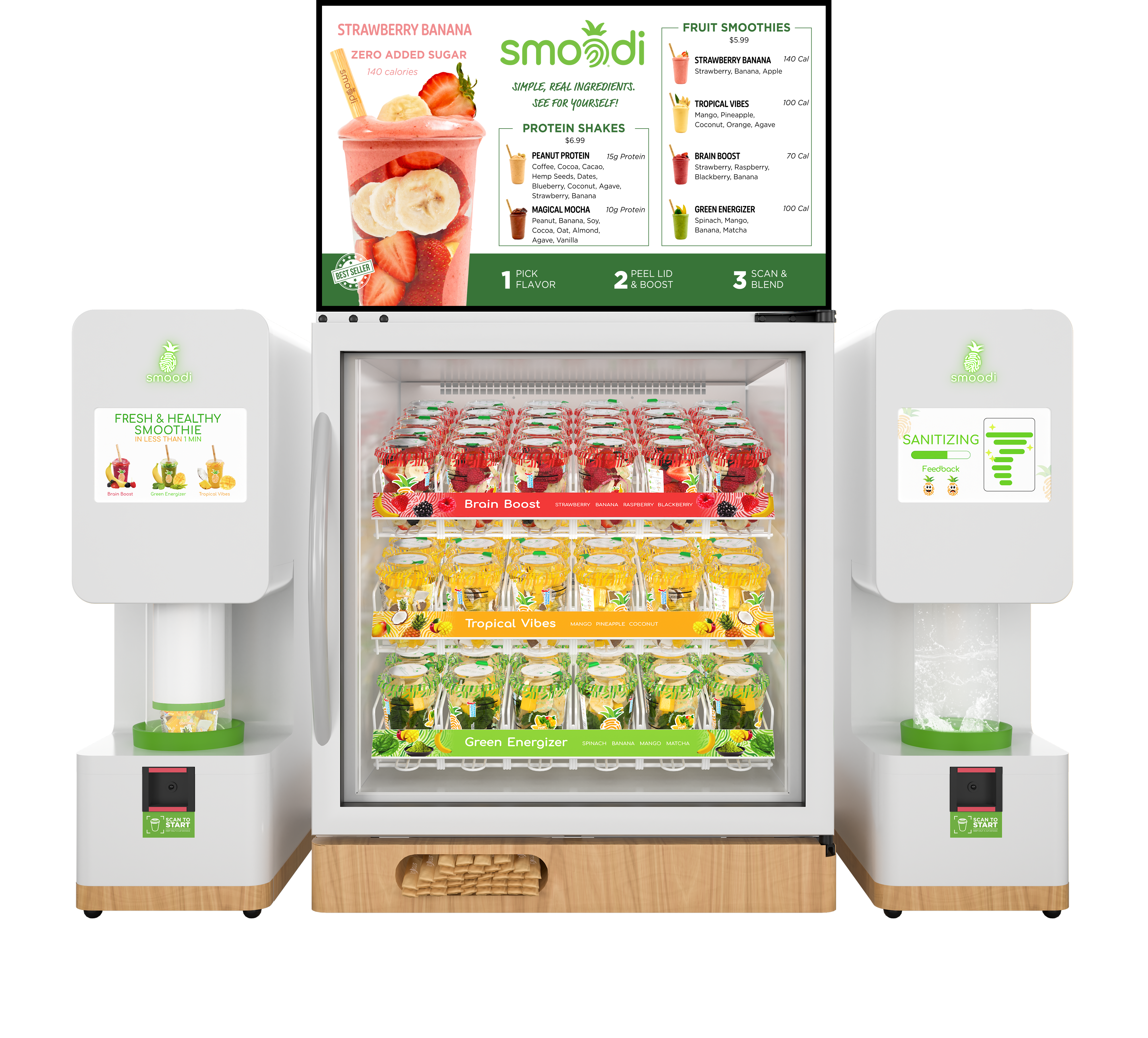
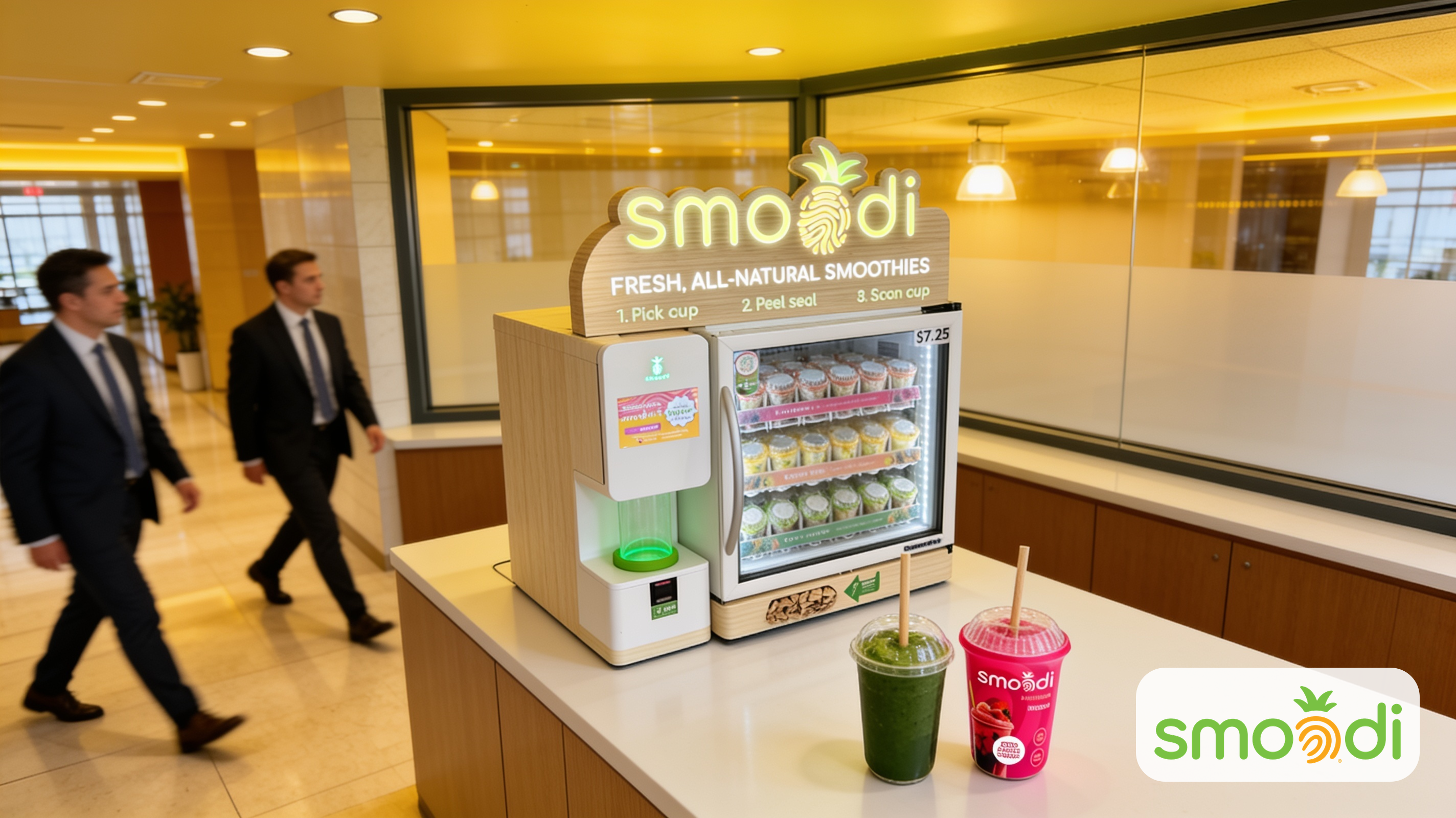
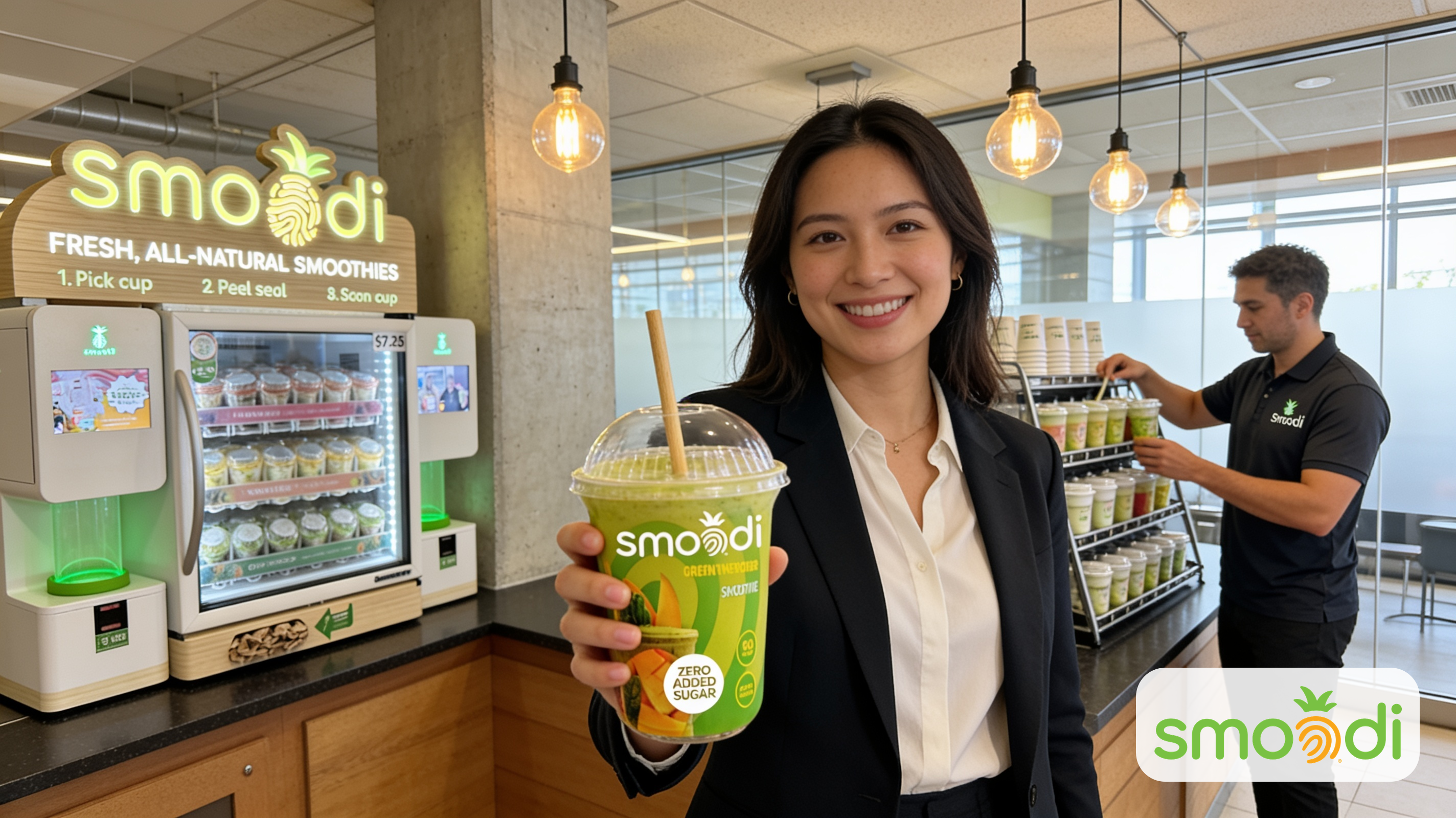
Historically, gym food and beverage revenue was limited by the need for on-site labor. Smoodi solves this by providing the world's first self-serve robotic smoothie machine. This "healthy smoothie store in a box" allows operators to offer fresh smoothies on autopilot with zero labor required for production.
The process is designed for speed and hygiene. Guests select a sealed frozen fruit cup, peel the tamper-evident seal, scan the barcode, place the cup in the machine, and the machine adds water and blends the drink in under 60 seconds. The entire process from start to finish takes about 90 seconds. Because Smoodi uses real frozen fruit pre-portioned at the source, there are no sugary purees or complex prep lists for staff to manage.
Maintenance is similarly automated. A patented self-cleaning cycle runs after every serve, and a deep sanitation cycle runs automatically once per day overnight using food-safe sanitizers. Staff responsibilities are limited to restocking cups and keeping surfaces clean, making it a viable option for facilities that cannot afford a dedicated juice bar employee.
Optimizing Fitness Club Ancillary Revenue via Nutrition
The timing of nutrition is a critical factor for fitness members. A peer-reviewed narrative review by Aragon and Schoenfeld in the Journal of the International Society of Sports Nutrition concluded that pre- and post-exercise meals should not be separated by more than approximately 3–4 hours Journal of the International Society of Sports Nutrition.
By providing immediate access to protein and nutrient-dense options, gyms can support their members' recovery goals. Smoodi offers a variety of dietitian-approved options to suit different workout needs:
- Recovery: Protein shakes like Choco-Banana (32g protein) or Strawberries & Cream (20g protein).
- Energy: The Green Energizer (100 cal, zero added sugar) featuring matcha, mango, spinach, and banana.
- Wellness: Brain Boost (70 cal, 7g fiber, zero added sugar) with strawberry, raspberry, blackberry, and banana.
- Hydration: The Cucumber Refresher (100 cal) or Tropical Vibes, which provides 110% of the daily vitamin C.
Most flavors are plant-based and lactose-free, though whey-based protein shakes and dairy-based options are also available. All nutrition and allergen information is clearly labeled on every cup and displayed on the machine's touch screen.
Evaluating Smoothie Bar Gym ROI
When considering the smoothie bar gym ROI, operators should look at the combination of low overhead and high perceived value. Smoodi machines are NSF and UL certified and fit into a compact footprint (approximately 40 in wide x 33 in high x 30 in deep), meaning they can be placed in corporate gyms, boutique studios, or large health clubs without requiring major renovations.
The business model is designed for flexibility, offering Placement, Monthly Lease, or Purchase programs. The website says many partners price cups at $4.99–$7.99 and cite 40–50% gross margin. To determine specific potential for a particular facility, operators can use the ROI calculator.
Operational risks are further mitigated by the product's shelf life. Frozen fruit cups last 2 years from harvest, which the website states results in zero food waste and spoilage. This eliminates the primary financial risk associated with traditional fresh-food programs.
Integrating Smoodi into Your Facility
Deployment is streamlined to ensure a fast go-live, typically within 4–6 weeks. The Smoodi team handles the installation, meaning no outside contractor is needed. The machines require standard 110-120V power, a 3/8 in push-to-connect water line, drain access, and internet connectivity.
For payment, operators can use their existing point of sale system. Alternatively, a pay-first vending version is available that accepts credit, debit, Apple Pay, and Google Pay. For those in corporate offices or managed accounts, an integrated POS option is also available.
With 400+ live deployments across 3 continents, Smoodi provides a proven method for fitness operators to increase their non-dues revenue while empowering healthy habits for their members.
Start Growing Your Ancillary Revenue
Ready to add a self-serve robotic smoothie station to your gym? Visit getsmoodi.com to explore placement and purchase options or watch a demo to see the technology in action.
Conclusion
Increasing non-dues revenue is essential for the long-term stability of fitness facilities, especially as the U.S. gym industry continues to grow. By leveraging automation, operators can capture a share of the expanding protein smoothie market without increasing labor costs. Smoodi provides a scalable, dietitian-approved beverage solution that fits into any footprint. From high-protein recovery shakes to low-calorie energizers, an automated smoothie station turns a member's post-workout routine into a consistent revenue stream for the business.
Ready to bring Smoodi to your location?
Join hundreds of operators delivering fresh, automated smoothies with zero labor.
Get Started