How Can Healthcare Systems Support Staff Wellness with Food?
Hospital food programs focus on patient dining while staff rely on vending machines during long shifts. Self-service nutrition stations address this wellness gap for healthcare workers.
Healthcare worker burnout remains one of the most pressing workforce challenges in the industry. Nurses, physicians, and support staff work 10 to 12 hour shifts with unpredictable break times, limited cafeteria access during off-hours, and high physical and emotional demands. Hospital food programs invest heavily in patient dining, and rightly so. But staff nutrition often defaults to whatever is available at 2 a.m. in the break room: vending machine chips, packaged crackers, stale coffee, or nothing at all.
Nutrition directly affects energy, cognitive function, and resilience during long shifts. For healthcare workers making critical decisions about patient care, the quality of available food is not a perk. It is an operational factor that affects performance, safety, and retention.
Why Do Hospital Food Programs Overlook Staff Nutrition?
The gap between patient dining and staff dining is not intentional neglect. It is a structural consequence of how hospital food programs are organized. Dietary services departments are funded, staffed, and evaluated based on patient meal delivery: nutritional compliance, therapeutic diet accuracy, patient satisfaction scores, and regulatory requirements. These responsibilities consume the department's capacity.
Staff dining is typically managed as a secondary function. Hospital cafeterias serve employees during daytime hours, but hours are limited (often 7 a.m. to 7 p.m. or shorter), menus are designed for the general population rather than shift workers, and pricing can be a deterrent for lower-wage support staff. Outside of cafeteria hours, options shrink to whatever the facility's vending program provides.
The result is a workforce that provides care around the clock but has access to adequate nutrition for only part of the day. Night shift nurses, weekend staff, and employees working through meal breaks due to patient needs are the most underserved by current food programs.
What Nutritional Challenges Do Healthcare Workers Face?
Healthcare workers face a specific set of nutritional challenges that differ from standard workplace nutrition concerns. Shift length is the most obvious factor: a 12-hour shift requires sustained energy across the entire span, not just the post-lunch period that most workplace nutrition programs address. Protein intake is critical for maintaining alertness and physical stamina during long shifts, particularly for nurses and support staff who are on their feet continuously.
Unpredictable break timing is another challenge. Unlike office workers who can plan meals around a consistent schedule, healthcare workers take breaks when patient flow allows. A meal option that takes 15 minutes to prepare and eat may not be viable when the available break window is 5 to 10 minutes. This pushes workers toward quick but nutritionally poor choices: candy bars, chips, energy drinks, and other items that provide a temporary boost followed by a crash.
Hydration is consistently inadequate among healthcare workers. The physical demands of clinical work, combined with environments that are often warm and dry, create hydration needs that coffee and soda do not meet. A whole-fruit smoothie provides both nutrition and hydration in a format that can be consumed quickly during a short break.
Where Can a Nutrition Station Serve Staff Most Effectively?
Placement is critical for staff-facing food programs. A nutrition station that requires a trip to the cafeteria offers no advantage over the cafeteria itself. The value comes from placing the station where staff already spend their break time or pass through during shift transitions.
- Staff lounges and break rooms: the primary break location for most clinical staff, where a nutrition station serves as an immediate alternative to vending machines
- Nursing station areas: high-traffic zones where nurses pass between patient rooms, allowing quick access without leaving the unit
- Employee entrance and exit areas: where staff arriving for or departing from shifts can grab a smoothie as part of their transition routine
- Staff-accessible areas near the cafeteria: extending healthy options beyond cafeteria operating hours with 24/7 self-service availability
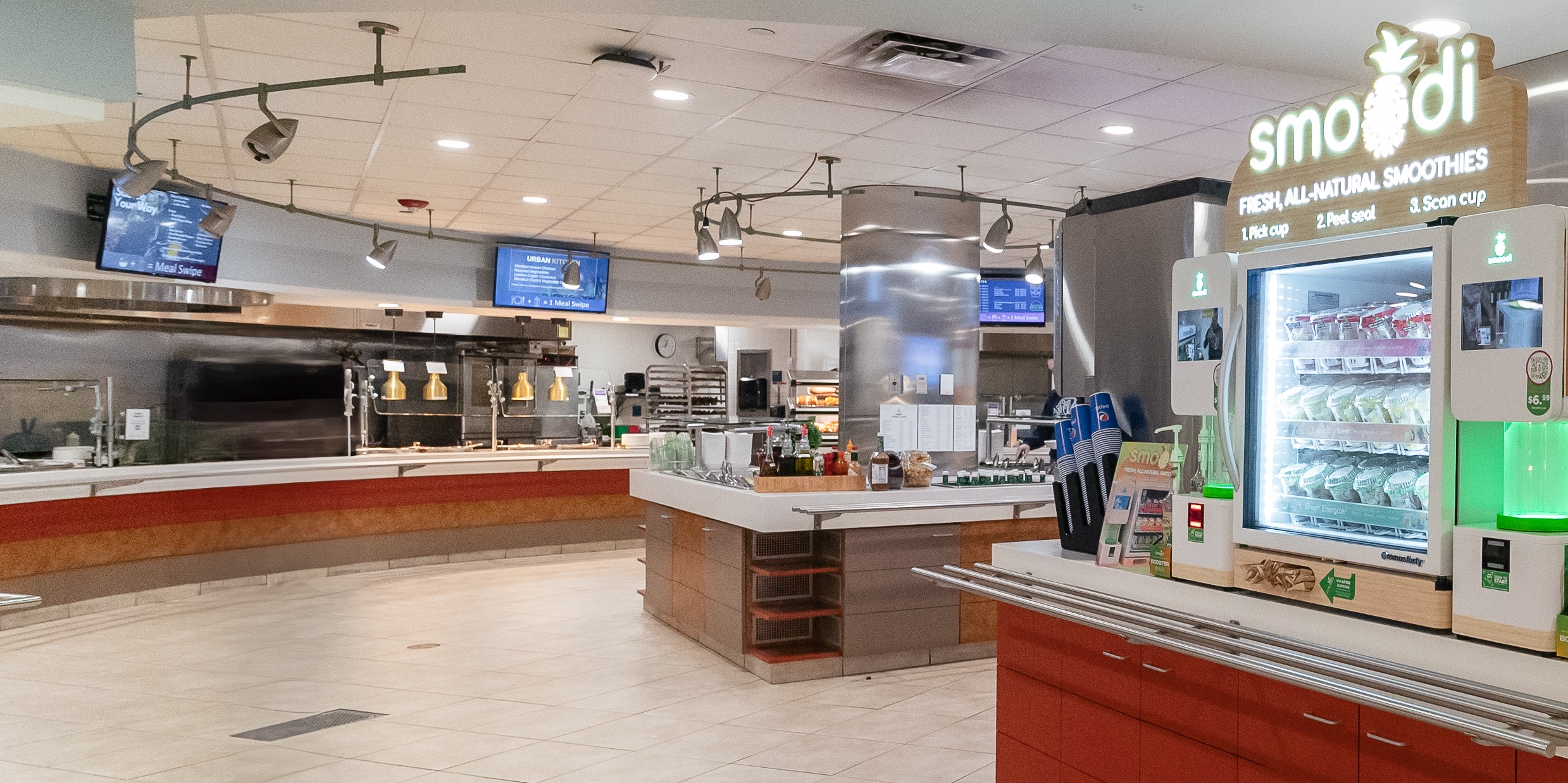
The compact 40-inch footprint of an automated smoothie station fits into these spaces without displacing existing furniture, equipment, or workflow patterns. No kitchen infrastructure is required beyond a standard electrical outlet, water connection, sanitizer inlet, and drain.
How Does Smoodi Fit Healthcare Staff Wellness Programs?
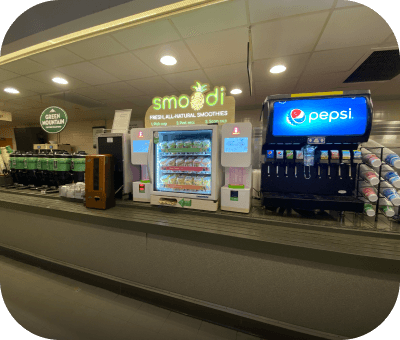
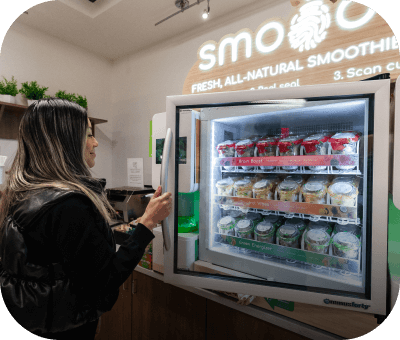
Smoodi's automated smoothie station addresses every operational challenge that makes staff nutrition programs difficult to implement. The machine operates 24 hours a day, 7 days a week, matching the shift schedules that no staffed food service can cover economically. Self-cleaning between every use meets the hygiene expectations of healthcare environments without requiring environmental services involvement. The machine blends IQF (individually quick frozen) whole fruit cups with water only. No syrups, concentrates, or artificial ingredients are used.
The booster bar is particularly relevant for healthcare staff. Protein powder supports sustained energy during long shifts. Collagen and functional supplements provide nutritional benefits that clinical staff understand and value. The ability to add a protein booster transforms a fruit smoothie into a substantive meal replacement that a nurse can consume during a five-minute break and stay fueled for the remaining hours of a shift.
Smoodi operates in more than 300 locations across the United States, with over 2 million smoothies served, including deployments in hospital and healthcare settings. The company was founded at Harvard Innovation Labs. The operational lease starts at $299 per month, with purchase options beginning at $14,999. IQF fruit cups have a shelf life of up to two years and are distributed through Dot Foods.
"Now we have healthy options available here in the cafeteria, and patients and even doctors are loving this."
— Dr. Nish Patel, Interventional Cardiologist, Baptist Health Miami
What Is the Retention Value of Staff Wellness Investments?
Healthcare organizations spend significant resources on recruitment and retention. The cost of replacing a single registered nurse ranges from $40,000 to over $100,000 when accounting for recruitment, onboarding, training, and lost productivity during the transition. Anything that reduces turnover delivers measurable financial returns.
Staff wellness investments send a visible signal: the organization cares about its employees, not just its patients. A nutrition station in a staff area is a daily, tangible reminder of that commitment. It is used multiple times per shift by multiple staff members, creating a touchpoint that abstract wellness program communications cannot replicate. When a nurse finishes a difficult procedure and walks to the break room to find a whole-fruit smoothie waiting on demand, the institution's commitment to staff wellness becomes concrete.
For healthcare administrators interested in adding a staff-focused nutrition program, visit getsmoodi.com/get-started to explore deployment options for healthcare facilities. To calculate the potential return for your organization, visit getsmoodi.com/roi.
Ready to bring Smoodi to your location?
Join hundreds of operators delivering fresh, automated smoothies with zero labor.
Get Started