Why Are Hospitals Investing in Automated Nutrition Programs?
Healthcare foodservice is projected to reach $22.8 billion by 2026. Hospitals are investing in automated nutrition stations that serve fresh, healthy options around the clock with zero labor.
The healthcare foodservice market is undergoing a significant transformation. Projected to reach $22.8 billion in 2026 (a 73 percent increase from $13.2 billion in 2021), the sector is driven by rising demand for healthier cafeteria options, staff wellness programs, and patient satisfaction improvements. Hospitals are moving away from traditional cafeteria-only models toward distributed, automated stations that serve fresh, nutritious food and beverages 24 hours a day, seven days a week.
For hospital dining directors and facilities managers, the shift reflects converging pressures. Healthcare workers report that 85 percent want quick-to-order options, 79 percent need fast-to-eat meals, and 94 percent expect high-quality ingredients. At the same time, foodservice labor shortages make it difficult to staff traditional serving lines around the clock. Automated nutrition stations solve both problems: they serve fresh food without staff involvement, operate continuously, and maintain consistent quality across every serving.
What Is Driving the Growth in Healthcare Foodservice?
Three forces are reshaping how hospitals think about food and beverage programs.
First, patient satisfaction scores now directly affect hospital reimbursement rates. The Hospital Consumer Assessment of Healthcare Providers and Systems (HCAHPS) survey includes food quality as a scored category. Hospitals that invest in better dining options see measurable improvements in overall satisfaction scores, which translate to financial outcomes.
Second, healthcare organizations increasingly view foodservice as a staff retention tool. With nurse turnover rates among the highest in any industry, hospitals are looking for visible, daily benefits that improve the work experience. A healthy food option available at 2:00 AM during a night shift signals that the organization values its staff. Forty-eight percent of healthcare workers say they actively seek wellness-supporting food choices at work.
Third, the micro-market and grab-and-go formats that have gained traction in corporate offices are now entering healthcare settings. Instead of funneling all food traffic through a single cafeteria with fixed hours, hospitals are distributing food stations across lobbies, waiting areas, staff break rooms, and corridor kiosks. Automated equipment makes this distributed model feasible without multiplying labor costs.
How Do Automated Nutrition Stations Fit Hospital Operations?
Hospitals operate on schedules that traditional foodservice models struggle to serve. The cafeteria may close at 7:00 PM, but nurses, technicians, physicians, and support staff work around the clock. Visitors arrive at unpredictable hours. Patients who miss a meal tray need an alternative. Vending machines have historically filled this gap, but they offer little beyond packaged snacks and sugary beverages.
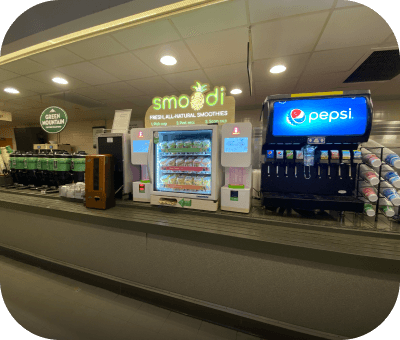
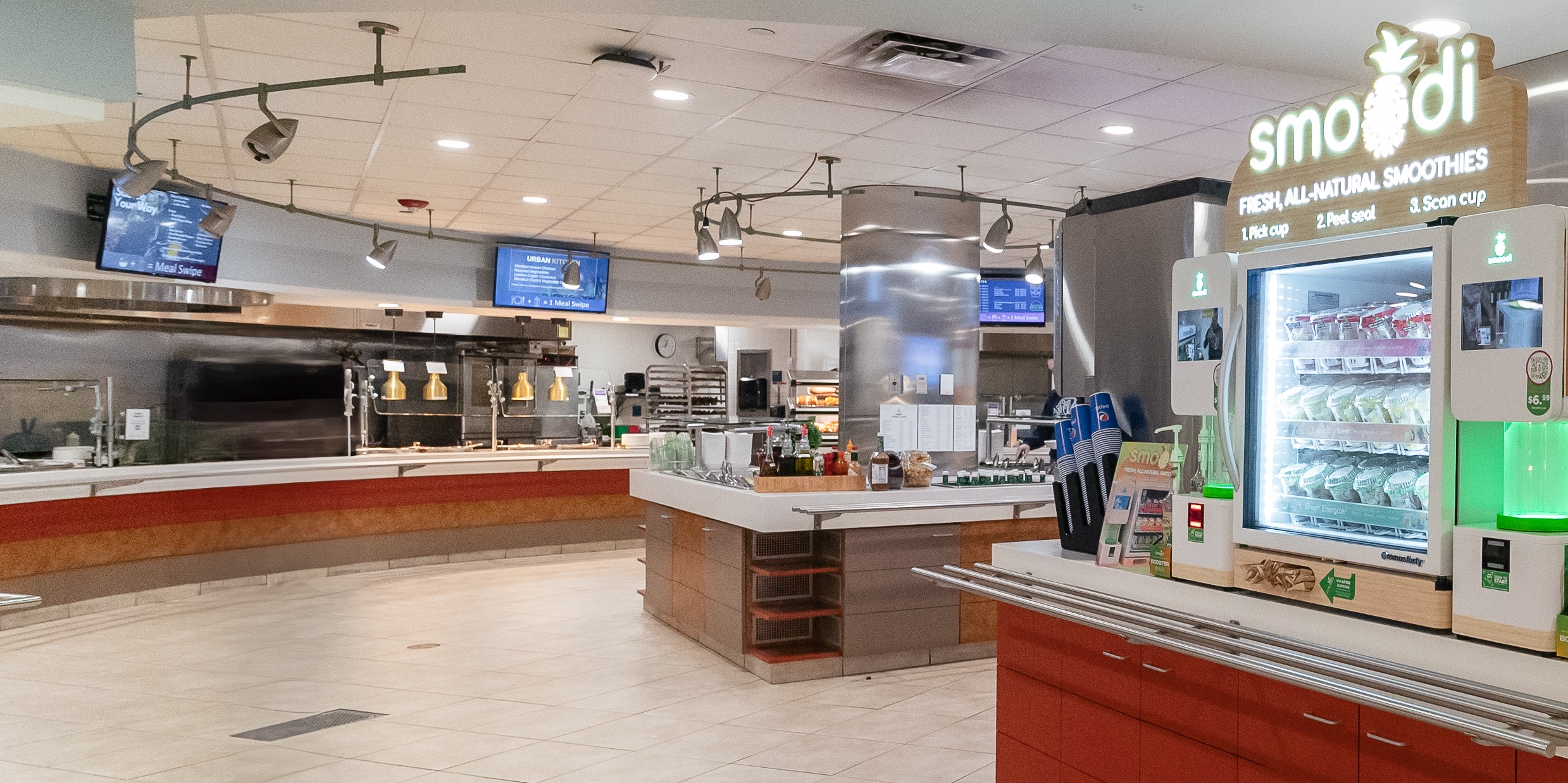
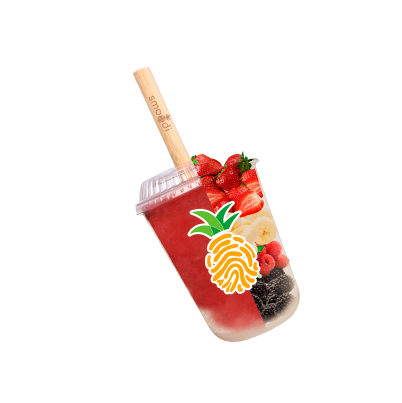
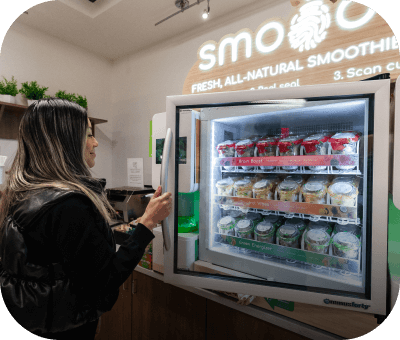
An automated smoothie station provides a fresh, whole-fruit beverage at any hour without requiring a single staff member. Smoodi's machine blends each smoothie in under 60 seconds and self-cleans between every use. The operation is entirely self-service: a user selects a fruit cup, inserts it into the machine, and receives a fresh smoothie. No cafeteria worker prepares the order. No one washes a blender. The machine handles everything, including sanitation.
The compact footprint (approximately 40 inches of floor space) means hospitals can place the station in a staff break room, a visitor lobby, near the outpatient pharmacy, or in a rehabilitation center without dedicating significant real estate.
"It's been a day and a half and we've sold over 1,000 pieces. It's been great. Install was very fast. Our guys love it."
— Hector Ortiz, Food Service Operations Manager, Baptist Health
What Results Are Healthcare Facilities Seeing?
Baptist Health's deployment of automated smoothie stations generated more than 6,000 smoothies during its initial soft launch period. The volume demonstrated that healthcare populations (staff, patients, and visitors combined) have strong and immediate demand for healthy beverage options when those options are available, convenient, and fast.
The economics are favorable for hospital foodservice budgets. With an operational lease starting at $299 per month and Smoodi retaining ownership of the machine (including full service and maintenance), the initial investment is minimal compared to outfitting a staffed smoothie bar, which typically requires $50,000 to $80,000 in equipment, build-out, and first-year labor costs. The fruit cups (IQF whole fruit blended with water only) have a shelf life of up to two years, eliminating the spoilage and waste that plague fresh-produce programs in institutional settings.
"Now we have healthy options available here in the cafeteria, and patients and even doctors are loving this."
— Dr. Nish Patel, Interventional Cardiologist, Baptist Health Miami
How Does Food Safety Work in Healthcare Settings?
Hospitals serve immunocompromised patients, elderly visitors, and staff who cannot afford a foodborne illness event. Food safety is not merely a compliance requirement. It is a clinical concern. Automated smoothie stations address this by eliminating the most common contamination vectors in manual preparation.
Each fruit cup is individually sealed at manufacturing and remains sealed until the moment it enters the machine. There is no open handling of ingredients. The machine runs an automatic cleaning and sanitizing cycle between every serving, not once per shift, but after every single use. There is no risk of cross-contamination from a shared blender pitcher, no temperature abuse from ingredients left on a prep counter, and no variability in cleaning thoroughness.
For hospitals evaluating equipment against HACCP (Hazard Analysis and Critical Control Points) criteria, the design-level food safety of an automated system is a procurement advantage. The sealed ingredient format, enforced cleaning cycles, and absence of human handling reduce hazard vectors to a level that manual preparation cannot consistently achieve.
Supporting Staff Wellness Programs
Hospital wellness programs are evolving from pamphlets and gym discounts to tangible, daily interventions embedded in the work environment. Placing a healthy smoothie station in a staff break room provides a visible, accessible wellness benefit that staff interact with during every shift. Smoodi's booster bar (protein powder, collagen, and other functional supplements) allows users to add a protein or vitamin boost to any smoothie, supporting the nutritional needs of healthcare workers who often eat irregularly due to demanding schedules.
What Does Installation Look Like in a Hospital?
Hospital facilities teams are accustomed to managing complex equipment installations. A Smoodi installation is straightforward by comparison. The machine requires a standard 120 VAC / 7A electrical outlet (NEMA 5-15P with integrated GFCI), a 3/8 inch push-to-connect water inlet (50 to 80 PSI, filtered and potable), a 1/4 inch push-to-connect sanitizer inlet, and a 1 inch FNPT drain. Most hospital locations already have these utilities available, especially near existing vending or coffee stations. A licensed plumber can typically complete the installation in a single visit.
For health systems operating multiple hospitals, the installation is standardized across every site. The same specifications, the same equipment, the same supply chain. Smoodi's fruit cups are distributed through Dot Foods, the largest food redistribution company in North America, making procurement straightforward for health systems that already work with Dot Foods-connected distributors.
A Practical Path for Hospital Dining Directors
For hospital foodservice directors evaluating automated nutrition stations, the decision framework is straightforward. Identify locations within the facility where staff, patients, or visitors would benefit from a healthy grab-and-go option (break rooms, lobbies, outpatient areas, rehabilitation centers). Verify that the location has the required electrical, water, and drain connections. Estimate daily volume based on foot traffic and shift schedules. And evaluate the cost structure against the alternative of staffing a manual smoothie bar.
Smoodi operates in more than 300 locations across the United States and has served more than two million smoothies. Founded at Harvard Innovation Labs, the company supports healthcare deployments with a supply chain built for institutional consistency. The operational lease starts at $299 per month (with terms available at $349, $399, and $499 for shorter commitments), and a purchase option is available starting at $14,999. To learn how Smoodi fits into your hospital's nutrition program, visit getsmoodi.com/get-started. To estimate the revenue potential for your facility, visit getsmoodi.com/roi.
Ready to bring Smoodi to your location?
Join hundreds of operators delivering fresh, automated smoothies with zero labor.
Get Started