Why Hotels Are Adding Smoothie Stations to Breakfast
Hotels are rethinking breakfast with automated smoothie stations that reduce labor costs, meet guest wellness expectations, and generate new F&B revenue.
Hotel food and beverage programs are undergoing a significant shift. Guests now expect healthy options as a standard part of the breakfast experience rather than an exception, and hotel operators are under pressure to deliver those options without increasing an already strained labor budget. Automated smoothie stations have emerged as a solution that addresses both demands simultaneously, offering guests a fresh, health-forward amenity while requiring zero dedicated staff to operate.
This article examines why hotel breakfast is evolving, what guests expect from modern F&B programs, and how automated smoothie stations fit into the operational and financial model that hotel managers work within.
The Shift in Hotel Breakfast Expectations
The traditional hotel breakfast buffet, pastries, cereal, juice from concentrate, and a hot station with eggs and sausage, is no longer sufficient for a growing segment of travelers. Wellness-oriented guests, business travelers with specific dietary preferences, and families with health-conscious parents now evaluate hotels partly on the quality and variety of their food offerings.
Industry surveys consistently show that food and beverage quality is among the top five factors influencing hotel selection and guest satisfaction scores. More than 60 percent of travelers in the premium and upper-midscale segments report that healthy breakfast options influence their booking decisions. For hotel operators competing on review scores and repeat bookings, breakfast is no longer an afterthought, it is a competitive differentiator.
Smoothies fit naturally into this landscape. They are perceived as a healthy, fresh, and modern option. They appeal across demographics, from business travelers looking for a quick protein-rich breakfast to families where children prefer fruit-based beverages over traditional breakfast foods. And they carry an implicit quality signal: a hotel that offers fresh smoothies at breakfast communicates attention to guest wellness.
Why Traditional Hotel Smoothie Programs Are Difficult
Despite the demand, staffed smoothie bars have been impractical for most hotels. The economics and logistics work against them.
Labor is the primary barrier. Hotel F&B teams are already stretched thin, particularly during the breakfast window when a small kitchen crew serves the majority of daily guests in a two-to-three-hour period. Adding a dedicated smoothie bar attendant means either hiring an additional part-time employee, adding $15,000 to $25,000 in annual labor cost, or diverting an existing team member from other breakfast duties. Neither option is attractive for an amenity that generates modest revenue relative to the overall breakfast program.
Fresh fruit inventory compounds the challenge. Hotels experience significant occupancy fluctuations, weekday business travel, weekend leisure stays, seasonal peaks and troughs, and event-driven surges. A fresh-fruit smoothie program must order perishable ingredients based on predicted occupancy, leading to inevitable waste during low-occupancy periods and potential shortages during unexpected peaks. Spoilage rates of 15 to 30 percent are common in fresh-fruit programs, and the waste is difficult to justify in a hotel kitchen where food cost management is closely monitored.
Equipment and space present additional obstacles. A staffed juice bar requires commercial blenders, a prep counter, refrigerated storage, a wash sink with plumbing, and enough floor space to accommodate both the station and the guest queue. In hotels where the breakfast area is shared with the lobby or a multi-use dining room, this footprint is often not available.
How Automated Smoothie Stations Solve These Problems
Automated smoothie machines address each of the barriers that have historically prevented hotels from offering smoothie programs.
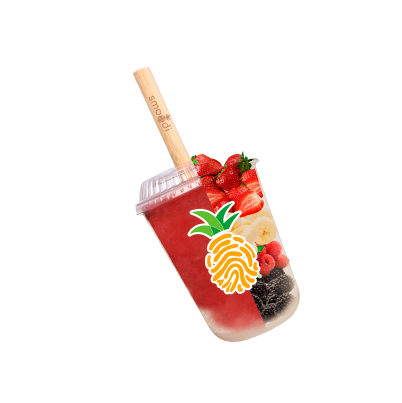
Smoodi's machine requires zero dedicated labor to operate. A guest selects a flavor on a touchscreen, the machine retrieves a pre-portioned IQF (individually quick frozen) fruit cup, blends a fresh smoothie in under 60 seconds, and dispenses it into a cup. The machine self-cleans between every use. No kitchen staff member needs to leave their station to prepare, serve, or clean up after smoothie service.
The frozen fruit cup supply chain eliminates the inventory management problem. Smoodi's cups have a shelf life of up to two years and are distributed through Dot Foods, one of the largest food redistribution networks in the United States. Hotels order cups on a scheduled basis and store them in existing freezer space. Because each cup is individually sealed and frozen, there is no spoilage from occupancy fluctuations, cups not used this week are still perfectly viable next month or next year.
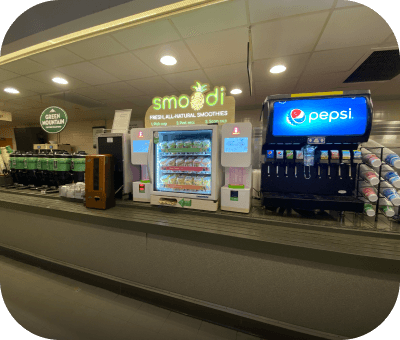
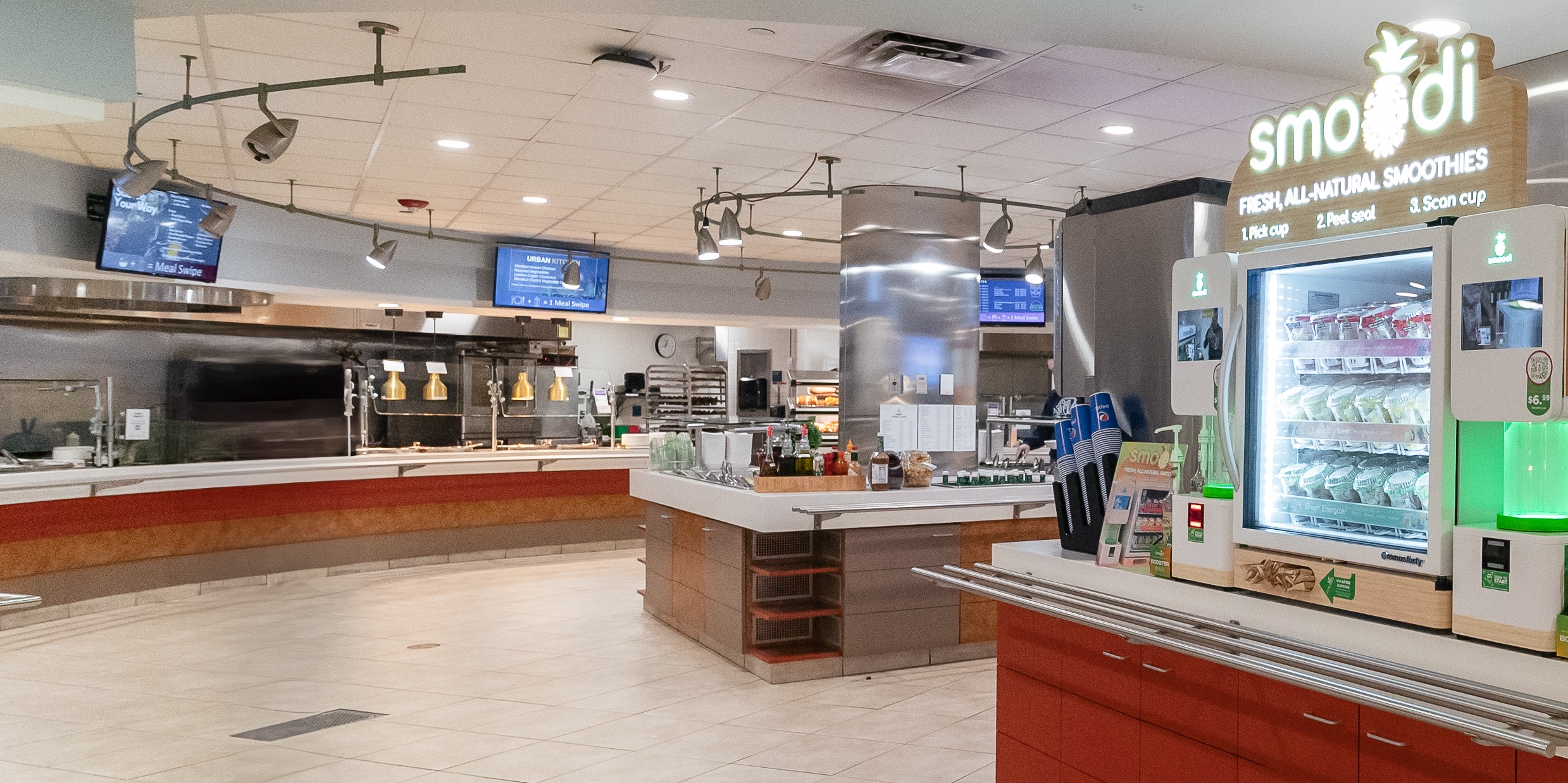
The machine's physical footprint is compact. Smoodi's unit requires approximately 40 inches of floor space, a standard 110V electrical outlet, and standard water and drain connections (push-to-connect fittings). It can be placed in a breakfast room, a lobby area, near the fitness center, or in a grab-and-go corridor where water and drain access is available.
The Financial Case for Hotel Operators
Smoodi offers operational lease programs starting at $299 per month, with full service included. A purchase option is also available starting at $14,999. On the lease, Smoodi retains ownership and handles all equipment maintenance and repairs. The wholesale cost of frozen fruit cups is the primary variable expense beyond the lease payment.
At a retail price of $7.00 to $9.00 per smoothie and a cup cost of $2.00 to $3.00, the contribution margin per serving is strong. A hotel selling 30 to 50 smoothies per day during breakfast service can generate $50,000 to $100,000 in annual gross revenue with margins of 60 to 70 percent, revenue that flows directly to the F&B department's bottom line without a corresponding increase in labor cost.
The operational lease is particularly relevant for hotel operators who manage capital budgets across multiple properties and compete for renovation and improvement dollars. Adding a smoothie program through Smoodi's lease requires no large capital approval and no construction timeline. Because Smoodi retains ownership on the lease, there is no equipment depreciation on the operator's books.
Guest Experience and Satisfaction Impact
Hotels that have deployed automated smoothie stations report positive guest response across several metrics. The smoothie station serves as a visible wellness amenity that guests notice and appreciate, often appearing in positive reviews and social media posts. For properties that track guest satisfaction scores, the addition of a fresh, healthy breakfast option contributes to higher overall F&B ratings.
The self-service format also fits the preferences of modern hotel guests. Business travelers and families with tight morning schedules value the ability to grab a fresh smoothie in under a minute without waiting for a staff member to prepare it. The touchscreen interface is intuitive, and the machine's reliability means guests receive the same quality product every time, a consistency that strengthens the hotel's brand promise.
Extended availability is another advantage. While a staffed smoothie bar operates only during breakfast hours, an automated machine can serve guests throughout the day, after a workout in the hotel gym, during an afternoon break between meetings, or as a late-night healthy snack option. This extended availability turns a breakfast-only amenity into a full-day revenue generator.
Where Smoothie Stations Fit in Hotel Properties
The most common placement is in the breakfast dining area, where the machine serves as an extension of the existing breakfast program. But hotels are also placing machines in other high-traffic areas.
- Lobby or grab-and-go area: serves arriving guests, departing guests, and anyone passing through between activities
- Near the fitness center or pool: captures demand from guests looking for a post-workout or poolside beverage
- Conference and meeting level: provides a healthy break option during multi-day corporate events
- Executive lounge or club level: adds a premium wellness touch for loyalty program members
Smoodi operates in more than 300 locations across the United States, including hotel properties, university campuses, hospitals, gyms, corporate offices, and airports. The company originated at Harvard Innovation Labs and has served more than two million smoothies across its network.
Getting Started with a Hotel Smoothie Program
For hotel F&B managers and general managers evaluating a smoothie program, the process from initial conversation to machine deployment is typically measured in weeks. Smoodi's team works with each property to assess placement options, estimate volume based on occupancy patterns and guest demographics, and configure the menu to match the property's brand positioning.
To model the revenue potential for your property, visit getsmoodi.com/roi. To begin the placement and deployment conversation, visit getsmoodi.com/get-started.
Ready to bring Smoodi to your location?
Join hundreds of operators delivering fresh, automated smoothies with zero labor.
Get Started