Make Hospital Food Healthier Pledge Operations Guide
Manage Make Hospital Food Healthier Pledge operations using automation to provide whole-food options without increasing hospital kitchen labor costs.
A hospital cafeteria during a shift change is a study in high-pressure logistics. Foodservice directors are tasked with feeding thousands of staff and visitors while simultaneously meeting rigorous clinical nutrition standards. Now, a new mandate is adding to that pressure: more than 250 hospitals across the United States have signed the U.S. Department of Health and Human Services (HHS) Make Hospital Food Healthier Pledge to provide more nutritious food.
While the commitment to wellness is clear, the operational reality is complex. Transitioning to a whole-food hospital cafeteria often requires more prep time, fresher ingredients, and more skilled labor—resources that are currently in short supply. The challenge for leadership is finding a way to operationalize these goals without compromising efficiency or increasing overhead.
Aligning Make Hospital Food Healthier Pledge Operations with Federal Guidelines
Operationalizing a hospital healthy food initiative is no longer just a matter of preference; it is increasingly tied to regulatory expectations. On March 30, 2026, the Centers for Medicare & Medicaid Services (CMS) issued a Quality & Safety Special Alert Memo (QSSAM-26-03) regarding hospital nutrition service obligations.
This memo links existing Medicare Conditions of Participation to the 2025–2030 Dietary Guidelines for Americans. According to Becker's Hospital Review, CMS noted that hospitals should offer menus that prioritize fruits, vegetables, whole grains, legumes, nuts, seeds, healthy fats, and minimally processed proteins, including plant-based options.
For foodservice directors, this means the focus must shift away from ultra-processed options. This shift is critical given that a systematic review presented at the ACC Asia 2025 meeting found that each additional 100 g/day of ultra-processed food consumption was associated with a 19.5% higher risk of digestive diseases and a 14.5% higher risk of hypertension, according to the American College of Cardiology.
Solving the Labor Gap in Hospital Food Pledge Implementation
The primary barrier to hospital food pledge implementation is the lack of available personnel. According to a 2024 State of Healthcare survey by FoodService Director, 61% of respondents reported experiencing a staffing shortage.
Adding fresh, whole-food prep—such as chopping fruit or blending smoothies—typically requires more manual labor. When staff are already stretched thin, adding these tasks can lead to burnout or inconsistent quality. To meet the pledge's goals, hospitals must look toward hospital foodservice automation to bridge the gap between nutritional mandates and labor availability.
Automation allows facilities to offer high-nutrient options without requiring a dedicated staff member to manage the preparation. By removing the need for on-site prep, hospitals can maintain a healthy menu while keeping their existing labor allocation focused on patient care and core kitchen operations.
Building a Healthy Hospital Beverage Program with Automation
One of the most effective ways to introduce whole foods into a high-traffic environment is through a healthy hospital beverage program. Traditional vending machines often rely on sugary drinks, while manual smoothie bars require significant labor and space.
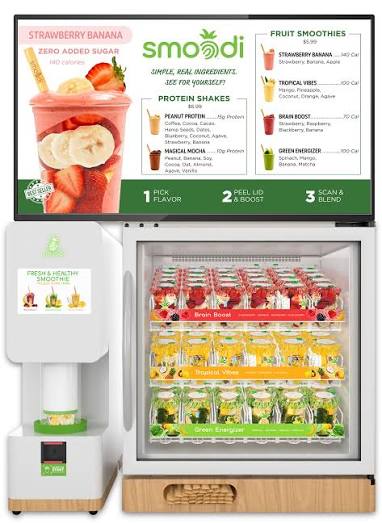
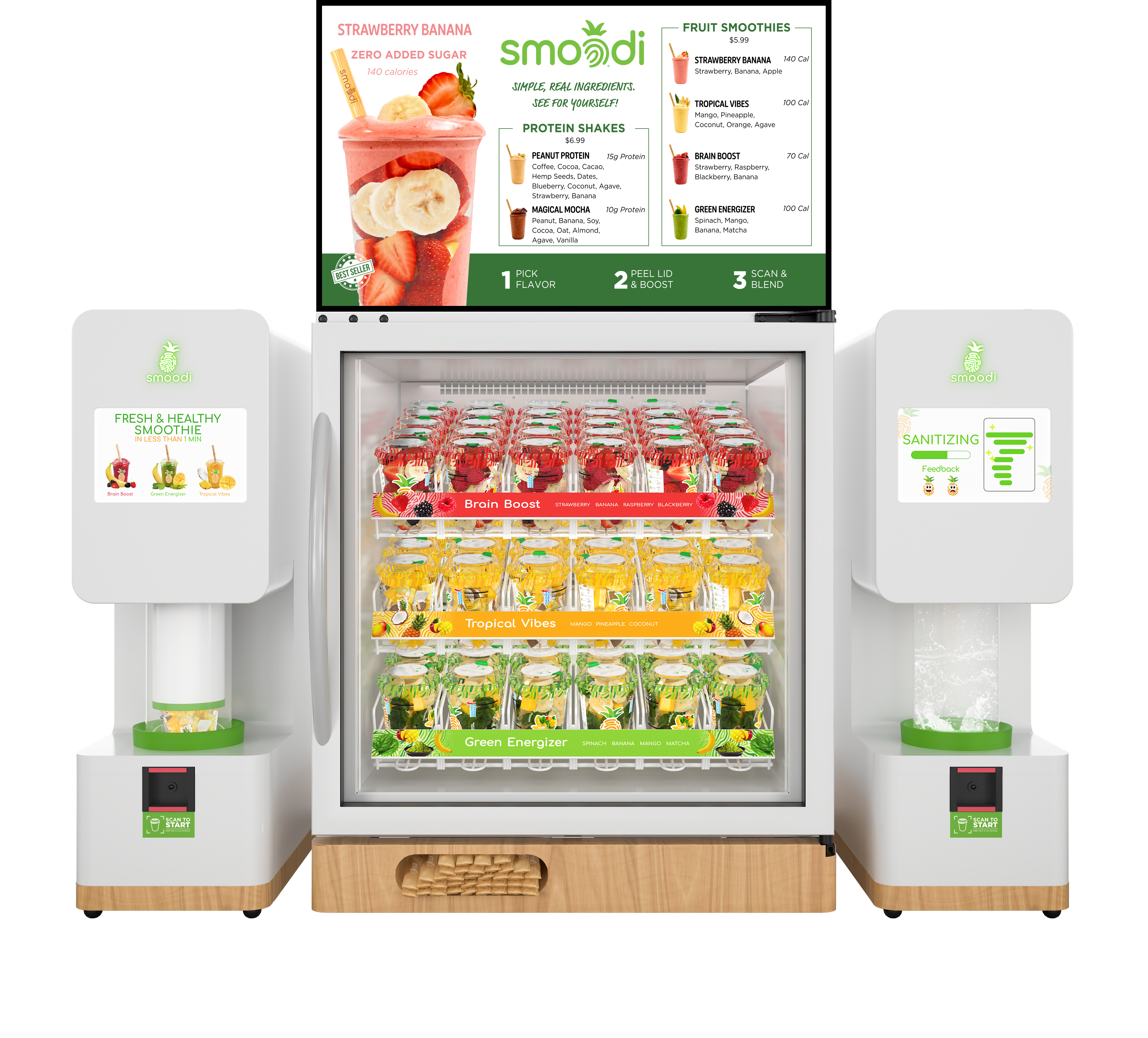
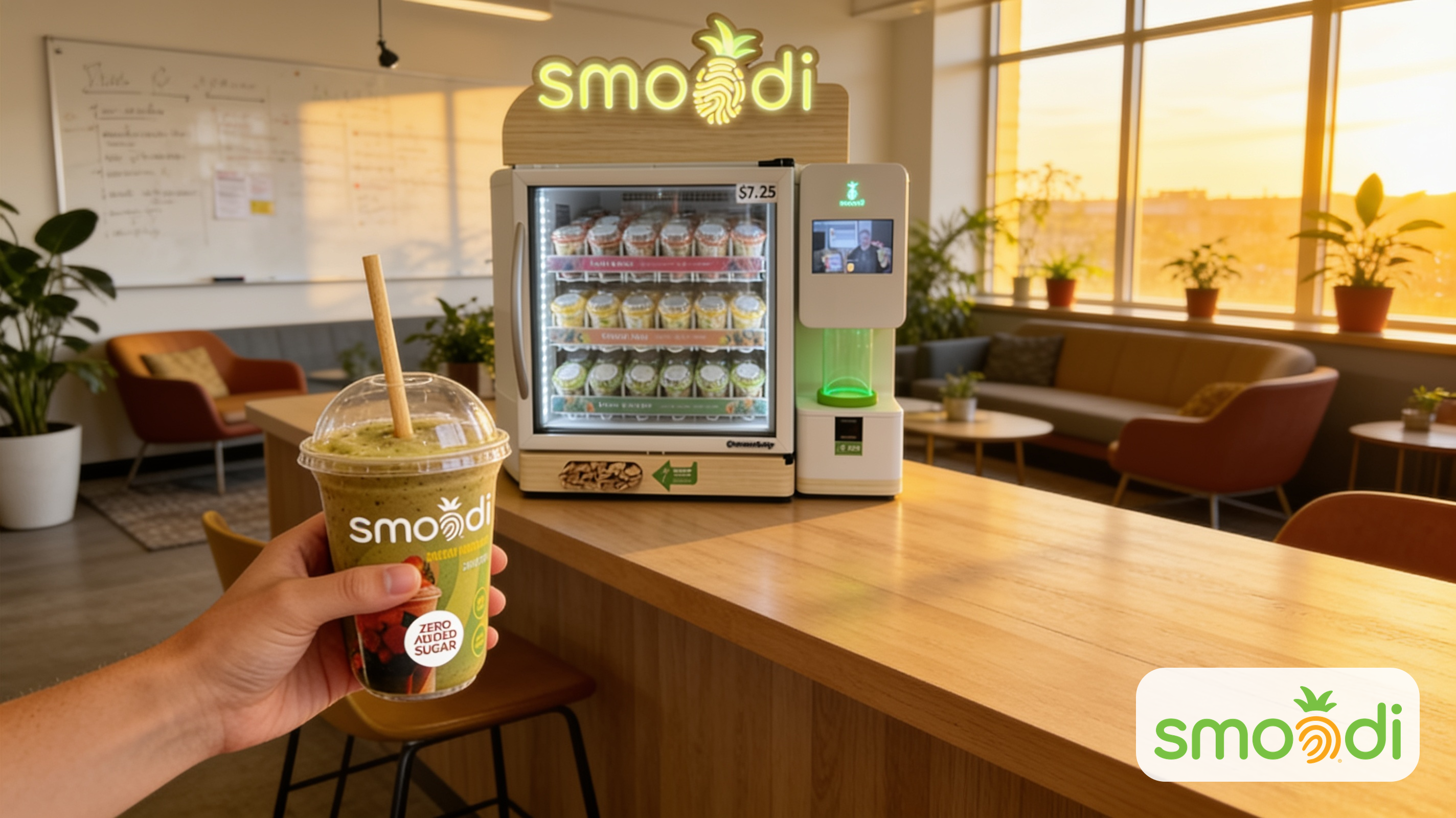
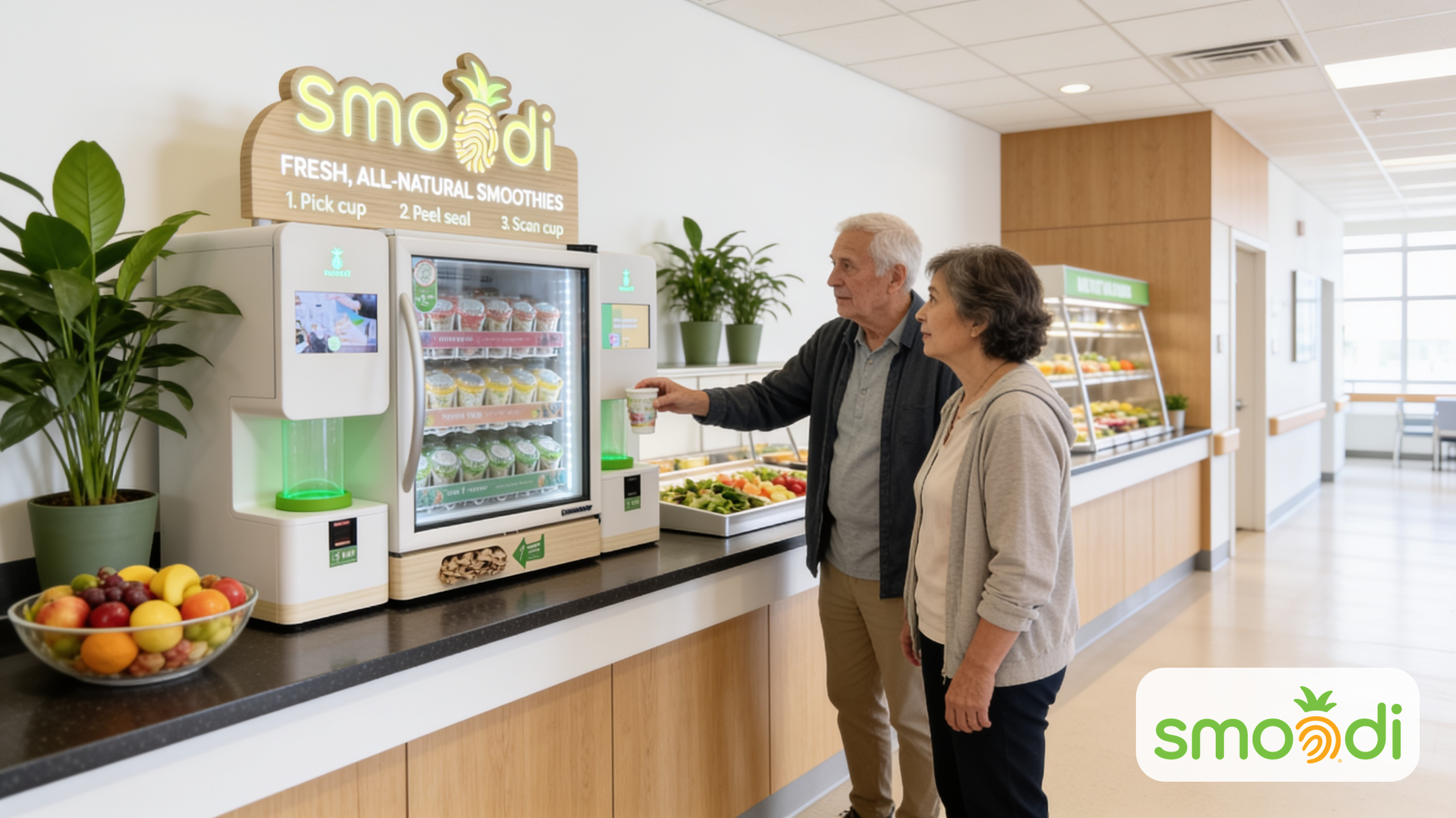
Smoodi provides a solution as the world's first self-serve robotic smoothie machine. This technology allows hospitals to offer dietitian-approved smoothies and protein shakes with zero on-site labor beyond restocking and surface cleaning. The system uses real frozen fruit pre-portioned at the source in recyclable cups made with recycled PET plastic, ensuring that the facility provides whole-food options without the waste associated with fresh produce spoilage.
The Smoodi menu supports the goals of the Make Hospital Food Healthier Pledge by offering options like the Green Energizer (100 calories, zero added sugar) and the Brain Boost (70 calories, 7g fiber, zero added sugar). For those needing recovery support, the Strawberries & Cream protein shake provides 20g of protein. Because the machine blends real fruit and does not use prepackaged sugary purees, it aligns with the CMS preference for minimally processed options.
Operational Efficiency and Integration
Integrating new technology into a healthcare setting requires a focus on sanitation and footprint. Smoodi machines are NSF and UL certified and feature a patented self-cleaning cycle that runs after every serve, along with an automatic daily deep sanitation cycle using food-safe sanitizers.
The physical footprint is designed for versatility, with both countertop and floor models available. The machines operate at a noise level under 65 dB, making them suitable for the quiet environments often required in healthcare settings. Installation is handled by the Smoodi team, meaning no external contractors are needed to get the system online.
From a management perspective, the cloud dashboard provides real-time data on sales, inventory, and machine health. With predictive maintenance and the ability to solve over 95% of service queries remotely, the system minimizes the burden on facility maintenance teams.
The Economic Outlook for Healthcare Food Services
Investing in nutrition is not only a clinical necessity but a strategic business move. MarketsandMarkets valued the U.S. healthcare/hospital food services market at $19.84 billion in 2024, with a projected CAGR of 11.1%, reaching $33.57 billion by 2029.
As the market grows, hospitals that can successfully balance the Make Hospital Food Healthier Pledge with operational efficiency will be better positioned. Smoodi supports this by offering a model where cups are purchased through existing food distributors such as Sysco, US Foods, or Dot Foods. The website says many partners price cups at $4.99–$7.99 and cite 40–50% gross margin.
For a detailed analysis of potential returns, foodservice directors can use the Smoodi ROI calculator.
Conclusion
Operationalizing the Make Hospital Food Healthier Pledge requires a strategic shift toward whole, minimally processed foods. While CMS guidelines and HHS pledges set the standard, labor shortages make manual implementation difficult. By leveraging hospital foodservice automation, such as Smoodi's robotic smoothie machines, hospitals can provide nutrient-dense, dietitian-approved options without increasing staffing burdens. This approach ensures that healthcare facilities meet federal nutrition expectations while maintaining operational efficiency and supporting the overall wellness of patients and staff.
To learn more about bringing automated nutrition to your facility, visit Smoodi for Hospitals or watch a demo of the technology in action.
Ready to bring Smoodi to your location?
Join hundreds of operators delivering fresh, automated smoothies with zero labor.
Get Started