How Is the U.S. Army Modernizing Dining Facilities?
The Army's DINEX initiative and autonomous kitchen pilots are transforming institutional dining. Civilian foodservice operators face the same pressures and can learn from the military's equipment-first approach.
The United States Army launched its Dining Excellence Initiative (DINEX) in December 2025 with a clear mandate: modernize garrison food service to improve nutrition, reduce waste, and address chronic staffing challenges. The initiative represents the largest overhaul of military dining in decades, and its approach offers lessons that civilian foodservice operators in healthcare, education, and corporate settings can apply directly.
At its core, DINEX is an equipment-first strategy. Rather than trying to hire more cooks and kitchen staff in a tight labor market, the Army is investing in autonomous food preparation systems, campus-style dining formats, and self-service stations that reduce the labor required per meal served. The parallels to civilian foodservice are striking: hospitals, universities, and corporate campuses face the same staffing shortages, the same demand for healthier options, and the same pressure to do more with fewer people.
What Is the Army's Dining Excellence Initiative?
DINEX was announced by the U.S. Army in January 2026 as a comprehensive modernization program for garrison dining facilities across domestic installations. The initiative focuses on three pillars: improving food quality and nutrition standards, transitioning from traditional cafeteria-line service to campus-style dining with multiple stations and self-service options, and integrating automated and autonomous kitchen equipment to reduce labor dependency.
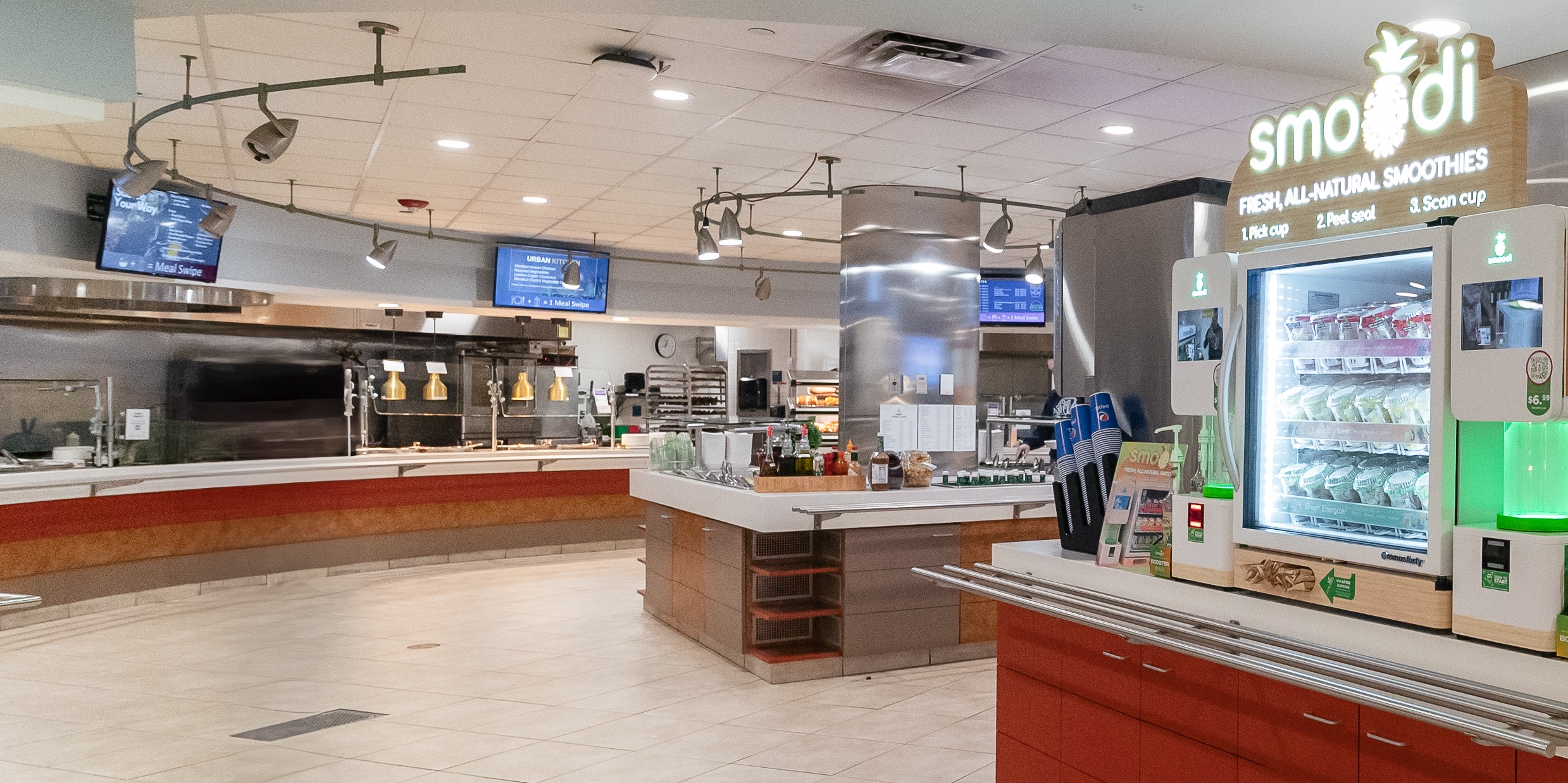
Pilot programs are underway at Fort Lee and Fort Hood, where campus-style dining venues replace the traditional single-line cafeteria model. These new formats feature distributed food stations (salad bars, grill stations, grab-and-go kiosks, and beverage stations) that allow diners to choose from multiple options without waiting in a single queue. The model mirrors what universities and corporate campuses have been adopting for several years, but the Army is implementing it at a scale and speed that few civilian institutions can match.
How Is Autonomous Kitchen Technology Being Deployed?
The most forward-looking element of DINEX is the integration of autonomous food preparation equipment. In March 2026, the Army tested its Sustained Autonomous Meals (SAM) system, a containerized autonomous kitchen capable of producing more than 120 meals per hour with minimal human oversight. The system handles food preparation, cooking, and portioning without a traditional kitchen brigade.
The 19th Expeditionary Sustainment Command's Market 19 autonomous dining facility is expanding from a fixed installation to containerized mobile units that can deploy to field exercises and forward operating bases. These mobile kitchens demonstrate that autonomous food equipment is no longer experimental. It is being field-tested and refined for operational deployment.
For civilian operators, the technology trajectory is clear. If the U.S. Army, with its complex logistics and strict nutrition requirements, is adopting autonomous food equipment, the same technology class is ready for hospitals, universities, corporate offices, and other institutional settings.
What Can Civilian Foodservice Learn from Military Modernization?
Several principles from the military's approach translate directly to civilian foodservice operations.
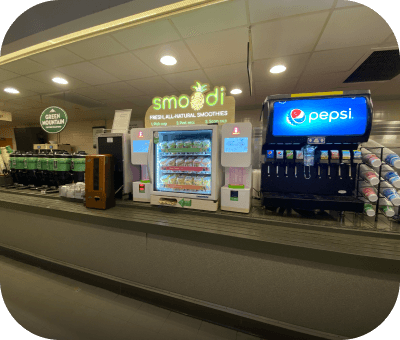
- Equipment-first strategy: Rather than competing for scarce labor, invest in equipment that eliminates labor requirements entirely for specific food categories. A smoothie station that requires zero staff is a practical example of this principle.
- Distributed service points: Instead of funneling all traffic through a single serving line, distribute food stations across the facility. Multiple self-service points reduce wait times, increase throughput, and improve the overall dining experience.
- Standardized, pre-portioned ingredients: The military's shift toward pre-portioned meal components reduces waste, improves consistency, and simplifies supply chain management. Pre-portioned fruit cups for an automated smoothie station follow the same logic.
- Autonomous cleaning and sanitation: Equipment that self-cleans between every use eliminates a major labor task and ensures consistent food safety compliance, which is critical in both military and civilian institutional settings.
- Scalable deployment: The Army is designing equipment and formats that can be replicated across dozens or hundreds of installations. Civilian operators managing multiple locations (hospital systems, university dining services, corporate campus networks) benefit from the same standardized approach.
How Does Smoodi Align with Institutional Modernization?
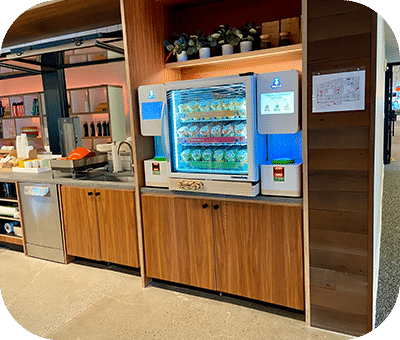
Smoodi's automated smoothie machine embodies the same principles that the Army is applying at scale: zero labor, autonomous cleaning, pre-portioned ingredients, compact footprint, and standardized deployment across locations.
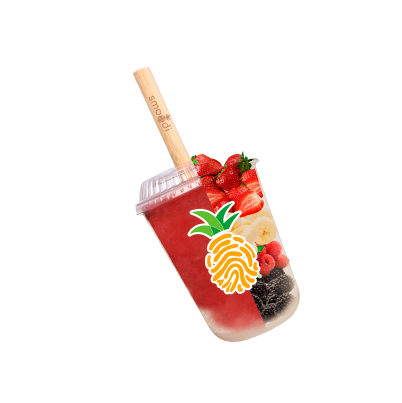
The machine blends a fresh smoothie in under 60 seconds and self-cleans between every use. IQF (individually quick frozen) whole fruit cups are blended with water only, with no syrups, concentrates, added sugars, or artificial ingredients. The cups have a shelf life of up to two years and are distributed through Dot Foods, the largest food redistribution company in North America. The machine occupies approximately 40 inches of floor space and requires a standard 120 VAC outlet, push-to-connect water and sanitizer inlets, and a drain connection.
For institutional operators evaluating their own modernization strategies, a Smoodi station represents a low-risk entry point. An operational lease starts at $299 per month (48-month term), with Smoodi retaining ownership and providing full service and maintenance. Shorter terms are available at $349 per month (36 months), $399 per month (24 months), and $499 per month (12 months). Operators can also purchase the machine starting at $14,999. The booster bar (protein powder, collagen, and other functional supplements) adds customization that serves diverse nutritional needs across different institutional populations.
The Broader Shift Toward Autonomous Foodservice
The Army's DINEX initiative is part of a broader movement across institutional foodservice. The global foodservice equipment market reached $42.7 billion in 2026 and is projected to grow to $76.9 billion by 2036, driven largely by automation and labor replacement technologies. Eighty-eight percent of foodservice operators report rising staff costs, and 60 percent report difficulty filling open positions.
Institutions that invest in autonomous equipment now are positioning for stronger margins and more resilient operations as labor costs continue to rise. The military is leading this transition by necessity, but civilian operators who follow the same principles (equipment-first, pre-portioned, distributed, autonomous) will realize the same benefits: lower labor costs, more consistent quality, better food safety, and the ability to serve more people with fewer staff.
Smoodi operates in more than 300 locations across the United States and has served more than two million smoothies since its founding at Harvard Innovation Labs. To explore how Smoodi's autonomous operation aligns with your facility's modernization strategy, visit getsmoodi.com/get-started.
Ready to bring Smoodi to your location?
Join hundreds of operators delivering fresh, automated smoothies with zero labor.
Get Started