What Is Predictive Maintenance for Food Equipment?
Connected foodservice equipment uses sensors and data to detect problems before they cause downtime. Predictive maintenance reduces repair costs and keeps self-service stations running.
Foodservice operators are familiar with reactive maintenance: a piece of equipment breaks, operations stop, a technician is called, and revenue is lost until the repair is complete. For equipment that serves customers directly (self-service stations, beverage dispensers, point-of-sale kiosks), downtime is not just a repair cost. It is a customer experience failure. The guest who walks up to an out-of-service machine does not come back later. They form an impression that the facility does not maintain its equipment, and they choose a different option.
Predictive maintenance changes this pattern. Connected equipment uses sensors to monitor performance continuously, detecting changes in operating parameters (temperature, motor load, cycle times, water pressure, component wear) that signal a developing problem before it causes a breakdown. The equipment or its cloud platform alerts the operator or service team, and the issue is addressed during a scheduled window rather than an emergency response.
How Does Predictive Maintenance Differ from Preventive Maintenance?
Preventive maintenance follows a calendar schedule: clean the machine every week, replace the filter every month, service the compressor every quarter. The schedule is based on general guidelines, not on the actual condition of the equipment. A machine that runs 200 cycles per day gets the same maintenance schedule as one that runs 20 cycles per day, even though their wear patterns are entirely different.
Predictive maintenance uses actual operating data to determine when maintenance is needed. A sensor that monitors motor current draw can detect the increased resistance that indicates bearing wear weeks before the bearing fails. A temperature sensor that tracks compressor performance can identify refrigerant loss before the system warms enough to affect product quality. A cycle counter combined with performance data can predict when a blending motor needs service based on actual usage, not a generic calendar interval.
The practical difference for operators is significant. Preventive maintenance either comes too early (wasting service resources on equipment that does not need attention) or too late (missing a problem that developed between scheduled intervals). Predictive maintenance targets the actual maintenance window, reducing unnecessary service calls while catching genuine problems before they cause downtime.
Why Does This Matter for Self-Service Equipment?
Self-service equipment operates without staff supervision. A staffed beverage station has a human operator who notices when something sounds wrong, when product quality changes, or when a component seems to be struggling. Self-service equipment relies on its own monitoring systems to detect these changes. Without predictive capabilities, the first indication of a problem is often the failure itself: an error message on the screen, a customer complaint, or a machine that simply stops working.
In high-traffic environments (university dining halls, hospital lobbies, corporate offices, fitness centers), an out-of-service self-service station creates immediate customer dissatisfaction. The global food automation market reached $14 billion in 2024, with a projected 69% increase in AI and robotics usage by 2027. As operators invest more in automated equipment, the reliability of that equipment becomes a critical factor in the return on investment.
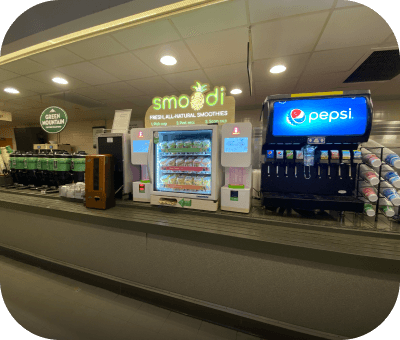
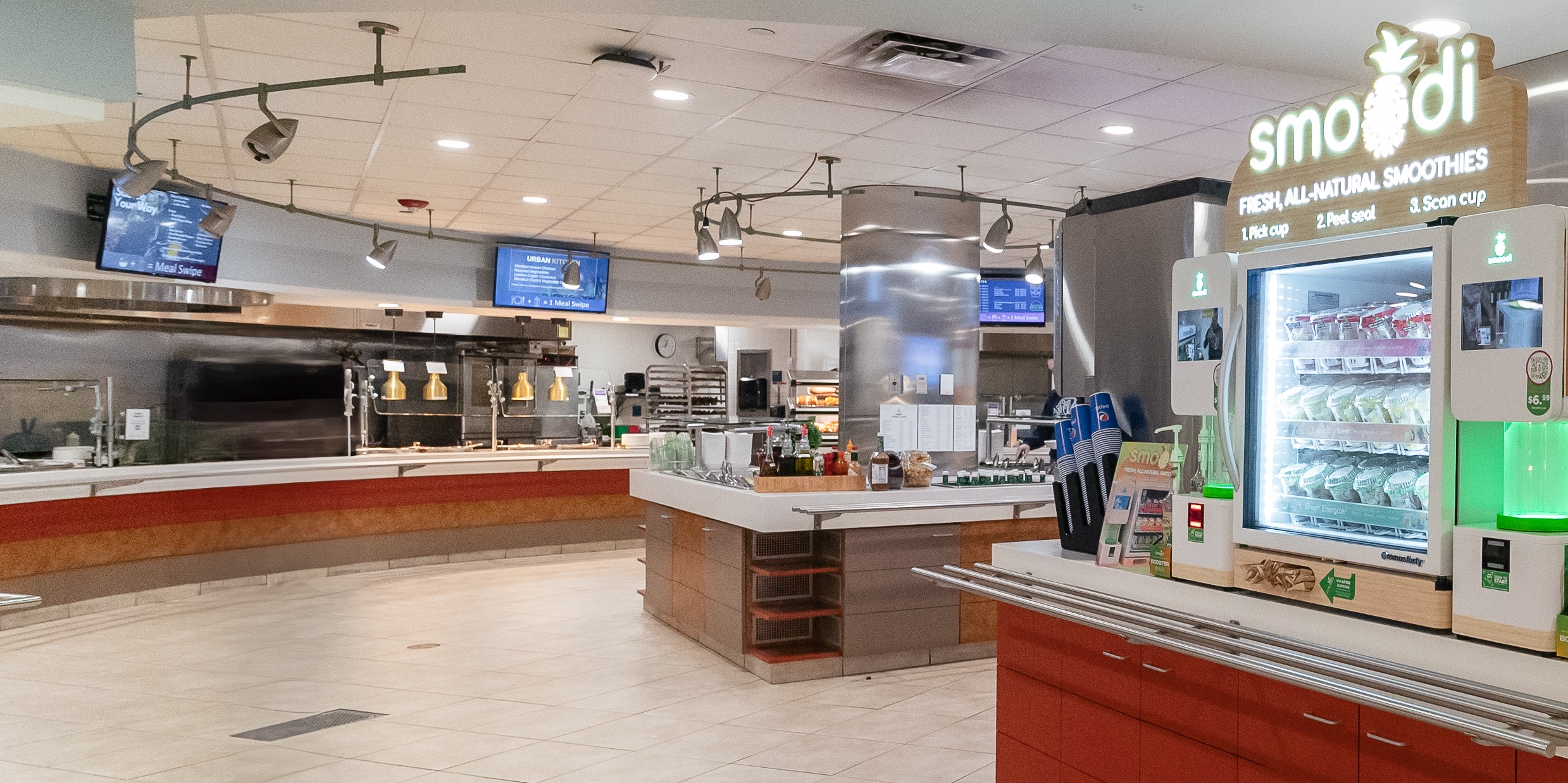
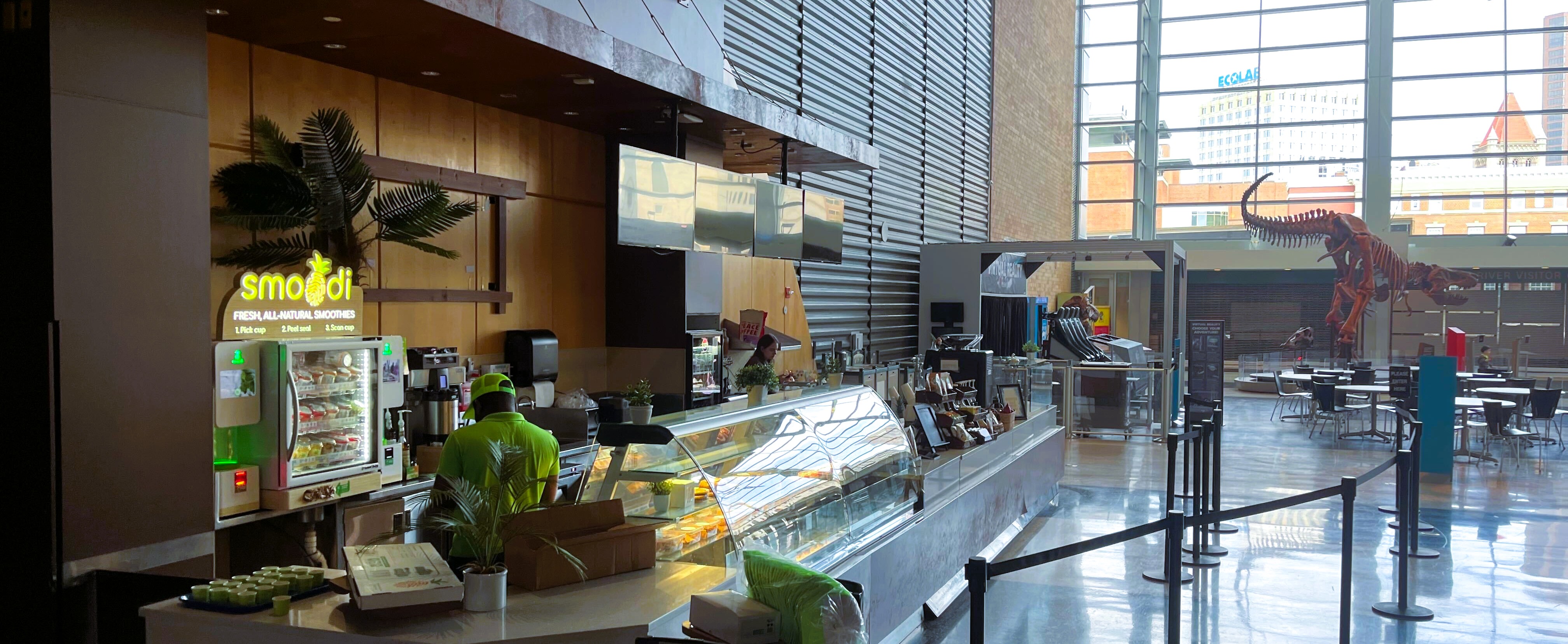
Smoodi's automated smoothie machines are designed with connectivity and monitoring capabilities. The machines can track usage patterns, alert operators to maintenance needs, and provide operational data that supports both maintenance planning and inventory management. This connected approach means operators are not guessing when service is needed; the equipment communicates its own status.
What Operational Data Does Connected Equipment Provide?
Beyond maintenance alerts, connected foodservice equipment generates data that improves overall operations. Usage data reveals demand patterns: which hours see the most traffic, which days of the week drive the highest volume, and how usage trends change seasonally. This data informs inventory planning (how many IQF fruit cups to stock), staffing decisions (when to schedule restocking), and placement optimization (is the current location generating expected traffic?).
Performance data tracks the machine's operating efficiency over time. A gradual increase in blend cycle time might indicate a component that is wearing. A change in water flow rate might signal a filter that needs replacement. A temperature deviation in the storage compartment might indicate a refrigeration issue. Each of these data points, tracked continuously, creates a maintenance picture that is far more detailed than any periodic inspection could provide.
For multi-location operators deploying equipment across several sites, cloud-connected data allows centralized monitoring. A university dining services team managing stations in five dining halls can view all machines from a single dashboard. A healthcare system with smoothie stations in three hospitals can track performance and usage across the network. This centralized visibility is a fundamental advantage of connected equipment over traditional, disconnected machines.
How Does Smoodi's Connected Model Support Operators?
Smoodi's approach to equipment connectivity focuses on operational simplicity for the operator. The machine handles its own self-cleaning cycle between every use. It blends IQF whole fruit cups with water only in under 60 seconds. No syrups, concentrates, or artificial ingredients are involved. The compact footprint (approximately 40 inches of floor space) requires a standard 120 VAC outlet, water connection, sanitizer inlet, and drain. Operators do not need food service expertise to deploy or maintain the equipment.
The connected monitoring layer adds visibility without adding complexity. Operators receive actionable information rather than raw data: restock the freezer, schedule a service visit, review this performance metric. This approach aligns with the broader trend in foodservice technology where the equipment is designed to manage itself and escalate to humans only when intervention is needed.
Smoodi operates in more than 300 locations across the United States, with over 2 million smoothies served. The company was founded at Harvard Innovation Labs. The operational lease starts at $299 per month for a 48-month term, scaling to $499 per month for a 12-month term, with a purchase option at $14,999. IQF fruit cups have a shelf life of up to two years and are distributed through Dot Foods.
What Should Operators Consider When Evaluating Equipment?
When evaluating foodservice equipment purchases or leases, operators should ask specific questions about connectivity and maintenance support. Does the equipment report its own maintenance needs, or does the operator need to schedule inspections manually? Is operational data accessible remotely, or only at the machine? Can the manufacturer or service provider view equipment status to proactively identify issues? Does the equipment integrate with existing facility management systems?
The answers to these questions determine how much operator time and attention the equipment will require over its lifespan. Equipment with predictive maintenance capabilities and remote monitoring reduces the total cost of ownership by preventing emergency repairs, extending component life, and minimizing downtime. For operators managing multiple locations, the centralized data visibility is not a convenience feature. It is an operational necessity.
For operators interested in learning more about connected, self-monitoring foodservice equipment, visit getsmoodi.com/get-started to explore Smoodi's technology and deployment options.
Ready to bring Smoodi to your location?
Join hundreds of operators delivering fresh, automated smoothies with zero labor.
Get Started