How Can Foodservice Operators Reduce Food Waste with Automation?
Food waste costs the U.S. foodservice industry billions annually. Pre-portioned, automated systems eliminate overpouring, spoilage, and inventory guesswork, producing near-zero waste compared to manual preparation.
Food waste is one of the largest controllable costs in foodservice operations. The U.S. foodservice industry discards an estimated 22 to 33 billion pounds of food annually, and for individual operators, waste can account for 4 to 10 percent of total food costs. In beverage programs specifically, waste comes from multiple sources: over-portioning of ingredients, spoilage of perishable produce, unused prep that expires before it is served, and inconsistent recipes that generate off-specification batches discarded at the end of a shift.
For operators under increasing pressure to demonstrate sustainability, reduce costs, and meet institutional ESG targets, food waste reduction has moved from a nice-to-have initiative to a core operational priority. Pre-portioned, automated food and beverage systems offer a structural solution. They eliminate waste at the source by removing the human variables (estimating, portioning, timing) that generate it.
Where Does Waste Occur in Traditional Smoothie Programs?
A traditional staffed smoothie bar produces waste at every stage of the process.
- Procurement waste: Operators order fresh fruit based on projected demand, but daily volume fluctuates. On slow days, purchased produce sits unused and approaches its expiration date. Fresh fruit has a typical shelf life of three to seven days, creating a narrow window for use.
- Prep waste: Kitchen staff wash, peel, and cut fruit for the day's service. Any prepped ingredients not used by the end of the shift must be discarded per food safety protocols. Over-prepping is common because staff prefer to have enough product rather than run out during peak service.
- Portioning waste: Manual smoothie preparation relies on staff to measure ingredients by hand or by eye. Over-portioning (using more fruit, liquid, or supplements than the recipe calls for) increases cost per serving and reduces the number of servings each batch of ingredients produces.
- End-of-day waste: Fresh ingredients that were opened, partially used, or held at serving temperature beyond safe limits are discarded at closing. In some operations, this daily discard represents 15 to 25 percent of the ingredients purchased for that day's smoothie program.
Across all four stages, traditional smoothie bars generate significant, recurring food waste. The waste is not caused by negligence. It is built into the operational model.
How Do Pre-Portioned Systems Eliminate Waste?
Pre-portioned, sealed ingredient systems attack waste at its structural root. Instead of ordering bulk produce, prepping ingredients each morning, and managing a perishable inventory throughout the day, operators stock sealed, shelf-stable cups that remain viable for months or years.
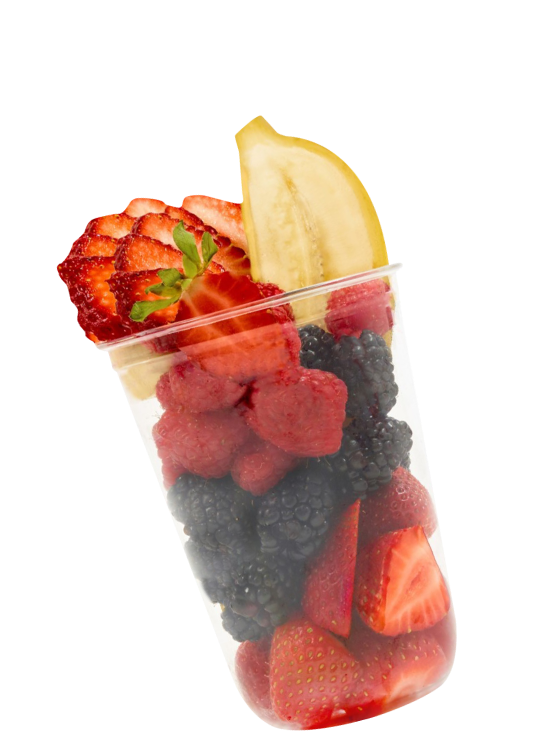
Smoodi's IQF (individually quick frozen) fruit cups are sealed at the manufacturing facility and remain sealed until the moment a customer inserts one into the machine. Each cup contains a precise, pre-measured amount of whole frozen fruit. There is no manual portioning, no overpouring, and no partial packages left open at the end of a shift. One cup equals one smoothie. The conversion is exact every time.
The cups have a shelf life of up to two years. This means operators can stock inventory weeks or months in advance without spoilage pressure. There is no daily produce delivery to manage, no walk-in cooler full of perishable fruit to rotate, and no end-of-day discard. If a cup is not used today, it is used next week or next month with identical quality.
"The investment into smoodi has been phenomenal. We broke even in the first couple of weeks."
— Linda Thacker, Director of Dining Services, Maryville University
What Impact Does Automation Have on Ingredient Accuracy?
Automated systems that use pre-portioned ingredients deliver consistent servings with zero variation. Every smoothie contains the same amount of fruit, blended with the same amount of water, every time. There is no recipe drift from tired staff at the end of a long shift. There is no well-intentioned over-portioning from a new employee who fills the blender a little higher than the recipe specifies.
This consistency has a direct financial impact. If a manual smoothie bar over-pours by just 10 percent on average (a conservative estimate during busy periods), an operation serving 100 smoothies per day wastes the equivalent of 10 additional servings worth of ingredients every day. Over a year, that adds up to more than 3,600 servings of wasted ingredients. At an average ingredient cost of $1.50 to $2.50 per serving, the annual waste can exceed $5,000 to $9,000 from over-portioning alone.
An automated system reduces this waste to zero. The machine dispenses the exact recipe, every time, with no human variability. Combined with the elimination of prep waste and end-of-day discard, the total waste reduction compared to a manual program is substantial.
How Does Shelf Life Affect Waste Reduction?
Shelf life is the single most important factor in ingredient waste for beverage programs. Fresh fruit requires refrigerated storage, daily delivery in warm climates, and careful rotation to ensure first-in-first-out usage. Even well-managed operations lose 5 to 15 percent of fresh produce to spoilage before it reaches a blender.
IQF fruit cups stored in a standard commercial freezer maintain their quality for up to two years from the date of production. The individually quick freezing process locks in nutrients and flavor at the point of harvest. There is no degradation during transport or storage because the product remains frozen throughout the supply chain.
For operators, this transforms inventory management from a daily logistics challenge into a simple periodic restock. Smoodi's fruit cups are distributed through Dot Foods, the largest food redistribution company in North America. Operators order based on projected weekly or monthly volume, and the supply chain handles the rest. There is no emergency produce order when a delivery is late. There is no Friday afternoon scramble to use up fruit that will not survive the weekend.
How Does Waste Reduction Support Sustainability Goals?
Sustainability is increasingly a procurement criterion for institutional buyers. Universities, hospitals, and corporations include waste reduction metrics in their ESG (environmental, social, and governance) reporting. Facilities managers are asked to document measurable progress toward waste reduction targets, and foodservice programs are a visible, auditable category.
A smoothie program that generates near-zero food waste provides a concrete data point for sustainability reports. The per-serving waste from an automated, pre-portioned system is limited to the empty cup packaging, which can be included in existing waste stream management. There is no produce spoilage to track, no prep waste to compost, and no end-of-day discard to document. The contrast with a traditional smoothie bar (which may generate 15 to 25 percent ingredient waste) is significant enough to influence procurement decisions in sustainability-conscious organizations.
Why Smoodi's Design Produces Near-Zero Waste
Smoodi's automated smoothie machine combines pre-portioned ingredients, automated preparation, and self-cleaning into a system that produces near-zero food waste by design. The IQF whole fruit cups contain no syrups, concentrates, added sugars, or artificial ingredients. Each cup is individually sealed, portioned precisely, and shelf-stable for up to two years. The machine blends each smoothie in under 60 seconds and self-cleans between every use.
Smoodi operates in more than 300 locations across the United States and has served more than two million smoothies since its founding at Harvard Innovation Labs. The operational lease starts at $299 per month, with Smoodi retaining ownership and providing full service and maintenance. A purchase option is available starting at $14,999. Smoodi's booster bar also allows customers to add protein powder, collagen, and other functional supplements to their smoothie.
For operators looking to reduce food waste while adding a healthy, revenue-generating beverage program, the economics are compelling. To learn how Smoodi's pre-portioned system eliminates food waste at your facility, visit getsmoodi.com/get-started. To estimate the revenue potential, visit getsmoodi.com/roi.
Ready to bring Smoodi to your location?
Join hundreds of operators delivering fresh, automated smoothies with zero labor.
Get Started