How Is Smart Equipment Cutting Foodservice Costs?
The smart commercial kitchen appliance market is projected to grow from $11.6 billion to $18.9 billion by 2031. IoT-enabled equipment now tracks usage, automates cleaning, and enables predictive maintenance, reducing downtime and labor costs.
The commercial kitchen is becoming a connected environment. Equipment that once required manual operation, manual cleaning, and manual monitoring now communicates its status, adjusts its cycles, and flags maintenance needs before breakdowns occur. The smart commercial kitchen appliance market is projected to grow from $11.6 billion in 2026 to $18.9 billion by 2031, reflecting a 10.3 percent compound annual growth rate. This is not speculative technology. It is an equipment upgrade cycle already underway across hospitals, universities, corporate campuses, hotels, and quick-service restaurants.
For foodservice operators, the shift to smart equipment is driven by three converging pressures. First, labor costs continue to rise while available workers become harder to find. 88 percent of foodservice operators report rising staff costs, and 60 percent cannot fill open positions. Second, operational margins are thinning, making equipment efficiency a direct contributor to profitability. Third, institutional buyers and franchise groups are standardizing on connected equipment platforms that deliver operational data alongside food and beverage output.
What Makes Foodservice Equipment 'Smart'?
The term 'smart equipment' in a foodservice context refers to machines that incorporate some combination of sensors, connectivity, automated controls, and data reporting. The specific capabilities vary by equipment category, but the core features that define smart foodservice equipment include several key characteristics.
- Automated operation: The machine performs its primary function (cooking, blending, dispensing, cleaning) with minimal or no human input after the initial setup. This reduces the skill level required to operate the equipment and eliminates variation between operators.
- Self-cleaning and sanitation: Automated cleaning cycles run between uses or at scheduled intervals, ensuring consistent hygiene standards without relying on staff discipline. This is particularly valuable in high-volume or high-turnover environments where manual cleaning is inconsistent.
- Usage tracking and reporting: Connected equipment logs the number of servings produced, operating hours, cleaning cycles completed, and resource consumption (water, energy, ingredients). This data supports operational planning, ESG reporting, and maintenance scheduling.
- Predictive maintenance: Sensors monitor component wear, temperature consistency, and cycle performance. The equipment can alert operators or service teams to maintenance needs before a failure occurs, reducing unplanned downtime.
- Remote monitoring: Operators or equipment service providers can view machine status, usage data, and alerts from a central dashboard, enabling oversight of multiple locations without on-site visits.
Not all smart equipment delivers all of these capabilities. The most impactful deployments are those where the automation directly addresses a specific operational pain point: labor cost, cleaning compliance, downtime, or usage visibility.
How Does Smart Equipment Reduce Labor Costs?
Labor is the largest controllable cost in most foodservice operations, and it is the cost category experiencing the steepest increases. The foodservice industry turnover rate is approximately 73 percent annually, meaning operators are constantly recruiting, training, and replacing workers. Each turnover event costs the operation in recruiting, onboarding, and lost productivity during the transition.
Smart, automated equipment reduces labor dependency in two ways. First, it performs preparation tasks that would otherwise require a dedicated worker. An automated smoothie machine, for example, replaces the roles of ingredient prep, blending, portioning, and cleaning, which together might occupy a part-time or full-time position at a busy smoothie bar. Second, it reduces the supervisory burden. Equipment that self-cleans and monitors its own performance does not need a manager checking whether cleaning protocols were followed or whether the machine is operating correctly.
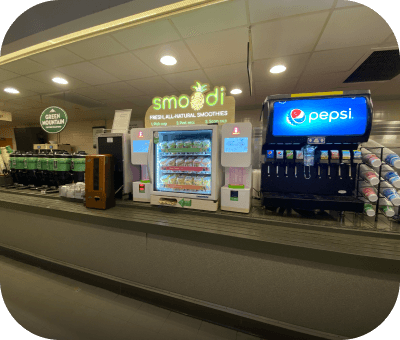
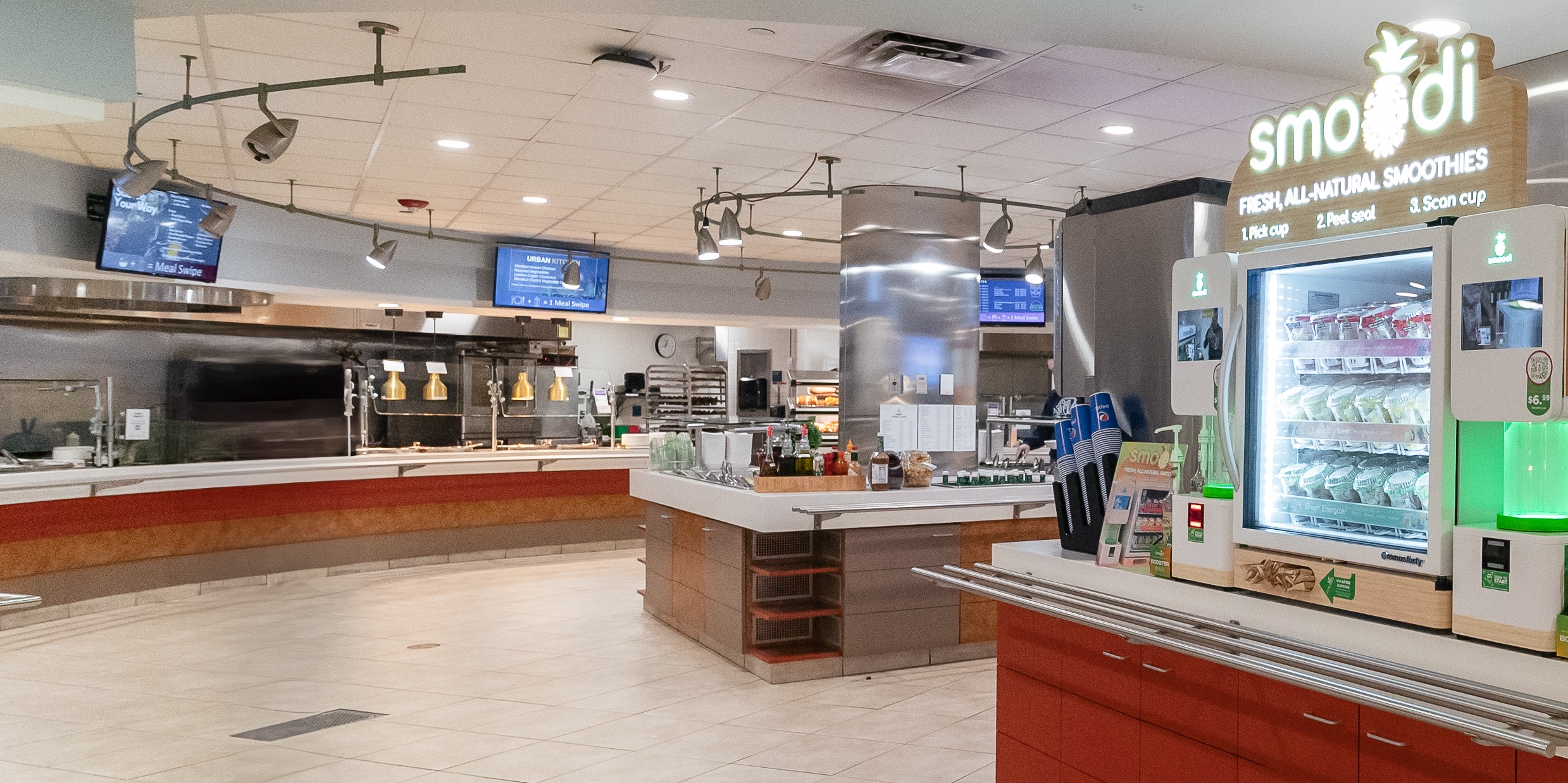
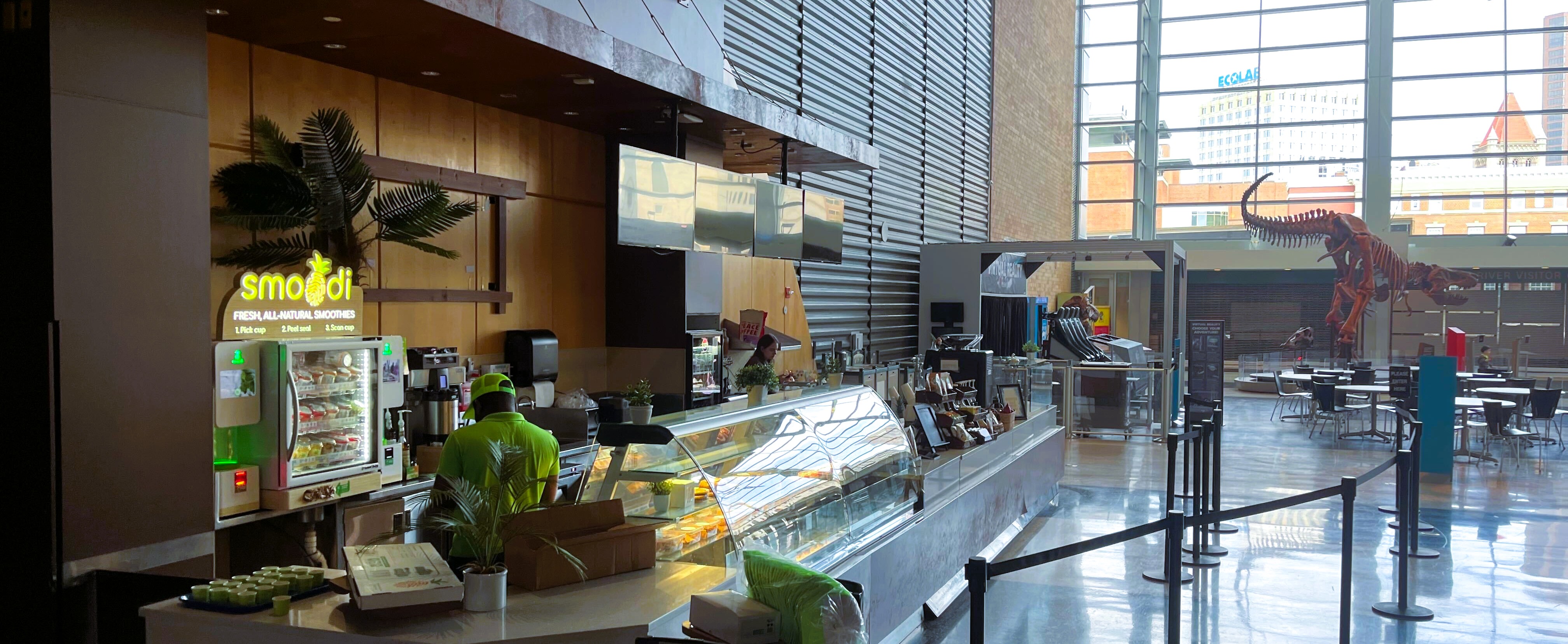
Smoodi's automated smoothie machine illustrates this model. The machine is entirely self-service: a customer places an IQF fruit cup into the machine, the machine blends the smoothie in under 60 seconds, and it self-cleans between every use. There is no dedicated operator. There is no cleaning crew. There is no ingredient prep. The entire cycle from customer selection to finished smoothie to clean machine requires zero staff involvement.
"We've had great success with smoodi across corporate offices and collegiate locations."
— Marcel Winokur, Director of Innovation, Aramark
What Role Does Self-Cleaning Play in Operational Efficiency?
Cleaning compliance is one of the most persistent challenges in foodservice operations. Health inspectors, HACCP auditors, and internal quality teams consistently find that manual cleaning procedures are the most common point of failure in food safety programs. Staff under time pressure skip steps, use incorrect sanitizer concentrations, or clean less thoroughly during rush periods.
Automated self-cleaning eliminates this variability. When the machine runs the same calibrated rinse and sanitization cycle after every use, the cleaning quality is identical whether it is the first serving of the day or the hundredth. The cycle uses precisely metered water and sanitizer, reducing resource waste compared to manual washing where staff often over-pour cleaning agents or run taps longer than necessary.
For operators in regulated environments (healthcare facilities, schools, government buildings), automated cleaning documentation is an additional benefit. The machine logs each cleaning cycle, providing auditable records that satisfy inspection requirements without manual record-keeping by staff.
How Does Connected Equipment Help Multi-Location Operators?
Operators managing multiple locations face a distinct set of challenges that connected equipment addresses. Without centralized data, each location is a black box: the operator knows aggregate revenue but has limited visibility into equipment utilization, ingredient consumption rates, maintenance status, or cleaning compliance across sites.
Connected smart equipment changes this by providing a unified view across all locations. An operator managing smoothie stations at 10 corporate campuses, for example, can see which locations are producing the most servings, which machines are due for maintenance, and which sites are underutilizing the equipment. This visibility enables data-driven decisions about equipment placement, supply ordering, and marketing emphasis.
Smoodi's operating model supports multi-location deployment. The machine occupies approximately 40 inches of floor space and requires a standard 120 VAC outlet, push-to-connect water and sanitizer inlets, and a drain connection. The fruit cups are distributed through Dot Foods and have a shelf life of up to two years, simplifying supply chain management across multiple sites. Smoodi retains ownership of the equipment on operational leases (starting at $299 per month on a 48-month term), providing full service and maintenance as part of the lease.
What Should Operators Look for in Smart Equipment?
Not all connected or automated equipment delivers equal value. When evaluating smart foodservice equipment, operators should assess several factors beyond the headline features.
- Does the automation replace a real labor cost, or does it automate a task that was already low-effort? The highest-value smart equipment eliminates roles or shifts, not just steps.
- Is the self-cleaning genuinely autonomous, or does it require manual intervention to initiate, load cleaning supplies, or verify completion? Truly automated cleaning runs without any staff action.
- Does the data reporting integrate with existing operational systems, or does it create yet another dashboard to monitor? The best connected equipment fits into existing management workflows.
- What is the total cost of ownership, including maintenance, connectivity fees, consumables, and service calls? A machine that is inexpensive to acquire but costly to maintain may not deliver the expected savings.
- Can the equipment scale? For operators planning to expand from one location to many, the deployment model, supply chain, and support infrastructure matter as much as the machine itself.
Where Is Smart Foodservice Equipment Headed?
The trajectory is clear. As labor costs rise, cleaning compliance requirements tighten, and institutional buyers demand operational data, the market share of connected, automated equipment will continue to grow. Operators who invest in smart equipment now are building operational infrastructure that becomes more valuable over time as data accumulates, processes optimize, and competitors who rely on manual operations face mounting cost disadvantages.
Smoodi operates in more than 300 locations across the United States and has served more than two million smoothies since its founding at Harvard Innovation Labs. The company's automated smoothie machine represents the intersection of smart equipment trends: zero-labor operation, automated self-cleaning, IoT connectivity, and a pre-portioned ingredient system that eliminates waste. Operational leases start at $299 per month, and purchase options begin at $14,999.
For operators evaluating how smart equipment can reduce costs and improve operations at their facilities, visit getsmoodi.com/get-started to request a demo. To calculate the potential return on investment, visit getsmoodi.com/roi.
Ready to bring Smoodi to your location?
Join hundreds of operators delivering fresh, automated smoothies with zero labor.
Get Started