How Big Is the Smoothie Market in 2026?
The global smoothie market is valued at $16.65 billion in 2026, growing at 8.66 percent CAGR. Here is what the data means for foodservice operators considering a smoothie program.
The global smoothies market reached an estimated $16.65 billion in 2026, growing at 8.66 percent compound annual growth rate toward a projected $25.21 billion by 2031. North America accounts for 39.2 percent of global smoothie revenue, making it the largest regional market. Within the broader category, the on-trade foodservice segment (smoothies sold through restaurants, cafeterias, hotels, and institutional food programs) is the fastest-growing channel at 9.72 percent CAGR.
For foodservice operators, these numbers represent more than market trivia. They signal sustained, growing consumer demand for a product category that delivers strong margins, fits health-conscious dietary preferences, and can be served through automated systems with minimal operational complexity. This post synthesizes the market data into an actionable overview: where the growth is coming from, what is driving consumer demand, and what it means for operators evaluating whether to add a smoothie program to their facility.
What Is Driving Smoothie Market Growth?
Several converging trends are fueling the expansion of the smoothie market, both at the consumer level and within institutional foodservice.
Health Consciousness and Preventive Nutrition
Consumers are increasingly treating food and beverages as tools for health management rather than simple sustenance. The 2025-2030 Dietary Guidelines for Americans explicitly recommend a smoothie made with frozen fruit as a practical way to increase fruit intake. With 80 percent of Americans consuming less fruit than recommended, smoothies fill a tangible nutritional gap. For foodservice operators, this is not a niche preference. It is a mainstream dietary shift supported by federal nutrition policy.
Protein and Functional Ingredients
Sixty-seven percent of consumers report actively trying to consume more protein in their meals and beverages. The protein beverage market is projected to reach $10.7 billion by 2034. Smoothies serve as a natural delivery vehicle for protein powders, collagen, greens, and other functional supplements. Operators who offer customizable add-ons (boosters, supplements, protein) capture higher per-serving revenue and serve a broader customer base.
Convenience and Grab-and-Go Formats
The shift toward grab-and-go dining is accelerating across every foodservice vertical. University students, hospital staff, corporate employees, and hotel guests all prioritize speed and convenience. A smoothie served in under 60 seconds from an automated station fits the grab-and-go model without requiring a staffed counter, a menu board, or a dedicated serving area.
Where Is the Growth Concentrated?
The smoothie market is not growing uniformly. Certain channels and verticals are outpacing the overall market.
- On-trade foodservice (restaurants, cafeterias, institutions): Growing at 9.72 percent CAGR, faster than the overall market. Institutional operators are adding smoothie programs to dining halls, break rooms, lobbies, and cafeterias.
- Healthcare: The healthcare foodservice market is projected to reach $22.8 billion in 2026. Hospitals and senior care facilities are adding healthy beverage options as part of staff wellness and patient satisfaction programs.
- Higher education: Campus dining is one of the strongest verticals for smoothie demand. Research shows smoothies rank as one of the most in-demand food categories among college students.
- Corporate and workplace: With 86 percent of employees saying workplace wellbeing matters as much as salary, corporate facilities are investing in food amenities that signal organizational commitment to health.
For operators in any of these verticals, the market data points in one direction: demand for smoothies in institutional and commercial settings is growing faster than the overall food and beverage market, and the trend shows no signs of slowing.
What Does This Mean for Operator Economics?
Market size and growth rates are encouraging, but operators need to understand the unit economics before investing. The key question is whether a smoothie program generates enough margin to justify the cost of equipment, ingredients, and (if applicable) labor.
In a traditional staffed smoothie bar, gross margins typically range from 50 to 65 percent, but net margins drop significantly after accounting for labor ($35,000 to $50,000 per year for a single-shift employee), equipment maintenance, fresh ingredient waste (10 to 25 percent spoilage), and overhead. Many manual smoothie programs operate at thin net margins or even lose money when labor is fully allocated.
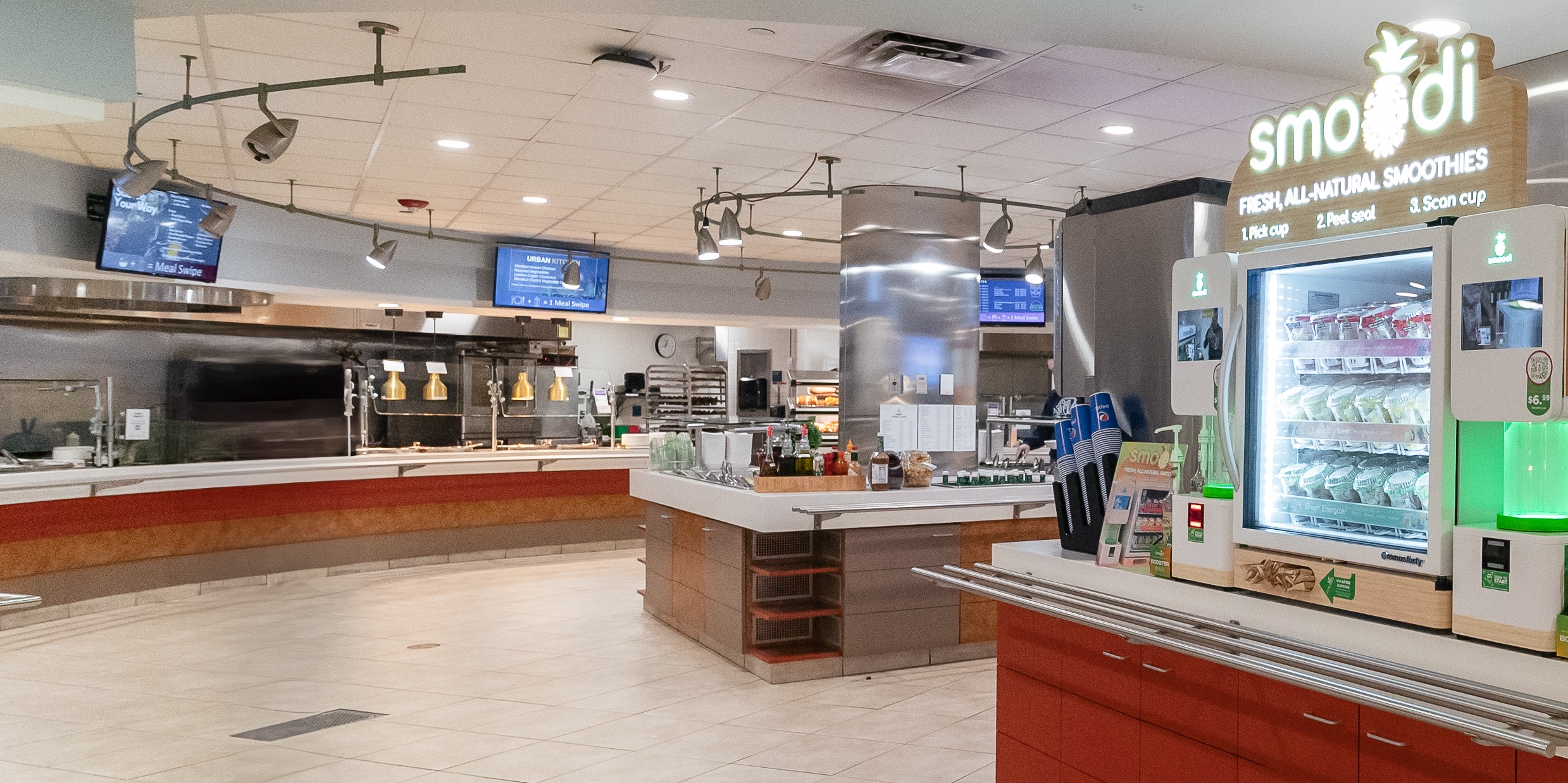
Automated systems improve the economics by eliminating labor cost entirely. Smoodi's machine requires no staff to operate, blends each smoothie in under 60 seconds, and self-cleans between every use. The ingredient cost is fixed per serving (one pre-portioned IQF fruit cup per smoothie), with near-zero waste. The operational lease starts at $299 per month, with Smoodi retaining ownership and providing full service. A purchase option is available starting at $14,999.
Operators pay the lease (or purchase cost) and the cost of fruit cups, and they keep the margin on every smoothie sold. For a facility serving 30 to 50 smoothies per day at a retail price of $5 to $7, the revenue potential is $150 to $350 per day, or $4,500 to $10,500 per month. After subtracting the lease and cup costs, operators in active locations report positive margins within the first few weeks of operation.
"We were looking for quick, healthy options for our customers and smoodi ticked all the boxes. It's quick, self-service, and does the job. The feedback has been great - the lines say it all."
— Jim Launer, President, Spooky Nook Sports
How Are Operators Entering the Market?
Operators entering the smoothie market today have options that did not exist five years ago. The traditional path (building a staffed juice bar with commercial blenders, hiring staff, sourcing fresh produce daily) remains available but comes with high startup costs and ongoing labor complexity.
The alternative path, deploying an automated smoothie station, offers a lower barrier to entry and a simpler operational model. The equipment arrives ready to install. Ingredients are delivered through established distribution networks. There is no staff to hire, train, or schedule. The machine handles blending, cleaning, and sanitation autonomously.
Smoodi's IQF fruit cups are distributed through Dot Foods, the largest food redistribution company in North America. This means operators in all 50 states can receive consistent ingredient supply through their existing distributor relationships. The cups have a shelf life of up to two years, eliminating the inventory management challenges associated with fresh produce. Smoodi's booster bar also allows customers to customize their smoothie with protein powder, collagen, and other functional supplements.
What Should Operators Evaluate Before Adding a Smoothie Program?
The market data supports the business case for adding smoothie programs, but operators should evaluate their specific context before committing.
- Location foot traffic: Does the facility serve enough daily visitors to generate consistent volume? Even 15 to 20 smoothies per day can produce positive returns with an automated system.
- Customer demographics: Are the facility's users health-conscious? University students, healthcare workers, fitness members, and corporate employees are among the strongest demographic segments for smoothie consumption.
- Space and utilities: A Smoodi machine occupies approximately 40 inches of floor space and requires a standard electrical outlet, water inlet, sanitizer connection, and drain. Most commercial facilities have these utilities available.
- Competitive offerings: Is there already a healthy beverage option in the facility? If not, the smoothie program fills an unmet need. If so, evaluate whether an automated option offers better economics or convenience.
Smoodi operates in more than 300 locations across the United States and has served more than two million smoothies since its founding at Harvard Innovation Labs. The company supports deployments across universities, hospitals, corporate offices, fitness centers, hotels, airports, convenience stores, and entertainment venues. To explore whether a smoothie program makes sense for your facility, visit getsmoodi.com/get-started. To estimate the revenue potential, visit getsmoodi.com/roi.
Ready to bring Smoodi to your location?
Join hundreds of operators delivering fresh, automated smoothies with zero labor.
Get Started