How Should You Build a Business Case for a Smoothie Program?
Building an internal business case for a smoothie station requires the right framework: demand data, financial projections, risk mitigation, and success metrics.
The person researching this topic is often not the final decision-maker. They are the facilities director, dining services lead, wellness coordinator, or operations manager who has already seen the product, understands its value, and wants to bring it to their organization. The challenge is not personal conviction. The challenge is building a compelling case for a budget committee, executive team, or procurement department that evaluates dozens of proposals each quarter.
This post provides the framework and data needed to build that internal business case. Whether the audience is a university VP of student life, a hospital CFO, a corporate facilities director, or a fitness chain's regional manager, the structure is the same: define the problem, present the solution, quantify the financials, address the risks, and propose measurable success criteria.
What Problem Does the Smoothie Program Solve?
Every business case begins with a problem statement, and the strongest problem statements use external data rather than personal opinion. The demand data is clear: smoothies rank as the number one most-requested food item on college campuses at 26% (Chartwells Higher Education Campus Dining Index 2026). Healthier functional beverages are among the top foodservice trends identified by the National Restaurant Association's 2026 'What's Hot' report. Consumer surveys show 61% of consumers want more self-service food technology in their daily environments.
The problem statement should connect this demand to the organization's specific context. For a university: students are requesting smoothie options that the dining program does not currently offer, and peer institutions have already added them. For a hospital: staff and visitors lack healthy grab-and-go options outside of cafeteria hours, and the current vending program does not meet wellness standards. For a corporate office: the organization is investing in workplace wellness and return-to-office amenities, but the current food program is limited to coffee and packaged snacks.
In each case, the problem is a gap between what the population wants and what the facility currently provides. Frame the gap with data, and the need becomes self-evident to decision-makers who may not have observed the demand firsthand.
What Should the Solution Overview Include?
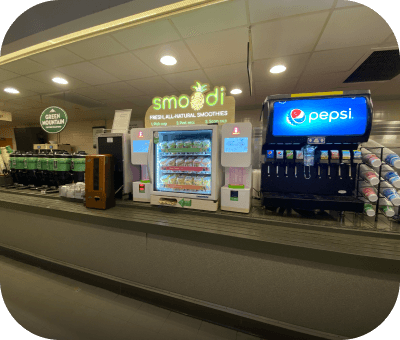
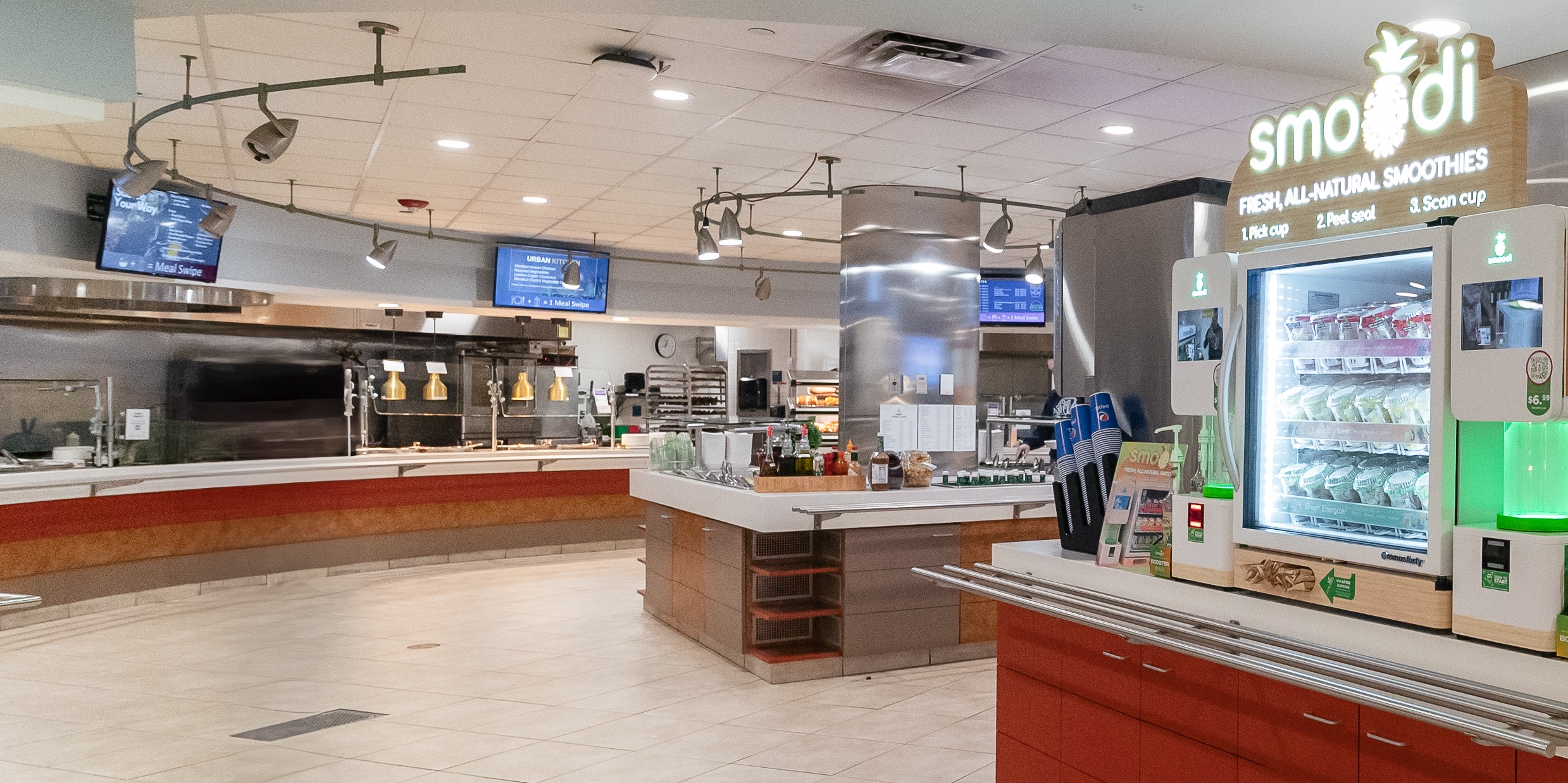
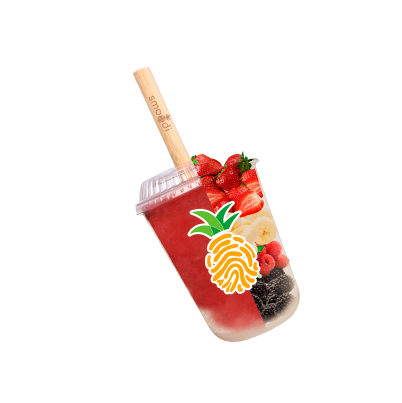
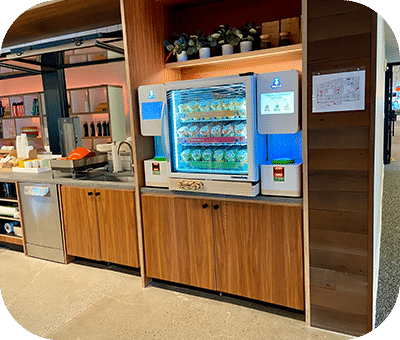
The solution overview explains what the smoothie program looks like in practice. Decision-makers need to visualize the operational reality, not just the concept. Key elements to include in this section are the physical footprint (approximately 40 inches of floor space, comparable to a standard office water cooler), the installation requirements (120 VAC outlet, water inlet, sanitizer inlet, and drain connection), and the product description (fresh whole-fruit smoothies blended from IQF fruit cups with water only, no syrups, concentrates, or artificial ingredients).
Emphasize the zero-labor operating model. The machine is self-service: customers select their smoothie on a touchscreen, the machine blends in under 60 seconds, and self-cleaning runs automatically between every use. No dedicated staff. No food handler training. No scheduling, no turnover, no overtime. For leadership teams evaluating the proposal, the zero-labor element often determines whether the project fits within existing operational capacity or requires new headcount.
Include the booster bar as a differentiation point: protein powder, collagen, and functional supplements are available as add-ons, allowing the organization to position the program as a functional nutrition amenity rather than a simple beverage station. This distinction matters when the business case competes against other amenity proposals for the same budget.
How Should You Present the Financial Analysis?
The financial section is where most business cases succeed or fail. Decision-makers want to see three things: how much it costs, how much it generates, and how long until it pays for itself.
- Lease option: $299 per month (48-month term), $349 per month (36-month term), $399 per month (24-month term), or $499 per month (12-month term). The operational lease means the organization retains no ownership but receives full service support.
- Purchase option: $14,999 one-time. The organization owns the machine outright.
- Ingredient costs: IQF fruit cups ordered through Dot Foods, the same distributor many foodservice operations already use. Cups have a shelf life of up to two years, eliminating spoilage risk.
- Revenue per serving: priced at $4 to $7 per smoothie depending on the venue and market, with booster add-ons generating an additional $1 to $2 per serving.
Present a conservative revenue projection using your facility's traffic data. For example, if a location serves 500 people per day and achieves a 5% smoothie adoption rate, that equals 25 smoothies per day. At $5 per smoothie, daily revenue is $125, or approximately $3,750 per month. Against a $349 monthly lease and ingredient costs, the program reaches profitability within the first month of operation. Operators across Smoodi's 300+ locations consistently report breaking even within the first few weeks.
"The investment into smoodi has been phenomenal. We broke even in the first couple of weeks."
— Linda Thacker, Director of Dining Services, Maryville University
Compare the automated model to the staffed alternative. A traditional smoothie bar requires at least one dedicated employee per shift, costing $2,500 to $4,500 per month in wages and benefits. The automated station eliminates this line item entirely. The cost comparison alone often justifies the investment for finance teams evaluating the proposal.
How Do You Address Risk and Objections?
Leadership teams evaluate risk as carefully as return. Anticipate and address the most common objections before they are raised.
Capital risk: the operational lease model eliminates capital expenditure. The organization can start a smoothie program without a purchase order, depreciation schedule, or asset management process. If the program does not meet expectations, the lease concludes at term with no residual obligation. This is fundamentally different from purchasing equipment that sits on the balance sheet for years.
Operational complexity: the self-service, self-cleaning model means no new staff, no new training programs, no food safety certifications for smoothie preparation, and no scheduling burden on management. The operational footprint is minimal.
Construction and disruption: installation requires a standard electrical outlet, water connection, sanitizer inlet, and drain. The compact 40-inch footprint fits into existing spaces (lobbies, dining halls, break rooms, fitness centers) without renovation. Deployment timelines are measured in days, not months.
Demand uncertainty: the phased deployment model lets organizations start with a single machine, evaluate performance over 60 to 90 days, and expand based on data rather than projections. Smoodi operates in more than 300 locations across universities, hospitals, corporate offices, fitness centers, and sports complexes, providing benchmarking data from comparable environments. The company was founded at Harvard Innovation Labs and has served over 2 million smoothies.
What Success Metrics Should You Propose?
Close the business case with a clear measurement framework. Propose specific metrics and a timeline for evaluation. Recommended success metrics include daily and monthly serving count (volume), revenue per serving and total monthly revenue (financial performance), adoption rate as a percentage of daily foot traffic (market penetration), customer satisfaction through feedback or usage frequency (quality), and breakeven timing relative to projections (financial validation).
Propose a 90-day evaluation period. This gives the program enough time to move through the initial adoption curve, seasonal variations, and word-of-mouth growth before a renewal or expansion decision is required. Present the evaluation as a low-risk pilot rather than a permanent commitment, which lowers the approval threshold for cautious decision-makers.
For the data and tools needed to build your business case, visit getsmoodi.com/roi for financial projections. To start a conversation about deployment options for your specific operation, visit getsmoodi.com/get-started.
Ready to bring Smoodi to your location?
Join hundreds of operators delivering fresh, automated smoothies with zero labor.
Get Started