Do Smoothie Stations Generate Revenue Year-Round?
Seasonality is a common concern for operators evaluating smoothie programs. The data tells a different story: with the right positioning, smoothie stations deliver consistent revenue across all four seasons.
One of the most common objections foodservice operators raise when evaluating a smoothie program is seasonality. The assumption is straightforward: people drink smoothies in summer, and demand drops off in colder months. If that assumption were true, a smoothie station would be a seasonal investment with inconsistent returns. But the data paints a different picture.
The global smoothie market is valued at $16.65 billion in 2026 and is growing at 8.66 percent CAGR, with the on-trade foodservice segment growing even faster at 9.72 percent CAGR. That kind of sustained growth does not come from a product that only sells for three months of the year. Smoothie consumption has shifted from a seasonal indulgence to a daily nutrition habit, driven by health consciousness, protein demand, and the rise of functional ingredients.
Why Do Operators Worry About Seasonal Smoothie Sales?
The seasonality concern is rooted in an outdated view of smoothies as a summer treat, similar to ice cream or frozen yogurt. In previous decades, smoothie bars did see significant seasonal swings. Walk-up smoothie shops in warm-weather locations experienced peak traffic from May through September and slower months through winter.
However, the modern smoothie consumer is different. Smoothies are now consumed as meal replacements, post-workout recovery drinks, breakfast alternatives, and functional nutrition vehicles. These use cases are not tied to temperature or season. A gym member who uses a protein smoothie after a morning workout does so in January just as readily as in July. A hospital cafeteria visitor choosing a whole-fruit smoothie over a sugary alternative makes that choice regardless of the weather outside.
Research from Tastewise indicates that seasonal food occasions have increased 106 percent in the past 12 months, suggesting that consumers are actively seeking seasonal variety rather than abandoning categories entirely. For smoothie programs, this means that seasonal menu positioning (not seasonal shutdown) is the correct strategy.
How Can Operators Position Smoothies for Every Season?
Successful year-round smoothie programs use seasonal framing to keep the offering fresh and relevant without changing the underlying equipment or operations. The key is aligning the messaging, not the product, with seasonal consumer preferences.
Summer: Hydration and Light Refreshment
Summer is naturally the strongest season for smoothie sales, and operators should lean into hydration and refreshment messaging. Tropical fruit blends, berry combinations, and lighter options appeal to consumers seeking cool, healthy alternatives to sodas and sugary iced drinks. Placement near pools, outdoor fitness areas, and high-traffic lobbies maximizes visibility during peak summer foot traffic.
Fall: Harvest Flavors and Back-to-School Nutrition
Fall brings back-to-school traffic on university campuses and a shift toward richer flavor profiles. Mango and tropical blends maintain appeal while the addition of protein boosters positions smoothies as a fuel source for students, athletes, and professionals returning to busier routines. Campus dining programs, corporate offices, and fitness centers see strong fall adoption when smoothies are positioned as quick, nutrient-dense meals between classes or meetings.
Winter: Protein, Immunity, and Functional Nutrition
Winter is where operators who understand functional nutrition outperform those who treat smoothies as a summer-only category. Protein-forward smoothies, collagen additions, and vitamin-rich blends appeal to consumers focused on immunity support and muscle maintenance during colder months. Healthcare facilities, corporate offices, and senior living communities see particularly consistent winter demand because their populations are motivated by nutrition goals rather than weather.
Spring: Fresh Starts and Wellness Goals
Spring aligns with New Year's resolution renewals, fitness ramp-ups, and a general shift toward lighter eating. Smoothie programs positioned as part of a wellness reset or clean-eating initiative see strong spring uptake. Gyms and fitness centers experience renewed membership activity in spring, making it an ideal time to reinforce the smoothie station as part of the facility experience.
What Does the Revenue Data Show for Year-Round Programs?
Operators running automated smoothie stations in indoor, climate-controlled environments report significantly flatter seasonal curves than traditional walk-up smoothie shops. The reason is straightforward: when the smoothie station is located where people already are (a gym lobby, a hospital cafeteria, a corporate breakroom, a campus dining hall), the purchase decision is driven by convenience and habit rather than weather.
Smoodi operates in more than 300 locations across the United States, spanning gyms, hospitals, universities, corporate offices, hotels, and convenience stores. The diversity of these environments confirms that smoothie demand is driven by location context, not season. A smoothie station in a fitness center sees post-workout traffic year-round. A station in a hospital cafeteria serves staff and visitors regardless of the month.
"I have been looking to add a smoothie bar for years but did not want to deal with the labor and food waste. Having smoodi in our facility is a huge benefit for our members."
— Adam Healy, General Manager, Waverly Oaks Athletic Club
How Does Smoodi Support Year-Round Consistency?
Several features of Smoodi's automated smoothie system directly address the operational concerns that make seasonality a risk for traditional smoothie programs.
- IQF fruit cups with up to two years of shelf life eliminate seasonal ingredient sourcing challenges. Operators do not need to adjust supply orders based on seasonal demand fluctuations because the cups are shelf-stable and restocked on a consistent weekly schedule through Dot Foods distribution.
- Zero labor means there is no staffing cost during slower periods. Traditional smoothie bars carry fixed labor costs regardless of volume, making low-traffic months unprofitable. An automated station has the same operating cost whether it serves 10 smoothies or 100 in a day.
- The booster bar (protein powder, collagen, and other functional supplements) allows seasonal positioning without menu changes. In winter, emphasize protein and immunity. In summer, emphasize hydration and refreshment. The same equipment and ingredients support both messages.
- Self-cleaning between every use means no additional maintenance burden during high-volume summer peaks or steady-state winter operation.
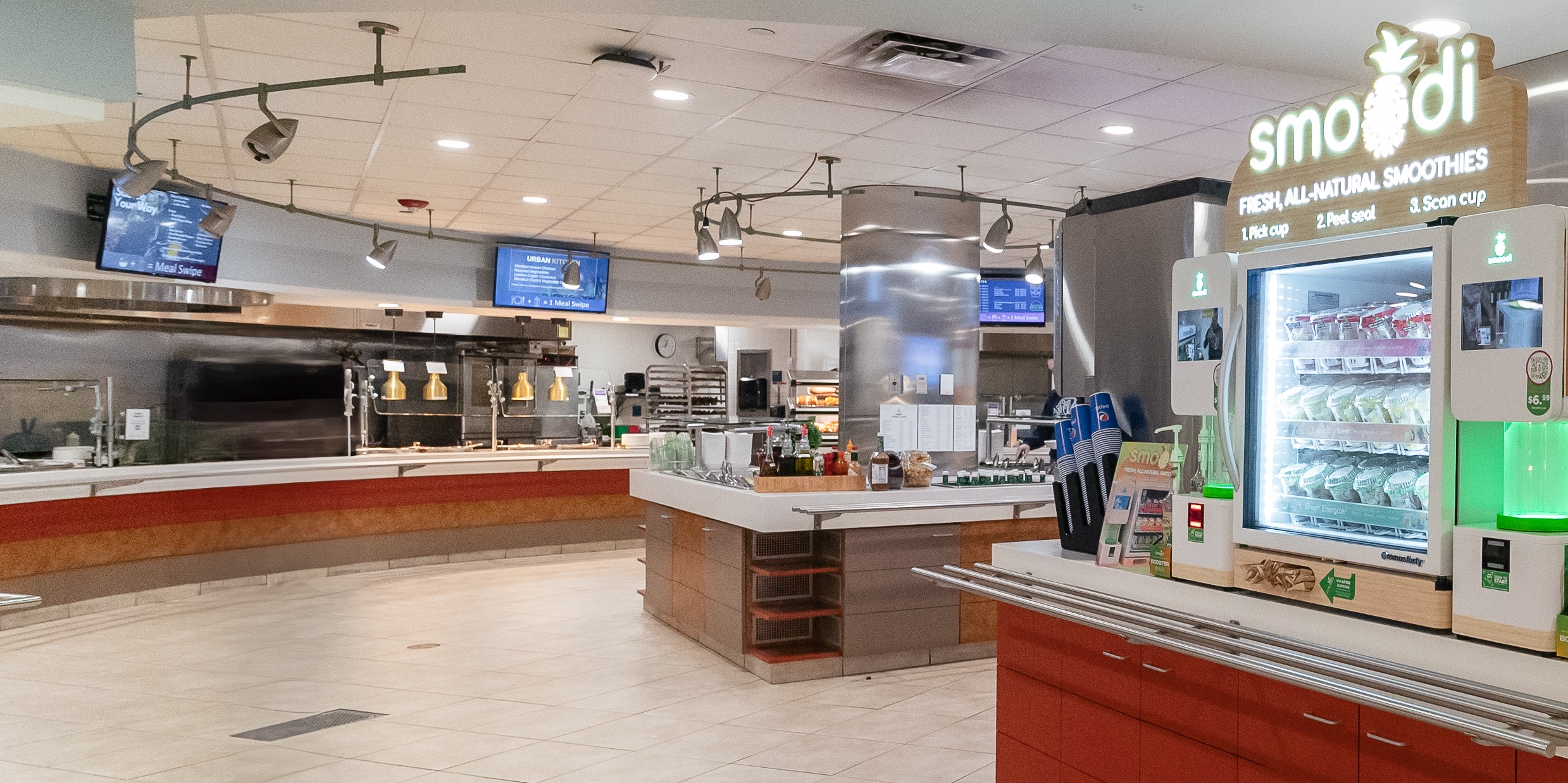
The machine occupies approximately 40 inches of floor space and requires a standard 120 VAC outlet, push-to-connect water and sanitizer inlets, and a drain connection. Operational leases start at $299 per month on a 48-month term, with shorter terms available at $349 (36 months), $399 (24 months), and $499 (12 months). Operators who prefer to own the equipment can purchase starting at $14,999.
What About Locations with Genuine Seasonal Traffic?
Some locations do experience genuine seasonal traffic patterns. Airports see higher passenger volumes during holiday travel periods. Resorts and attractions have defined peak seasons. University campuses have summer breaks with reduced foot traffic.
Even in these environments, the economics of an automated station differ from a staffed smoothie bar. Because the machine requires zero dedicated labor and the fruit cups have a two-year shelf life, the cost of running a Smoodi station during a slower period is limited to the lease payment and utilities. There is no food spoilage, no idle staff wages, and no inventory waste. The station simply serves fewer smoothies at the same per-unit margin, without the fixed-cost burden that makes traditional smoothie programs uneconomical during off-peak months.
Building a Year-Round Smoothie Revenue Strategy
The operators who generate the most consistent smoothie revenue share a few common practices. They position the station in a high-traffic, climate-controlled area where foot traffic is driven by the facility itself, not by weather. They rotate signage and messaging seasonally to keep the offering visible and relevant. They leverage the booster bar to align with seasonal health priorities (protein in winter, refreshment in summer). And they treat the smoothie program as a permanent amenity rather than a seasonal experiment.
Smoodi's pre-portioned IQF fruit cups, blended with water only and containing no syrups, concentrates, or artificial ingredients, deliver the same product quality in every season. The two-year shelf life and Dot Foods distribution network ensure supply chain consistency regardless of agricultural seasons or regional sourcing challenges.
For operators evaluating whether a smoothie program will deliver year-round returns, the question is less about the season and more about the setting. Indoor locations with consistent foot traffic, health-conscious populations, and a need for quick, grab-and-go nutrition are strong candidates in any month. To estimate the revenue potential of a smoothie program at your facility, visit getsmoodi.com/roi. To explore Smoodi's menu and equipment options, visit getsmoodi.com/get-started.
Ready to bring Smoodi to your location?
Join hundreds of operators delivering fresh, automated smoothies with zero labor.
Get Started