What Costs More: Smoothie Station or Juice Bar?
Staffed juice bars and automated smoothie stations serve the same product but differ dramatically in cost, labor, and margins. Here is a full operator comparison.
Foodservice operators evaluating a smoothie program typically weigh two models: a staffed juice bar with fresh ingredients and manual preparation, or an automated smoothie station that handles blending, dispensing, and cleaning without dedicated labor. Both can generate meaningful revenue, but the cost structures, operational demands, and scalability profiles are fundamentally different.
This comparison examines each model across six dimensions, startup costs, labor, ingredient supply chain, daily operations, revenue retention, and scalability, so operators can determine which approach fits their environment, budget, and goals.
Startup Costs and Infrastructure
A traditional juice bar requires significant upfront investment. Commercial blenders rated for frozen fruit cost $400 to $900 each, and most operators need at least two to maintain throughput during peak hours. Beyond the blenders, a functional build-out includes a commercial refrigerator or freezer for ingredient storage, prep counters with cutting boards, a point-of-sale terminal, plumbing for a wash sink, and potentially electrical upgrades if the space was not previously configured for foodservice.
Depending on the complexity of the installation, total build-out costs range from $15,000 for a basic counter setup to $100,000 or more for a fully branded juice bar with custom millwork and signage. Many university and hospital operators report spending $30,000 to $50,000 on mid-range installations that meet health department standards and fit the aesthetics of the surrounding dining environment.
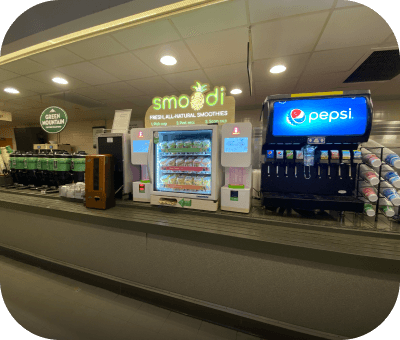
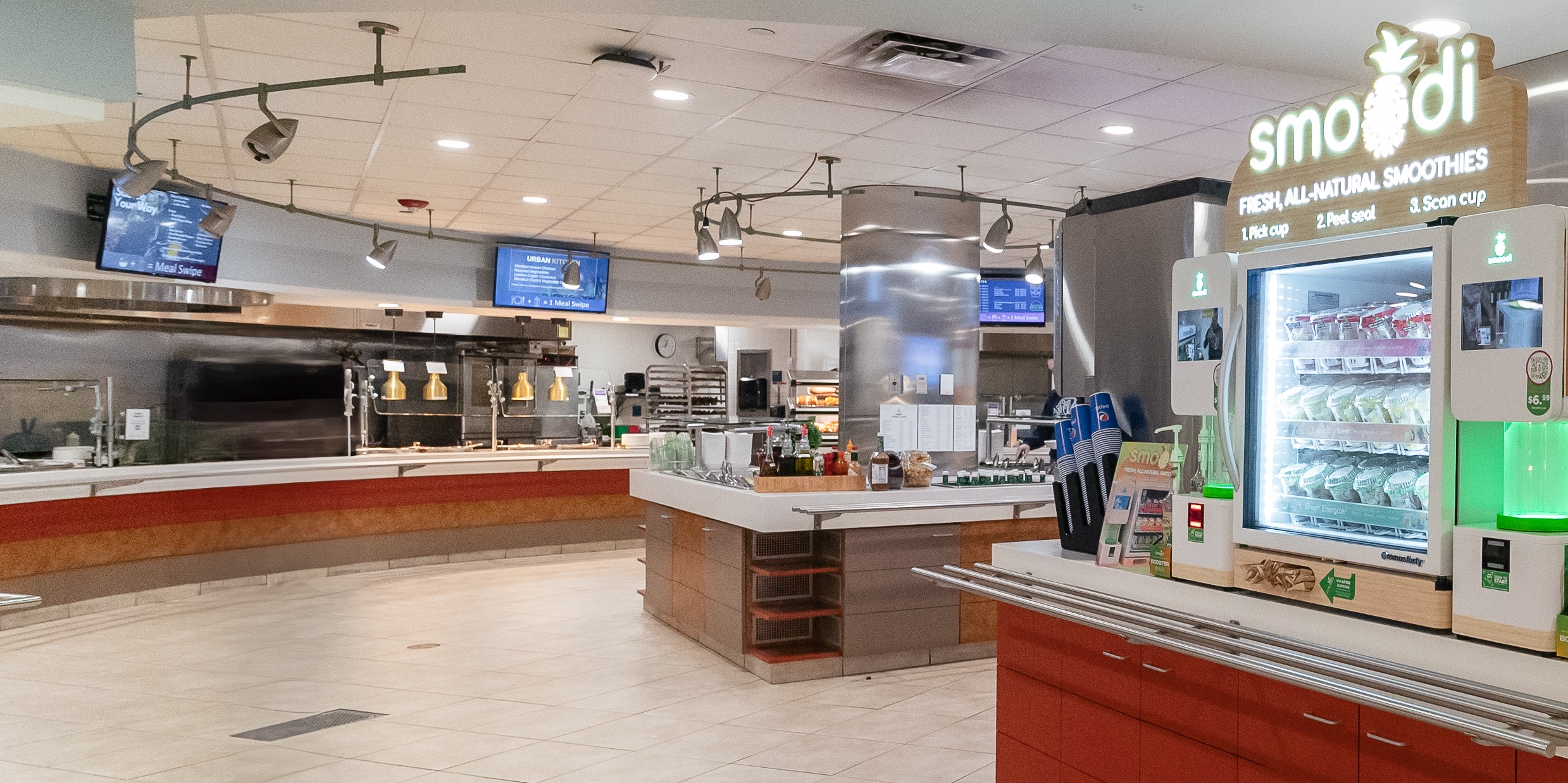
An automated smoothie station requires far less infrastructure. Smoodi's machine is a self-contained unit that runs on a standard 110V electrical outlet and requires only simple push-to-connect water and drain fittings rather than the wash sinks, dedicated water lines, and full kitchen build-out that a staffed juice bar demands. Smoodi offers an operational lease starting at $299 per month or a purchase option starting at $14,999. The unit fits in roughly 40 inches of floor space and can be placed in a hallway, lobby, cafeteria corner, or break room. Installation typically takes less than an hour.
Labor: The Largest Ongoing Cost Difference
Labor is where the two models diverge most sharply. A staffed juice bar requires at least one employee per operating shift to handle prep, blending, serving, and cleaning. At current foodservice wages of $15 to $20 per hour in most U.S. markets, and significantly higher in major metropolitan areas, a single part-time position covering 25 hours per week costs approximately $19,500 to $26,000 per year in wages alone. Add payroll taxes, workers compensation insurance, benefits, training time, and scheduling overhead, and the all-in cost for one position frequently exceeds $30,000 annually.
The foodservice industry has an annual turnover rate of approximately 73 percent. Most operators replace their smoothie bar staff at least once per year, incurring recruiting, onboarding, and productivity-gap costs estimated at $1,500 to $2,000 per departure. For a two-person smoothie bar team, turnover alone adds $3,000 to $4,000 in annual hidden costs that rarely appear in initial budget projections.
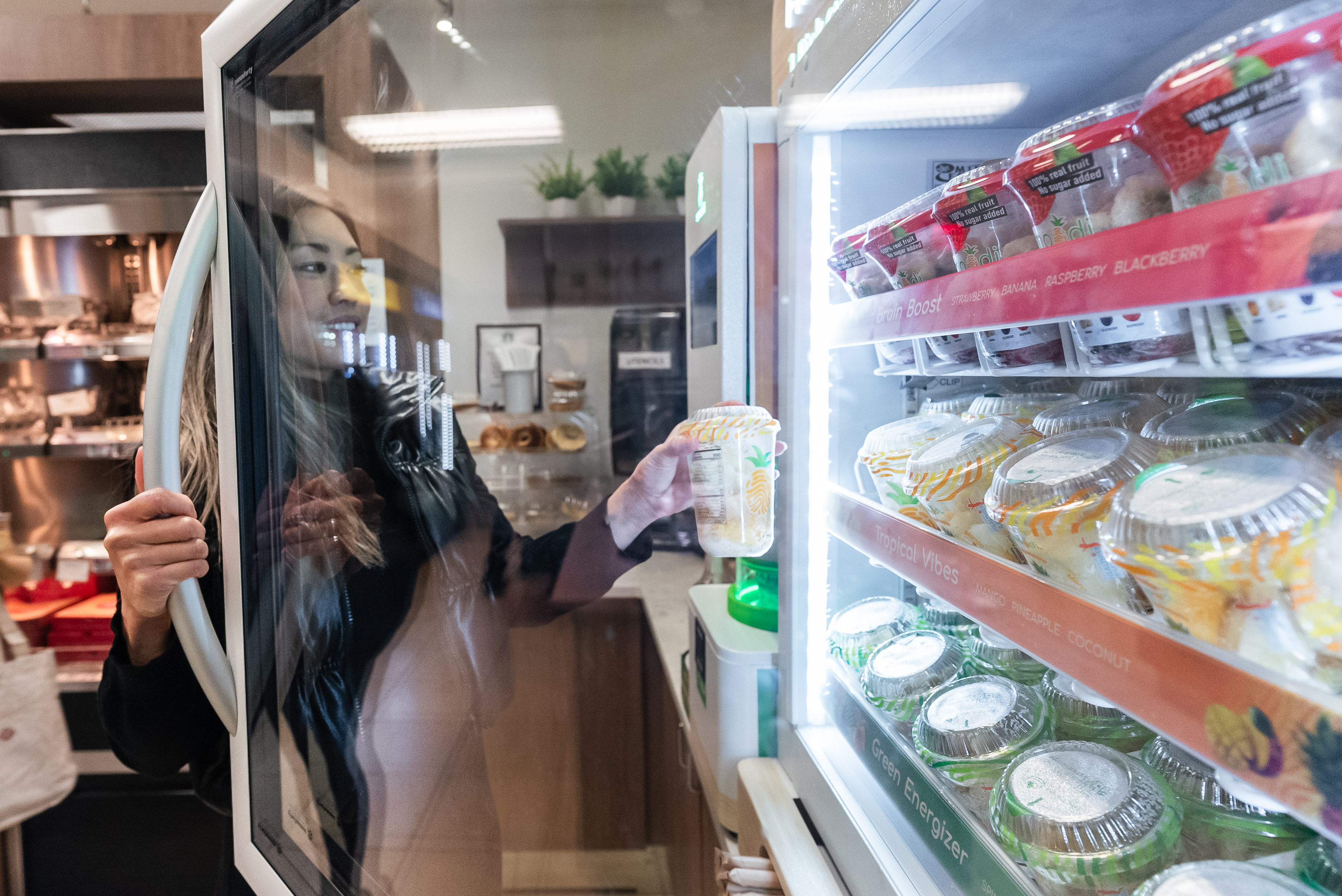
An automated smoothie station requires zero dedicated labor. Smoodi's machine blends a smoothie in under 60 seconds, self-cleans between every use, and operates without supervision throughout the service day. The only staff interaction required is restocking frozen fruit cups, a task that takes approximately 10 to 15 minutes per week depending on volume. This allows existing facility staff to manage the smoothie program as a minor addition to their current responsibilities rather than a standalone staffing commitment.
Ingredient Supply Chain and Waste
Fresh-ingredient smoothie bars face a persistent spoilage problem. Fresh fruit has a usable shelf life of three to five days after delivery, and operators typically experience 15 to 30 percent ingredient waste by volume during normal operations. For a program serving 50 to 100 smoothies per day at a raw ingredient cost of $2.00 to $3.00 per serving, annual spoilage costs can reach $10,000 to $15,000. That figure rises sharply during low-volume periods, summer breaks at universities, slow occupancy months at hotels, or hybrid work schedules at corporate offices, when the same quantity of perishable inventory is ordered but fewer smoothies are sold.
Automated stations using individually quick frozen (IQF) fruit cups eliminate spoilage almost entirely. Smoodi's frozen fruit cups have a shelf life of up to two years and are distributed through Dot Foods, one of the largest food redistribution networks in the United States. Each cup is pre-portioned and sealed, removing overpouring, daily prep waste, and inventory guesswork. Operators order on a predictable schedule based on actual consumption data rather than on estimates of what will sell before it spoils.
Product Consistency and Quality Control
Consistency is a recurring challenge for staffed juice bars. Different employees blend for different durations, use slightly different portion sizes, and interpret recipes with natural human variation. The result is a product that tastes different depending on who makes it and when. In healthcare settings where patients rely on predictable nutritional content, or in fitness environments where members have specific post-workout macronutrient goals, this variability can undermine the program's value proposition.
An automated machine blends every smoothie to the same specification, same ingredients, same blend time, same texture. Smoodi's machine produces a consistent product regardless of time of day, day of week, or who restocked the cups. For operators positioning their smoothie program as a reliable nutrition option rather than a casual beverage, this consistency matters.
Daily Operations and Maintenance
A staffed juice bar demands active management every operating day. Opening prep includes washing, cutting, and portioning fruit, calibrating blenders, and setting up the service area. Mid-shift tasks include cleaning to meet health code requirements, restocking ingredients, and managing the queue during peak periods. End-of-day work involves deep cleaning, inventory counts, and placing fresh ingredient orders for the next delivery. The manager or shift lead responsible for these tasks often spends 30 to 60 minutes per day on smoothie-program logistics, in addition to the time spent by the dedicated smoothie bar employee.
Maintenance on commercial blenders used for frozen fruit adds further cost. Blade assemblies dull and need replacement, jar seals wear out, and motors require periodic servicing. Annual maintenance typically runs $1,000 to $3,000 per blender. Health inspections add compliance overhead that varies by jurisdiction but generally requires documented cleaning schedules, temperature logs, and employee food safety certifications.
Smoodi's machine is self-cleaning and self-monitoring. The automated cleaning cycle runs between every blend, meeting commercial food safety standards without staff involvement. Smoodi handles all machine maintenance as part of the subscription, so operators carry no repair or replacement parts costs. The operational demand on the facility is limited to weekly cup restocking.
Revenue Retention and Profit Margins
Both models generate revenue from smoothie sales, but the paths to profit differ substantially. A staffed juice bar selling smoothies at $7 to $10 per cup, with ingredient costs of $2.00 to $3.50 per serving and fully loaded labor costs, typically delivers a net margin of 20 to 35 percent after all operating expenses. That margin compresses during low-volume periods when labor costs remain fixed regardless of how many smoothies are sold.
With Smoodi's operational lease program, the operator's costs are the monthly lease payment and the wholesale price of frozen fruit cups. With no labor cost allocated to the program and near-zero spoilage, the contribution margin per smoothie after cup costs typically reaches 60 to 70 percent at standard retail pricing. This margin percentage holds at any volume, a machine selling 20 smoothies per day and a machine selling 200 per day deliver the same percentage margin on cups, because there is no fixed labor cost to absorb.
Scalability and Multi-Location Expansion
Adding a second staffed juice bar means duplicating the full cost structure: another build-out, another employee team, another set of fresh ingredient deliveries, and another layer of management oversight. Each additional location adds roughly the same cost as the first, which makes multi-site expansion a significant financial commitment.
Adding a second automated smoothie station means placing another machine in another location on the same lease or purchase program. There is no second build-out, no second staff hire, and no second supply chain to coordinate. Smoodi operates in more than 300 locations across the United States, spanning universities, hospitals, gyms, corporate offices, and airports. That deployment scale was achieved because the per-location cost and operational burden remain minimal regardless of how many machines an operator runs.
Choosing the Right Model for Your Operation
A staffed juice bar may be the stronger choice when the operation already employs a food and beverage team whose labor cost is absorbed across multiple revenue streams, the brand strategy depends on visible staff interaction and extensive customization, or the location generates 500 or more servings per day where labor becomes a small fraction of total revenue.
An automated smoothie station typically fits better when the operator wants to add a smoothie program without adding headcount, the location lacks full kitchen infrastructure, consistent margin at any volume level is a priority, or the operator plans to expand across multiple sites without multiplying operational complexity. Smoodi's operational lease starts at $299 per month with full service included, a structure that reduces both the financial barrier and the operational friction of launching a new program.
Smoodi's ROI calculator at getsmoodi.com/roi provides a custom financial comparison based on your location's expected volume, local labor costs, and target pricing. To discuss machine placement and configuration for your specific facility, visit getsmoodi.com/get-started.
Ready to bring Smoodi to your location?
Join hundreds of operators delivering fresh, automated smoothies with zero labor.
Get Started