Why Are Stadiums Going Self-Service for Food?
The sports venue foodservice market is projected to reach $42 billion by 2027. Stadiums and arenas are rapidly adopting self-service automation to handle high-volume demand with fewer staff.
A halftime rush at a major stadium can involve tens of thousands of fans moving to concourses simultaneously, all expecting to buy food and drinks within a 15 to 20 minute window. Traditional concession models struggle with this reality. Long lines drive fans back to their seats empty-handed, resulting in lost revenue per visit. Labor scheduling for a three-hour event with extreme peak-and-valley demand patterns makes staffing costly and inefficient. And the industry-wide labor shortage affecting all of foodservice hits stadium operations particularly hard, since event-day staffing requires large numbers of temporary or part-time workers.
The sports venue foodservice market is projected to reach $42 billion by 2027, and the operators capturing the largest share of that spending are the ones solving the throughput problem. Self-service kiosks, mobile ordering, cashierless checkout, and automated food and beverage stations are all gaining traction as stadiums and arenas redesign their concourse experiences around speed, convenience, and reduced labor dependency.
What Challenges Do Stadium Foodservice Operators Face?
Stadium and arena foodservice operations are fundamentally different from restaurants, cafeterias, or retail food outlets. The challenges are amplified by the nature of live event attendance.
- Extreme demand concentration: 80 percent or more of food and beverage sales occur during three to four peak windows (pre-event, halftime, and between-period breaks). Operators must build capacity for peak volume while accepting that equipment and staff sit idle for much of the event.
- Labor intensity: Stadium concession operations historically require large numbers of hourly workers for short shifts. Finding, training, and retaining these workers has become increasingly difficult as the foodservice industry faces a 73 percent annual turnover rate.
- Limited space per concession point: Concourse real estate is expensive and constrained. Every square foot allocated to back-of-house preparation or storage is a square foot unavailable for fan movement, seating, or additional revenue points.
- Speed expectations: Fans will abandon a concession line if the wait exceeds five to seven minutes. Each additional minute of wait time reduces the probability of a purchase and increases fan dissatisfaction with the venue experience.
- Health and variety demands: Modern sports fans expect more than hot dogs and nachos. Surveys consistently show growing demand for healthy, fresh, and diverse food options at venues, particularly among younger demographics.
How Is Self-Service Technology Reshaping Stadium Food?
Stadium operators are deploying multiple self-service technologies to address these challenges. Mobile ordering platforms allow fans to place orders from their seats and pick up at designated windows, reducing line congestion. Cashierless grab-and-go markets use sensor-based checkout to let fans take items and walk out without waiting in a payment line. Self-service kiosks replace cashier-staffed order points for made-to-order items.
Automated food and beverage equipment takes this a step further by removing the preparation labor entirely. Instead of a cashier taking an order and a worker preparing it, the fan interacts directly with the machine, which handles the full cycle from ingredient selection to preparation to dispensing. This model is particularly effective for beverage categories like smoothies, where the preparation is standardized and repeatable.
The shift is already visible at major venues. Stadiums are testing robotic concession systems, automated beer and cocktail dispensers, and self-service snack stations that operate without any staffed positions. The common thread across all of these deployments is the same: reduce the labor required per transaction while increasing the speed and consistency of service.
"We were looking for quick, healthy options for our customers and smoodi ticked all the boxes. It's quick, self-service, and does the job. The feedback has been great - the lines say it all."
— Jim Launer, President, Spooky Nook Sports
Why Do Healthy Options Matter at Sports Venues?
The fan demographic at sports events is shifting. Younger fans (Gen Z and Millennials) who grew up with health-conscious food culture expect fresh, nutritious options alongside traditional stadium fare. Parents attending family-friendly events want healthy choices for their children. Athletes and fitness enthusiasts attending sporting events as spectators maintain their dietary preferences even in a concession environment.
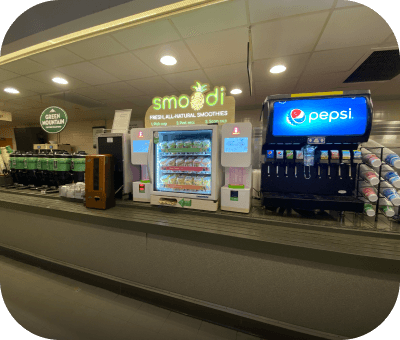
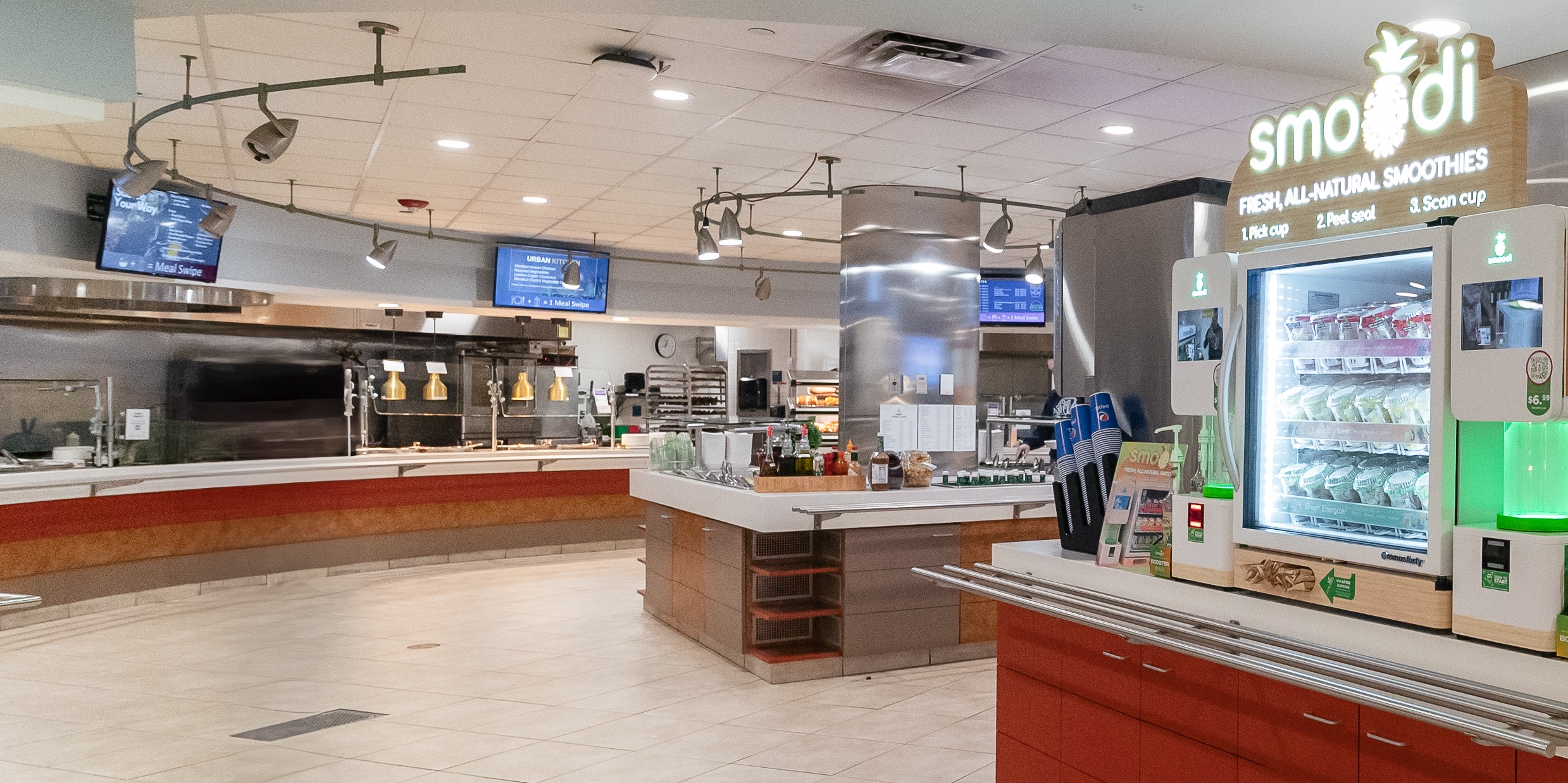
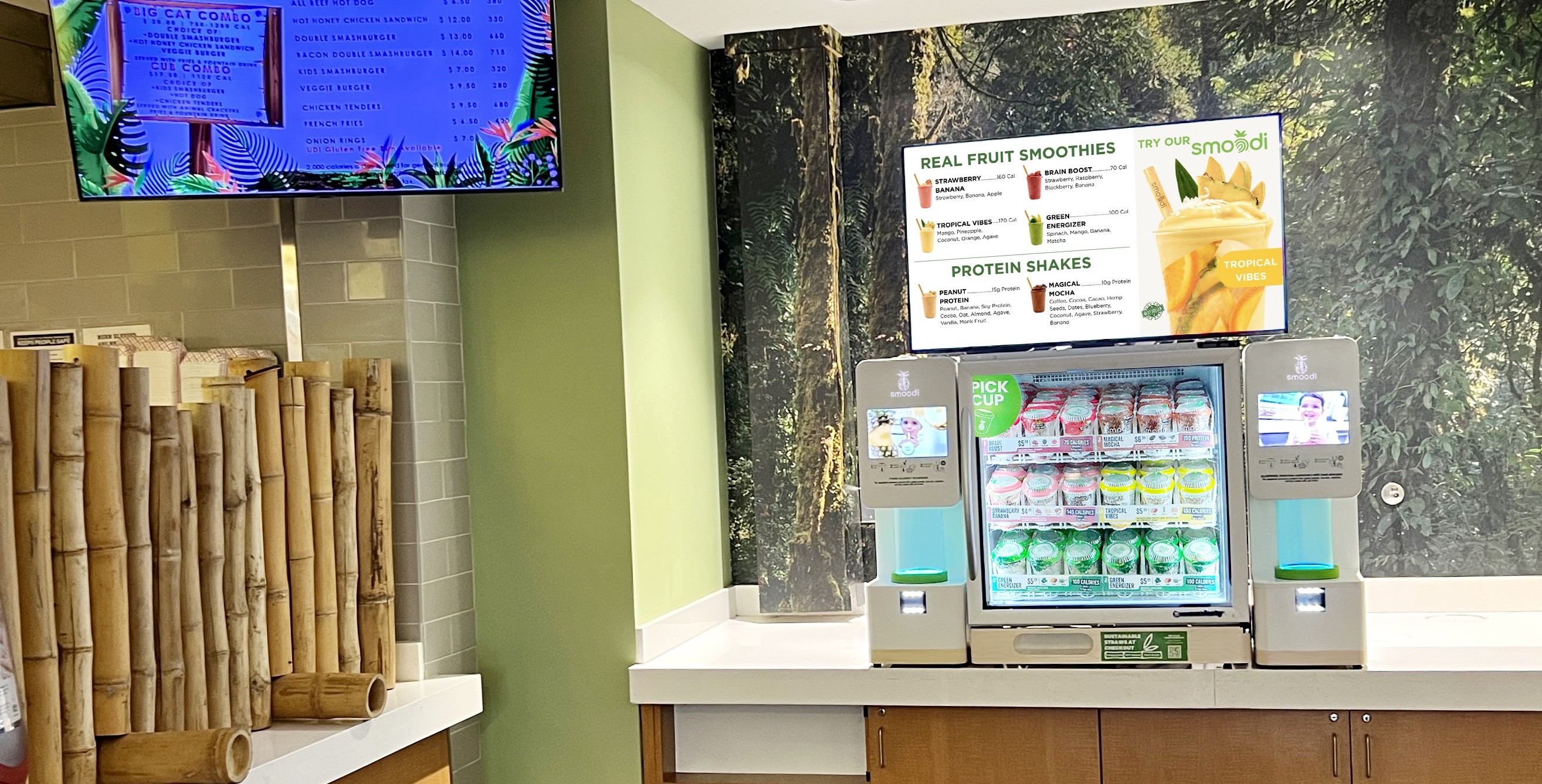
Adding a healthy beverage option at a venue does not require replacing existing concession categories. It means adding a complementary option that serves an underserved segment of the fan base. A self-service smoothie station on a concourse offers fresh, whole-fruit smoothies in under 60 seconds, with no staffing requirement and a footprint of approximately 40 inches. It occupies the space of a single vending machine but delivers a fresh, made-to-order product that traditional vending cannot match.
How Does Automated Equipment Handle Stadium Volume?
One concern venue operators raise about automated equipment is throughput capacity. Can a single machine handle the concentrated demand of a halftime rush? The answer depends on the equipment design and the deployment strategy.
A single Smoodi machine blends a smoothie in under 60 seconds, including the self-cleaning cycle between servings. That translates to approximately 50 to 60 servings per hour per machine. For venues that need higher throughput, multiple machines can be installed side by side in the same footprint as a single larger competitor kiosk, blending simultaneously. Three machines operating in parallel can serve 150 to 180 smoothies per hour with zero labor, matching or exceeding the throughput of a staffed concession point that would require three to four workers.
The economics are straightforward. A staffed concession point for smoothies at a stadium might require three workers at $15 to $20 per hour for a four-hour event, plus a supervisor, plus food prep time before the event, plus cleanup after. The total labor cost per event can reach $300 to $500 or more. Three automated machines operating on lease agreements of $299 to $499 per month total eliminate the per-event labor calculation entirely.
What About Setup and Infrastructure at Venues?
Venue operators evaluating automated equipment need practical answers about infrastructure requirements. Stadium concourses have constraints that differ from a typical foodservice installation.
Smoodi's machine requires a standard 120 VAC, 7-amp outlet (NEMA 5-15P with integrated GFCI), a push-to-connect water inlet (three-eighths inch, 50 to 80 PSI filtered and potable), a sanitizer inlet (quarter-inch push-to-connect), and a drain connection (one-inch FNPT with half-inch slope per 12 inches, open drain within 10 feet). Most modern stadium concourses already have the electrical and plumbing infrastructure to support these requirements at existing concession points.
The IQF fruit cups have a shelf life of up to two years and are distributed through Dot Foods, allowing venues to maintain inventory without the spoilage concerns that fresh produce creates. For venues that host events on variable schedules (weekly games, occasional concerts, seasonal sporting events), the long shelf life means ingredient inventory does not expire between events.
What Does the Future of Stadium Foodservice Look Like?
Industry analysts project that stadium and arena foodservice will continue moving toward automated, self-service, and mobile-first models through the remainder of the decade. The drivers are structural: labor costs continue to rise, fan expectations for speed and variety continue to increase, and venue operators are under pressure to maximize revenue per square foot of concourse space.
Automated beverage stations fit naturally into this trajectory. They offer a healthy, differentiated product category that does not compete with existing concession offerings. They require no incremental labor. They operate consistently regardless of staffing availability. And they serve a growing consumer segment that is actively seeking fresh, nutritious options at every touchpoint, including live events.
Smoodi operates in more than 300 locations across the United States, including sports and entertainment venues, and has served more than two million smoothies. For venue operators interested in adding a healthy, automated concession option, visit getsmoodi.com/get-started to request a venue assessment. To calculate the potential revenue impact, visit getsmoodi.com/roi.
Ready to bring Smoodi to your location?
Join hundreds of operators delivering fresh, automated smoothies with zero labor.
Get Started