Student Housing Self-Service Food Amenity Guide
Learn how a student housing self-service food amenity like Smoodi meets demand for healthy, automated nutrition in modern residential communities.
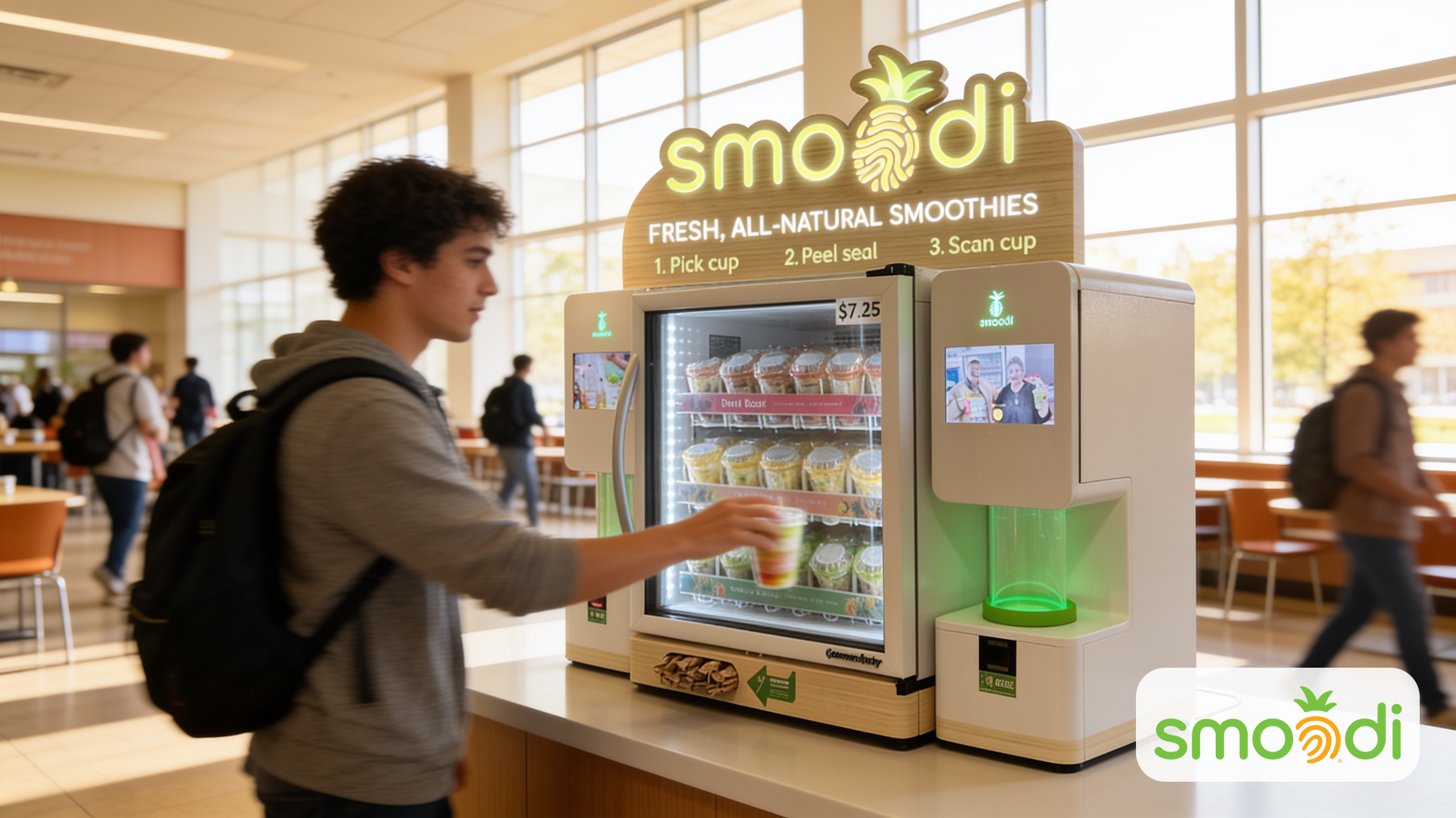
A student walks into a residence lobby after a late-night study session, looking for a nutritious snack that does not require a trip to a 24-hour convenience store. Instead of a vending machine filled with processed chips, they find a sleek, automated station offering real-fruit smoothies. This scene is becoming a reality as developers shift toward high-end lifestyle offerings to attract a wellness-conscious generation.
The demand for healthy options is no longer limited to the main dining hall. According to Chartwells Higher Education, 26% of students identified smoothies as their most desired cuisine, making it the number one food students want to see more of. For operators, integrating a student housing self-service food amenity is a strategic way to meet this demand without increasing payroll.
Meet the Demand for a Student Housing Wellness Amenity
Modern students view their living space as an extension of their health and productivity goals. This shift is reflected in spending habits; McKinsey & Company reports that Gen Z and millennials make up approximately 36% of U.S. adults but drive more than 41% of annual wellness spend. Providing a high-quality nutrition station transforms a lobby from a transit area into a wellness hub.
The broader market trend supports this investment. McKinsey & Company estimates that wellness spending in the U.S. will top $500 billion annually, growing at 4–5% per year. By offering a student housing wellness amenity, developers align their properties with these macroeconomic trends, appealing to the two-thirds of Gen Z and millennials who say they purchased functional-nutrition products last year, according to McKinsey & Company.
Elevating Off-Campus Student Housing Dining
Competition among developers has intensified, with a focus on luxury additions to residential communities. Forbes notes that recent years have seen developers compete to add luxury amenities ranging from makers spaces to boxing gyms. In this environment, off-campus student housing dining must move beyond the basics to remain competitive.
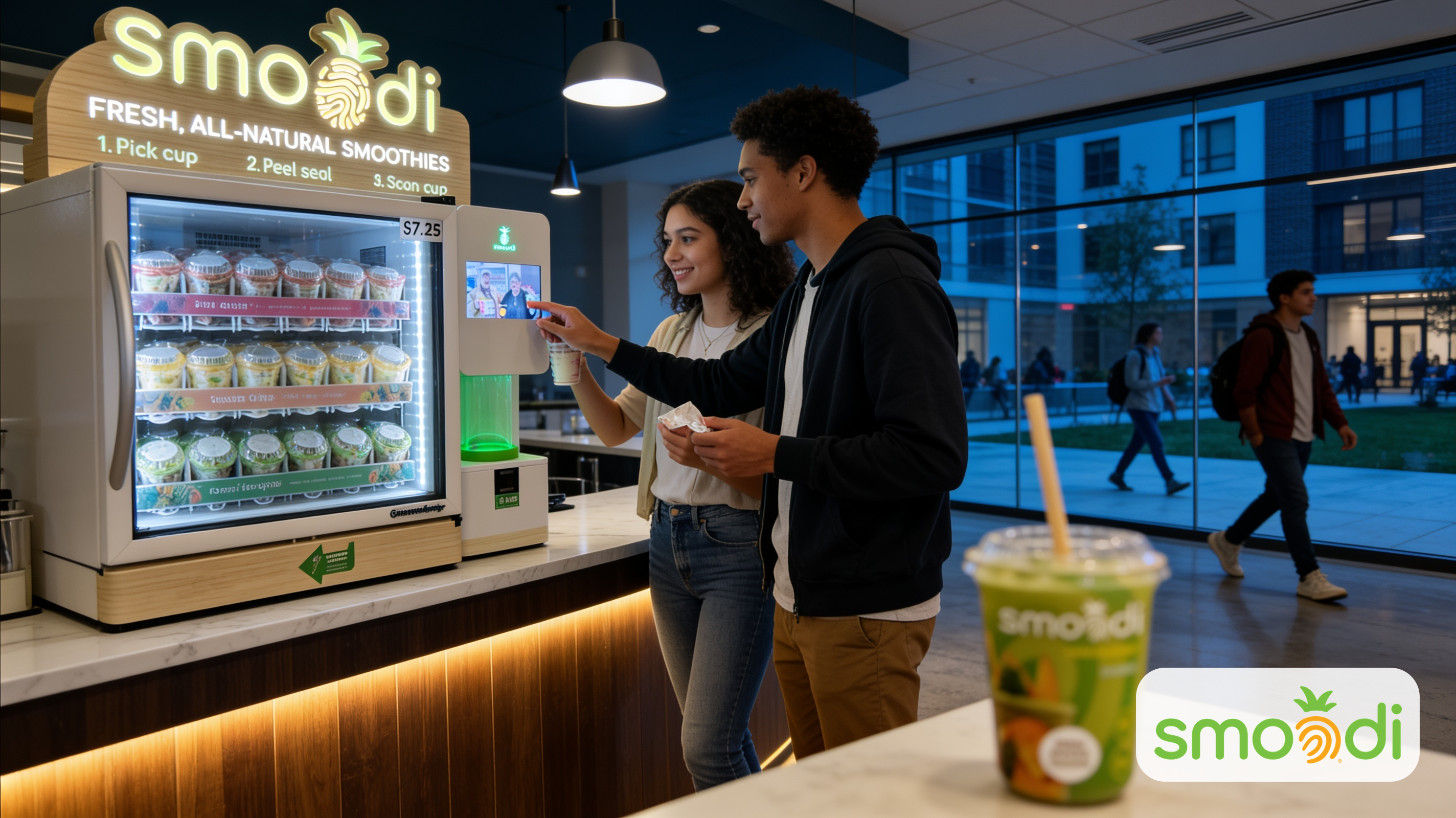
Integrating automated nutrition allows properties to activate shared areas. The National Apartment Association (NAA) reports that more purpose-built student housing buildings are including vending machines with healthy choices and grab-and-go coffee bars near entries and lobbies to bring students together. A robotic smoothie station serves as a social anchor, providing a premium experience that mirrors the luxury amenities students now expect.
Operational Efficiency of a Smoothie Station in Student Housing
The primary challenge of adding food services to residential properties is the lack of dedicated culinary staff. A traditional smoothie bar requires prep, cleaning, and constant supervision. Smoodi solves this by providing the world's first self-serve robotic smoothie machine, designed as a healthy smoothie store in a box.
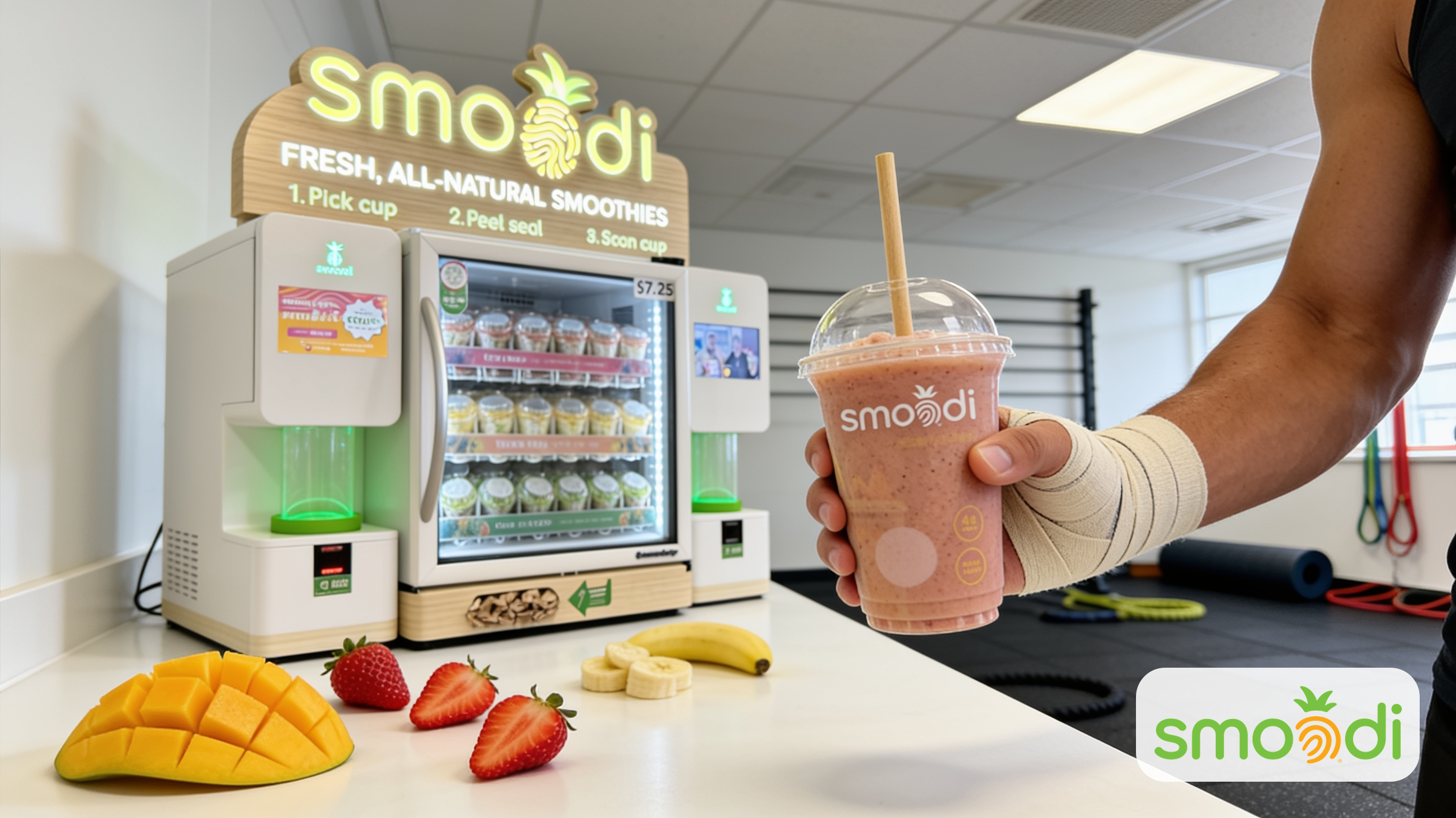
The Smoodi system operates with zero labor beyond restocking cups and maintaining surface cleanliness. The process is streamlined for the guest: they pick a sealed frozen fruit cup, peel the tamper-evident seal, scan the barcode, place the cup in the machine, and the machine adds water and blends in under 60 seconds. This efficiency makes a smoothie station student housing operators can manage without hiring additional personnel.
Maintaining Hygiene and Safety
Hygiene is a critical concern in shared residential spaces. Smoodi utilizes a patented self-cleaning cycle that runs after every single serve, complemented by an automatic deep sanitation cycle that runs overnight using food-safe sanitizers. The machine is NSF and UL certified, ensuring it meets rigorous industry standards for safety and sanitation.
Sustainable and Fresh Ingredients
To avoid the waste associated with fresh produce, Smoodi uses real frozen fruit pre-portioned at the source. These recyclable cups, made from recycled PET plastic, have a shelf life of two years from harvest when kept frozen. This approach ensures zero food waste and spoilage, a significant advantage for property managers overseeing campus beverage amenity programs.
Designing a Modern Student Apartment Food Program
A successful student apartment food program requires a balance of variety and accessibility. Smoodi offers a diverse menu that caters to different student needs throughout the day:
- Energy and Focus: The Brain Boost smoothie (strawberry, raspberry, blackberry, banana) contains 7g of fiber and zero added sugar.
- Fitness and Recovery: Protein shakes like Choco-Banana provide 32g of protein, while Peanut Protein offers 15g.
- Wellness: The Green Energizer (matcha, mango, spinach, banana) is 100 calories with zero added sugar.
- Refreshment: The Cucumber Refresher provides a 100-calorie hydration option.
These options are dietitian-approved and many are lactose-free and plant-based. Because the machine uses a closed prep path, it minimizes cross-contact, and all allergen and nutrition information is clearly labeled on every cup and displayed on the touch screen.
Integrating Smoodi into Your Property
Implementing a self-service nutrition station is designed to be frictionless. Smoodi provides a standard package that includes the machine, a freezer (countertop or freestanding), a video menu header, and installation kits. The setup requires standard 110-120V power, a 3/8 in push-to-connect water line, drain access, and internet connectivity.
Installation is handled by the Smoodi team, meaning no outside contractors are required. From the initial order to going live, the typical timeline is about 4–6 weeks. Furthermore, according to the Smoodi website, no food license is needed for this automated setup.
Operators can choose from Placement, Monthly Lease, or Purchase programs. To understand the potential financial impact, operators can use the ROI calculator. The website notes that many partners price cups between $4.99 and $7.99, citing gross margins of 40–50%.
Conclusion
As student housing evolves into a lifestyle-driven industry, the integration of a student housing self-service food amenity becomes a key differentiator. By combining the high demand for smoothies with a zero-labor robotic model, developers can provide premium nutrition that appeals to Gen Z's wellness priorities. Smoodi enables properties to offer fresh, dietitian-approved smoothies and protein shakes without the operational burden of a traditional cafe, ensuring students have access to healthy habits on autopilot.
Ready to elevate your residential amenities? Visit getsmoodi.com to learn more about deployment options.
Ready to bring Smoodi to your location?
Join hundreds of operators delivering fresh, automated smoothies with zero labor.
Get Started