University Dining Automation Enrollment Pressures
See how university dining automation and enrollment pressures are pushing mid-sized campuses to adopt self-serve beverage technology.
The Financial Reality of the Demographic Cliff
A university dining director stands before a budget spreadsheet, facing a stark contradiction: the demand for high-quality, healthy food options is rising, but the student population is shrinking. This is the current reality for many mid-sized institutions across the United States.
The pressure is rooted in a broader trend. According to NPR, colleges and universities collectively experienced a 15% decline in enrollment between 2010 and 2021. This downward trajectory is expected to continue, as the number of high school graduates will peak between 3.8 and 3.9 million in 2025 before a gradual descent leads to about 13% fewer graduates by 2041, according to Forbes.
For mid-sized universities, these numbers translate to significant budget pressure. When enrollment drops, the per-student operating cost for dining services increases, forcing administrators to find ways to maintain service quality without increasing labor expenditures.
Why University Dining Automation Enrollment Trends Drive Change
In response to these shifts, campus leaders are turning to technology to stabilize their operations. Research from GlobeNewswire (CBORD press release) indicates that nearly half of college leaders have invested in automation in the last two years, and more than half expect to do so over the next two years.
The motivation is twofold: revenue generation and labor efficiency. Departmental leaders at higher education institutions ranked exploring new revenue sources as their top initiative, while top administrators ranked it second only to labor-reducing automation, according to the same GlobeNewswire report.
Implementing a self-serve beverage station model allows institutions to offer premium, healthy options without the need for dedicated staffing. By removing the labor requirement from the preparation process, universities can redirect human resources to more complex dining needs while still providing students with fast, nutritious choices.
Reducing Operating Costs Through Labor-Saving Technology
Labor shortages and rising wages have made traditional smoothie bars a financial liability for many campuses. Smoodi addresses this by offering the world's first self-serve robotic smoothie machine, described as a healthy smoothie store in a box.
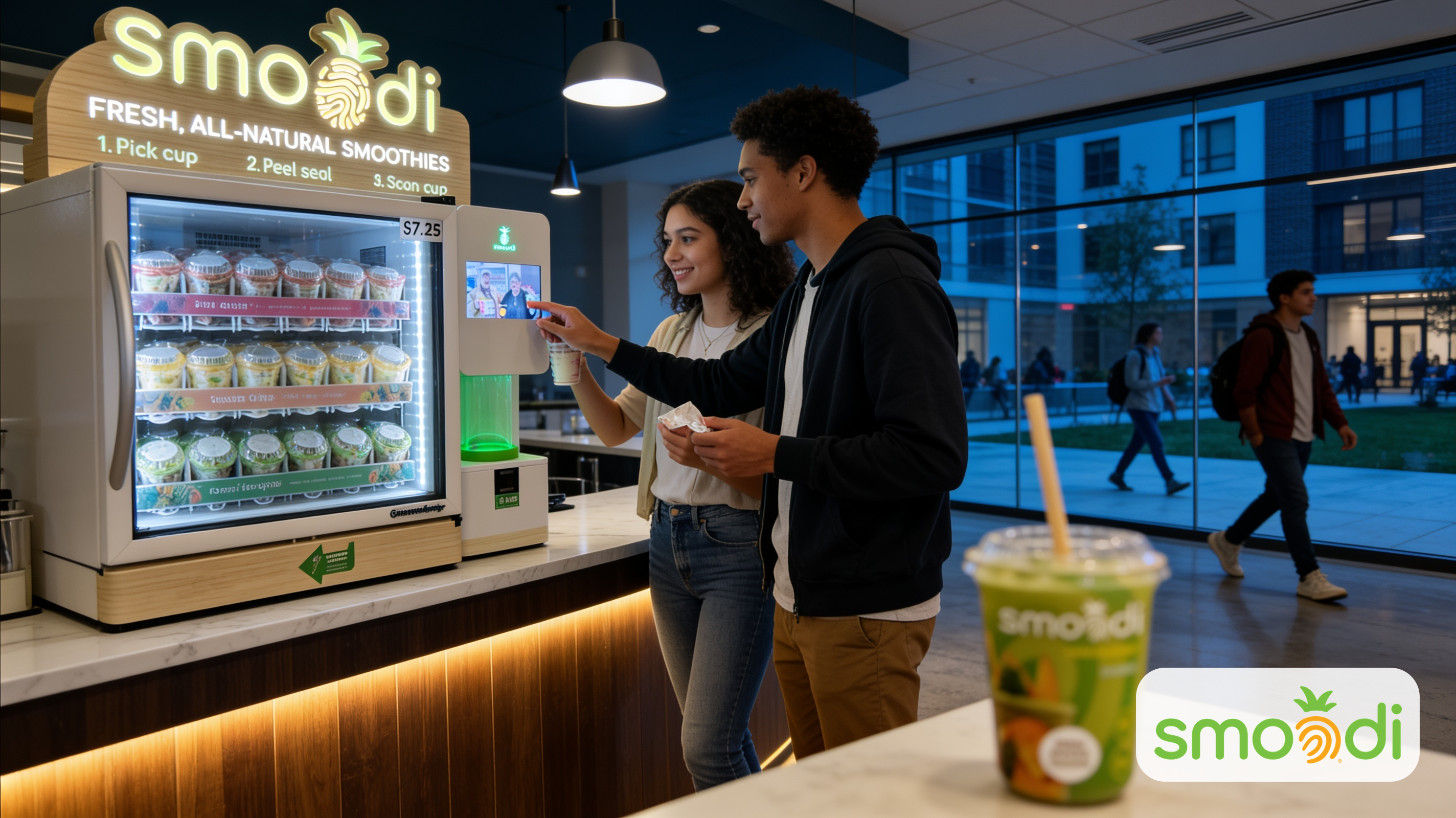
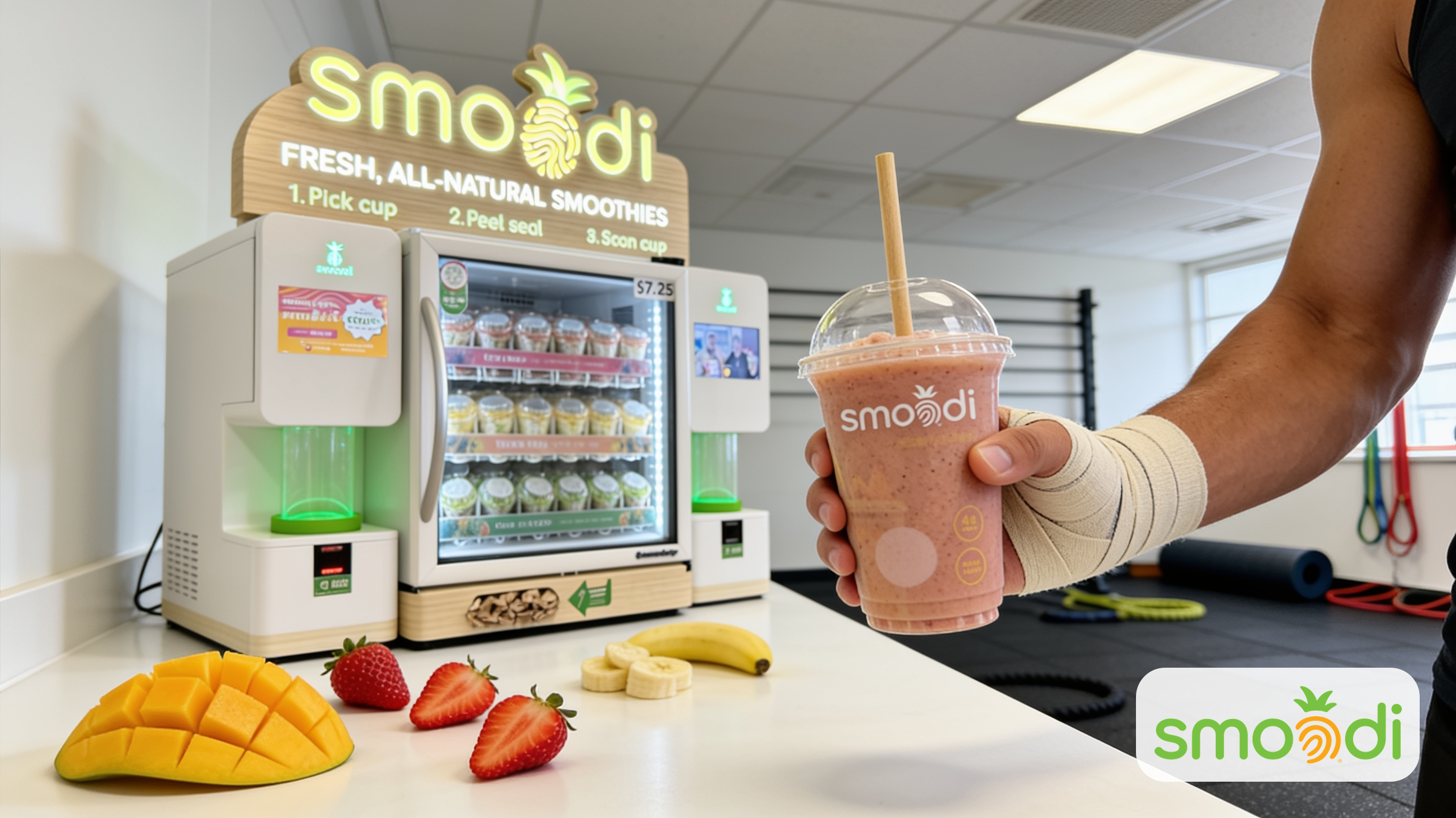
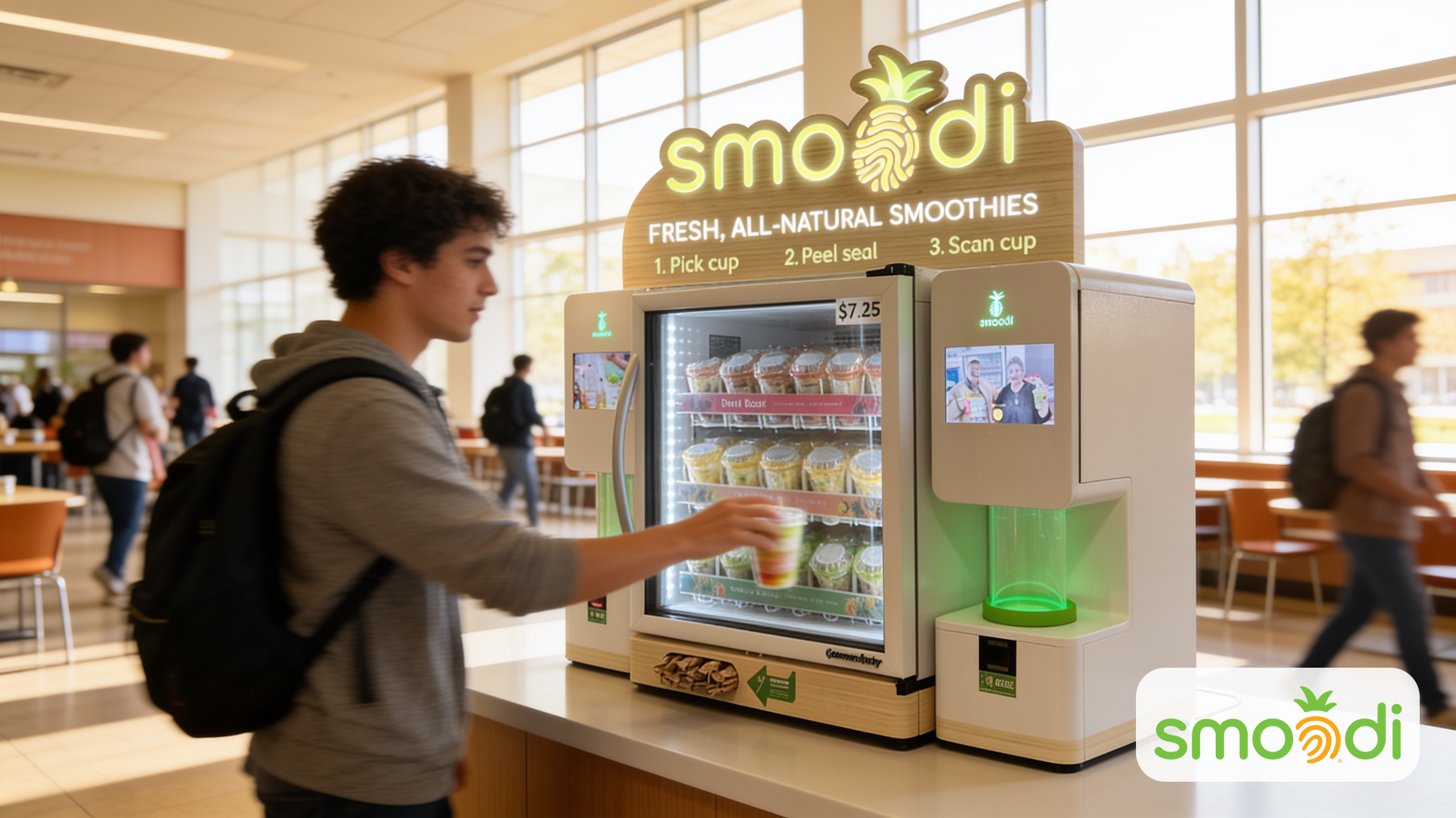
The system operates with zero labor for the actual preparation of the drink. Guests select a sealed frozen fruit cup, peel the tamper-evident seal, scan the barcode, place the cup in the machine, and the machine blends the drink in under 60 seconds. The entire process from start to finish takes approximately 90 seconds. Because the machine handles the blending and cleaning, the only on-site labor required is restocking cups and keeping surfaces clean.
This shift toward automation is part of a wider industry trend. According to Auguste Escoffier School of Culinary Arts, 47% of restaurant operators stated that in 2024, the use of technology and/or automation to help with labor shortages would become more common.
Maintaining Hygiene and Standards
Automation does not mean a sacrifice in cleanliness. Smoodi utilizes a patented self-cleaning cycle that runs after every serve, complemented by an automatic deep sanitation cycle that runs overnight using food-safe sanitizers. The machine is NSF and UL certified, ensuring it meets rigorous industry standards for safety and sanitation.
Diversifying Revenue Streams with Healthy Options
As campuses explore new revenue streams—including transaction fees from off-campus dining venues, on-campus franchises, and food delivery partnerships, as noted by GlobeNewswire—the demand for dietitian-approved, healthy options remains high.
Smoodi provides a diverse menu that caters to various student needs without requiring a chef. Options include:
- Wellness: Brain Boost (70 cal, 7g fiber, zero added sugar) and Green Energizer (100 cal, zero added sugar).
- Protein: Strawberries & Cream (20g protein), Choco-Banana (32g protein), and Peanut Protein (15g protein).
- Hydration: Cucumber Refresher (100 cal).
The use of real frozen fruit, pre-portioned at the source, ensures that there are no syrups or concentrates. Because the cups have a shelf life of two years from harvest when kept frozen, the website says this results in zero food waste and spoilage.
The University Dining Director Equipment Decision
When evaluating campus foodservice ROI automation, directors must consider the total cost of ownership and the ease of deployment. Smoodi is designed for rapid integration, with a typical go-live period of about 4–6 weeks. The installation is handled by the Smoodi team, meaning no outside contractor is needed.
The hardware is designed to fit into existing footprints, offering both countertop and floor models. The machines require standard 110–120V power and a 3/8 in push-to-connect water line. To manage the technology, Smoodi provides a cloud dashboard for tracking sales, inventory, and machine health, with predictive maintenance that allows over 95% of service queries to be solved remotely.
For high-traffic environments, such as universities, Smoodi advises the use of two machines to maintain consistent throughput. This ensures that students can access healthy nutrition between classes without long wait times.
Strategic Implementation for Long-Term Stability
The long-term viability of campus dining depends on the ability to adapt to a shrinking student pool. The National Association of College & University Food Services (NACUFS) highlighted these future challenges in its "Campus Dining: 2030 and Beyond" report, which was based on quantitative and qualitative research by expert researchers and leaders in the field, as reported by Diverse: Issues in Higher Education.
By integrating automated solutions, universities can decouple their revenue growth from their labor costs. The website says many partners price cups at $4.99–$7.99 and cite 40–50% gross margin. To determine specific financial projections for a particular campus, administrators can use the Smoodi ROI calculator.
Conclusion
The intersection of declining enrollment and rising labor costs is forcing a shift in how universities approach dining. By adopting university dining automation enrollment strategies, institutions can maintain high standards of nutrition and student satisfaction while reducing operational overhead. Smoodi provides a scalable, labor-free solution that fits into the modern campus ecosystem. From dietitian-approved flavors to a self-cleaning robotic system, automation allows universities to empower healthy habits on autopilot.
To learn more about deploying an automated smoothie solution on your campus, visit Smoodi University or request a demo at getsmoodi.com.
Ready to bring Smoodi to your location?
Join hundreds of operators delivering fresh, automated smoothies with zero labor.
Get Started