What Does a Smoothie Bar Really Cost Operators?
A staffed smoothie bar can cost $150,000 or more in year one. This breakdown shows how operators are replacing those costs with Smoodi's automated smoothie program.
Foodservice operators considering a smoothie program face a fundamental choice: build and staff a traditional smoothie bar, or deploy an automated smoothie machine. The upfront numbers look similar until you account for the full cost picture, labor, waste, equipment depreciation, and operational overhead. This analysis breaks down what each model actually costs in 2026.
The True Cost of a Staffed Smoothie Bar
A traditional smoothie bar involves more capital and operational expense than most operators anticipate at the outset. The costs fall into four categories.
1. Equipment and Build-Out
Commercial blenders capable of handling frozen fruit reliably cost between $400 and $900 per unit. A functional smoothie station requires at minimum two blenders (to maintain throughput while one is in use), a commercial refrigerator or freezer for ingredient storage, a prep counter, a point-of-sale terminal, and often a plumbing connection for cleaning. A basic build-out typically runs $15,000 to $50,000 depending on location and whether plumbing work is needed. A full juice-bar-style installation with millwork and branding can reach $100,000 or more.
2. Labor
This is the largest ongoing cost. A smoothie bar requires at minimum one full-time or part-time employee per operating shift. At the current foodservice wage floor of $15 to $18 per hour in most markets, and significantly higher in cities, a single part-time position (20 hours per week) costs approximately $16,000 to $19,000 per year in wages alone, before benefits, payroll taxes, training time, and turnover costs. Foodservice has an annual turnover rate of approximately 73%, meaning most operators replace this position at least once per year, adding recruiting and onboarding costs on top of wages.
3. Ingredient Waste and Spoilage
Fresh fruit spoils. Industry data suggests that foodservice operations using fresh produce experience 15 to 30 percent waste by volume during normal operations. For a smoothie program doing 50 servings per day at a raw ingredient cost of $2.00 to $3.00 per serving, annual ingredient waste alone can exceed $10,000. This figure rises sharply in lower-traffic periods, summer breaks at universities, low-occupancy hotel periods, and corporate offices with hybrid schedules.
4. Ongoing Maintenance and Management
Commercial blenders used for frozen fruit require regular maintenance. Blade and jar replacements, motor repairs, and deep cleaning add $1,000 to $3,000 per year in maintenance costs. There is also a management overhead cost: scheduling staff, ordering fresh ingredients daily or several times per week, monitoring waste, and handling health department compliance for fresh food handling.
The Smoodi Cost Model
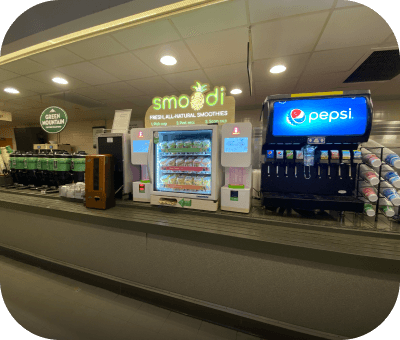
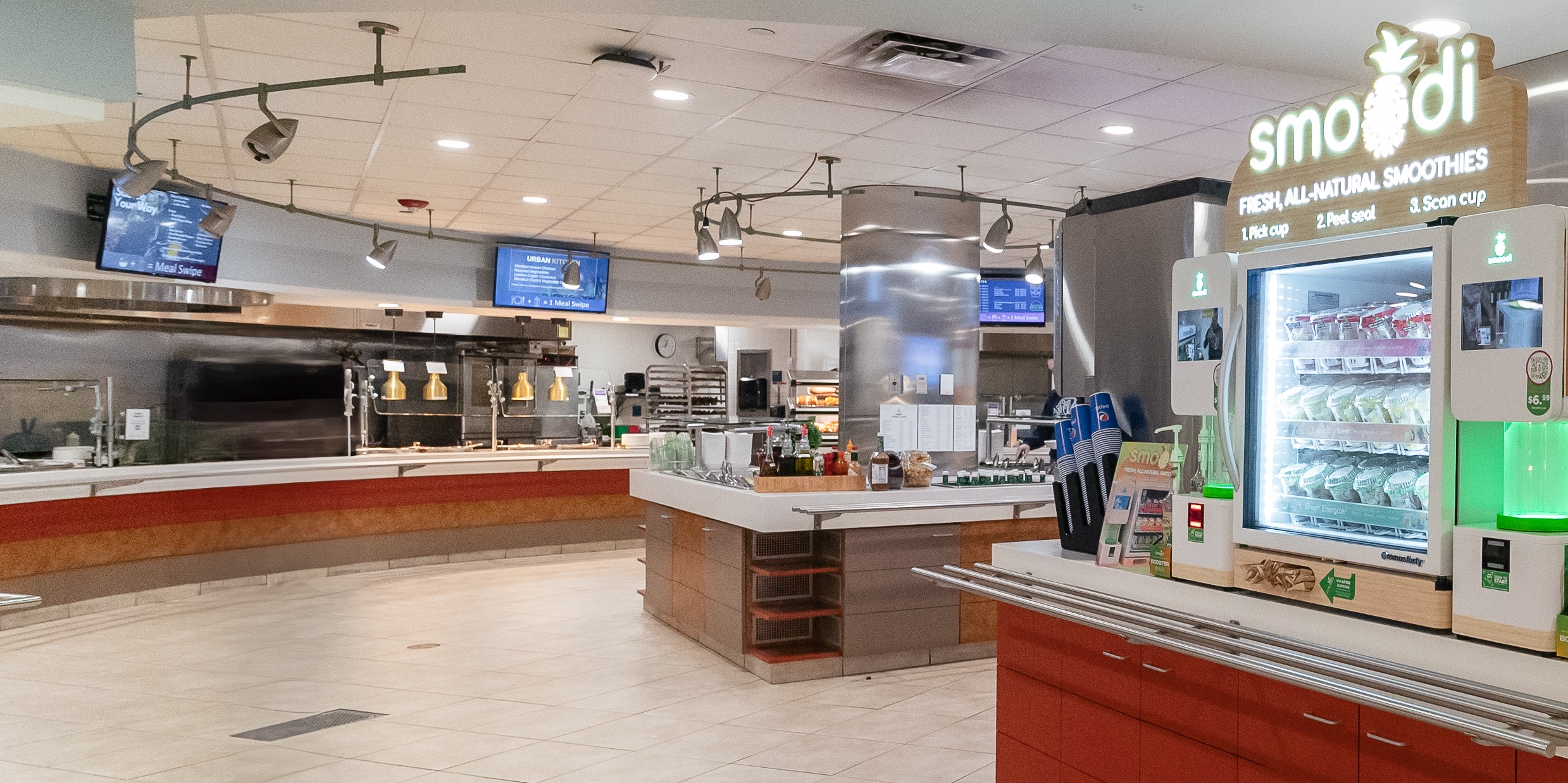
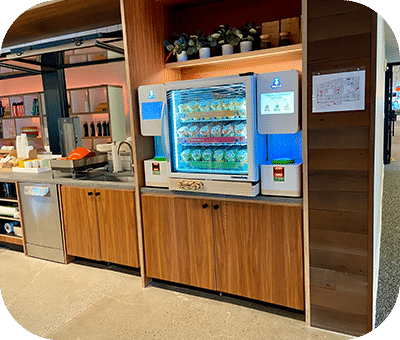
Smoodi offers an operational lease starting at $299 per month, with full service included, or a purchase option starting at $14,999. There is no major build-out cost beyond placing the machine in a space with access to a standard 110V outlet, water supply, and drain (all using simple push-to-connect fittings).
The operator's cost is the wholesale price of IQF frozen fruit cups, which Smoodi supplies through Dot Foods, one of the largest food redistribution networks in the United States. Because the cups are frozen with a shelf life of up to two years, there is no spoilage. Because the machine is self-cleaning and self-contained, there is no maintenance burden on the operator. Because the machine operates autonomously, there is no dedicated labor required.
At a typical smoothie retail price of $7.00 to $9.00 per cup and a cup cost of roughly $2.00 to $3.00 per serving, the contribution margin per cup after cup costs is strong and scales directly with volume without adding labor costs. The operator's primary fixed cost is the lease payment, which is predictable month to month.
Side-by-Side: Year-One Cost Comparison
- Equipment and build-out. Traditional bar: $15,000–$100,000 | Smoodi: Lease from $299/mo or purchase from $14,999
- Annual labor (1 part-time position). Traditional bar: $16,000–$25,000 | Smoodi: $0
- Annual ingredient waste. Traditional bar: $5,000–$15,000 | Smoodi: Near zero (2-year frozen shelf life)
- Annual maintenance. Traditional bar: $1,000–$3,000 | Smoodi: Included in subscription
- Revenue retention. Traditional bar: 100% minus labor overhead | Smoodi: Retail revenue minus cup costs and lease payment
When a Traditional Smoothie Bar Still Makes Sense
A staffed smoothie bar can be a strong investment when the location has an existing food and beverage team whose labor cost is already absorbed, the brand positioning requires a premium in-person experience with customization beyond what an automated machine offers, or the volume is high enough (500+ servings per day) that dedicated staffing represents a small fraction of revenue.
For most institutional operators, universities, hospitals, gyms, hotels, and corporate campuses, those conditions are rarely all true simultaneously. The labor cost alone makes the traditional model difficult to justify at typical campus or institutional smoothie volumes of 50 to 200 servings per day.
Calculating Your Own Numbers
Smoodi's ROI calculator at getsmoodi.com/roi allows operators to input their expected daily volume, local labor cost, and smoothie price point to generate a custom payback and margin analysis. For operators currently running or considering a traditional smoothie program, the comparison is often decisive.
To see how Smoodi performs in your specific location, visit getsmoodi.com/get-started to speak with the Smoodi team.
Ready to bring Smoodi to your location?
Join hundreds of operators delivering fresh, automated smoothies with zero labor.
Get Started