What Do the New USDA Dietary Guidelines Mean for Beverages?
The 2025-2030 USDA Dietary Guidelines set the firmest stance yet on added sugars and recommend frozen fruit smoothies by name. Here is what foodservice operators need to know.
The 2025-2030 Dietary Guidelines for Americans, released in January 2026, represent the most significant update to federal nutrition policy in a decade. For the first time, the guidelines explicitly state that "no amount of added sugars is recommended or considered part of a healthy or nutritious diet." They set a hard ceiling of less than 10 grams of added sugar per meal for most Americans, recommend zero added sugars for children under age four, and flag sugar-sweetened beverages as a primary target for reduction across all age groups.
For foodservice operators, these guidelines are not advisory. They drive regulatory updates across every federally funded nutrition program: school meal standards, the Child and Adult Care Food Program (CACFP), the Women, Infants, and Children (WIC) program, military dining facilities, and healthcare institution nutrition requirements. Beverage programs built on syrups, concentrates, or sugary mixes now face compliance pressure from multiple directions.
What Changed in the 2025-2030 Dietary Guidelines?
The updated guidelines sharpen several positions that were previously softer recommendations.
- Added sugar ceiling: Less than 10 grams per meal for adults and children over age four. Zero added sugars recommended for children under four.
- Sugar-sweetened beverages: Explicitly identified as a primary source of excess added sugar. The guidelines recommend replacing them with water, unsweetened beverages, or 100 percent fruit options.
- Frozen fruit endorsement: The guidelines specifically recommend "a smoothie made with frozen fruit" as a practical way to increase daily fruit intake. Frozen fruit is recognized as nutritionally equivalent to fresh when processed without added sugars.
- Fruit intake targets: Two servings of fruit per day for most adults. The guidelines note that 80 percent of Americans currently consume less fruit than recommended.
- 100 percent juice limits: While permitted, 100 percent juice is recommended in limited portions (no more than half of daily fruit intake). Whole fruit and blended whole-fruit beverages are preferred.
The explicit naming of frozen-fruit smoothies as a recommended option is notable. It gives foodservice operators a direct federal reference point when justifying smoothie programs to procurement committees, nutrition review boards, and institutional compliance officers.
How Do the New Sugar Limits Affect Beverage Programs?
The 10-gram-per-meal sugar ceiling creates a practical problem for many existing beverage programs. A typical 16-ounce commercial smoothie made with fruit puree concentrates contains 30 to 50 grams of added sugar. A flavored latte from a coffee station can contain 25 to 40 grams. Even beverages marketed as "healthy" often exceed the new threshold in a single serving.
Operators in schools, hospitals, and government-funded facilities are the first to feel the compliance pressure. School nutrition standards for the 2025-2026 academic year are being updated to reflect the new added-sugar limits. CACFP-funded childcare and senior nutrition programs are following. Military dining facilities operating under the Army's new Dining Excellence Initiative (DINEX) are incorporating the updated guidelines into their menu planning.
For commercial foodservice (corporate cafeterias, hotel breakfast bars, fitness center snack bars), the guidelines create market pressure rather than regulatory mandates. Consumers who are aware of the new recommendations will increasingly scrutinize beverage options. Operators who proactively align their offerings with federal nutrition standards position themselves as health-forward and nutrition-conscious, which is a competitive advantage in employee retention, guest satisfaction, and brand perception.
Which Beverages Meet USDA Standards?
Under the new guidelines, the beverages that meet or exceed USDA recommendations share several characteristics: they contain zero added sugars, they use whole or minimally processed ingredients, and they contribute meaningful nutrition (vitamins, minerals, fiber, or protein) rather than empty calories.
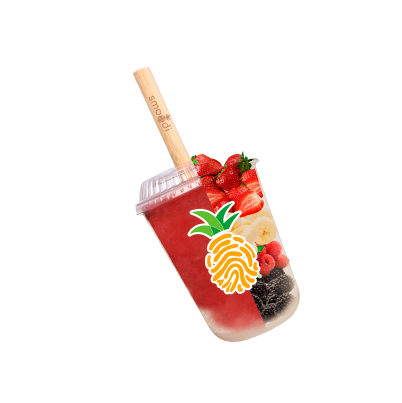
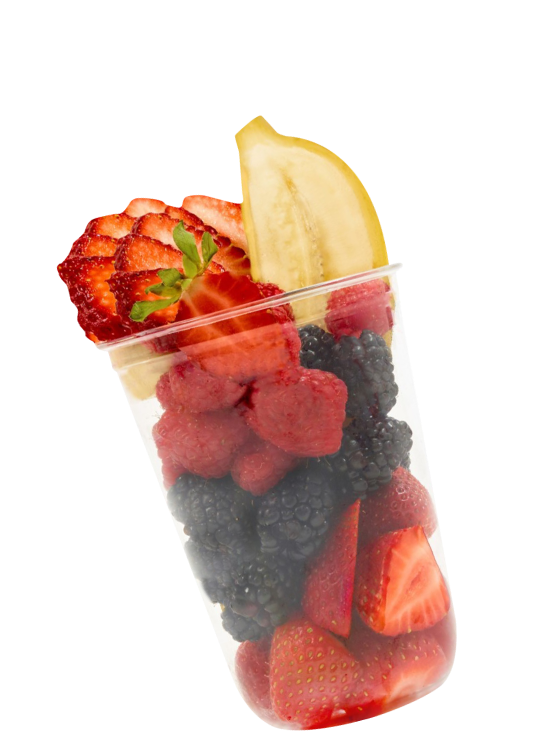
Smoodi smoothies meet every criterion. Each smoothie is made from IQF (individually quick frozen) whole fruit cups blended with water only. There are no syrups, no concentrates, no added sugars, and no artificial ingredients. The fruit is flash-frozen within hours of harvest, preserving vitamins and minerals at peak levels. The USDA guidelines specifically endorse this exact format: a smoothie made with frozen fruit, without added sweeteners.
The booster bar adds another dimension of compliance and value. Protein powder, collagen, and other functional supplements allow users to customize their beverage for specific nutritional needs (post-workout recovery, meal replacement, or dietary supplementation) without adding sugar. For dietitians and nutrition program managers, the ability to offer a standardized, whole-fruit beverage with optional functional boosters simplifies menu planning and documentation.
How Does This Affect Federal Nutrition Programs?
Federal nutrition programs that serve millions of Americans daily are among the first to update their standards in response to the new guidelines.
- K-12 school meals: The USDA permits smoothies as part of reimbursable school breakfast and lunch programs. Pureed fruits in smoothies credit toward fruit and vegetable requirements. The new added-sugar limits make whole-fruit smoothies (with no added sweeteners) an ideal compliant option.
- CACFP (childcare and adult care): Programs serving young children must now meet the zero-added-sugar standard for children under four. Whole-fruit smoothies with water are one of the few beverage categories that naturally meet this requirement.
- WIC: The Women, Infants, and Children program is updating its approved food packages to align with the 2025-2030 guidelines. Frozen fruits and whole-fruit beverages are expected to remain approved items.
- Military dining (DINEX): The Army's Dining Excellence Initiative, launched in December 2025, is incorporating the updated dietary guidelines into garrison dining standards. Campus-style dining facilities at installations like Fort Lee and Fort Hood are piloting nutrition-forward menu concepts.
- Healthcare facilities: Hospital nutrition programs that participate in Medicare and Medicaid often follow federal dietary guidelines as a baseline for cafeteria and patient meal standards.
What Should Operators Do Now?
The timeline for compliance varies by program, but the direction is clear. Operators who wait for mandates to take effect will be reactive. Those who align their beverage programs now gain a first-mover advantage with regulators, customers, and institutional procurement teams.
A practical first step is to audit existing beverage offerings against the 10-gram added-sugar threshold. Any beverage that exceeds that limit per serving is a candidate for replacement or reformulation. Whole-fruit smoothies made with IQF ingredients and water provide a ready alternative that requires no recipe development or staff training.
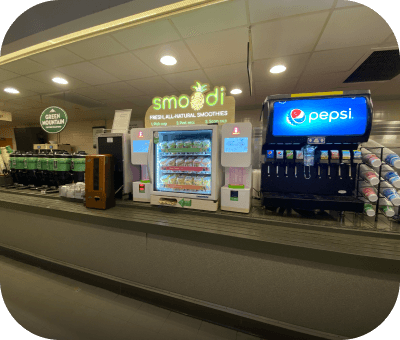
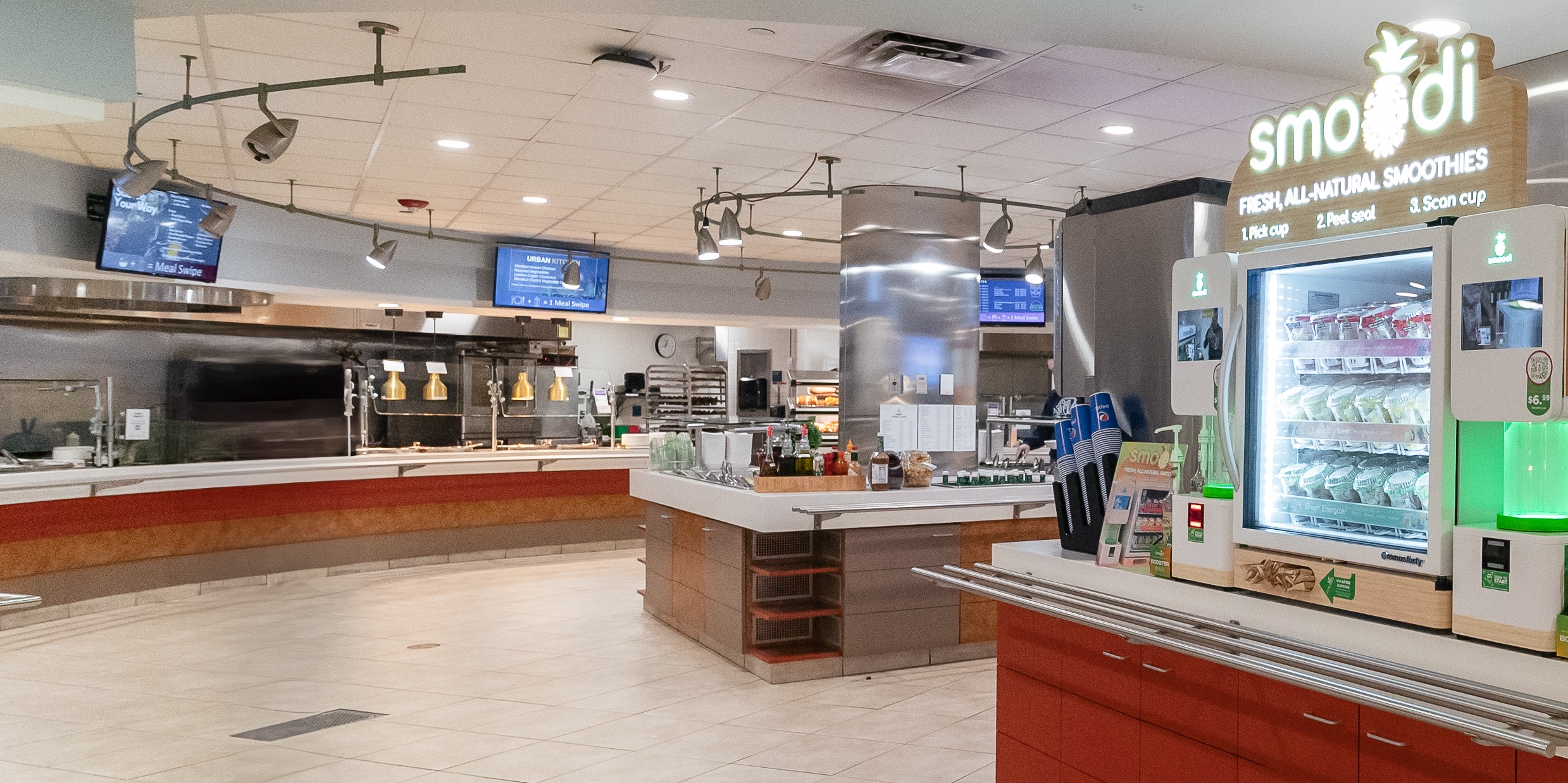
Smoodi's automated machine makes the transition operationally simple. The machine requires zero dedicated labor, self-cleans between every use, and blends a fresh smoothie in under 60 seconds. Fruit cups have a shelf life of up to two years and are distributed through Dot Foods, the largest food redistribution company in North America. An operational lease starts at $299 per month (48-month term), or operators can purchase the machine starting at $14,999.
Smoodi operates in more than 300 locations across the United States, serving universities, hospitals, corporate offices, fitness centers, hotels, airports, convenience stores, and senior living communities. More than two million smoothies have been served since the company's founding at Harvard Innovation Labs. To explore how a Smoodi station supports your facility's compliance with the 2025-2030 Dietary Guidelines, visit getsmoodi.com/get-started.
Ready to bring Smoodi to your location?
Join hundreds of operators delivering fresh, automated smoothies with zero labor.
Get Started