Why Every Gym Needs an Automated Smoothie Station in 2026
Gym owners face rising member expectations for nutrition. An automated smoothie station cuts staffing costs, boosts retention, and generates new revenue.
The post-workout smoothie is one of the most established rituals in fitness. Members finish a session, reach for a protein-rich blend, and refuel before heading out the door. Despite this near-universal demand, most gyms still do not offer a reliable on-site smoothie option, and the ones that do often struggle with the operational burden of running a staffed juice bar. In 2026, as gym member expectations rise and labor costs continue to climb, automated gym smoothie stations are emerging as the practical answer to a problem that has persisted for years.
The Nutrition Gap at Most Fitness Centers
Fitness centers have invested heavily in equipment, group fitness programming, and digital member experiences over the past decade. Nutrition, by contrast, has remained an afterthought. Walk into most gyms and the food and beverage options are limited to a vending machine stocked with energy drinks and protein bars, products that may carry a health halo but are often loaded with added sugar and artificial ingredients.
This gap between what members want and what gyms provide is well-documented. Approximately 31% of gym-goers regularly purchase convenience items such as drinks, snacks, and refreshments at their facility, and those who do report higher satisfaction with their overall gym experience. For facilities that lack a fresh nutrition option, that demand represents revenue left on the table and a missed opportunity to deepen member engagement.
Recovery lounges, meditation rooms, and nutrition counseling spaces are no longer premium add-ons at competitive fitness centers, they are becoming standard. Members increasingly evaluate their gym not just by the quality of its equipment but by the quality of its overall wellness experience. A smoothie station fits naturally into this expectation, sitting at the intersection of nutrition, convenience, and post-workout recovery.
Why Members Expect a Gym Smoothie Station
Post-workout nutrition is not a luxury, it is a functional need. The 30-minute window after exercise is when the body is most receptive to protein and carbohydrate intake for muscle recovery and glycogen replenishment. When a gym provides a fresh, real-fruit smoothie option on-site, it removes the friction between the workout and the recovery meal, keeping members in the facility longer and reinforcing the gym's role as a complete wellness destination.
The retention case is equally compelling. The HFA 2025 Fitness Industry Benchmarking Report places the industry-average annual retention rate at 66.4%, with 50% of new members quitting within the first six months. The average gym loses approximately $60,000 per year to member churn. Amenities that create daily habits and build community, like a post-workout smoothie ritual, are among the most effective tools for improving those numbers. When members associate a specific positive routine with their gym, they are measurably less likely to cancel.
Industry data supports this further: gyms with strong retail and nutrition offerings generate an average of $12 per member per month in ancillary revenue. For facilities with loyalty or engagement programs wrapped around those offerings, the figure climbs to $34 per member per month. A smoothie station is not just an amenity, it is a retention tool with a direct revenue impact.
The Staffing Problem That Holds Gyms Back
If the demand is clear, why have most gyms not added a smoothie bar? The answer is almost always operational. A staffed juice bar requires trained employees, fresh produce inventory, commercial blending equipment, daily cleaning protocols, and health code compliance. In a labor market where foodservice turnover exceeds 73% annually and 79% of operators report difficulty hiring, staffing a smoothie bar is a commitment many gym operators cannot sustain.
The math is challenging. A single staffed smoothie station operating 12 hours a day can cost $35,000 to $50,000 annually in labor alone, before accounting for food waste, equipment maintenance, and management overhead. For most fitness centers, particularly those without a dedicated food service team, those numbers put a traditional juice bar out of reach.
"I have been looking to add a smoothie bar for years but did not want to deal with the labor and food waste. Having smoodi in our facility is a huge benefit for our members."
— Adam Healy, General Manager, Waverly Oaks Athletic Club
This is the same operational challenge that has limited fresh nutrition access across multiple industries. As explored in the Smoodi blog post "Smoodi is Cutting Costs and Boosting Efficiency," the labor intensity of traditional smoothie operations has historically been the primary barrier to making fresh nutrition available in high-traffic environments, whether in hospitals, universities, or fitness centers.
How Automated Smoothie Stations Solve the Equation
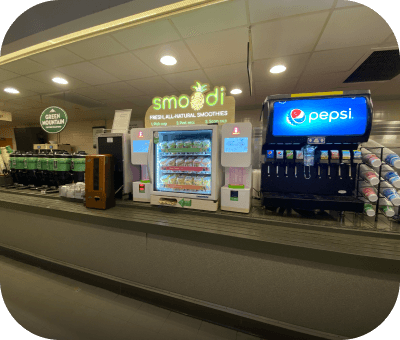
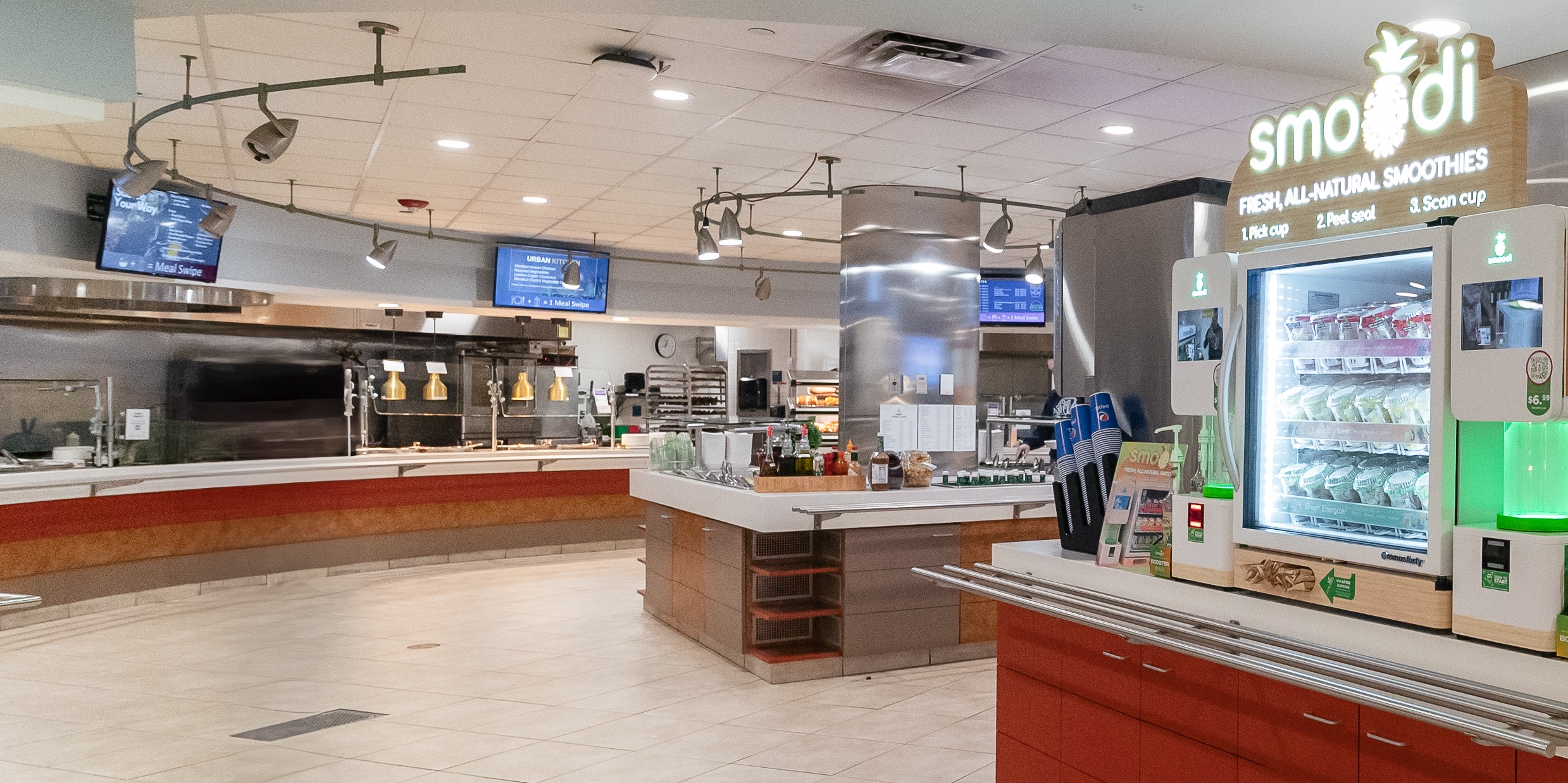
Automated smoothie stations eliminate the operational barriers that have kept gyms from offering fresh nutrition on-site. Each unit operates without any dedicated staff, members select a blend on the touchscreen, the machine portions real frozen fruit, blends it fresh, and self-cleans between each use. The entire process takes under 60 seconds.
For gym operators, the key advantages are both operational and financial:
- Zero daily labor requirement, no barista, no food handler, no scheduling
- Self-cleaning cycle after every use, no manual sanitation between customers
- Pre-portioned IQF fruit packs eliminate spoilage and produce management entirely
- 24/7 operation captures early-morning and late-night demand when staffed options would be closed
- Remote monitoring tracks inventory levels, machine status, and transaction data from a single dashboard
- Compact footprint fits in a lobby, near the locker room, or in any common area without renovation
This model transforms the economics entirely. A gym does not need to hire staff, train a smoothie maker, or manage a perishable supply chain. The machine handles every step from portioning to blending to cleanup, and weekly restocking takes approximately 30 minutes.
Real Ingredients, No Compromise
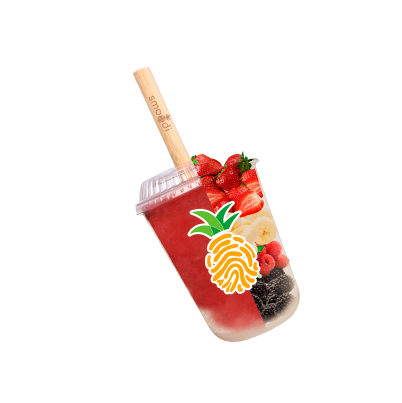
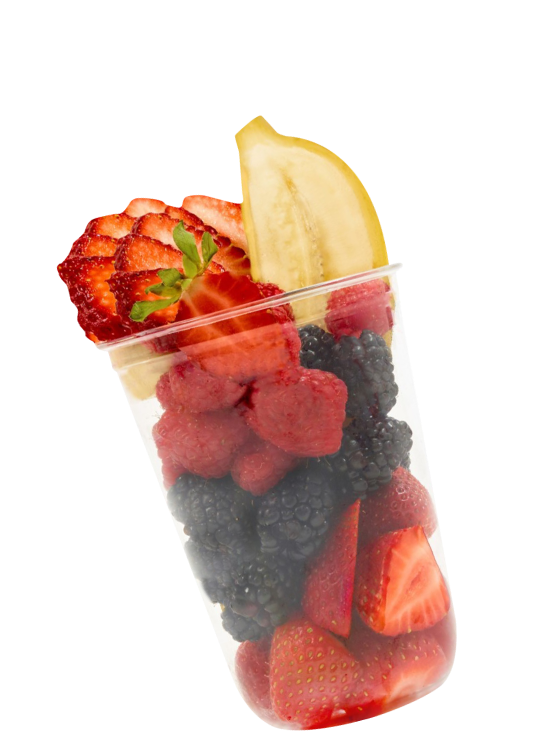
A common concern among gym operators is whether an automated machine can match the quality of a staffed juice bar. In Smoodi's case, the ingredient standard is actually higher than many traditional bars. Every smoothie is made from real frozen fruit, no powder concentrates, no artificial flavors, no added sugar. The fruit is frozen at peak ripeness using IQF (individually quick frozen) technology, which preserves more nutrients than fresh produce that has spent days in transit and sitting on a shelf.
As the Smoodi blog post "It Shouldn't Be Expensive to Be Healthy" notes, removing the cost structure of a staffed operation also means members pay less for a genuinely nutritious product. The result is a better smoothie at a better price point, a combination that drives repeat purchases and builds the kind of daily habit that supports long-term member retention.
The Revenue Case for Gym Operators
Beyond member satisfaction, automated smoothie stations represent a meaningful and measurable revenue opportunity. Unlike a staffed bar that closes when its employees go home, an automated unit operates continuously. For gyms with early-morning and late-evening traffic, which describes the vast majority of fitness centers, this around-the-clock availability captures revenue during hours when no other fresh food option is accessible.
The ancillary revenue potential is significant. One industry case study documented a gym smoothie bar generating $8,400 per month in loyalty-driven sales alone. Operators who have deployed automated smoothie machines in fitness settings typically see those machines reach positive ROI within three to six months. After that point, the machine generates net revenue with minimal ongoing cost, no labor budget, no fresh produce orders, no equipment maintenance contracts typical of traditional commercial blenders.
For gym owners evaluating capital allocation, the comparison is straightforward: a staffed juice bar requires ongoing investment in labor, inventory, and management. An automated station requires a single deployment and generates returns from day one, with revenue scaling in direct proportion to foot traffic.
Competitive Differentiation in a Crowded Market
The fitness industry in 2026 is defined by a simple competitive reality: members have more choices than ever. Boutique studios, budget chains, premium clubs, and home fitness platforms are all competing for the same consumer. In this environment, the gyms that retain members are the ones that deliver a complete experience, not just good equipment, but a facility that supports the full wellness cycle from workout to recovery to nutrition.
A 2025 survey found that 76% of gym members said loyalty-program benefits and exclusive amenities were an important factor when choosing between comparable facilities. An automated smoothie station is precisely the kind of tangible, visible amenity that signals investment in member wellbeing. It gives the gym a talking point on the tour, a reason for members to linger after their session, and a daily touchpoint that builds the habits and community connections that drive retention.
"We were looking for quick, healthy options for our customers and smoodi ticked all the boxes. It's quick, self-service, and does the job. The feedback has been great - the lines say it all."
— Jim Launer, President, Spooky Nook Sports
Making the Shift in 2026
For gym owners evaluating their amenity strategy, the question is no longer whether to offer on-site nutrition. The data on member expectations, retention impact, and ancillary revenue all point in the same direction. The question is how to deliver fresh nutrition sustainably, without the labor burden, spoilage risk, and operational complexity of a traditional smoothie bar.
An automated gym smoothie station provides a clear answer. It meets members where they are, at the moment they need nutrition most, with real ingredients and zero staffing overhead. The operational results at fitness facilities that have already deployed them suggest the model works, and for gyms still relying on vending machines and protein bar displays, the gap between member expectations and what the facility offers is only widening.
Operators interested in exploring how a gym smoothie station could fit into their facility can visit the Smoodi gyms page at getsmoodi.com/gyms or use the ROI calculator at getsmoodi.com/roi to model the financial impact for their specific location.
Ready to bring Smoodi to your location?
Join hundreds of operators delivering fresh, automated smoothies with zero labor.
Get Started