How Can 24/7 Facilities Provide Fresh Nutrition at Every Hour?
Hospitals, hotels, manufacturing plants, and data centers operate around the clock, but most food programs shut down after dinner. Self-service nutrition stations are closing the overnight gap for facilities that never sleep.
Hospitals, hotels, manufacturing plants, data centers, and airports share a common operational reality: the work never stops. These facilities operate 24 hours a day, 365 days a year, relying on round-the-clock teams to keep patients safe, guests comfortable, production lines moving, servers running, and flights departing on time. Yet the food programs at most of these facilities shut down by 7 or 8 PM, leaving night shift workers with little more than vending machines and whatever they packed from home. The overnight nutrition gap is a well-documented problem with real consequences for worker health, safety, and retention.
Who Works the Night Shift, and Why Does Nutrition Matter?
Night shift workers represent roughly 16 percent of the US workforce, approximately 27 million people. They include nurses, physicians, security personnel, hotel staff, warehouse workers, airline ground crews, manufacturing operators, emergency dispatchers, and IT infrastructure teams. These are not marginal roles. They are essential positions in industries where downtime is not an option.
Research consistently shows that night shift work takes a measurable toll on health. Night shift workers face a 29 percent higher risk of obesity compared to day shift colleagues. They also experience increased risk of metabolic disorders, cardiovascular disease, type 2 diabetes, and gastrointestinal problems. Circadian disruption affects hormone regulation, appetite signaling, and glucose metabolism. When poor food access compounds that disruption, the health consequences accelerate.
The pattern is predictable. A nurse working a 12-hour overnight shift arrives at 7 PM, after the cafeteria has closed. By midnight, hunger sets in. The options are a candy bar from the vending machine, leftover pizza in the break room, or nothing at all. By 3 AM, fatigue and blood sugar instability affect focus and decision-making. This is not a comfort issue. In healthcare settings, it is a patient safety issue. In manufacturing environments, it is a workplace safety issue.
The Scope of the Problem
- Hospital cafeterias typically operate from 6 AM to 7 PM, leaving a 11-hour gap with no fresh food service.
- Hotel kitchens may close by 10 PM, but housekeeping, security, and front desk teams work through the night.
- Manufacturing plants running three shifts often provide vending machines as the sole food option for second and third shifts.
- Data centers and logistics hubs operate in locations where nearby restaurants and convenience stores may not exist, making external food access difficult or impossible.
- Airports have food courts that close in the evening, while ground crews, cleaning teams, and TSA personnel continue working overnight.
What Happens When Facilities Fail to Feed Their Night Teams?
The consequences of the overnight nutrition gap extend beyond individual health. Facilities that do not provide adequate food options for night shift workers experience higher turnover in overnight positions, increased absenteeism, more workplace injuries during late shifts, lower morale among teams that feel undervalued compared to day shift colleagues, and difficulty recruiting for overnight roles.
Retention is particularly affected. Night shift workers already contend with social isolation, disrupted sleep patterns, and the physical demands of off-hours work. When the employer also fails to provide basic food access, it reinforces the perception that overnight staff are an afterthought. In competitive labor markets, this perception drives talented workers toward employers who demonstrate more comprehensive support.
Some facilities attempt to address the problem with catering deliveries, stocked refrigerators, or extended cafeteria hours. Each approach has limitations. Catering deliveries are expensive and create food safety risks when items sit at room temperature for hours. Stocked refrigerators require someone to manage inventory, monitor expiration dates, and clean the unit regularly. Extended cafeteria hours require additional staffing at premium overnight pay rates. The cost of these workarounds often exceeds their value, leading most facilities to accept the vending machine default.
Why Self-Service Nutrition Solves the 24/7 Challenge
The core problem is straightforward: fresh food preparation requires staff, but staffing a food program around the clock is prohibitively expensive for most facilities. Self-service nutrition stations eliminate this constraint entirely. An automated system that requires no operator, no food preparation, and no cleanup provides the same quality of service at 2 AM that it provides at 2 PM.
For 24/7 facilities, the ideal nutrition solution meets several specific criteria. It operates without dedicated staff at any hour. It maintains food safety without manual intervention. It uses shelf-stable ingredients that do not spoil during low-traffic overnight hours. It occupies minimal space in break rooms, lobbies, or staff areas that were not designed for food service. It delivers genuine nutritional value, not just calories, to workers whose health is already compromised by circadian disruption.
How Smoodi Delivers Fresh Nutrition Around the Clock
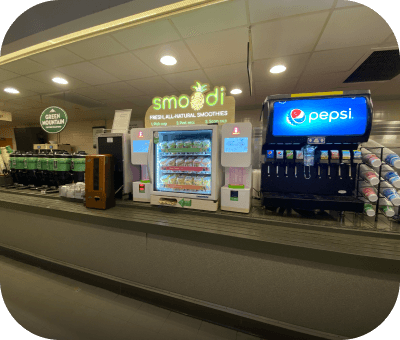
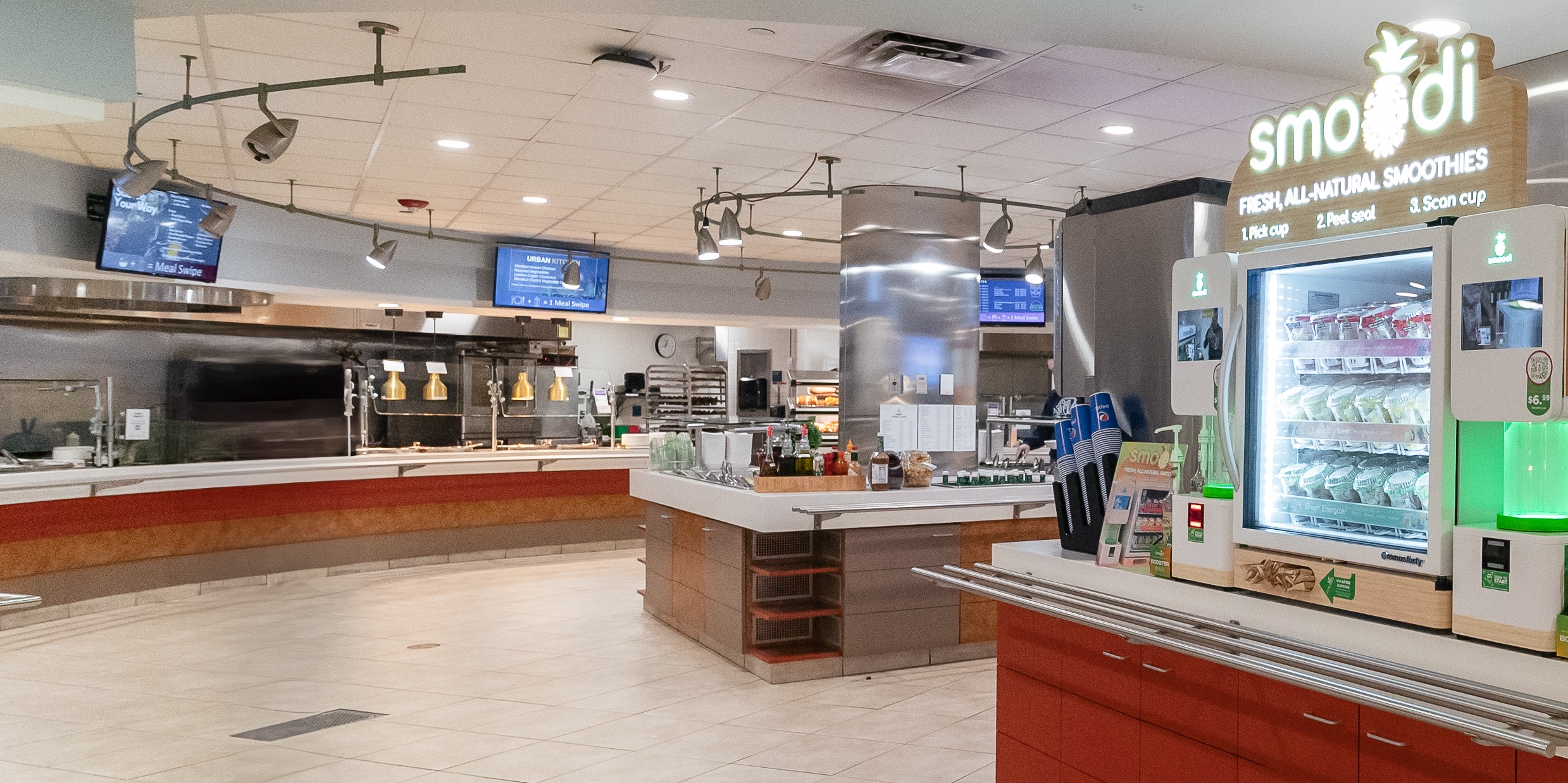
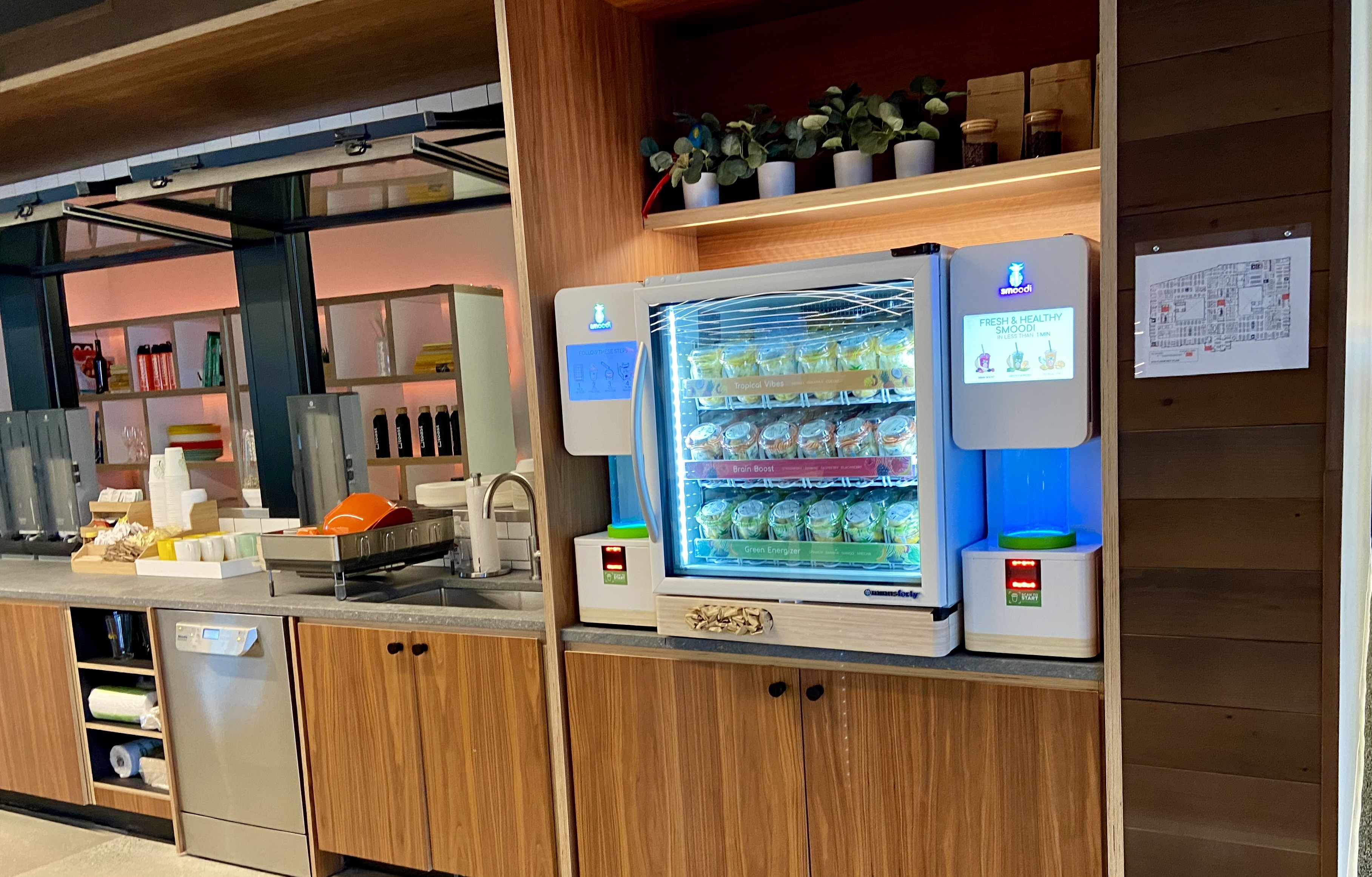
Smoodi's automated smoothie machine was designed for exactly this operational profile. The machine is fully self-service, requiring no staff to operate, monitor, or clean. A night shift nurse, a hotel housekeeper, or a warehouse worker can walk up at any hour, select a smoothie, and have a fresh fruit beverage blended and ready in under 60 seconds. The machine self-cleans between every use, maintaining food safety standards without manual intervention.
Each smoothie is blended from IQF (individually quick frozen) real fruit cups with water only. Zero syrups, zero concentrates, zero artificial ingredients, zero added sugar. IQF fruit cups have a shelf life of up to two years, which means facilities do not face the spoilage risk that makes perishable food programs impractical for overnight service. The fruit cups are distributed through Dot Foods, the largest foodservice redistributor in the United States, ensuring reliable supply to facilities nationwide.
"smoodi is hands down the number one perk at our headquarters. Fresh, healthy, and zero effort on our end."
— Katherine Berman, Workplace Experience Manager, Toast
The booster bar offers protein powder, collagen, and other functional supplements, allowing workers to customize their nutrition for energy, recovery, or sustained focus during long shifts. The compact design requires approximately 40 inches of floor space, fitting in break rooms, nurse stations, hotel back-of-house areas, and manufacturing floor rest areas without renovation or construction.
Where to Place Nutrition Stations in 24/7 Facilities
- Hospital break rooms and staff lounges, accessible to clinical teams during shift changes and overnight hours.
- Hotel employee dining areas, serving housekeeping, front desk, and security teams across all shifts.
- Manufacturing floor break rooms, positioned near shift change areas for maximum visibility and convenience.
- Data center common areas, where small teams work in isolation and external food options may be distant.
- Airport employee areas behind security, serving ground crews, TSA personnel, and airline staff.
The Business Case for Overnight Nutrition Access
Investing in overnight nutrition is not a charitable gesture. It is an operational decision with measurable returns. Facilities that provide fresh food access to night shift workers report improved retention in hard-to-fill overnight positions, reduced absenteeism driven by better health outcomes, fewer safety incidents during late shifts when fatigue and poor nutrition compound, higher employee satisfaction scores among overnight teams, and a stronger employer brand for recruiting.
Smoodi operates in more than 300 locations across the United States, with over 2 million smoothies served. The company was founded at Harvard Innovation Labs. The operational lease starts at $299 per month for a 48-month term, with additional options at $349 per month (36 months), $399 per month (24 months), and $499 per month (12 months). The purchase option is $14,999. Multiple machines can be installed side by side in high-traffic facilities to handle peak demand during shift changes.
Facility managers, hospital administrators, hotel operations directors, and manufacturing plant managers exploring 24/7 nutrition solutions can learn more at getsmoodi.com/get-started.
Ready to bring Smoodi to your location?
Join hundreds of operators delivering fresh, automated smoothies with zero labor.
Get Started