How Hospitals Can Provide Healthcare Fast Nutrition
Learn how hospitals can improve patient satisfaction and recovery through healthcare fast nutrition using automated smoothie technology.
The Challenge of Hospital Nutrition
A patient arrives at a healthcare facility, exhausted and recovering. While the medical care is precise, the dining experience often feels like an afterthought. This is a common trend across the industry, as food and beverage is the lowest-scoring factor across the hospital stay experience, according to the 2023 J.D. Power U.S. Hospital Patient Satisfaction Study, which surveyed 2,885 hospital patients J.D. Power.
The stakes for improving these services are high. Malnutrition affects between 20% and 50% of hospital inpatients on admission, with further nutritional declines expected during hospitalisation Journal of Human Nutrition and Dietetics (Wiley). When patients lack access to convenient, nutrient-dense options, the recovery process can be hindered.
Implementing healthcare fast nutrition allows facilities to bridge the gap between clinical requirements and patient satisfaction. By providing accessible, dietitian-approved options, hospitals can support better health outcomes while improving the overall patient experience.
Improving Patient Satisfaction Through Flexibility
Patient satisfaction is closely tied to how much control a person feels they have over their environment. Research indicates that foodservice models supporting patient flexibility and meal ordering closer to the delivery time, such as room service or choice at the point of service, show higher patient satisfaction Journal of Human Nutrition and Dietetics (Wiley).
While 73% of patients can order food and beverage for room delivery, the overall experience remains the lowest-scoring aspect of their stay J.D. Power. This suggests that delivery alone is not the solution; rather, the quality and accessibility of the options matter most.
Electronic bedside meal ordering systems have been shown to positively impact patient dietary intake, satisfaction, plate waste, and costs compared with traditional menus Nutrition and Dietetics (Wiley). Moving toward automated, self-serve models can further this trend by giving patients and visitors immediate access to healthy choices without waiting for a delivery window.
Reducing Waste in Healthcare Foodservice
Efficiency in the kitchen is as important as the experience in the ward. Currently, hospitals discard approximately 30% of prepared meals, which contributes 5–10% of the facility's CO₂ emissions Resources, Conservation and Recycling (Elsevier).
Traditional food preparation often leads to spoilage and overproduction. Smoodi addresses this by using real frozen fruit pre-portioned at the source. These cups have a shelf life of two years from harvest when kept frozen, which the website says means zero food waste and spoilage.
By shifting some of the nutritional demand to an automated system, hospitals can reduce the burden on central kitchens. Smoodi machines operate with a closed prep path that minimizes cross-contact and require no on-site labor beyond restocking cups and keeping surfaces clean.
Integrating Healthcare Fast Nutrition with Smoodi
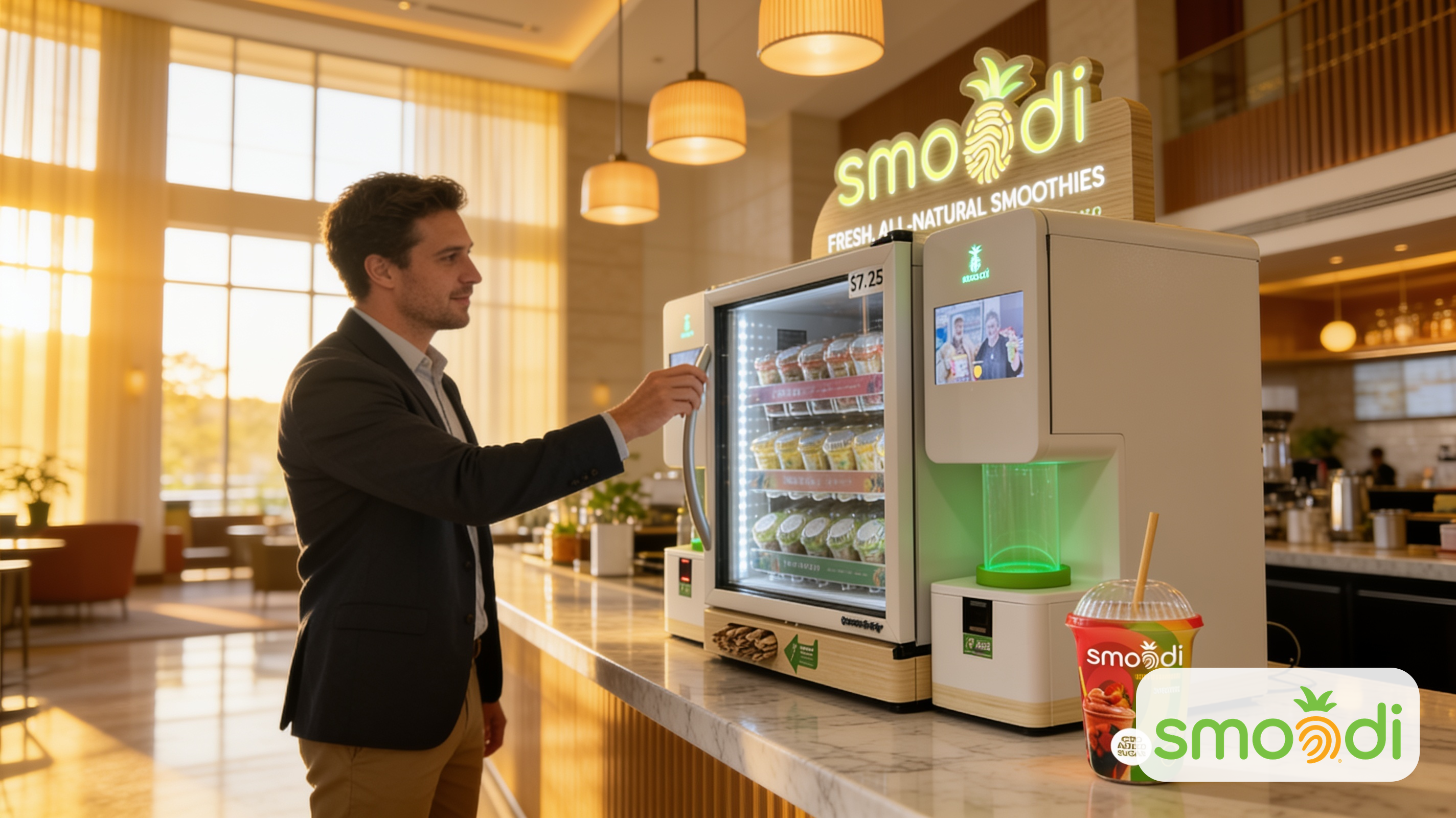
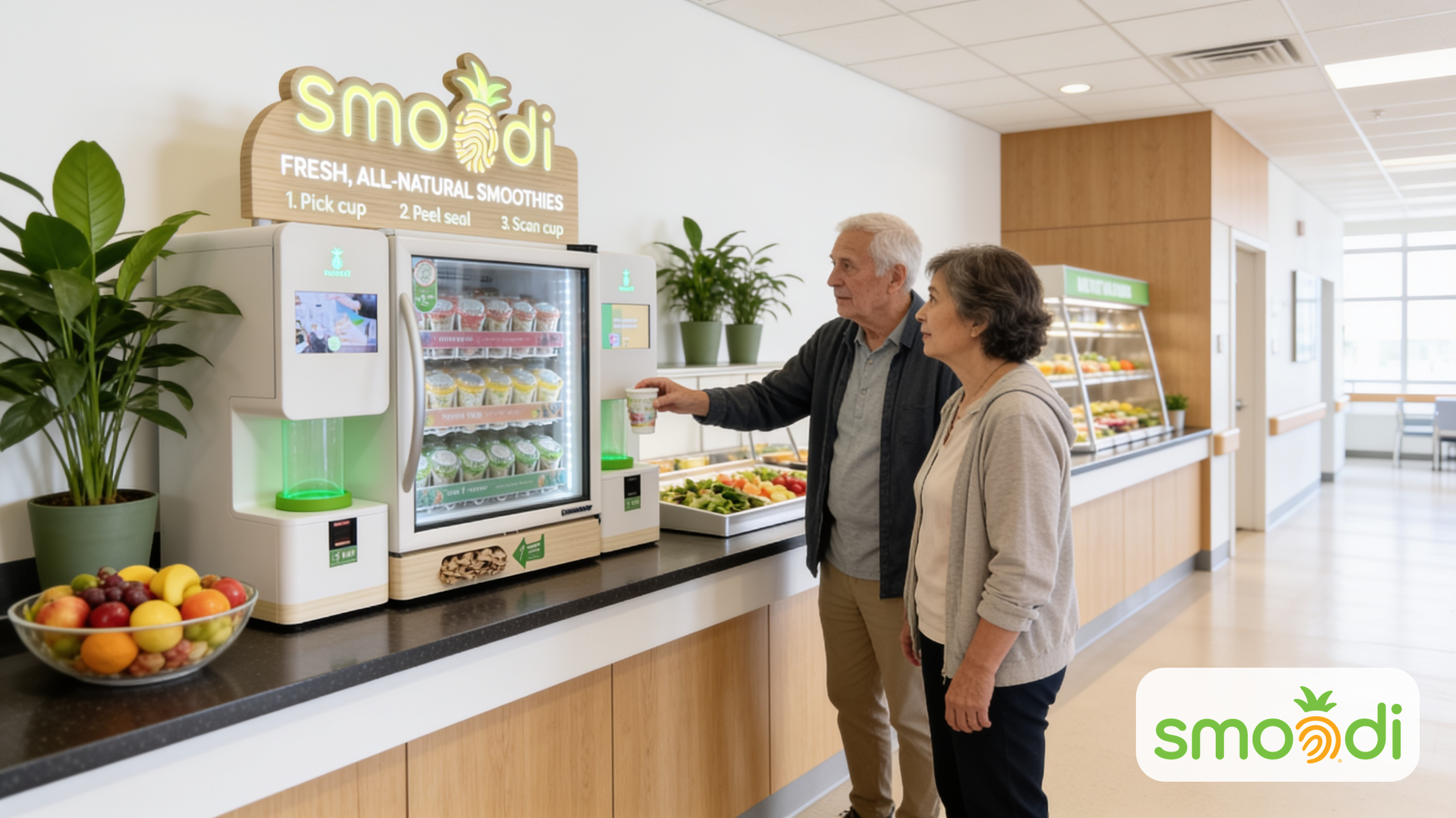
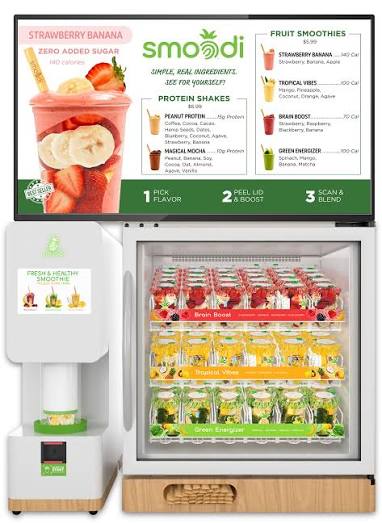
Smoodi provides a streamlined way to offer dietitian-approved nutrition without adding to the staffing burden. As the world's first self-serve robotic smoothie machine, Smoodi allows guests to select a sealed frozen fruit cup, peel the tamper-evident seal, scan the barcode, and blend a fresh drink in under 60 seconds.
The menu is designed to support various wellness needs. Many flavors are 100 calories or less. Specific options include:
- Brain Boost: 70 calories, 7g fiber, and zero added sugar.
- Green Energizer: 100 calories and zero added sugar.
- Cucumber Refresher: 100 calories.
- Protein Shakes: Options like Choco-Banana provide 32g of protein, while Strawberries & Cream offers 20g.
Most flavors are plant-based and lactose-free, though whey protein shakes and dairy-based flavors are also available. This variety ensures that a wide range of dietary preferences are met within a healthcare setting.
Operational Efficiency and Safety
In a hospital environment, sanitation is non-negotiable. Smoodi machines are NSF and UL certified. To maintain high hygiene standards, a patented self-cleaning cycle runs after every serve, and a deep sanitation cycle runs automatically once per day overnight using food-safe sanitizers.
The technology is designed for seamless integration into busy facilities. The machine has a footprint of approximately 40 in wide x 33 in high x 30 in deep and operates at a noise level under 65 dB. Installation is handled by the Smoodi team, requiring only standard 110-120V power, water, drain access, and internet connectivity.
Management is simplified through a cloud dashboard that tracks sales, inventory, and machine health. Because the system uses predictive maintenance and remote updates, over 95% of service queries are solved remotely, ensuring that the service remains available to patients and staff.
Conclusion
Improving the nutritional experience in hospitals is critical for both patient recovery and overall satisfaction. By reducing food waste and increasing the availability of flexible, nutrient-dense options, healthcare facilities can address the systemic gaps in patient dining. Automated solutions like Smoodi provide a way to deliver high-quality, dietitian-approved nutrition with zero labor, helping hospitals move toward a more efficient and patient-centric model of care.
To learn more about implementing automated nutrition in your facility, visit Smoodi for Hospitals or explore the ROI calculator.
Ready to bring Smoodi to your location?
Join hundreds of operators delivering fresh, automated smoothies with zero labor.
Get Started