How Can Campus Dining Prepare for Fall 2026?
Fall enrollment planning is underway at universities nationwide, and dining directors face rising student expectations for fresh, high-protein, clean-ingredient food options. The decisions made this summer will shape campus dining programs for the entire academic year.
Campus dining directors across the country are finalizing their fall 2026 food programs right now. The planning window between June and August determines which vendors get approved, which equipment gets installed, and which menu items students will find when they arrive on campus in September. For dining directors evaluating their options, the data on what students actually want has never been clearer.
Chartwells Higher Education's 2026 Campus Dining Index provides the most comprehensive picture of student dining preferences available. The findings point in a consistent direction: students want fresh, high-protein, minimally processed food options that fit into their busy schedules. Dining programs that align with these preferences see higher meal plan utilization, stronger student satisfaction scores, and better retention outcomes. Programs that lag behind face growing student dissatisfaction and competitive pressure from off-campus alternatives.
What Do Students Want from Campus Dining in 2026?
The Chartwells 2026 data reveals three dominant preferences that should guide fall planning decisions. High-protein meals rank as the number one dining preference among college students at 28 percent, up 36 percent year over year. Clean, minimally processed foods saw the largest year-over-year increase of any dietary preference, rising 40 percent. And smoothies were the top requested beverage on campus at 45 percent, outpacing coffee, juice, and energy drinks.
These are not marginal preferences. When nearly half of students request smoothies and more than a quarter prioritize high-protein meals above all other dining attributes, dining directors are looking at a structural shift in what students expect from their meal programs. The students arriving on campus in fall 2026 grew up with functional nutrition as a baseline expectation, not a specialty niche.
The implications for fall planning are direct. Dining programs that offer fresh, high-protein, functional beverage options will meet the dominant student demand. Programs that rely solely on traditional hot food lines, packaged snacks, and bottled beverages will fall short of what this generation considers acceptable.
Why Is Fall 2026 a Critical Planning Window?
Several factors make this fall planning cycle more consequential than previous years. First, enrollment competition among universities continues to intensify. Dining quality consistently ranks among the top factors students consider when choosing between schools. A 2025 NACUFS survey found that 73 percent of students said dining quality influenced their enrollment decision. Dining directors who upgrade their programs before fall gain a recruiting advantage that lasts the entire academic year.
Second, campus labor availability remains constrained. The National Restaurant Association reports that labor recruitment surged from 18 percent to 33 percent as the top operator challenge in 2026. University dining operations compete with local restaurants and retail for the same labor pool, often at a disadvantage on wages and scheduling flexibility. Any new food program that requires additional staff faces a hiring challenge that may delay or prevent successful launch.
Third, food costs continue to rise. Campus dining budgets are under pressure from food inflation that has pushed costs up 34 percent compared to pre-pandemic levels. New program additions that introduce perishable ingredients, complex recipes, or specialized labor add cost at a time when budgets are already strained. Programs that deliver popular menu items with minimal waste, minimal labor, and predictable costs have a structural advantage.
What Should Dining Directors Prioritize for Fall?
Based on the Chartwells data and the operational realities of campus dining in 2026, dining directors should focus their fall planning on three priorities.
Add High-Protein Functional Beverages
The combination of smoothies as the top requested beverage (45 percent) and high-protein meals as the top dining preference (28 percent) points directly to protein-enriched smoothie programs as the highest-impact addition a dining program can make. Students do not view smoothies as treats. They view them as meals, snacks, and post-workout recovery options that fit between classes. A smoothie station with protein and collagen boosters addresses the top two student preferences simultaneously.
Solve the Labor Challenge with Self-Service
Adding a staffed smoothie bar to a campus dining hall creates a hiring and scheduling problem that many dining operations cannot solve in the current labor market. Self-service formats that require zero dedicated staff eliminate this bottleneck entirely. The equipment handles preparation, portioning, and cleaning without human intervention, allowing dining directors to add a high-demand menu category without adding headcount.
Choose Shelf-Stable Ingredients to Control Costs
Fresh fruit programs introduce spoilage, seasonal price volatility, and supply chain complexity. IQF (individually quick frozen) fruit formats offer a solution. IQF fruit preserves nutritional content, eliminates prep labor, and provides shelf life measured in years rather than days. For dining directors managing tight budgets, the predictability of shelf-stable ingredients reduces both waste and cost variance across the academic year.
How Does Smoodi Fit Into Campus Dining Programs?
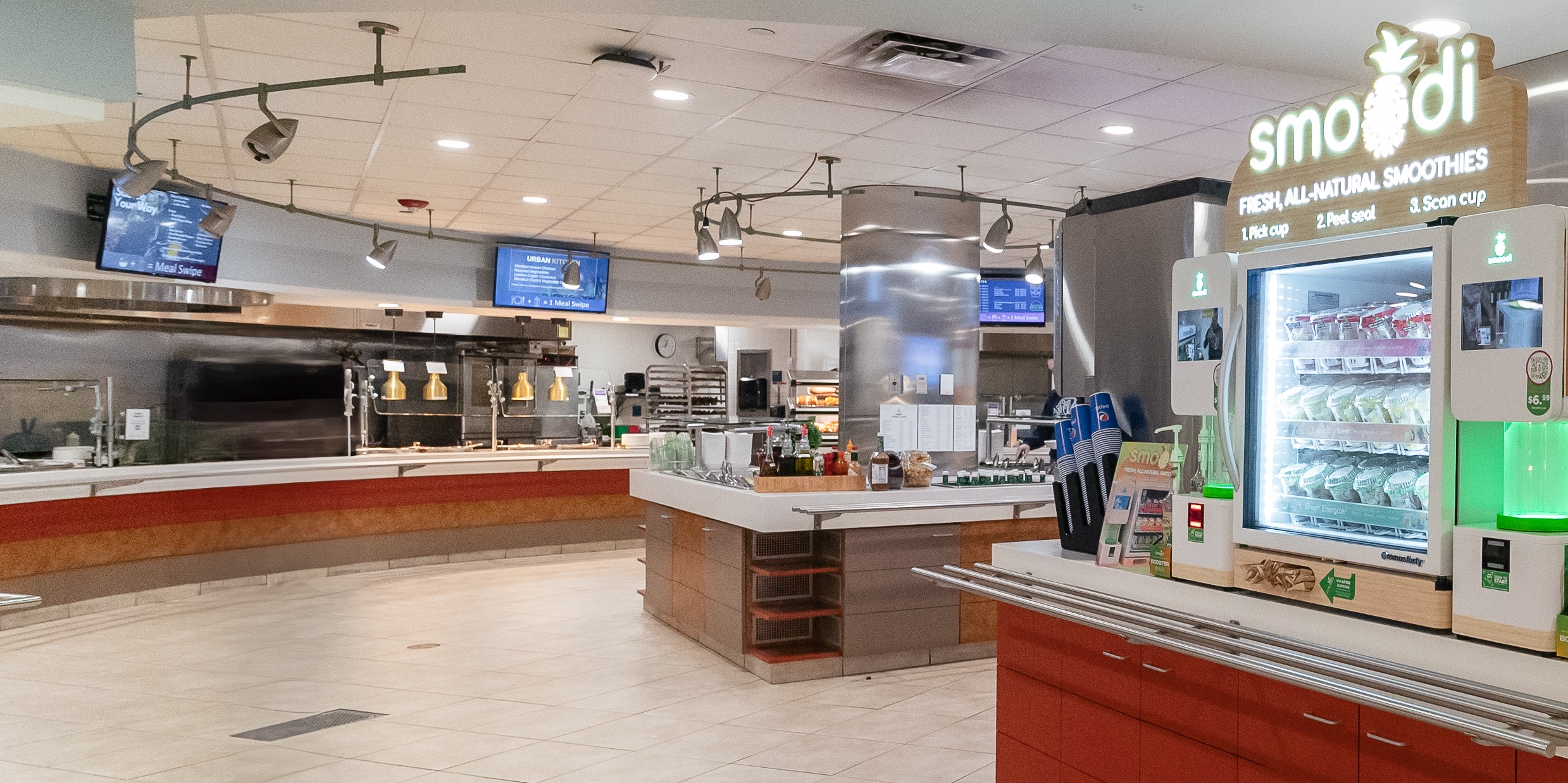
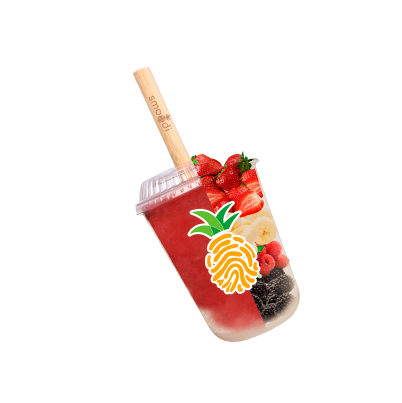
Smoodi's automated smoothie machine was designed for exactly the operational environment campus dining directors face. Each smoothie starts with IQF real fruit cups blended with water only, with no syrups, concentrates, or artificial ingredients. The booster bar offers protein powder, collagen, and other functional supplements. The machine blends a fresh smoothie in under 60 seconds and self-cleans between every use. No staff required.
"Campus dining is continuously evolving and as operators we have a rising bar to meet the needs of our guests. We've been able to provide a quality smoothie experience while leaning into a labor-saving technology."
— Dustin Peterson, Director of Retail Operations, Rochester Institute of Technology
Smoodi operates in more than 300 locations across the United States, with over 2 million smoothies served. The company was founded at Harvard Innovation Labs. IQF fruit cups have a shelf life of up to two years and are distributed through Dot Foods, integrating with existing campus foodservice supply chains. The operational lease starts at $299 per month for a 48-month term, with a purchase option at $14,999. For high-traffic campus locations, multiple machines can be installed side by side in the same footprint as a single competitor kiosk, blending simultaneously to handle peak class-change rushes.
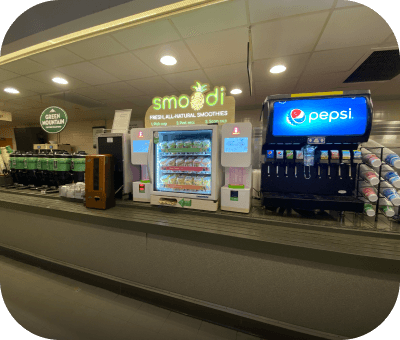
The compact design requires approximately 40 inches of floor space, making it feasible to place machines in dining halls, student centers, residence halls, recreation centers, and library common areas. Installation requires a standard 120 VAC outlet, a water inlet, a sanitizer inlet, and a drain. Many campus dining operations have installed Smoodi machines in locations where a full smoothie bar would be physically impossible.
What Questions Should Dining Directors Ask Before Fall?
- Does the program meet the top student preferences? Check whether the solution delivers fresh, high-protein, clean-ingredient beverages that address the Chartwells 2026 priorities.
- What is the labor requirement? Confirm whether the program requires new hires, training, or shift coverage. In the current labor market, any program that depends on additional staff faces execution risk.
- What is the waste profile? Evaluate whether the ingredients are perishable or shelf-stable. Programs using IQF or other long-shelf-life formats eliminate the spoilage that erodes margins on fresh-fruit programs.
- Can the program scale to multiple locations? Consider whether the solution can be placed in dining halls, residential buildings, recreation centers, and other high-traffic campus locations without duplicating labor at each site.
- What is the total cost of ownership? Compare the all-in cost (equipment, ingredients, labor, maintenance, waste) rather than just the ingredient cost per serving. Programs with zero labor and near-zero waste often deliver lower total cost despite higher ingredient quality.
Preparing Now for a Stronger Fall Launch
The dining directors who will have the strongest fall 2026 programs are those making vendor decisions and equipment commitments now, during the July and August planning window. Waiting until September means competing for installation slots, missing orientation week (which sets dining expectations for the entire year), and starting behind peer institutions that moved earlier.
The student data is unambiguous. Fresh, high-protein, clean-ingredient smoothies are the single highest-demand beverage category on campus. Self-service delivery is the format that solves the labor constraint. And shelf-stable IQF ingredients are the cost model that makes the program sustainable across a full academic year.
Campus dining directors interested in adding a self-service smoothie program for fall 2026 can explore options and calculate ROI at getsmoodi.com/roi.
Ready to bring Smoodi to your location?
Join hundreds of operators delivering fresh, automated smoothies with zero labor.
Get Started