What Does the CMS Hospital Food Pledge Mean?
On July 8, 2026, CMS announced the Make Hospital Food Healthier Pledge, directing hospitals to align food services with the 2025-2030 Dietary Guidelines. For hospital dining directors, this creates both a compliance obligation and an opportunity to upgrade nutrition programs.
On July 8, 2026, the U.S. Department of Health and Human Services and the Centers for Medicare and Medicaid Services (CMS) announced the "Make Hospital Food Healthier" Pledge, a voluntary program inviting hospitals to serve more nutritious meals. The announcement was accompanied by a CMS Quality and Safety Special Alert directing hospitals to align their food services with the 2025-2030 Dietary Guidelines for Americans. Beginning in reporting year 2026, CMS also expanded the Malnutrition Care Score from adults aged 65 and older to all adults aged 18 and older.
For hospital dining directors, contract dining companies, and healthcare facility managers, the pledge is more than a symbolic gesture. Facilities that fail to align their food services with the dietary guidelines risk losing Medicare and Medicaid funding. The expanded Malnutrition Care Score means that nutrition screening and intervention now apply to a much larger patient population. These changes require practical adjustments to what hospitals serve, how they serve it, and what options are available to patients, staff, and visitors throughout the day.
What Does the CMS Pledge Require?
The CMS pledge directs participating hospitals to take specific actions regarding their food programs. While the pledge itself is voluntary, the underlying CMS Quality and Safety Special Alert carries regulatory weight for facilities participating in Medicare and Medicaid programs.
The key directives include limiting ultra-processed foods in patient meals, limiting sugar-sweetened beverages, limiting added sugar across menu items, prioritizing minimally processed proteins, and emphasizing whole grains. Hospitals are also directed to align food service offerings with the 2025-2030 Dietary Guidelines, which emphasize nutrient density, fiber, and protein adequacy while limiting added sugars, saturated fats, and sodium.
The expanded Malnutrition Care Score adds a measurement dimension. Previously focused on adults 65 and older, the score now applies to all adults 18 and older. This means hospitals must demonstrate malnutrition screening, assessment, diagnosis, and intervention across their entire adult patient population. Nutrition programs that can document their contribution to malnutrition care gain compliance value beyond the dining operation itself.
Why Does This Matter Beyond the Cafeteria?
Hospital food programs affect more than patient meals. Research published in the Journal of Hospital Management confirms that food quality significantly enhances patient satisfaction both directly and through emotional well-being. Patient satisfaction scores, measured through HCAHPS surveys, influence hospital reimbursement rates. When food quality improves, satisfaction scores improve, and the financial impact extends well beyond the dining budget.
Staff retention is another dimension. Healthcare facilities across the country face acute staffing shortages, and workplace amenities (including food options) influence whether clinical staff choose to stay or leave. A nutrition program that serves fresh, healthy options to staff as well as patients delivers dual value: compliance with the CMS pledge and investment in workforce retention.
Visitor experience matters too. Family members spending long hours in hospital waiting areas and patient rooms have limited food options in most facilities. Vending machines stocked with chips, candy, and sugary beverages are increasingly incongruent with a healthcare environment that claims to prioritize health. Providing fresh, nutritious self-service options for visitors aligns the facility's food environment with its clinical mission.
What Should Hospital Dining Directors Add?
The CMS pledge creates a clear framework for evaluating food program additions. Every new item or station a dining director adds should be assessed against the pledge criteria.
- Zero added sugar: any new beverage or food station should contain no added sugars of any kind. This means no syrups, concentrates, flavored bases, or sweetened dairy products. The sugar content should come exclusively from whole food ingredients.
- Minimally processed ingredients: the pledge prioritizes minimally processed proteins and whole foods. Food stations using whole fruits, vegetables, and clean protein supplements align directly with this requirement.
- Malnutrition screening support: programs that offer protein and nutrient-dense options can contribute to malnutrition care documentation. A beverage station with protein and collagen boosters provides measurable nutritional intervention for at-risk patients.
- Decentralized access: hospital dining programs traditionally center on the cafeteria, but patients, staff, and visitors need nutrition access throughout the facility and throughout the day. Self-service stations placed in waiting areas, nursing stations, and rehabilitation units extend nutrition access beyond cafeteria hours.
- Compliance documentation: any new food program addition should provide clear ingredient documentation that can be referenced during compliance audits. Programs with transparent, simple ingredient lists simplify the documentation burden.
How Does Smoodi Align with the CMS Pledge?
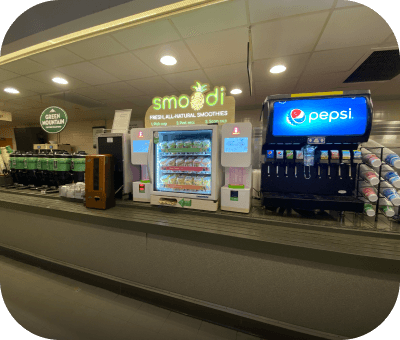
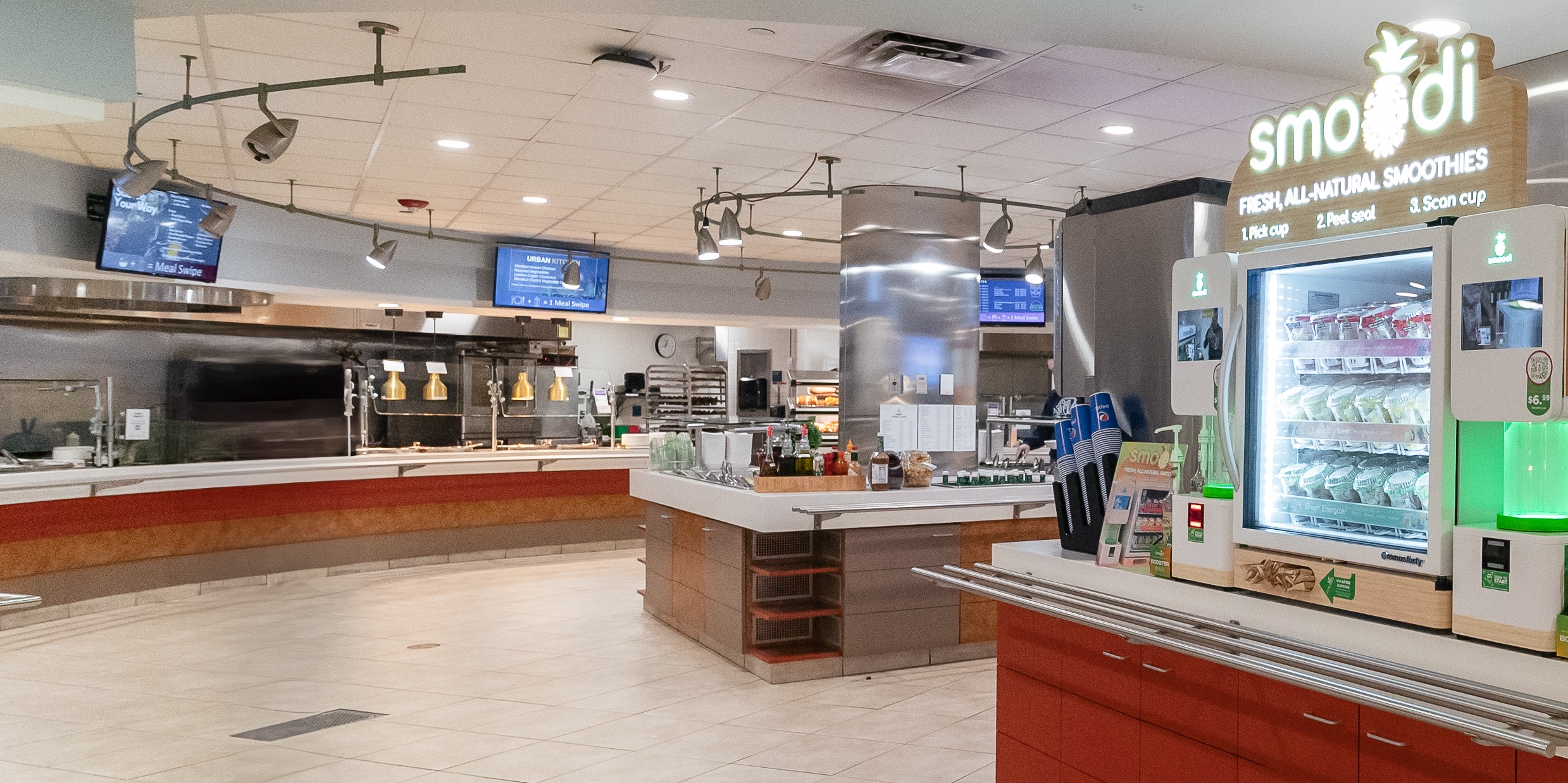
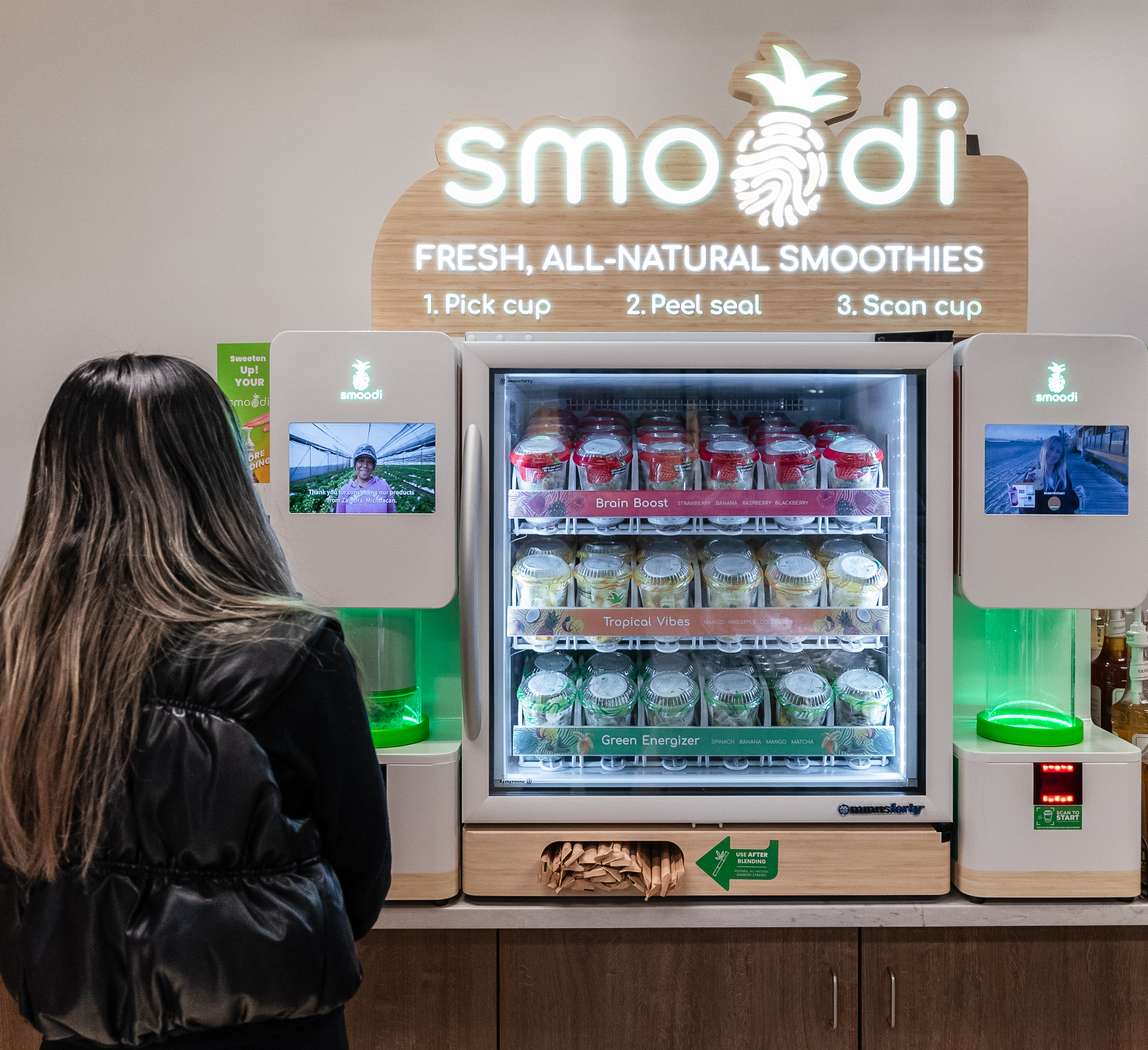
Smoodi's automated smoothie machine is built on the exact principles the CMS pledge prioritizes. Each smoothie is made from IQF (individually quick frozen) real fruit cups blended with water only. There are no syrups, no concentrates, no artificial ingredients, and zero added sugar. The booster bar offers protein powder, collagen, and other functional supplements that provide the nutrient-dense, high-protein options the pledge emphasizes.
"Now we have healthy options available here in the cafeteria, and patients and even doctors are loving this."
— Dr. Nish Patel, Interventional Cardiologist, Baptist Health Miami
The self-service format enables decentralized nutrition access. Smoodi machines can be placed in cafeterias, staff break rooms, rehabilitation areas, outpatient waiting rooms, and visitor lounges. The machine requires approximately 40 inches of floor space, a standard 120 VAC outlet, a water inlet, a sanitizer inlet, and a drain. It blends a fresh smoothie in under 60 seconds and self-cleans between every use, requiring zero dedicated staff.
Smoodi operates in more than 300 locations across the United States, including hospital and healthcare settings, with over 2 million smoothies served. The company was founded at Harvard Innovation Labs. IQF fruit cups have a shelf life of up to two years and are distributed through Dot Foods. The operational lease starts at $299 per month for a 48-month term, with a purchase option at $14,999.
What Is the Compliance Timeline?
The July 8, 2026 announcement establishes the framework, and the expanded Malnutrition Care Score takes effect in reporting year 2026. Hospital dining directors should treat this as an immediate planning priority rather than a future consideration. CMS has a documented pattern of converting voluntary programs into mandatory requirements when participation is insufficient. Facilities that adopt pledge-aligned programs now position themselves ahead of potential mandatory requirements.
The practical timeline for dining directors is straightforward. Audit current menus against the pledge criteria during July and August 2026. Identify gaps where added sugars, ultra-processed foods, or sugar-sweetened beverages remain in the food program. Evaluate additions that close those gaps while also contributing to the expanded Malnutrition Care Score. Implement changes before the end of the reporting year to ensure compliance documentation is in place.
Taking Action on the CMS Pledge
The Make Hospital Food Healthier Pledge represents a clear signal from CMS about the direction of hospital food standards. Whether a facility joins the voluntary pledge or not, the underlying Quality and Safety Special Alert applies to all Medicare and Medicaid participating hospitals. The expanded Malnutrition Care Score applies to all adults. And the 2025-2030 Dietary Guidelines provide the nutritional framework against which hospital food programs will be evaluated.
For hospital dining directors, the path forward involves adding food and beverage options that meet every pledge criterion by default: zero added sugar, minimally processed whole food ingredients, protein and nutrient-dense supplements, and self-service delivery that extends nutrition access beyond the cafeteria.
Healthcare facility managers interested in pledge-aligned nutrition programs can explore options at getsmoodi.com/get-started.
Ready to bring Smoodi to your location?
Join hundreds of operators delivering fresh, automated smoothies with zero labor.
Get Started