How Can Operators Customize Nutrition Without Staff?
The personalized nutrition market is projected to reach $48 billion by 2030. Self-service booster bars let operators deliver customization with zero incremental labor cost.
The global personalized nutrition market is projected to grow from $16 billion in 2025 to $48 billion by 2030. Consumers increasingly expect food and beverage programs that can be customized to their individual health goals, dietary preferences, and functional needs. For foodservice operators, delivering on this expectation has traditionally required trained staff who can portion supplements, mix custom blends, and advise customers on ingredient options. The staffing crisis has made this approach unsustainable. Labor recruitment has surged from 18 percent to 33 percent as the number one operator challenge. Self-service stations with integrated booster bars offer a fundamentally different model: customers personalize their own nutrition without any staff involvement.
Why Are Consumers Demanding Customizable Nutrition?
Three converging trends are driving demand for personalized nutrition in foodservice settings. First, functional food purchasing has reached mainstream adoption. McKinsey's Future of Wellness survey found that 50 percent of consumers now purchase functional food products, meaning foods selected specifically for health benefits beyond basic nutrition. Among Gen Z and millennial consumers, that figure rises to 66 percent. These consumers do not view a smoothie as a treat. They view it as a delivery vehicle for protein, collagen, electrolytes, or other functional ingredients tailored to their personal wellness goals.
Second, the fitness and wellness industry has normalized supplement customization. Consumers who add protein powder to their morning shake at home expect the same capability when purchasing beverages at work, at the gym, or on campus. The distinction between home nutrition and away-from-home nutrition is collapsing.
Third, the GLP-1 medication surge is reshaping dietary preferences at scale. With 18 percent of American adults now using GLP-1 medications, millions of consumers are actively seeking nutrient-dense, high-protein, low-sugar options. These consumers want to control what goes into their food and beverages, and they gravitate toward programs that offer visible, understandable customization rather than opaque, pre-mixed formulations.
Why Does Traditional Customization Require Staff?
In a traditional juice bar or smoothie bar model, customization depends on a trained employee. The employee receives the customer's order, selects the correct supplements, portions the appropriate amounts, adds them to the blend, and operates the equipment. This process requires training on ingredient properties, portioning accuracy, allergen awareness, and equipment operation.
The labor cost of this model is significant. A single staffed station requires an employee present during all operating hours, representing $30,000 to $50,000 or more in annual labor cost. For multi-location operators, this cost multiplies with every site. The training requirement adds further cost: staff turnover in foodservice averages 73 percent annually, meaning operators must continuously train new employees on supplement portioning and ingredient knowledge.
Beyond the financial burden, the staffed model creates operational constraints. The station can only operate when staff is available. Peak-hour demand creates bottlenecks as a single employee can only prepare one order at a time. Evening, weekend, and off-peak hours may not generate enough revenue to justify staffing, leaving the station closed precisely when some customers most want to use it.
How Do Self-Service Booster Bars Solve This?
Self-service booster bars flip the customization model. Instead of relying on an employee to interpret the customer's preferences and execute the customization, the customer does it themselves. The customer selects their base (in the case of a smoothie, their fruit flavor), then adds functional boosters (protein powder, collagen, or other supplements) from a visible, accessible booster bar. The equipment handles the blending, and the result is a personalized beverage created in under 60 seconds.
This model eliminates every labor constraint of traditional customization:
- Zero portioning labor: the customer self-serves boosters, requiring no staff training on supplement portioning or ingredient properties
- Zero incremental labor cost: the station operates without a dedicated attendant, meaning customization adds no labor expense
- All-daypart availability: the station can operate during off-peak hours, evenings, and weekends without staffing decisions
- No bottleneck: each customer interaction with the booster bar is independent, and the equipment serves one customer while the next is selecting their options
- Consistent quality: the equipment blends to the same specification every time, eliminating the variability that comes with different staff members preparing orders differently
The result is a program that delivers the personalization consumers demand while operating at a fraction of the cost of a staffed alternative. Operators who previously could not justify a nutrition program due to labor costs can now offer one.
What Do Consumers Customize and Why?
Consumer customization patterns in self-service nutrition settings cluster around three goals: recovery, wellness, and dietary compliance.
Recovery-focused consumers, common in fitness centers and sports facilities, add protein powder to support post-workout muscle synthesis. The Chartwells 2026 Campus Dining Index reports that high-protein is the number one dining preference at 28 percent, up 36 percent year over year. These consumers have specific protein intake targets and value the ability to control how much protein enters their beverage.
Wellness-focused consumers add functional boosters like collagen (for skin and joint health) or other supplements designed to support specific health outcomes. The collagen beverage market has reached $2.8 billion globally, growing at 7.3 percent annually. These consumers view their beverage as a daily wellness ritual, not just a refreshment.
Dietary-compliance consumers, including the 18 percent of adults using GLP-1 medications, seek assurance that their beverage contains no added sugars, artificial ingredients, or unnecessary calories. For these consumers, customization means transparency and control: knowing exactly what is in their drink and adjusting it to match their dietary requirements.
How Does Smoodi Enable Customization Without Staff?
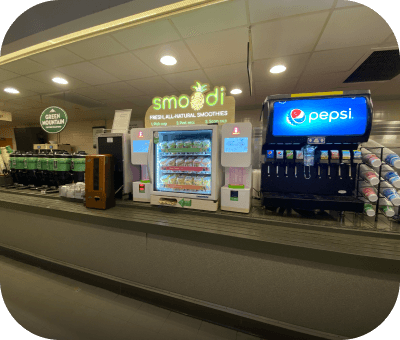
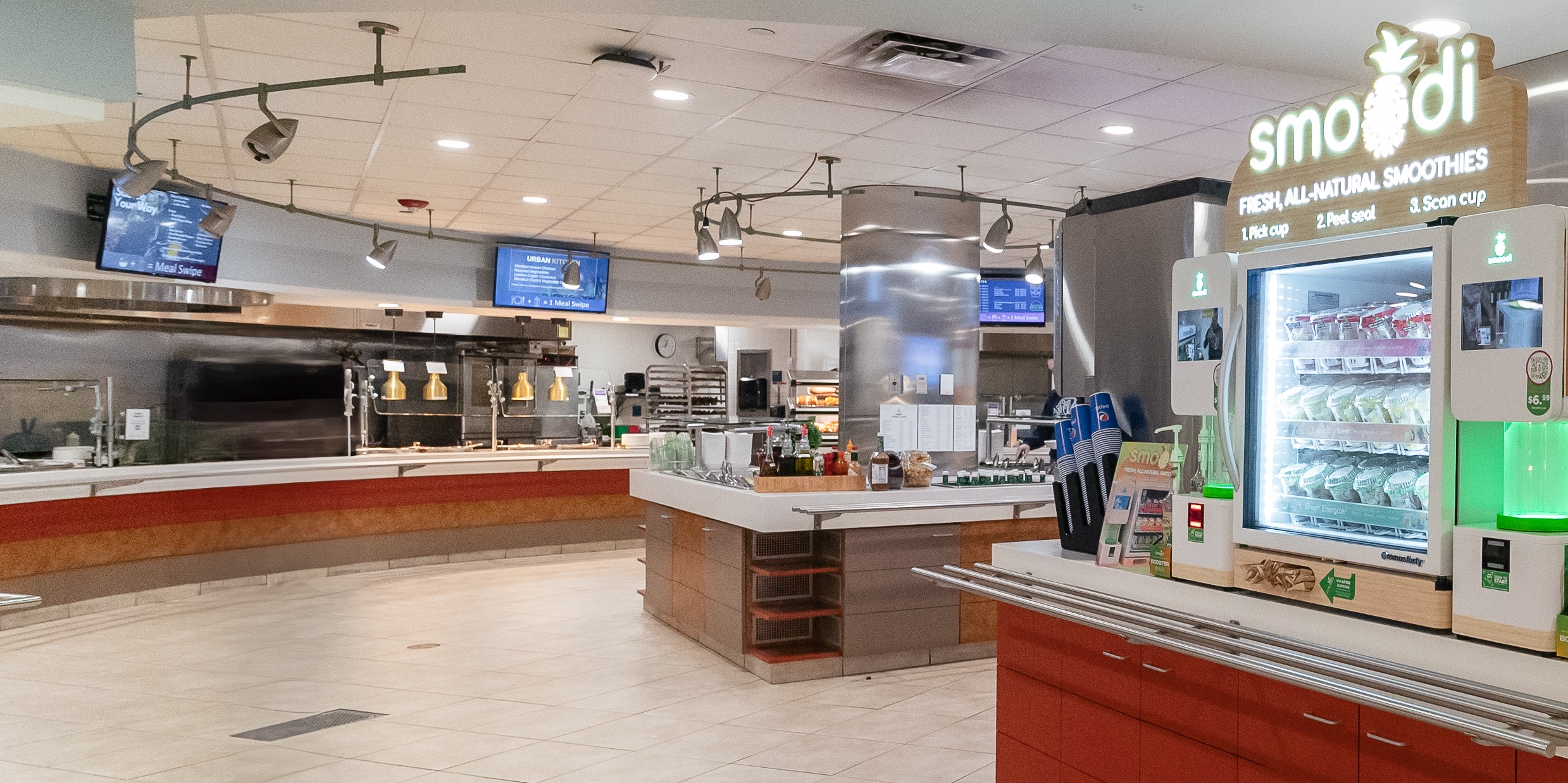
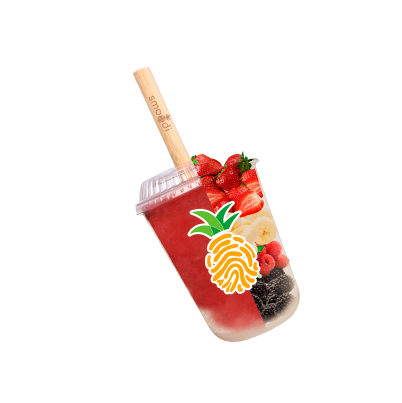
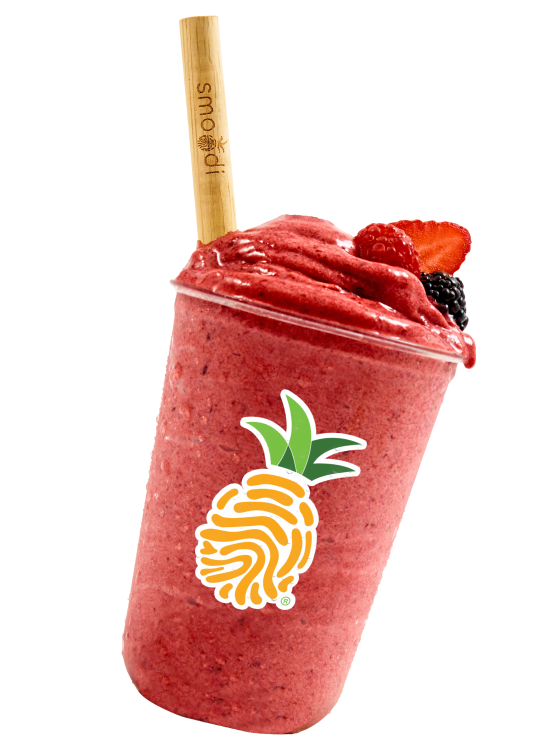
Smoodi's automated smoothie machine with integrated booster bar delivers the customizable nutrition program that consumers demand with zero staff overhead. Each smoothie starts with IQF (individually quick frozen) real fruit cups blended with water only. No syrups, concentrates, or artificial ingredients. The booster bar offers protein powder, collagen, and other functional supplements that customers add according to their own preferences. The machine blends a fresh, personalized smoothie in under 60 seconds and self-cleans between every use.
"smoodi is hands down the number one perk at our headquarters. Fresh, healthy, and zero effort on our end."
— Katherine Berman, Workplace Experience Manager, Toast
The self-service format means no employee is needed to operate the station, portion supplements, or advise customers. The compact design requires approximately 40 inches of floor space, enabling deployment in locations where a staffed nutrition station would be impractical: office breakrooms, gym lobbies, hospital common areas, student housing, and hotel fitness centers.
Smoodi operates in more than 300 locations across the United States, with over 2 million smoothies served. The company was founded at Harvard Innovation Labs. IQF fruit cups have a shelf life of up to two years and are distributed through Dot Foods. The operational lease starts at $299 per month for a 48-month term, with a purchase option at $14,999. For high-volume locations, multiple machines can be installed side by side, blending simultaneously.
Operators seeking to add a customizable nutrition program without increasing labor costs can explore self-service options at getsmoodi.com/get-started.
Ready to bring Smoodi to your location?
Join hundreds of operators delivering fresh, automated smoothies with zero labor.
Get Started