Why Are Employees Skipping Lunch at Work?
Fifty-one percent of employees skip lunch at least once a week. Always-available nutrition under 60 seconds addresses the gap without adding staff.
Ninety-four percent of employees say that taking a lunch break improves their work performance. Yet 51 percent skip lunch at least once a week, according to Fooda's 2026 workplace food research. This disconnect between what employees know they need and what they actually do represents a significant problem for employers investing in workplace productivity, retention, and wellbeing. The lunch skip is not a personal failing; it is a systems problem. When the available options require too much time, too many decisions, or too much effort, employees default to skipping the meal entirely.
Why Are Employees Skipping Lunch?
The reasons employees skip lunch cluster into four categories, and each one points to a structural gap rather than an individual choice.
Time Pressure
Back-to-back meetings, project deadlines, and the perception that stepping away signals lower commitment all contribute to time pressure around lunch. An employee with a 30-minute gap between meetings at 12:15 PM faces a calculation: leave the building, wait in line at a restaurant, order, wait for food, eat, and return. The round trip takes 40 to 60 minutes in most office locations. The math does not work, so the employee stays at their desk and skips the meal.
Decision Fatigue
By midday, employees have already made dozens of work-related decisions. Adding the question of what to eat, where to get it, and whether it fits their dietary preferences creates cognitive load that many employees simply avoid. Research on decision fatigue consistently shows that people defer or abandon choices when they are mentally depleted. Skipping lunch is often not a conscious decision; it is the absence of a decision.
Limited Options
Many offices are located in areas with limited nearby food options, or the available options do not align with employees' health goals. An employee trying to eat clean, high-protein, and minimally processed will struggle in an office park surrounded by fast food and convenience stores. The office kitchen, if it exists, offers coffee, packaged snacks, and whatever colleagues brought for potluck. None of these options meet the standard that health-conscious employees set for themselves.
Cost
Restaurant lunch prices have increased substantially in recent years. An employee spending $12 to $18 per lunch, five days a week, faces a monthly food cost of $240 to $360 before tax and tip. Many employees, especially early-career professionals, reduce this expense by skipping meals or relying on whatever free options the office provides.
What Is the Productivity Cost of Skipped Lunches?
The business case for addressing skipped lunches is grounded in productivity data. Employees who skip lunch experience measurable declines in afternoon cognitive performance, including reduced attention span, slower processing speed, and lower quality decision-making. The 2:00 to 4:00 PM productivity dip that most managers observe in their teams is not random; it correlates directly with midday nutrition (or the lack of it).
DoorDash's 2026 Workplace Meal Trends Report underscores the value employees place on workplace food: 34 percent of employees would trade their company's holiday party for a daily catered lunch. That statistic reveals how strongly employees feel about consistent, daily food access versus occasional perks. The holiday party is a one-time event. Lunch is a daily need that affects energy, mood, and output every single workday.
For employers, the cost of skipped lunches is not just lost productivity in the afternoon. It compounds. Employees who regularly skip meals report higher stress levels, lower job satisfaction, and greater likelihood of seeking other employment. The lunch skip is both a symptom and a cause of workplace disengagement.
What Solutions Are Companies Trying?
Employers have explored several approaches to the skipped lunch problem, each with distinct advantages and limitations.
Catered Lunch Programs
Companies that offer catered lunches (daily or several times per week) see high employee satisfaction on catered days. The limitation is cost and coverage. A catered lunch program for 100 employees at $12 to $15 per person runs $1,200 to $1,500 per event, or $5,000 to $7,500 per week for daily service. Most mid-size companies cannot sustain this expense. And on days without catering, the skipped-lunch problem returns immediately.
Meal Delivery Subsidies
Subsidized delivery through apps gives employees choice and convenience but introduces variability in delivery times, order accuracy, and dietary quality. An employee who orders at 12:00 PM and receives food at 12:45 PM has lost most of their lunch window to waiting. The subsidy also creates an ongoing per-employee expense that scales linearly with headcount.
Snack Pantries
The office snack pantry (granola bars, chips, fruit, yogurt, coffee) provides a baseline but does not replace a meal. Employees who skip lunch and substitute with snack pantry items are consuming packaged, often processed foods that do not deliver the sustained nutrition of a balanced meal. The pantry addresses hunger but not the nutrition gap.
How Does Always-Available Nutrition Change the Equation?
The common thread across all these solutions is that they are time-bound, require planning, or depend on external logistics. Catering arrives at a set time. Delivery requires ordering in advance. The snack pantry offers only what was stocked last week. None of these solutions meet the employee who, at 2:15 PM, realizes they have not eaten and needs something nutritious in the next five minutes.
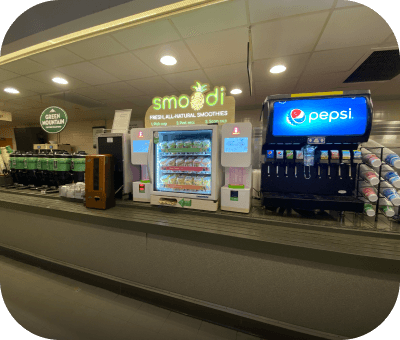
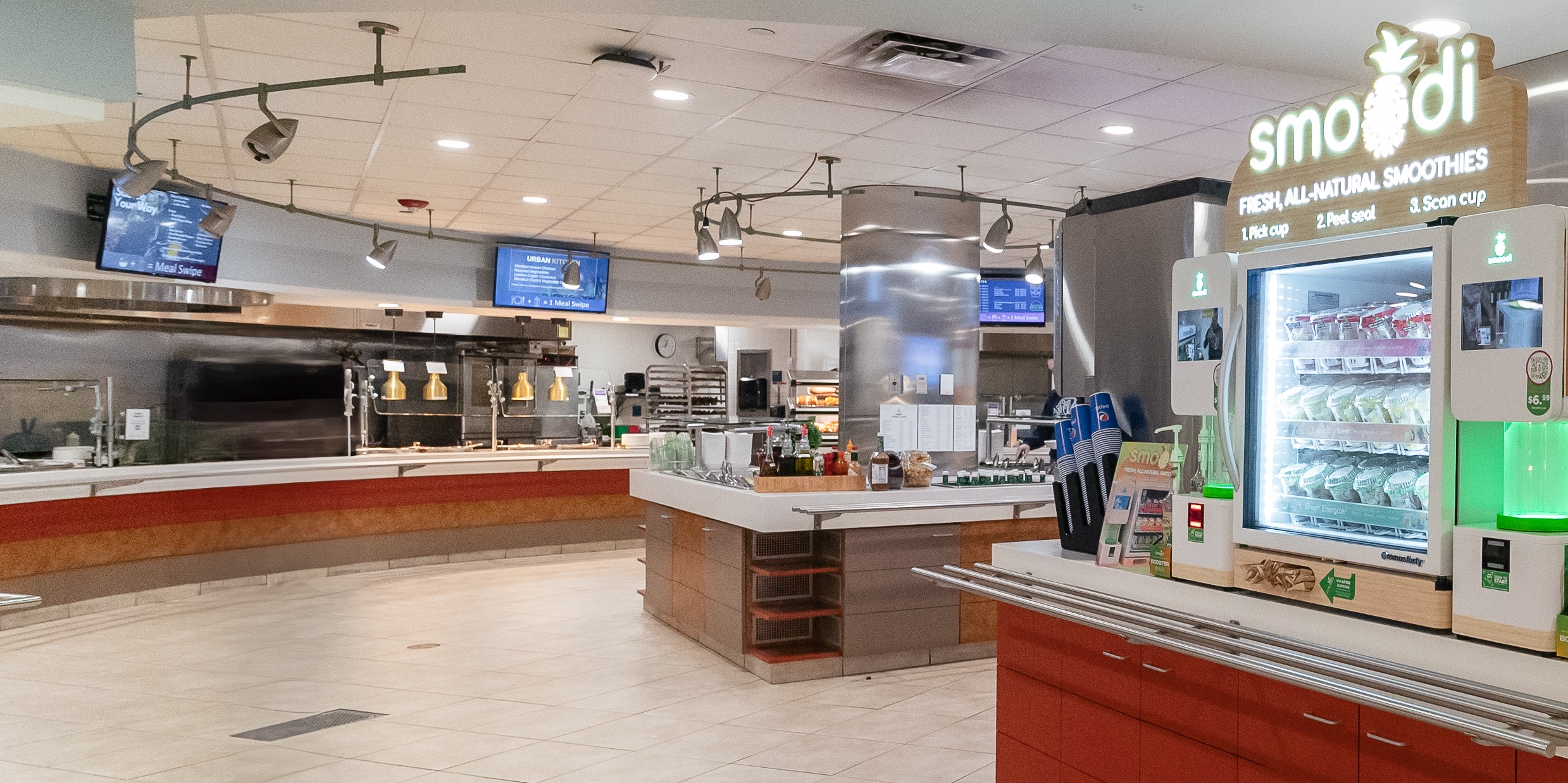
An automated smoothie station fills this gap precisely. Smoodi's machine produces a fresh, whole-fruit smoothie in under 60 seconds, available whenever the employee needs it. No ordering, no waiting, no decision-making beyond selecting a flavor and optional boosters. The simplicity is the point. When the barrier to getting a nutritious option is less than 60 seconds and zero cognitive effort, the skip rate drops because the default shifts from 'nothing' to 'smoothie.'
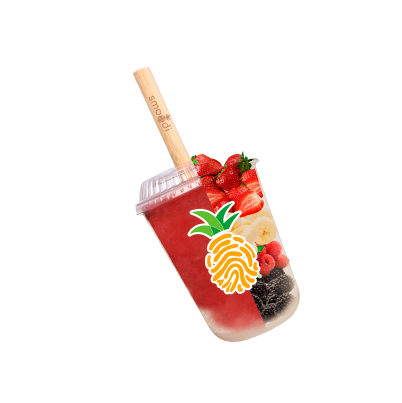
IQF (individually quick frozen) fruit cups are blended with water only. No syrups, concentrates, or artificial ingredients. The booster bar provides protein powder, collagen, and functional supplements, turning a fruit smoothie into a substantive nutrition option that can partially replace a skipped meal. For the employee who missed lunch and has 90 seconds between meetings, a protein-boosted smoothie delivers meaningful nutrition without any of the friction that caused them to skip lunch in the first place.
"We were looking for ways to give our employees healthier options - smoodi was the answer. It tastes great, our team loves it."
— Eric Rose, President & COO, Shoreham Bank
What Does Implementation Look Like?
Smoodi's machine occupies approximately 40 inches of floor space, fitting into a break room, kitchen area, or lobby alcove. It self-cleans between every use. Installation requires a standard 120 VAC / 7A outlet, water connection, sanitizer inlet, and drain. For most offices, installation can be completed without significant construction or disruption.
Smoodi's operational lease starts at $299 per month for a 48-month term, scaling to $499 per month for a 12-month term. The purchase option is $14,999. Companies can absorb the cost as an employee perk or offer smoothies at a subsidized price. Either model provides a daily nutrition option at a fraction of the cost of catered meals or delivery subsidies.
IQF fruit cups have a shelf life of up to two years and are distributed through Dot Foods. Smoodi operates in more than 300 locations across the United States, with over 2 million smoothies served. The company was founded at Harvard Innovation Labs.
HR leaders, workplace experience managers, and facilities teams looking to address the lunch skip problem can explore options at getsmoodi.com/get-started.
Ready to bring Smoodi to your location?
Join hundreds of operators delivering fresh, automated smoothies with zero labor.
Get Started