How Are EV Charging Stations Creating F&B Revenue?
EV charging sessions create 20 to 40 minutes of dwell time per stop. Forward-thinking site operators are turning that wait into food and beverage revenue with healthy, self-service options.
Electric vehicle adoption is accelerating across the United States, and with it comes a new category of commercial real estate: the EV charging location. Every fast-charging session takes 20 to 40 minutes. That is 20 to 40 minutes of captive dwell time, longer than a typical drive-through visit and comparable to a sit-down lunch. For site operators, the question is no longer whether to install chargers. It is how to monetize the time drivers spend waiting.
Food and beverage is the natural answer. Major charging networks and convenience retailers are already investing in food adjacency at charging hubs. The locations that offer the best amenities (fresh food, drinks, clean restrooms, Wi-Fi) win the most charging stops. An automated smoothie station adds a healthy, self-service beverage option to these locations without requiring dedicated kitchen staff or a full food prep operation.
Why Does Dwell Time at EV Chargers Matter for Food Revenue?
Traditional gas stations generate revenue in three to five minutes per visit. The driver pumps fuel, possibly grabs a bottled drink, and leaves. EV charging fundamentally changes this dynamic. A Level 3 fast charger delivers an 80% charge in 20 to 40 minutes depending on the vehicle and charger capacity. That is enough time for a meal, a snack, or a beverage stop that would never happen at a gas pump.
Charging networks recognize this. Electrify America, ChargePoint, and Tesla Supercharger locations are increasingly co-located with retail, dining, and convenience stores. Convenience chains like Buc-ee's, Wawa, and Sheetz are expanding EV infrastructure specifically because charging drives extended visits and higher per-customer spending. The data supports the thesis: customers who stay longer spend more on food and beverages.
What Do EV Drivers Want at Charging Locations?
EV drivers tend to skew health-conscious and higher-income compared to the general driving population. Early adopters are disproportionately wellness-oriented, environmentally aware, and willing to pay a premium for quality food. This demographic is underserved by the typical gas station food offering of hot dogs, packaged pastries, and fountain drinks.
Fresh, healthy options align with what EV drivers are already choosing in other aspects of their lives. A whole-fruit smoothie made from IQF (individually quick frozen) fruit cups blended with water, with no syrups, concentrates, or artificial ingredients, fits this profile exactly. It is a product that health-conscious consumers actively seek, delivered in under 60 seconds while they wait for their vehicle to charge.
Why Is Staffing a Challenge at Charging Locations?
Most EV charging locations are not traditional restaurants or cafes. They are convenience stores, travel plazas, parking structures, retail lots, or standalone charging hubs. These locations typically operate with minimal staff. Hiring, training, and retaining food prep workers at a highway charging station or suburban parking lot is expensive and logistically difficult.
An automated smoothie station eliminates this challenge entirely. The machine handles blending, dispensing, and self-cleaning between every use without human intervention. Existing site staff (a convenience store clerk, a lot attendant, a building manager) can handle periodic restocking in minutes. There is no dedicated food service employee required.
How Does Shelf Life Solve the Variable-Traffic Problem?
EV charging traffic is still growing. A location that serves 50 charging sessions today may serve 200 in two years as EV adoption increases. This creates a variable-traffic challenge for food programs: fresh ingredients spoil if traffic is lower than expected, and understocking misses revenue on peak days.
Smoodi's IQF fruit cups have a shelf life of up to two years. This eliminates the spoilage risk that makes fresh food programs uneconomical at locations with unpredictable traffic. Operators stock cups based on current demand and scale inventory as traffic grows, without throwing away expired produce during slow weeks. Cups are distributed through Dot Foods, simplifying procurement logistics.
What Are the Economics for Site Operators?
The financial model for adding an automated smoothie station at an EV charging location is straightforward. Smoodi's operational lease starts at $299 per month for a 48-month term, with shorter terms available up to $499 per month. Operators pay the lease cost plus ingredient costs (IQF fruit cups), then keep the margin on every smoothie sold at their chosen retail price, typically between $5.00 and $8.00.
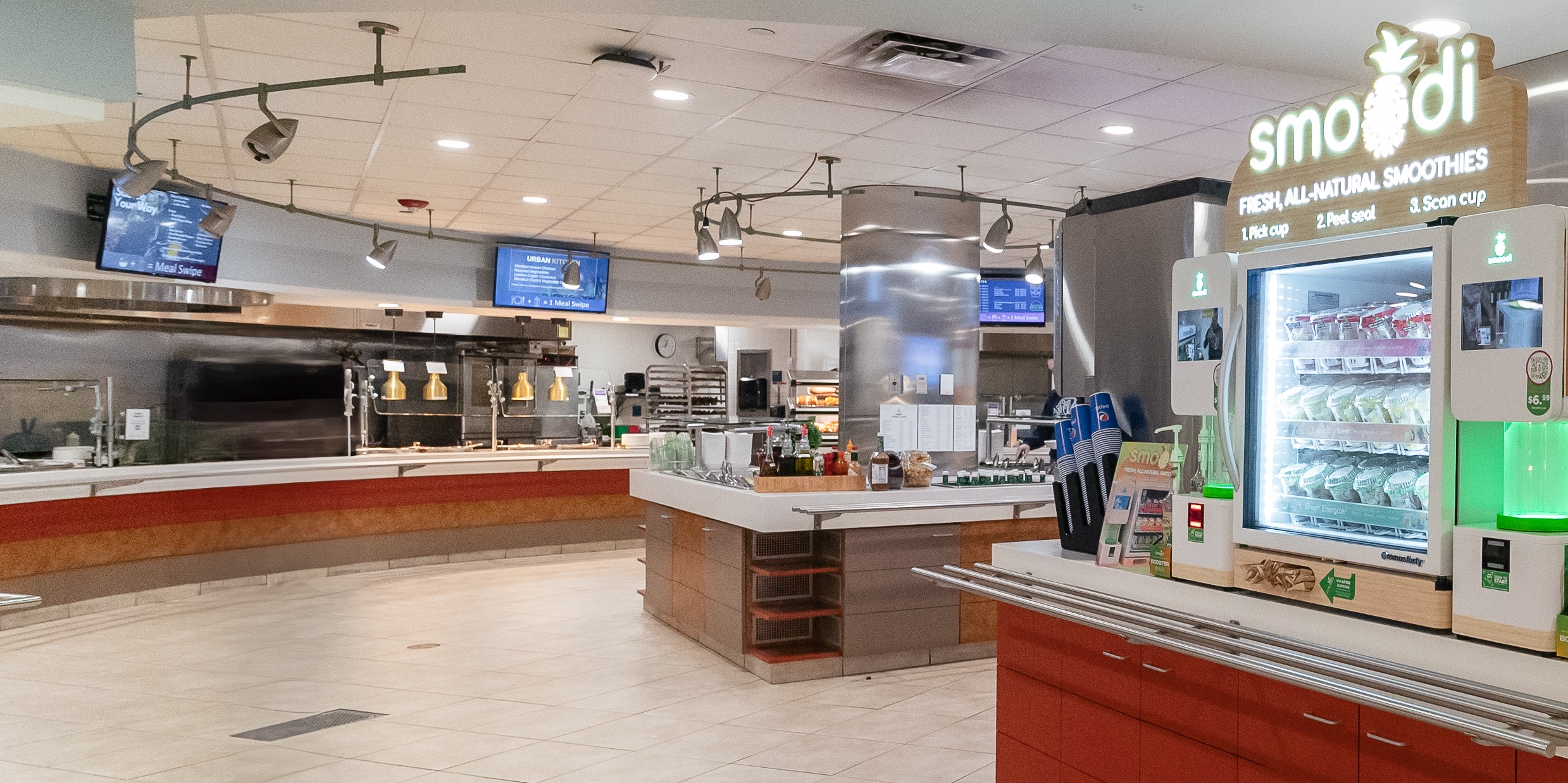
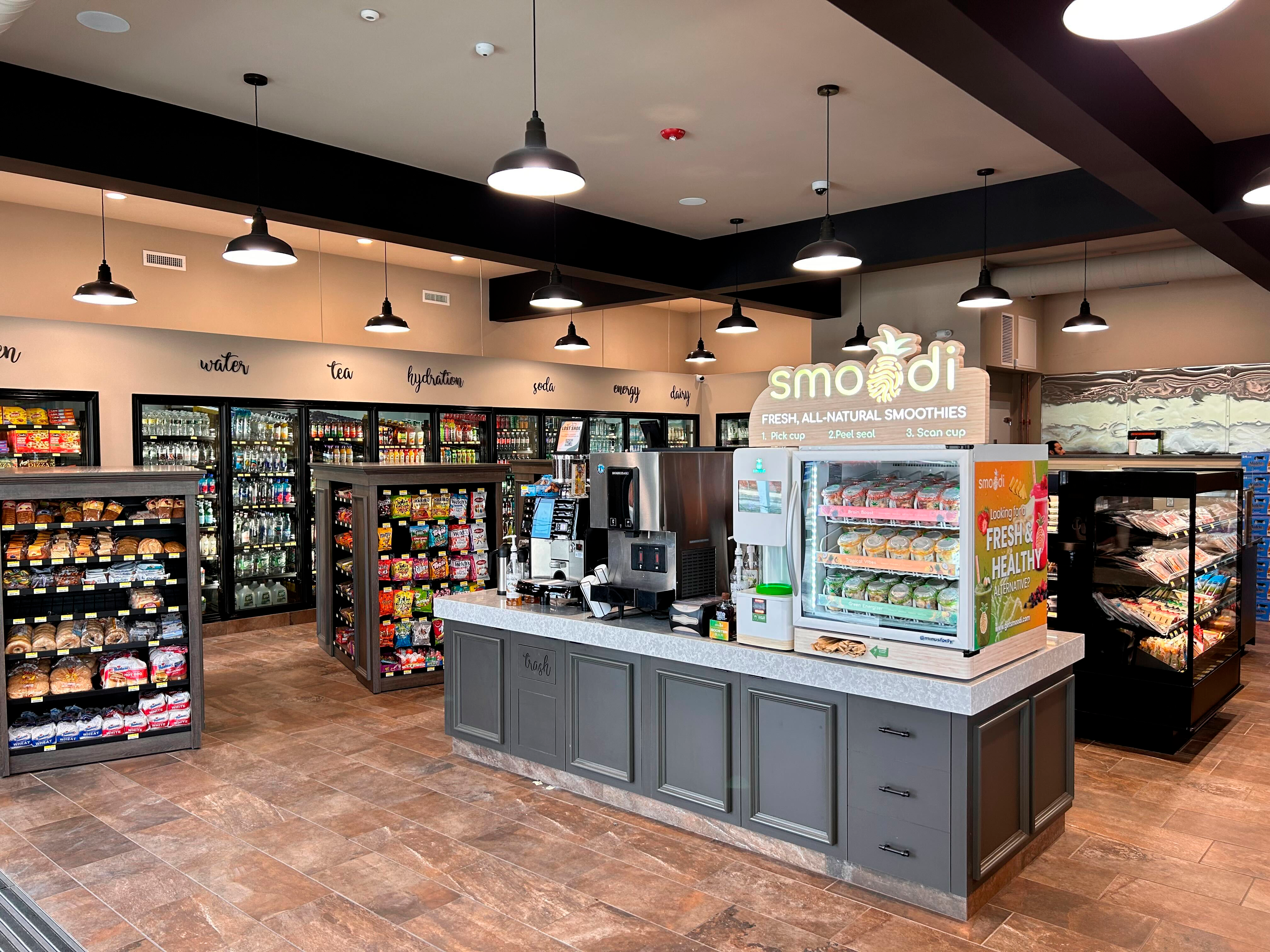
For operators who prefer ownership, purchase pricing starts at $14,999. The machine requires approximately 40 inches of floor space, a standard 120 VAC outlet, a water inlet, a sanitizer inlet, and a drain connection. The compact footprint fits in convenience store corners, travel plaza lobbies, or covered charging canopies without displacing existing retail merchandise.
The booster bar (protein powder, collagen, and other functional supplements) provides an upsell opportunity that increases average ticket value. Health-conscious EV drivers are exactly the demographic that opts for protein and functional add-ons.
Where Are Smoothie Stations Best Positioned at Charging Sites?
- Inside the convenience store or travel plaza adjacent to the chargers, near the checkout or beverage counter
- In a covered lounge or waiting area specifically designed for charging customers
- Near the entrance of a retail location that hosts chargers in its parking lot
- In the lobby of a parking structure or office building with fleet charging
- At highway rest stops or turnpike service plazas that are adding EV infrastructure
The key placement principle is visibility and proximity. Drivers should see the smoothie station as they enter the waiting area or convenience store. The machine's visual blending action creates its own draw, prompting impulse purchases from customers who might not have planned to buy a beverage.
How Does This Fit the Broader Charging Infrastructure Trend?
The EV charging ecosystem is moving from standalone chargers in empty parking lots toward full-amenity charging destinations. Operators are learning what airports, train stations, and travel plazas learned decades ago: captive dwell time is a revenue opportunity, and the quality of the amenities determines whether customers choose your location over a competitor's.
A healthy, self-service smoothie station is one piece of a broader amenity strategy. It complements coffee service, snack options, and seating areas. It requires no additional labor. And it serves a product that the EV driver demographic actively values.
Smoodi operates in more than 300 locations across the United States, with over 2 million smoothies served. The company was founded at Harvard Innovation Labs and has proven the automated smoothie model across corporate offices, universities, hospitals, gyms, and convenience stores. EV charging locations represent the next logical expansion of that model: high dwell time, health-conscious consumers, and minimal staffing infrastructure.
To explore how an automated smoothie station fits your charging location, visit getsmoodi.com/get-started. To run the numbers on projected revenue and breakeven timing, visit getsmoodi.com/roi.
Ready to bring Smoodi to your location?
Join hundreds of operators delivering fresh, automated smoothies with zero labor.
Get Started