How Can Senior Living Improve Nutrition with Automation?
Food-insecure adults age 60 and older quadrupled from 1.8 million to 7.4 million between 1999 and 2023. Senior living communities are turning to self-service nutrition stations to close the gap between scheduled meals.
Nutrition is one of the most important and most overlooked aspects of senior living operations. While communities invest in fitness programs, social activities, and healthcare coordination, the food program often follows a rigid three-meal schedule that leaves significant nutritional gaps throughout the day. For residents managing chronic conditions, recovering from procedures, or taking medications that require food at specific times, those gaps are not just inconvenient. They are clinically relevant.
The scale of the problem extends well beyond individual communities. The number of food-insecure adults age 60 and older in the United States quadrupled from 1.8 million to 7.4 million between 1999 and 2023. While food insecurity in senior living settings differs from food insecurity in the general population, the underlying issue is the same: older adults are not consistently getting the nutrition they need, when they need it. For senior living operators, addressing between-meal nutrition is both a clinical priority and a competitive differentiator.
Why Does Between-Meal Nutrition Matter for Seniors?
Clinical nutrition research consistently demonstrates that older adults benefit from more frequent, smaller nutrient intakes distributed throughout the day rather than three large meals. This is particularly true for protein intake, which is essential for maintaining muscle mass, supporting immune function, and accelerating recovery from illness or surgery. The recommended protein intake for adults over 65 is 1.0 to 1.2 grams per kilogram of body weight per day, higher than the 0.8 grams recommended for younger adults.
Yet most senior living dining programs concentrate protein delivery at lunch and dinner. Breakfast may include eggs or yogurt, but the mid-morning, mid-afternoon, and evening periods between meals typically offer only light snacks such as crackers, cookies, or juice. These fill the hunger gap but do not deliver the protein, vitamins, and minerals that aging bodies need to maintain function.
A smoothie with a protein booster consumed between meals addresses this gap directly. It delivers fruit-based vitamins, hydration, and a meaningful protein dose in a format that is easy to consume for residents who may have difficulty with solid foods due to dental issues, swallowing challenges, or reduced appetite.
What Nutritional Challenges Are Unique to Aging Populations?
Aging changes nutritional needs in several important ways. Appetite naturally decreases with age, making it harder for residents to consume enough calories and nutrients at standard mealtimes. Absorption efficiency declines for certain nutrients, meaning older adults need higher intakes to achieve the same nutritional status. Hydration becomes more critical because the thirst mechanism weakens with age, increasing dehydration risk.
Collagen production declines steadily after age 25, contributing to joint stiffness, skin thinning, and reduced bone density. Collagen supplementation through beverages has become a growing focus in geriatric nutrition. A smoothie with a collagen booster provides a palatable delivery method that integrates supplementation into a enjoyable daily routine rather than adding another pill or powder to an already extensive medication regimen.
These nutritional realities make between-meal options critically important. A whole-fruit smoothie with optional protein and collagen boosters delivers multiple nutritional benefits in a single, easy-to-consume format.
How Do Self-Service Stations Fit Senior Living Operations?
Senior living communities face the same staffing challenges as the broader foodservice industry, often magnified by the specialized care requirements of the population. Dining staff must balance meal preparation with regulatory compliance, dietary restrictions tracking, and individualized nutrition plans. Adding a staffed smoothie bar to this workload is impractical for most communities.
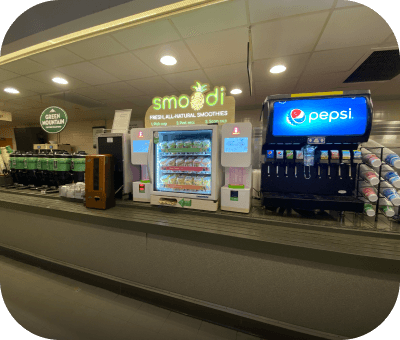
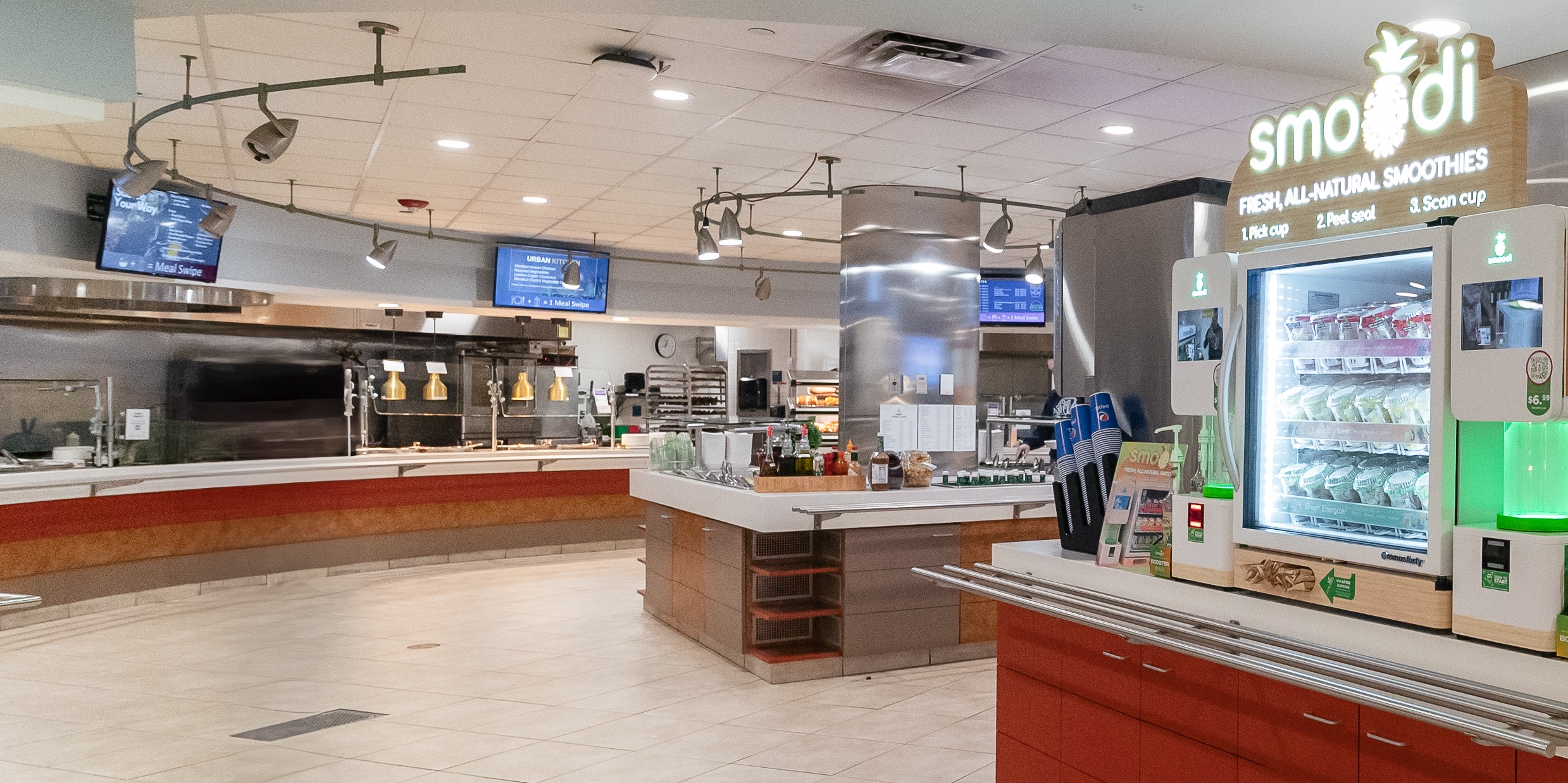
A self-service smoothie station operates independently of the dining team. Smoodi's machine blends IQF (individually quick frozen) fruit cups with water only, producing a fresh smoothie in under 60 seconds. The machine self-cleans between every use. No food prep training is required for the staff member who restocks the cups. The sealed, tamper-evident IQF cups eliminate food safety concerns associated with open produce handling in a healthcare-adjacent environment.
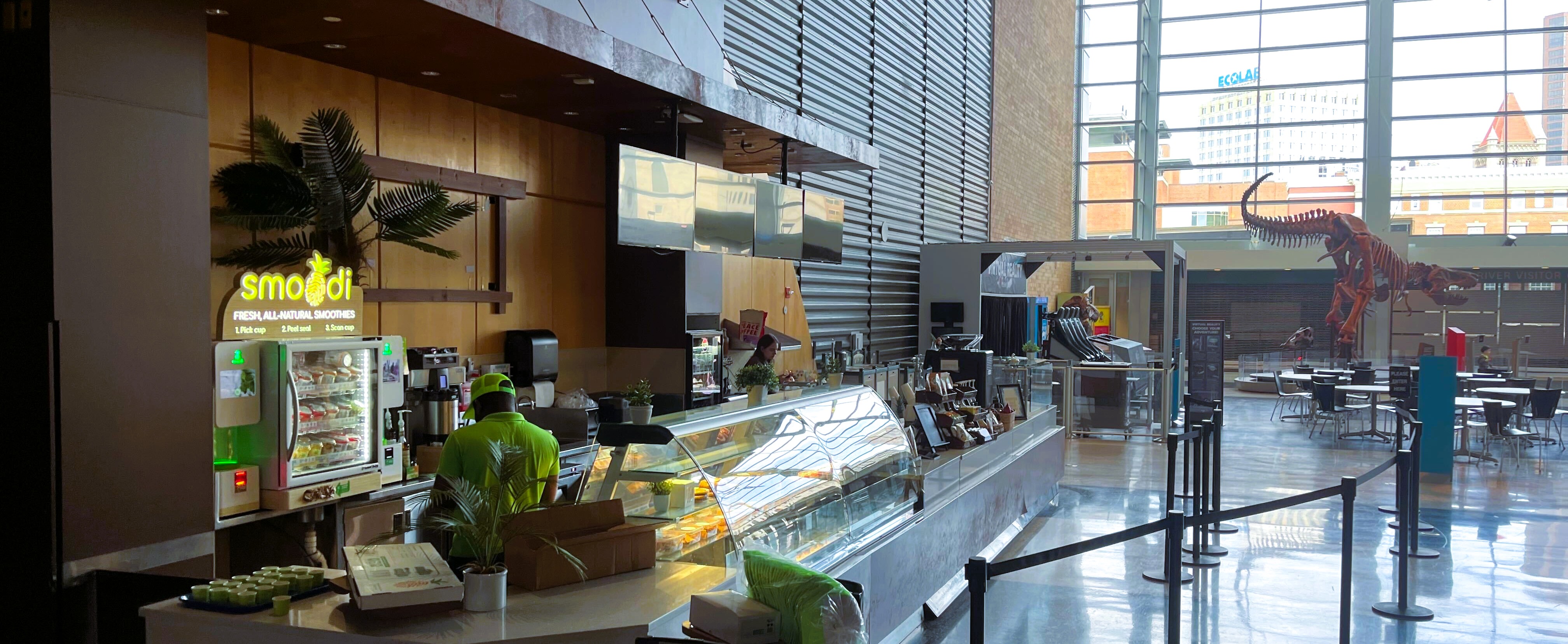
Placement in a common area, resident lounge, or near the dining hall entrance allows residents to access a healthy option any time they pass through, not only during the posted meal schedule. This transforms nutrition from a three-times-daily event into an available-all-day resource.
Why Does Dining Quality Drive Senior Living Decisions?
Prospective residents and their families consistently rank dining quality as a top-three factor when evaluating senior living communities. The dining program is one of the most visible, daily-experienced aspects of community life. A community that offers diverse, healthy, accessible food options throughout the day communicates a level of care and investment that residents and families notice.
This competitive dimension matters in a market where senior living communities are increasingly competing for residents. Occupancy rates, resident satisfaction scores, and family referrals are all influenced by the food experience. A smoothie station in the common area is not just a nutrition tool. It is a visible amenity that signals the community's commitment to resident wellness, and it creates a social gathering point where residents interact around a shared, positive experience.
What Are the Economics for Senior Living Operators?
Smoodi's operational lease starts at $299 per month for a 48-month term, with shorter terms available at $349 (36 months), $399 (24 months), and $499 (12 months). Operators pay the lease plus ingredient costs for IQF fruit cups, distributed through Dot Foods. For operators who prefer to own the equipment, purchase pricing starts at $14,999.
Senior living communities can integrate smoothie costs into their existing meal plan structure or offer smoothies as a separate amenity. Communities that include smoothies in the meal plan see higher daily consumption because residents perceive the smoothie as part of their dining benefit rather than an extra expense. Communities that sell smoothies separately typically price between $4.00 and $6.00, generating modest direct revenue while delivering significant resident satisfaction value.
The booster bar (protein powder, collagen, and other functional supplements) is particularly valuable in senior living because it allows residents to customize their smoothie for specific nutritional goals. A resident focused on bone health can add collagen. A resident building muscle strength after a fall can add protein. This personalization happens without any additional equipment or staff involvement.
How Does Food Safety Work in Healthcare-Adjacent Settings?
Senior living communities operate under healthcare-adjacent food safety regulations that require careful attention to hygiene, cross-contamination prevention, and temperature control. Traditional smoothie preparation, which involves handling fresh produce, cleaning cutting surfaces, and sanitizing blenders manually, introduces multiple points where food safety protocols can be compromised, especially when performed by staff whose primary role is not food preparation.
Smoodi's sealed IQF fruit cups and automatic self-cleaning function address these concerns directly. Each cup is individually sealed, frozen, and tamper-evident. There is no open produce to wash, inspect, or store. The machine sanitizes its blending components between every use without manual intervention. This closed-loop system reduces food safety risk to a level that most healthcare-adjacent compliance teams find acceptable with minimal additional oversight.
Where Should Smoothie Stations Be Placed in Senior Living?
- In the main dining hall lobby or entrance, accessible to residents before and after posted meal times
- In a common area lounge or activity room where residents spend time between meals
- Near the fitness or physical therapy center, where residents benefit from post-exercise protein intake
- In the memory care wing, where staff can prepare smoothies for residents who benefit from nutrient-dense, easy-to-consume options
- Near the front entrance or welcome area, where prospective residents and families experience the community during tours
How Does Smoodi Serve Healthcare Environments Today?
Smoodi operates in healthcare environments including Baptist Health and other hospital systems. The machine uses whole fruit with no syrups, concentrates, added sugars, or artificial ingredients. Every ingredient is real food, blended with water. The fruit cups have a shelf life of up to two years, ensuring consistent availability regardless of census fluctuations.
Smoodi was founded at Harvard Innovation Labs and now operates in more than 300 locations across the United States, with over 2 million smoothies served. For senior living operators interested in enhancing between-meal nutrition for residents, visit getsmoodi.com/get-started.
Ready to bring Smoodi to your location?
Join hundreds of operators delivering fresh, automated smoothies with zero labor.
Get Started