What Makes Fresh-Blended Smoothies Different from Bottled?
Consumers and operators often treat bottled smoothies and fresh-blended smoothies as interchangeable products. They are not. The differences in nutrition, ingredients, and customer experience are significant and have real implications for foodservice programs.
Walk into any grocery store, convenience store, or cafeteria cooler and you will find rows of bottled smoothies marketed with images of fresh fruit and health-forward messaging. Walk up to a staffed juice bar or an automated blending station and you can get a smoothie made from actual fruit, blended to order. Both products are called smoothies. Both are marketed as healthy options. But the similarities end there.
For consumers making purchasing decisions and for foodservice operators evaluating beverage programs, understanding the real differences between these product categories is essential. The gap between a bottled, shelf-stable smoothie and a fresh-blended smoothie made from whole frozen fruit is wider than most people realize, spanning nutrition, ingredient integrity, customer experience, and operational economics.
How Bottled Smoothies Are Made
Most bottled smoothies sold in retail and foodservice environments go through a multi-step manufacturing process designed to maximize shelf life and ensure food safety during distribution. The fruit is typically processed into purees or concentrates, blended with water, juices, and sometimes added sugars or sweeteners, then heat-treated through pasteurization to kill bacteria and extend the product's usable life.
Pasteurization is necessary for any beverage that will sit in a supply chain for days, weeks, or months before being consumed. But heat treatment degrades certain nutrients. Vitamin C, one of the primary nutritional benefits consumers associate with fruit-based beverages, is heat-sensitive and breaks down significantly during pasteurization. B vitamins and certain antioxidants are similarly affected. The result is a product that started with real fruit but has lost a meaningful portion of its nutritional value by the time it reaches the consumer.
Additionally, many bottled smoothies contain ingredients beyond fruit. Added sugars, fruit juice concentrates (which are effectively sugar with some flavor), natural flavors, stabilizers, and preservatives are common. These additions improve taste consistency, extend shelf life, and reduce manufacturing cost, but they move the product further from the whole-fruit nutrition that consumers believe they are buying.
How Fresh-Blended Smoothies Differ
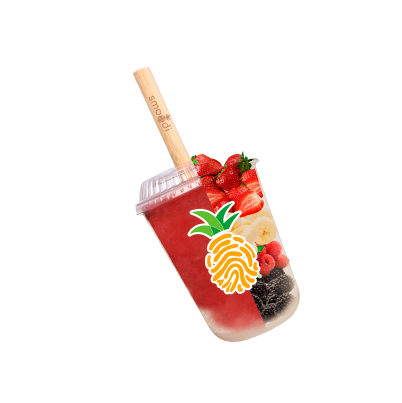
A fresh-blended smoothie starts with whole fruit, either fresh or frozen, and blends it at the point of service. There is no intermediate processing step. The fruit goes from its stored state directly into the blender and then into the cup. When the fruit is IQF (individually quick frozen), the freezing happens rapidly after harvest, which locks in nutrients, flavor, and fiber structure at their peak. The fruit is not cooked, concentrated, or chemically preserved at any point.
The nutritional difference is meaningful. Whole fruit retains its natural fiber, including both soluble and insoluble forms. Fiber slows sugar absorption, supports digestive health, and contributes to satiety. When fruit is processed into juice or concentrate for bottled products, most of the fiber is removed or broken down. A consumer drinking a bottled smoothie made from fruit concentrate is getting the sugar from the fruit without the fiber that naturally moderates its metabolic impact.
Fresh-blended smoothies also retain the full spectrum of micronutrients present in the whole fruit. Vitamins, minerals, and phytonutrients that degrade during heat treatment remain intact when the fruit is simply frozen and then blended. The difference is not theoretical. It is measurable in laboratory analysis and noticeable in taste. Consumers consistently describe fresh-blended smoothies as having brighter flavor, better texture, and a more natural taste compared to bottled alternatives.
Three Product Categories Operators Should Understand
For foodservice operators evaluating their beverage program, it is useful to think about smoothies in three distinct categories, each with different quality, cost, and operational profiles.
Category 1: Bottled and Shelf-Stable Smoothies
These are the products found in refrigerated coolers and vending machines. They are the most processed, with the longest supply chain between fruit and consumer. They require no preparation labor but offer limited margins (typically a retail markup on wholesale cost), no customization, and the weakest nutritional profile of the three categories. Operators stock them, rotate inventory, manage expiration dates, and handle waste from unsold products.
Category 2: Fresh-Made at Staffed Juice Bars
Staffed juice and smoothie bars produce the freshest possible product, with maximum customization. They also carry the highest operational cost: dedicated labor, fresh ingredient procurement and storage, cleaning and sanitation protocols, and waste from perishable ingredients that are not used before expiring. For most foodservice operators, a staffed smoothie bar is viable only in high-traffic locations where the revenue justifies the labor investment.
Category 3: Automated Fresh-Blending from Sealed Ingredients
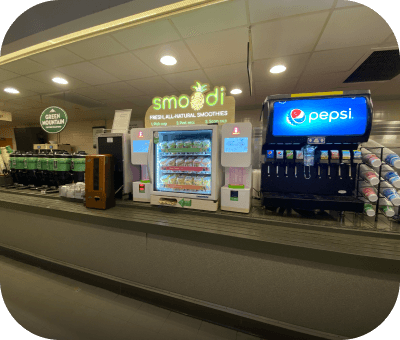
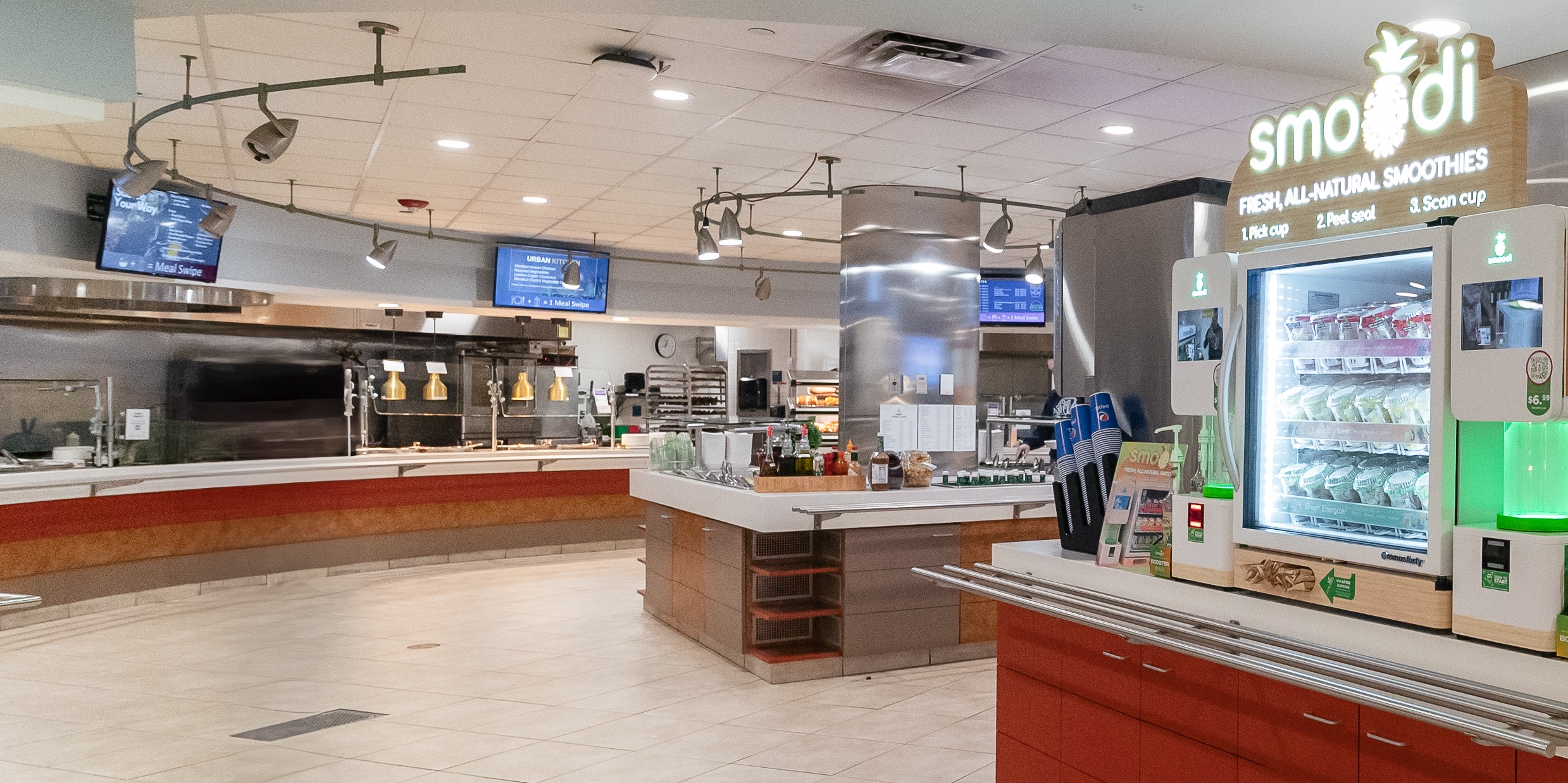
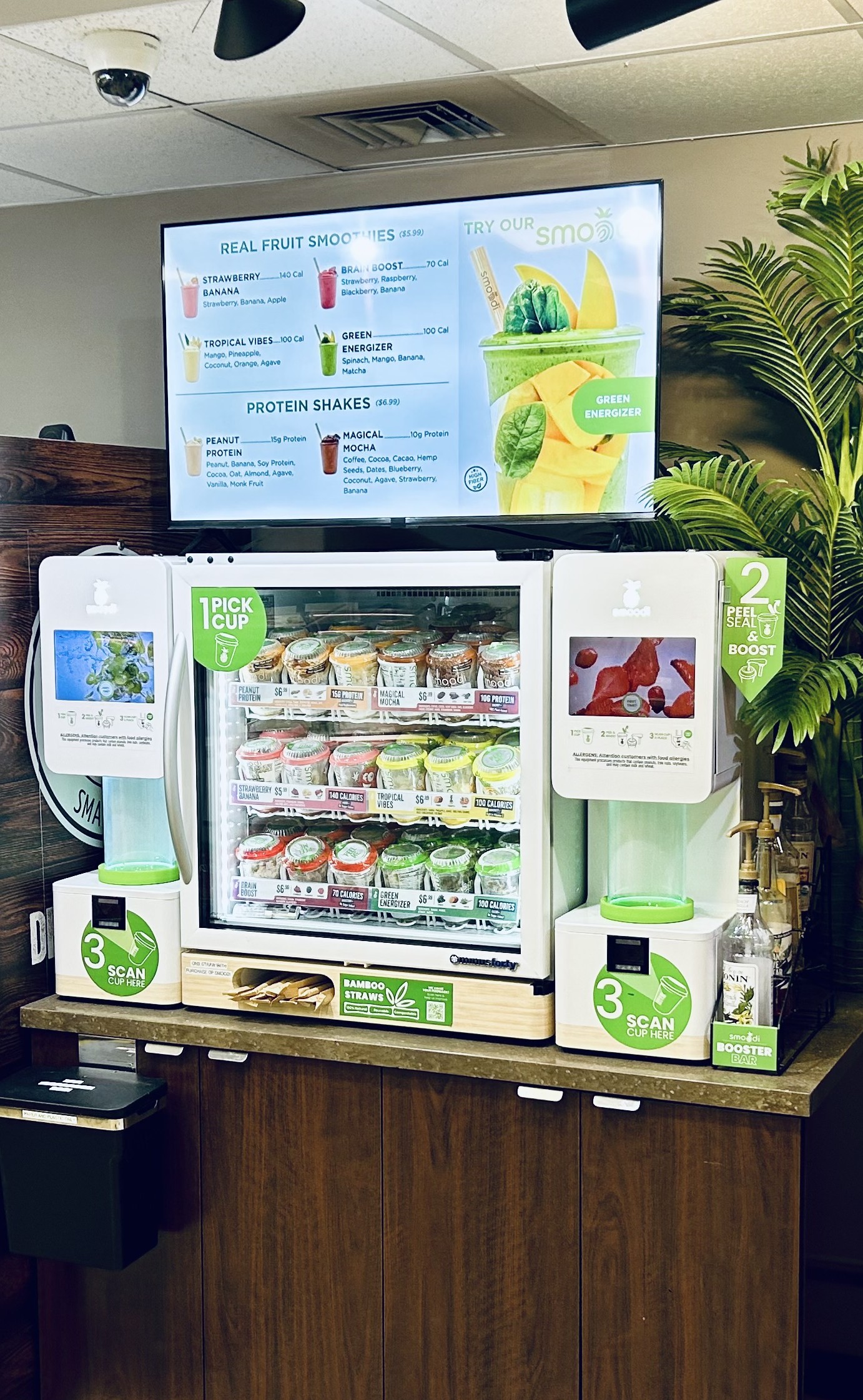
This category combines the product quality of a staffed juice bar with the operational simplicity of a bottled product. Smoodi's model fits squarely here. Each smoothie is blended fresh from sealed IQF fruit cups containing real whole frozen fruit. The machine adds water only, with no syrups, concentrates, or artificial ingredients. The blending happens at the point of service in under 60 seconds, and the machine self-cleans between every use. There is no labor cost, no perishable ingredient waste (cups have up to a two-year shelf life), and no compromise on product quality.
What Consumers Actually Taste and Experience
The consumer experience gap between bottled and fresh-blended smoothies extends beyond nutrition. Temperature, texture, and freshness perception all differ significantly.
A bottled smoothie sits at refrigerator temperature. A fresh-blended smoothie from frozen fruit is cold and thick, with a texture that consumers associate with premium quality. The visual appearance is also different: fresh-blended smoothies have a vibrant color and visible fruit texture, while bottled products often have a uniform, slightly dulled appearance from processing and storage.
These sensory differences affect willingness to pay. Consumers routinely pay $5 to $8 for a fresh-blended smoothie at a juice bar while hesitating at $3 to $4 for a bottled version. The perceived value of freshness, visible ingredients, and made-to-order preparation supports premium pricing that benefits operator margins.
The Operational Case for Automated Fresh-Blending
For operators who want to offer fresh-blended quality without staffed-bar economics, automated blending from sealed ingredients solves the equation. Smoodi's IQF fruit cups are distributed through Dot Foods, simplifying procurement. The cups store in a standard freezer with no special handling. The machine occupies approximately 40 inches of floor space, runs on a standard 120 VAC outlet, and requires no dedicated operator.
The sealed-cup model also provides food safety advantages. There is no cross-contamination from shared ingredient bins, no allergen risk from improperly cleaned blenders (the machine self-cleans between every use), and no quality variation from inconsistent portioning. Every smoothie contains exactly the same ingredients in exactly the same proportions, blended fresh every time.
"I have been looking to add a smoothie bar for years but did not want to deal with the labor and food waste. Having smoodi in our facility is a huge benefit for our members."
— Adam Healy, General Manager, Waverly Oaks Athletic Club
Choosing the Right Smoothie Format for Your Operation
The right format depends on the specific operation. High-traffic locations with existing foodservice staff may sustain a staffed juice bar. Locations that need a grab-and-go option with minimal management overhead may prefer bottled products. But for the growing number of operators who want fresh, real-ingredient quality without the labor and waste of a staffed program, automated fresh-blending from sealed IQF fruit offers the strongest combination of product quality, operational simplicity, and margin performance.
Smoodi operates in more than 300 locations across the United States and has served over 2 million smoothies. The booster bar adds protein powder, collagen, and other functional supplements for customers who want targeted nutrition. Lease options start at $299 per month, or operators can purchase outright starting at $14,999.
Operators interested in comparing smoothie program formats for their facility can learn more at getsmoodi.com/get-started.
Ready to bring Smoodi to your location?
Join hundreds of operators delivering fresh, automated smoothies with zero labor.
Get Started