What Should Healthcare Waiting Areas Offer Patients?
Most healthcare waiting areas offer only vending machines with chips and soda, creating a visible contradiction with the facility's health mission. Healthy self-service options can improve patient satisfaction and align food offerings with clinical values.
Healthcare facilities invest heavily in clinical outcomes, medical technology, and staff training. Yet the waiting room experience, where patients and families spend some of their most anxious hours, often receives minimal attention. Walk into an outpatient surgery center, an infusion clinic, a dialysis center, or an emergency department waiting area, and the food options are typically limited to a vending machine stocked with chips, candy bars, and sugary sodas.
This creates a visible contradiction. The same facility that counsels patients on nutrition, manages chronic disease through dietary intervention, and promotes preventive health offers nothing but processed snacks in its own public spaces. For hospital administrators focused on patient experience metrics and satisfaction scores, this gap is both a problem and an opportunity.
How Does the Waiting Room Affect Patient Satisfaction?
Patient experience is now a core performance metric for healthcare systems. Satisfaction scores directly influence reimbursement rates, reputation, and competitive positioning. The physical environment of a facility, including the waiting area, contributes meaningfully to how patients and families perceive their overall experience.
Extended wait times are common in outpatient surgery centers (families waiting during procedures), infusion clinics (patients spending three to six hours per session), dialysis centers (regular multi-hour visits), and emergency departments (unpredictable wait durations). During these extended stays, access to food and beverages is not a luxury. It is a basic comfort need. Patients who are fasting before procedures need options afterward. Family members who arrive early and stay late need sustenance. When the only available option contradicts the health messaging posted on the walls, it erodes trust.
Why Do Traditional Food Programs Fail in Waiting Areas?
Hospital cafeterias serve the main building, but waiting areas in outpatient facilities, satellite clinics, and specialty centers are often far from the cafeteria. Installing a staffed food counter in a waiting room is impractical: the space is limited, food prep in a clinical environment raises safety concerns, and the economics of staffing a counter for intermittent demand do not work.
Vending machines fill the gap by default. They require no staff, fit in small spaces, and restock infrequently. But they offer only packaged, shelf-stable products, which overwhelmingly means processed snacks and sugary beverages. The food available in the vending machine directly contradicts the dietary advice that clinicians provide in the exam room next door.
How Does a Smoothie Station Align with the Clinical Mission?
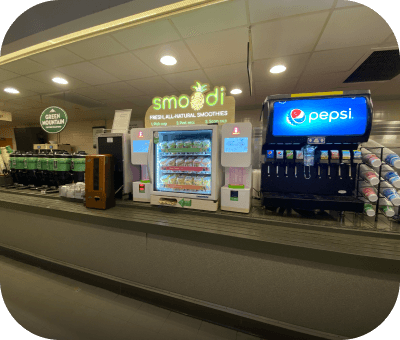
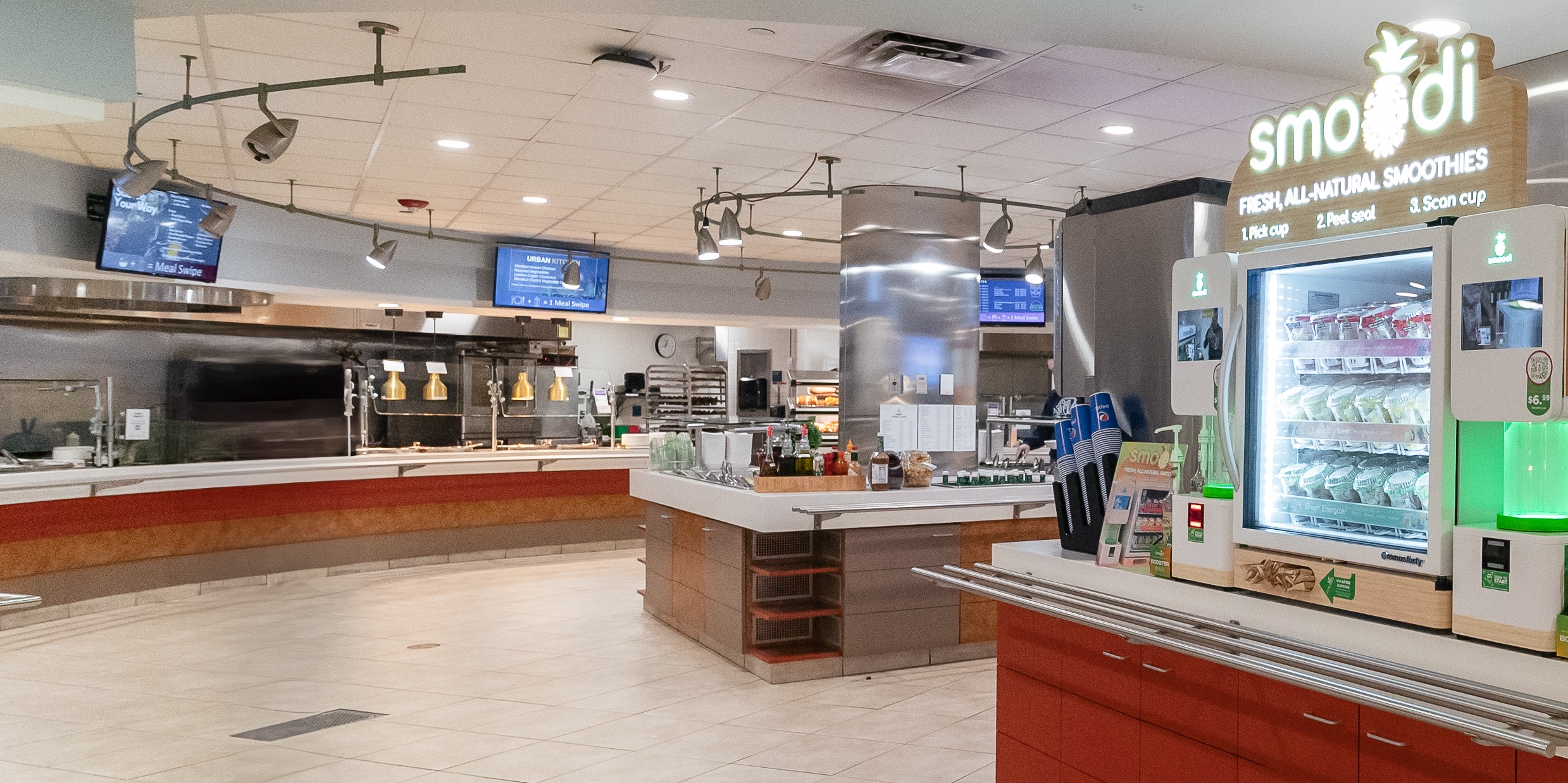
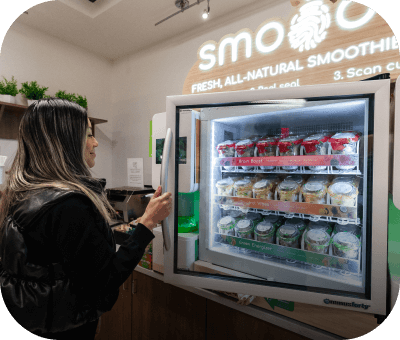
A self-service smoothie station provides a genuinely healthy option that aligns with the facility's clinical mission. Smoodi's machines blend IQF (individually quick frozen) fruit cups with water only. Every smoothie contains real fruit with no syrups, concentrates, added sugars, or artificial ingredients. The booster bar offers protein powder, collagen, and other functional supplements that support post-procedure recovery nutrition.
This alignment matters beyond optics. Nutritional guidance for post-surgical recovery consistently emphasizes protein, vitamins, and hydration. Patients completing chemotherapy infusions benefit from easily digestible, nutrient-dense foods. Dialysis patients managing potassium and phosphorus intake can select fruit options that fit their dietary parameters. A smoothie station in the waiting area makes the right nutritional choice the easy choice, exactly where patients and families need it most.
"It's been a day and a half and we've sold over 1,000 pieces. It's been great. Install was very fast. Our guys love it."
— Hector Ortiz, Food Service Operations Manager, Baptist Health
What Food Safety Standards Does Automated Equipment Meet?
Healthcare environments demand rigorous food safety. Any food or beverage equipment in a clinical setting must meet strict hygiene standards. Smoodi's self-cleaning function between every use addresses this requirement directly. The machine sanitizes its blending components automatically after each smoothie, eliminating the cross-contamination risk that comes with manual cleaning in food service operations.
The sealed IQF fruit cups further reduce food safety risk. There is no open produce to handle, no cutting boards to sanitize, no fresh fruit to wash and inspect. Each cup is individually sealed, frozen, and tamper-evident. Staff who restock the machine do not need food handling certification or culinary training. This makes the system viable in clinical environments where traditional food prep would require additional licensing, inspections, and compliance overhead.
Where Should Smoothie Stations Be Placed in Healthcare Facilities?
- Outpatient surgery center waiting rooms, where families wait during procedures and patients need nutrition post-recovery
- Infusion therapy suites, where patients spend three to six hours per session and benefit from easily digestible nutrition
- Emergency department family waiting areas, where unpredictable wait times create extended food needs
- Rehabilitation center lobbies, where patients recovering from injury or surgery visit regularly
- Hospital main lobbies or visitor lounges, as a complement to the cafeteria for off-hours access
The machine occupies approximately 40 inches of floor space. It requires a standard 120 VAC outlet, a push-to-connect water inlet (3/8 inch, 50 to 80 PSI), a sanitizer inlet (1/4 inch), and a drain connection. Most healthcare facilities have these utilities readily available in or near waiting areas.
What Are the Economics for Healthcare Administrators?
Smoodi's operational lease starts at $299 per month for a 48-month term, with shorter terms available up to $499 per month. Operators pay the lease cost plus ingredient costs (fruit cups purchased through Dot Foods distribution) and keep the margin on every smoothie sold. For operators who prefer to own the equipment, purchase pricing starts at $14,999.
Healthcare facilities typically price smoothies between $5.00 and $8.00. In high-traffic locations like hospital main lobbies, daily volume can reach 20 to 40 smoothies, generating meaningful revenue against modest fixed costs. Even in lower-traffic satellite clinics, the patient experience benefit justifies the investment as part of the facility's broader satisfaction improvement strategy.
"Now we have healthy options available here in the cafeteria, and patients and even doctors are loving this."
— Dr. Nish Patel, Interventional Cardiologist, Baptist Health Miami
How Does Smoodi Already Serve Healthcare?
Smoodi operates in healthcare environments today, including Baptist Health and other hospital systems. The machine's proven track record in clinical settings demonstrates that automated smoothie stations can meet the operational, safety, and experience standards that healthcare administrators require.
Smoodi was founded at Harvard Innovation Labs and now operates in more than 300 locations across the United States, with over 2 million smoothies served. The IQF fruit cups have a shelf life of up to two years, ensuring consistent availability regardless of patient volume fluctuations. For healthcare administrators interested in enhancing patient and visitor experience with a healthy, self-service nutrition option, visit getsmoodi.com/get-started.
Ready to bring Smoodi to your location?
Join hundreds of operators delivering fresh, automated smoothies with zero labor.
Get Started