How Does the HHS Hospital Food Pledge Affect Operations?
The HHS Make Hospital Food Healthier pledge challenges hospitals to cut ultra-processed foods. Whole-fruit self-service stations offer a practical path forward.
On July 8, 2026, the Department of Health and Human Services launched the Make Hospital Food Healthier pledge, a voluntary nationwide initiative developed in partnership with the Centers for Medicare and Medicaid Services. The pledge asks participating hospitals to limit ultra-processed foods and sugar-sweetened beverages, prioritize nutrient-dense menu options aligned with the 2025-2030 Dietary Guidelines for Americans, and eliminate deep-frying from hospital kitchens. While the commitment is voluntary, it carries significant reputational and regulatory signaling weight. For hospital foodservice directors, the pledge raises a practical question: how can facilities shift toward whole-food, nutrient-dense options without expanding kitchen staff, extending food preparation time, or increasing ingredient waste?
What Does the Pledge Require from Hospital Foodservice?
The pledge outlines three core commitments for participating hospitals. First, hospitals agree to limit ultra-processed foods in patient meals, cafeteria offerings, and vending selections. Ultra-processed foods, as defined by the NOVA classification system, include items with industrial additives such as hydrogenated oils, high-fructose corn syrup, artificial flavors, and emulsifiers. Second, hospitals commit to prioritizing nutrient-dense options that align with the 2025-2030 Dietary Guidelines, emphasizing whole grains, fruits, vegetables, lean proteins, and low-fat dairy. Third, hospitals agree to eliminate deep-frying as a cooking method.
This initiative follows the March 2026 CMS memorandum reiterating hospital nutrition service obligations under the Conditions of Participation. While the pledge itself does not carry regulatory penalties, hospitals that fail to improve nutrition quality face increasing scrutiny from accreditation bodies, patient advocacy groups, and the media. The gap between a hospital's clinical mission (promoting health) and its food program (often dominated by processed convenience foods) has become a visible reputational risk.
Why Has Hospital Food Been Difficult to Improve?
Hospital foodservice operations face constraints that make menu improvement uniquely challenging. Patient meal service requires compliance with hundreds of dietary restrictions, allergen protocols, and texture modifications. Cafeteria service must accommodate three daily meal periods plus overnight staff, creating extended operating hours that strain labor budgets. Staffing shortages in hospital kitchens mirror the broader foodservice labor crisis, with dietary departments competing for workers against every other employer in the local market.
The result is a reliance on processed, shelf-stable, heat-and-serve products that simplify preparation and reduce the skills required of kitchen staff. Frozen entrees, pre-packaged snacks, and fountain beverages dominate many hospital cafeterias because they require minimal labor, generate predictable costs, and present low food safety risk. Replacing these items with fresh, whole-ingredient alternatives typically requires additional prep time, more skilled kitchen labor, shorter shelf-life inventory management, and higher ingredient costs.
Vending machines in hospital lobbies, waiting areas, and staff break rooms present a related challenge. Most hospital vending offerings consist of chips, candy, cookies, and sugar-sweetened beverages. These are exactly the categories the HHS pledge asks hospitals to reduce. Replacing vending inventory with healthier packaged alternatives addresses part of the problem but does not fundamentally change the processed nature of the products available.
What Operational Strategies Support Pledge Compliance?
Hospital foodservice directors evaluating compliance strategies face a spectrum of options, each with different cost, labor, and implementation profiles.
Menu reformulation is the most common approach: replacing deep-fried items with baked or grilled alternatives, substituting whole grains for refined options, and reducing added sugars in beverages and desserts. This requires recipe development, staff retraining, and often a period of patient satisfaction adjustment as familiar comfort foods are modified or removed.
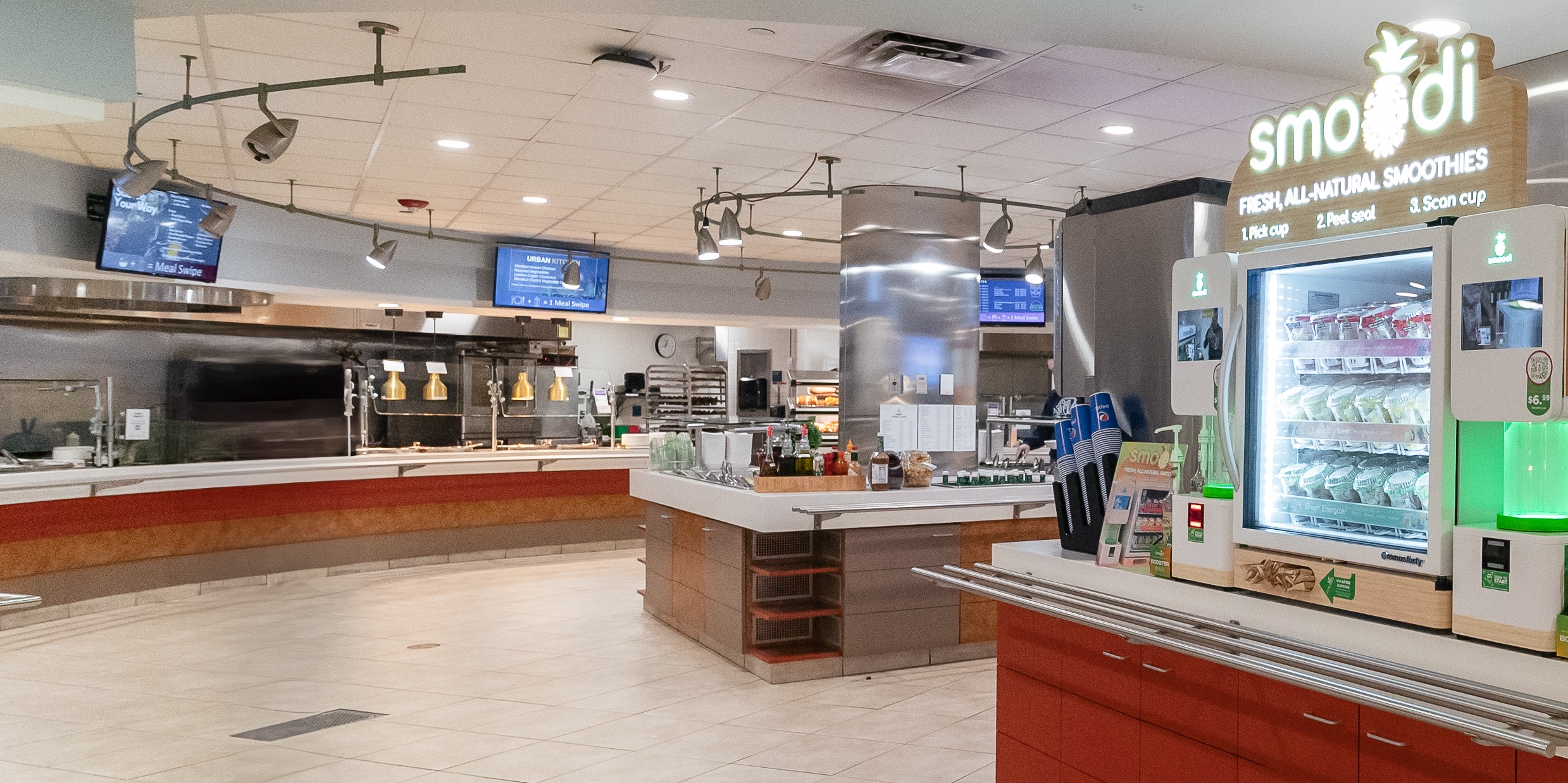
Fresh food stations in the cafeteria (such as salad bars, grain bowls, and made-to-order options) provide visible evidence of commitment to the pledge. These stations, however, require dedicated staff for preparation, restocking, and food safety compliance throughout service hours. For hospitals already facing kitchen labor shortages, adding staffed fresh food stations may not be feasible without budget increases.
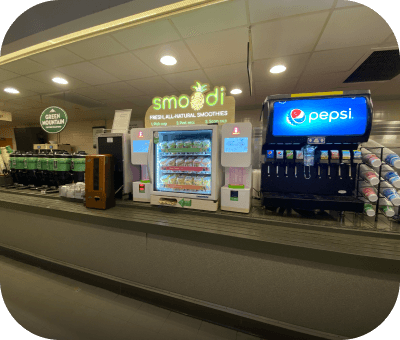
Self-service automated food and beverage stations offer a third path. These stations deliver fresh, whole-ingredient products without requiring dedicated food preparation staff. The technology handles blending, dispensing, and cleaning autonomously, allowing dietary departments to add nutrient-dense options in cafeterias, lobbies, and staff break rooms without expanding the labor budget.
How Does Whole-Fruit Automation Align with the Pledge?
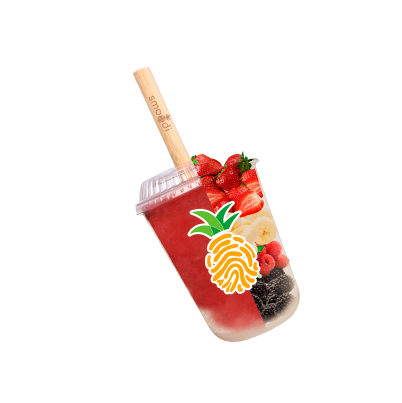
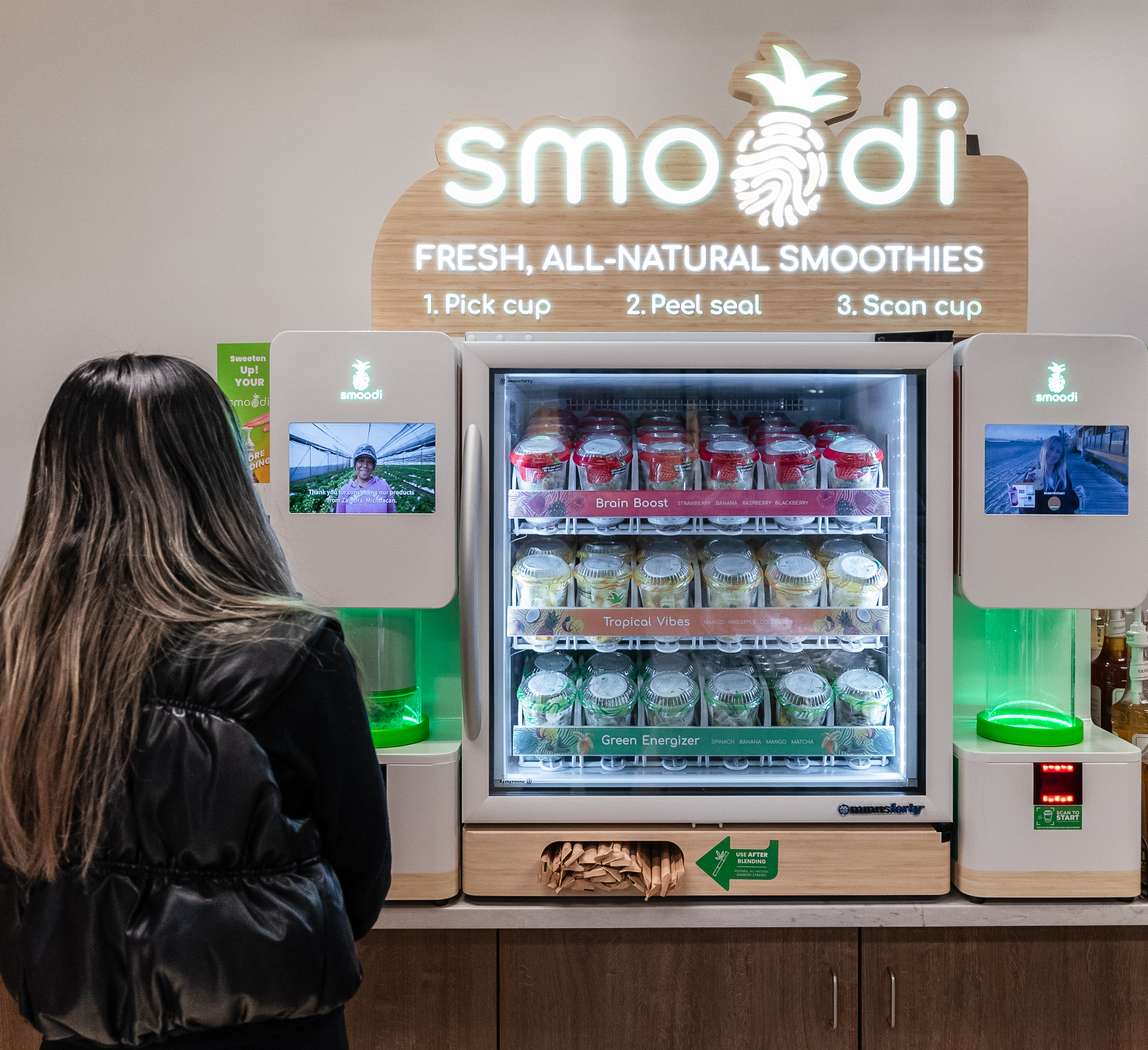
Smoodi's automated smoothie machine addresses each of the pledge's core requirements directly. Every smoothie is blended from IQF (individually quick frozen) fruit cups with water only. No syrups, concentrates, artificial flavors, or added sugars are used in any product. This places every Smoodi smoothie firmly outside the ultra-processed category, meeting the pledge's first commitment without qualification.
The booster bar offers protein powder, collagen, and functional supplements, providing nutrient-dense customization that aligns with the Dietary Guidelines' emphasis on adequate protein intake and functional nutrition. For hospitals serving patients on GLP-1 medications (a rapidly growing patient population), a high-protein, low-sugar smoothie provides a compatible option that supports the medication's dietary requirements.
"Now we have healthy options available here in the cafeteria, and patients and even doctors are loving this."
— Dr. Nish Patel, Interventional Cardiologist, Baptist Health Miami
The machine self-cleans between every use, blends a smoothie in under 60 seconds, and occupies approximately 40 inches of floor space. For hospital dietary departments already stretched thin on staffing, the zero-labor operating model is the critical advantage. No additional kitchen staff, no food prep training, and no incremental food safety protocols are required.
IQF fruit cups have a shelf life of up to two years, eliminating the fresh produce spoilage that typically accompanies healthy menu additions. Cups are distributed nationally through Dot Foods, ensuring consistent supply for hospital systems with multiple facilities across different regions.
Where Can Hospitals Deploy Self-Service Nutrition Stations?
Hospital campuses offer multiple high-traffic locations where a compact, self-service smoothie station addresses nutrition gaps without requiring kitchen infrastructure.
- Main cafeteria: positioned alongside existing food options as a whole-fruit, zero-added-sugar alternative to fountain beverages and processed snacks
- Staff break rooms: nurses, technicians, and support staff working 12-hour shifts need convenient access to healthy food, particularly during overnight hours when the cafeteria is closed
- Outpatient waiting areas: patients and families spending hours in waiting rooms have limited food access, and a healthy self-service option improves the patient experience
- Rehabilitation and physical therapy wings: patients in recovery programs benefit from high-protein nutrition that supports muscle rebuilding and energy during therapy sessions
- Main lobby and entrance: a visible wellness amenity that signals the hospital's commitment to healthy food for every visitor, patient, and staff member
"It's been a day and a half and we've sold over 1,000 pieces. It's been great. Install was very fast. Our guys love it."
— Hector Ortiz, Food Service Operations Manager, Baptist Health
What Is the Financial Model for Hospital Deployment?
Smoodi's operational lease starts at $299 per month for a 48-month term, scaling to $499 per month for a 12-month term. The purchase option is $14,999. For hospital foodservice budgets, the lease model provides a predictable monthly expense that avoids capital equipment procurement processes and committee approvals typically required for large purchases. The station generates revenue from smoothie sales while simultaneously improving the cafeteria's nutritional profile for pledge compliance.
Smoodi operates in more than 300 locations across the United States, with over 2 million smoothies served. The company was founded at Harvard Innovation Labs. Installation requires a standard 120 VAC outlet, water connection (3/8-inch push-to-connect, 50 to 80 PSI), sanitizer inlet, and drain. For hospital systems evaluating pledge compliance strategies, the combination of whole-ingredient products, zero labor requirements, and compact installation makes automated smoothie stations a practical first step toward meeting the HHS commitment.
Hospital foodservice directors and dining operations managers interested in aligning their food programs with the HHS pledge can explore deployment options at getsmoodi.com/get-started. To evaluate the financial impact, visit getsmoodi.com/roi.
Ready to bring Smoodi to your location?
Join hundreds of operators delivering fresh, automated smoothies with zero labor.
Get Started