How Are Hospital Cafeterias Supporting Staff Wellness?
Healthcare worker burnout remains a critical challenge in 2026, and hospital dining programs are evolving from cost centers to strategic wellness assets. When staff cannot access nutritious meals quickly, they skip eating, compounding the burnout cycle.
Healthcare worker burnout is not a new problem, but it has reached a critical threshold in 2026. Staffing shortages, extended shifts, and the cumulative toll of the past several years have left hospitals facing a retention crisis that directly affects patient care quality. Among the many factors contributing to burnout, one of the most overlooked is nutrition access. When healthcare workers cannot get a nutritious meal quickly during their shift, they skip eating. When they skip eating, fatigue, cognitive decline, and emotional exhaustion accelerate. Hospital cafeterias are now at the center of a strategic conversation about how to break this cycle.
The data supports the urgency. Research shows that 94% of healthcare workers expect high-quality ingredients in hospital dining. Yet 48% say they need wellness-supporting food choices that fit their unpredictable schedules. 85% want food options that are quick to order, and 79% need meals that are fast to eat. The gap between what staff expect and what most hospitals provide is wide, and closing it requires more than adding menu items to the main cafeteria.
Why Traditional Cafeteria Service Falls Short for Healthcare Staff
Most hospital cafeterias operate on a schedule that reflects administrative convenience, not clinical reality. Breakfast service might run from 6:30 to 9:00 AM, lunch from 11:00 AM to 2:00 PM, and dinner from 5:00 to 7:00 PM. For a nurse working a 12-hour night shift that starts at 7:00 PM, none of these windows are accessible. For a surgeon whose procedure runs through the lunch period, the cafeteria is closed by the time they are available to eat.
Even when cafeteria hours overlap with a staff member's availability, the time required to walk to the cafeteria, wait in line, order, pay, and walk back can easily consume 20 to 30 minutes. On a floor where patient needs are constant and unpredictable, most healthcare workers cannot spare that time. The result is that many staff members rely on vending machines, skip meals entirely, or bring food from home that may sit unrefrigerated for hours.
This is not a minor inconvenience. Poor nutrition during shifts contributes to the physiological and psychological symptoms of burnout. When the body does not receive adequate fuel, cognitive performance declines, emotional regulation becomes harder, and physical endurance drops. For healthcare workers who are making life-and-death decisions under pressure, the consequences of inadequate nutrition during a shift are serious.
The Shift from Cost Center to Wellness Asset
Forward-thinking hospital administrators are reframing their dining programs. Instead of viewing the cafeteria as a cost center that needs to be managed for efficiency, they are treating food access as a strategic investment in staff retention and performance. The logic is straightforward: replacing a registered nurse costs an estimated $40,000 to $60,000 when factoring in recruiting, onboarding, training, and lost productivity. If improved nutrition access contributes even modestly to reducing turnover, the return on investment is substantial.
This reframing is driving three specific changes in how hospitals approach food for their staff. First, hospitals are extending food access beyond traditional cafeteria hours, with 24/7 options in break rooms and lounges. Second, they are placing food closer to where staff actually work, reducing the time required to access a meal. Third, they are prioritizing nutritious, quick-to-consume options over the heavy, starchy meals that have historically dominated hospital cafeteria menus.
Extending Nutrition Access to Break Rooms and Lounges
The most impactful change hospitals can make is placing nutritious food options in the spaces where staff already take their breaks. Rather than requiring a nurse to leave the floor and walk to a distant cafeteria, a self-service nutrition station in the unit break room puts healthy food within a two-minute walk. This dramatically increases the likelihood that staff will actually eat during their shift.
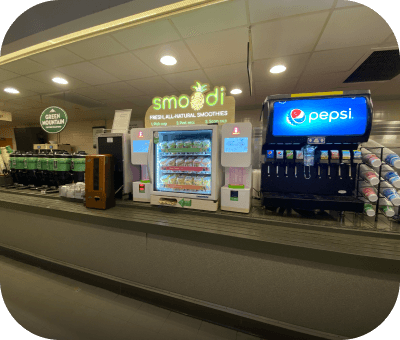
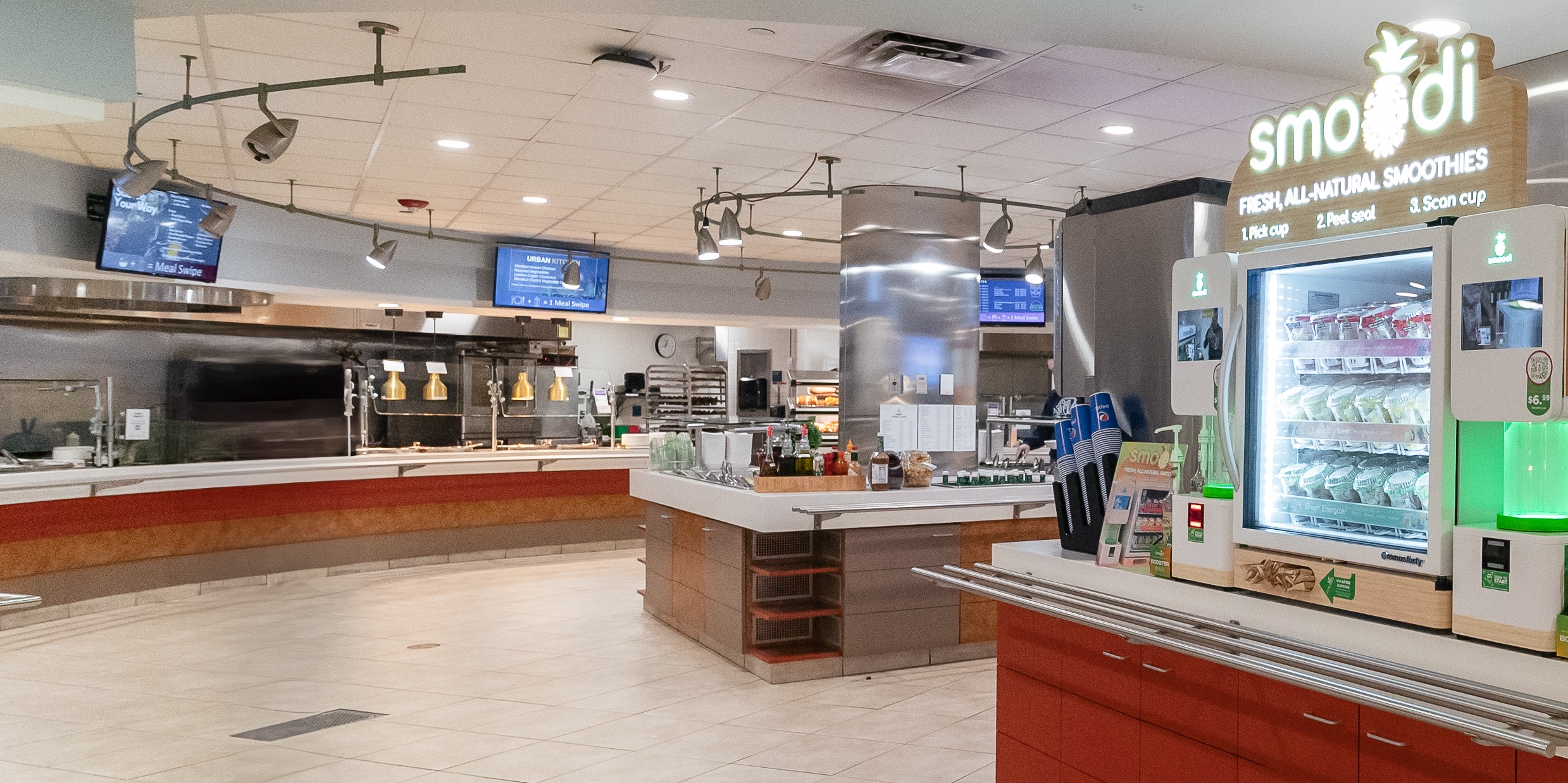
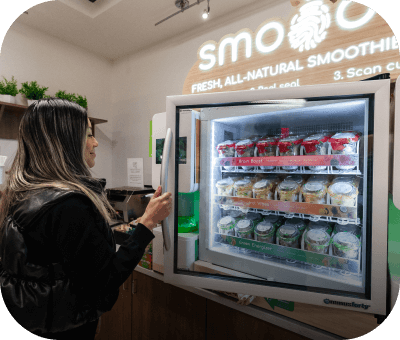
Smoodi's automated smoothie machine is designed for exactly this type of deployment. The machine occupies approximately 40 inches of floor space, making it viable for break rooms and staff lounges where space is limited. It connects to a standard 120 VAC outlet and requires water and sanitizer inlets plus a drain connection. No dedicated foodservice staff are needed to operate it. A healthcare worker can walk to the break room, select a smoothie flavor, add a protein or collagen booster, and have a fresh, nutritious beverage in under 60 seconds.
The machine self-cleans between every use, which is critical in healthcare environments where infection control standards are strict. The sealed IQF (individually quick frozen) fruit cups eliminate loose ingredient handling, and each smoothie is made from real fruit blended with water only. No syrups, concentrates, or artificial ingredients are involved.
"Now we have healthy options available here in the cafeteria, and patients and even doctors are loving this."
— Dr. Nish Patel, Interventional Cardiologist, Baptist Health Miami
24/7 Access for All Shifts
Hospitals operate around the clock, but most foodservice programs do not. Night shift workers and weekend staff consistently report the poorest access to quality food options. Vending machines filled with chips, candy, and sugary beverages are often the only available option after the cafeteria closes.
An automated smoothie station operates whenever the facility needs it, with no staffing constraints on operating hours. A night shift nurse at 3:00 AM has the same access to a fresh, protein-enriched smoothie as a day shift worker at noon. This equality of access across all shifts is a meaningful wellness benefit that addresses one of the most common complaints from overnight and weekend healthcare staff.
The IQF fruit cups have a shelf life of up to two years and are distributed through Dot Foods, which simplifies ordering and inventory management. Hospital foodservice directors do not need to manage perishable fruit inventory for a 24/7 station. They stock the cups in a standard freezer and load them into the machine as needed. There is no waste from expired fresh ingredients, no daily prep, and no cleaning staff required between shifts.
Functional Nutrition for Healthcare Workers
Healthcare workers have specific nutritional needs during long, physically demanding shifts. Protein supports sustained energy and muscle recovery. Collagen supports joint health for workers who spend 12 or more hours on their feet. The functional supplement options available through Smoodi's booster bar align with what healthcare professionals know they need but often cannot access during a shift.
Unlike grab-and-go sandwiches or packaged snacks, a smoothie with protein and collagen boosters provides targeted nutrition in a format that is genuinely quick to consume. A staff member can drink a smoothie while walking back to the floor. They cannot do the same with a hot meal from the cafeteria, which is one reason cafeteria meals are skipped so frequently during busy shifts.
Supporting Healthcare Staff with Better Food Access
Smoodi operates in healthcare facilities across the United States, including hospitals, outpatient centers, and medical office buildings. With more than 300 locations nationwide and over 2 million smoothies served, the platform has been validated in environments where hygiene standards are strict, operating hours are long, and staff need quick access to genuinely nutritious food.
Hospital administrators and foodservice directors interested in improving staff nutrition access can explore lease options starting at $299 per month or purchase starting at $14,999. Visit getsmoodi.com/get-started to learn how Smoodi can support your healthcare team's wellness.
Ready to bring Smoodi to your location?
Join hundreds of operators delivering fresh, automated smoothies with zero labor.
Get Started