How Does Hospital Food Quality Affect HCAHPS Scores?
Hospital food consistently ranks among the lowest-scoring areas of patient experience. Research shows that food quality creates a measurable halo effect on overall satisfaction scores, and CMS nutrition mandates are raising the stakes for hospital dining programs.
Hospital food quality remains one of the most persistent challenges in patient experience management. Patient satisfaction surveys consistently show that food receives lower ratings than nearly every other aspect of hospital care, from nursing responsiveness to room cleanliness. What makes this particularly consequential for hospital administrators is the growing evidence that food quality creates a measurable halo effect on overall satisfaction scores. As CMS expands nutrition requirements through the Make Hospital Food Healthier Pledge and the Malnutrition Care Score, the connection between food quality and institutional performance has never been more direct.
What Is the HCAHPS Survey, and Where Does Food Fit?
HCAHPS (Hospital Consumer Assessment of Healthcare Providers and Systems) is the standardized survey that measures patient experience across U.S. hospitals. The survey covers communication with nurses and doctors, responsiveness of hospital staff, cleanliness and quietness of the hospital environment, discharge information, and overall rating of care. Notably, there is no HCAHPS question that directly measures food quality. This absence has led some administrators to deprioritize food improvements, reasoning that food does not directly affect their publicly reported scores.
That reasoning, however, misses a critical dynamic. Patients do not evaluate their hospital experience in isolated categories. Their satisfaction with food, comfort, and daily routines flows into their overall perception of care quality. When food quality is low, patients rate their overall experience lower, even on questions that have nothing to do with what they ate. This phenomenon, documented by multiple patient experience researchers, is known as the food quality halo effect.
How Does the Food Quality Halo Effect Work?
The halo effect operates on a straightforward principle: a patient who feels well-fed, nourished, and respected at mealtimes develops a more positive overall impression of the hospital. A patient who receives bland, unappealing, or nutritionally inadequate food carries that negative experience into every other evaluation of their stay. The food tray arrives multiple times per day, making it one of the most frequent touchpoints in the patient experience.
The evidence supporting this effect is measurable. One director of dining services reported an immediate 10 percent increase in patient satisfaction scores after implementing a room-service dining model that gave patients more control over meal timing and selection. That improvement came not from changes to nursing care, physician communication, or room cleanliness. It came solely from improving the food experience.
For hospital administrators focused on HCAHPS performance, this data reframes food quality from a hospitality concern to a strategic lever. Investing in food does not just improve the dining experience. It lifts the overall satisfaction profile of the entire institution.
What Are CMS Nutrition Requirements Changing in 2026?
The Centers for Medicare and Medicaid Services is adding regulatory pressure to an area that was already underperforming. The Make Hospital Food Healthier Pledge encourages hospitals to commit to specific nutrition improvements including increased access to fresh fruits and vegetables, reduced processed food offerings, and healthier default beverage options. While the pledge is currently voluntary, it signals the direction CMS is moving. Hospitals that participate gain recognition and position themselves ahead of potential mandatory requirements.
More directly, CMS has expanded the Malnutrition Care Score to cover all adults aged 18 and older, with the expanded reporting effective for the 2026 reporting year. This score tracks whether hospitals screen for malnutrition, diagnose nutritional deficiencies, create care plans, and follow up. Hospitals that perform poorly on malnutrition screening and intervention face consequences in their quality reporting metrics. The combination of the pledge and the expanded malnutrition score means that hospital nutrition programs are no longer optional extras. They are compliance requirements with measurable institutional consequences.
What Strategies Improve Hospital Food Satisfaction?
Hospital dining directors pursuing food quality improvements generally focus on several proven strategies.
- Offering room-service or on-demand dining models that give patients control over meal timing and selection
- Replacing processed, pre-packaged meal components with fresh, whole-food alternatives
- Adding functional nutrition options such as protein-enriched beverages, fresh fruit, and collagen supplements that support recovery
- Placing satellite nutrition stations in lobbies, waiting areas, and staff common areas to extend healthy food access beyond the cafeteria
- Reducing reliance on sugar-sweetened beverages and replacing them with clean-label alternatives
The implementation challenge for most hospitals is that these improvements traditionally require additional staff, more complex supply chains, and larger food preparation areas. Hospitals already facing labor shortages and tight operating budgets often struggle to execute food quality improvements even when the strategic case is clear. The most successful programs find formats that deliver nutrition quality improvements without proportional increases in labor and operational complexity.
How Does Smoodi Support Hospital Nutrition Programs?
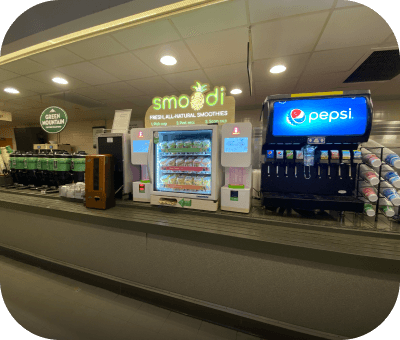
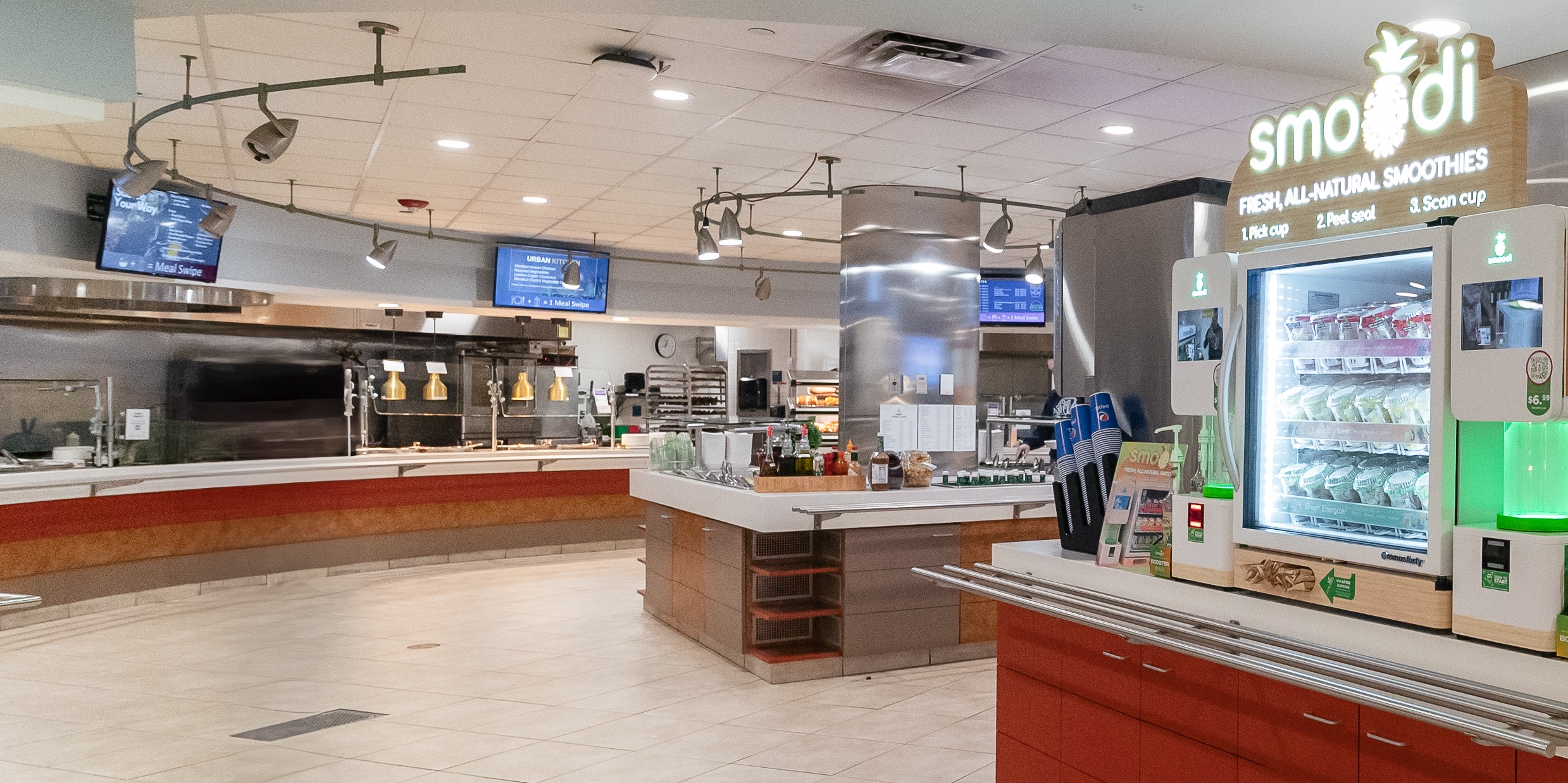
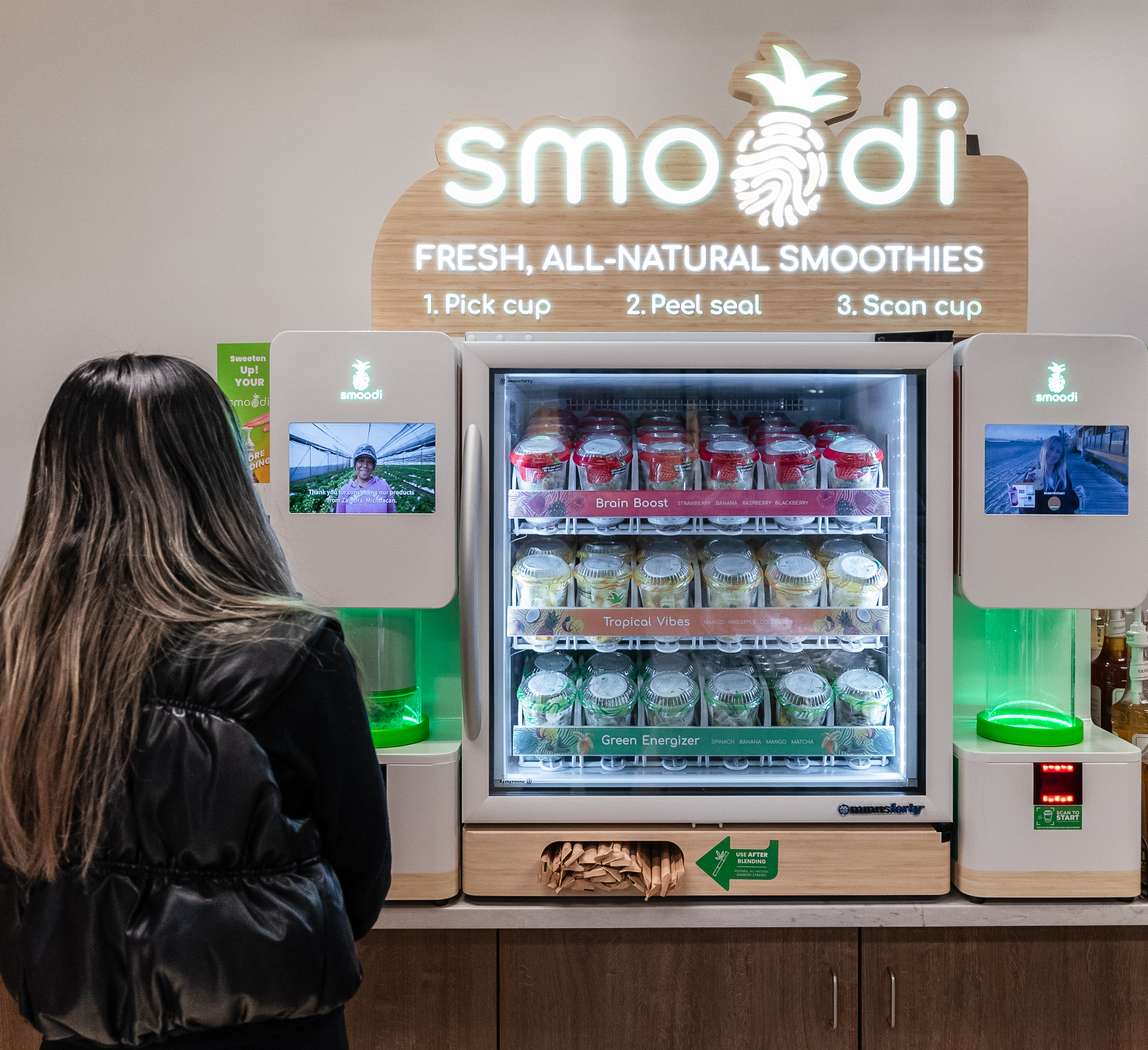
Smoodi's automated smoothie machine addresses the core challenge hospital dining directors face: improving food quality and variety without adding staff or operational complexity. Each smoothie starts with IQF (individually quick frozen) real fruit cups blended with water only. No syrups, concentrates, or artificial ingredients. The booster bar offers protein powder, collagen, and other functional supplements that directly support malnutrition screening and care plan goals. The machine blends a fresh smoothie in under 60 seconds and self-cleans between every use.
"Now we have healthy options available here in the cafeteria, and patients and even doctors are loving this."
— Dr. Nish Patel, Interventional Cardiologist, Baptist Health Miami
Smoodi operates in more than 300 locations across the United States, with over 2 million smoothies served. The company was founded at Harvard Innovation Labs. The compact design requires approximately 40 inches of floor space, making it feasible to place machines in cafeterias, lobbies, staff break rooms, and satellite nutrition stations throughout a hospital campus. IQF fruit cups have a shelf life of up to two years and are distributed through Dot Foods, integrating with existing hospital supply chains. The operational lease starts at $299 per month for a 48-month term, with a purchase option at $14,999. For high-traffic hospital locations, multiple machines can be installed side by side, blending simultaneously.
For hospitals working to improve HCAHPS performance and meet CMS nutrition mandates simultaneously, adding a self-service, whole-fruit nutrition station represents one of the most efficient interventions available. The food quality halo effect means that even a single improvement to the nutrition environment can influence how patients perceive their overall care experience.
Hospital administrators interested in improving food quality scores and meeting CMS nutrition requirements can explore options at getsmoodi.com/get-started.
Ready to bring Smoodi to your location?
Join hundreds of operators delivering fresh, automated smoothies with zero labor.
Get Started