How Will Mandatory Malnutrition Reporting Change Hospital Food Programs?
CMS has finalized mandatory reporting of the Malnutrition Care Score beginning in 2028. Over 3,000 acute care hospitals must now screen and document nutrition care for all adults. Here is what hospital food programs need to know.
On August 4, 2026, the Centers for Medicare and Medicaid Services finalized a rule that will reshape hospital nutrition programs across the United States. Beginning in 2028, the Malnutrition Care Score becomes the first nutrition-focused electronic clinical quality measure required under the Hospital Inpatient Quality Reporting Program. Over 3,000 acute care hospitals must now screen, assess, diagnose, and create nutrition care plans for every adult patient aged 18 and older.
This is not a voluntary pledge or a best-practice recommendation. Hospitals that fail to report the Malnutrition Care Score face payment reductions under the Medicare Inpatient Prospective Payment System. The compliance clock is already ticking: 2026 data will be used for the first reporting cycle, which means hospitals need nutrition program investments in place now to affect their mandatory scores.
What Is the Malnutrition Care Score?
The Malnutrition Care Score is an electronic clinical quality measure developed by the Academy of Nutrition and Dietetics in collaboration with CMS. It tracks four sequential steps of malnutrition care: screening for malnutrition risk, completing a nutrition assessment when screening is positive, documenting a malnutrition diagnosis based on assessment findings, and creating a nutrition care plan for diagnosed patients.
The measure originally applied only to patients aged 65 and older. The 2025 update expanded eligibility to all adults aged 18 and older, significantly increasing the patient population that hospitals must screen and document. This expansion means that every adult inpatient encounter now requires malnutrition screening as a documented step in the care pathway.
For hospital dining directors and nutrition services managers, this regulatory change elevates nutrition from a support service to a compliance requirement. The quality of food and beverage options available to patients, staff, and visitors becomes part of the institution's reportable quality profile.
Why This Matters for Hospital Food Operations
The Malnutrition Care Score creates a direct link between hospital nutrition programs and Medicare reimbursement. Hospitals already manage dozens of quality measures, but this is the first one specifically tied to nutrition care delivery. The financial stakes are real: hospitals that do not report or that report poor scores face payment adjustments that can amount to millions of dollars annually for large systems.
Beyond the financial implications, the Malnutrition Care Score reflects a broader shift in how CMS evaluates hospital quality. The Make Hospital Food Healthier Pledge, launched in 2024, invited hospitals to voluntarily commit to improving food quality. Over 1,000 hospitals signed the pledge. The mandatory Malnutrition Care Score turns that voluntary commitment into a requirement with financial consequences.
Hospital food services directors now face a specific operational challenge: they need to demonstrate that their facility provides adequate nutrition screening and intervention across the entire patient population. This includes not just tray-line meals but also the food and beverage options available in cafeterias, waiting areas, and staff break rooms where patients, families, and clinical teams access nutrition throughout the day.
The $33.57 Billion Hospital Food Services Market
The US healthcare and hospital food services market is valued at approximately $33.57 billion in 2026, with growth projected through the end of the decade. Mandatory malnutrition reporting adds regulatory pressure to a market that is already being reshaped by patient satisfaction scores, labor shortages, and rising food costs.
Hospital food programs face a unique set of constraints that make compliance challenging. Staffing shortages limit the ability to expand fresh food preparation. Budget pressures make it difficult to add new nutrition programs. Space constraints in existing facilities limit options for new food service equipment. Any solution that addresses malnutrition care compliance must work within these operational realities.
Hospitals that approach the Malnutrition Care Score purely as a documentation exercise will miss the broader opportunity. The measure creates a framework for genuinely improving nutrition access across the facility. Hospitals that invest in making nutrient-dense food and beverages more accessible to patients, staff, and visitors will see benefits beyond compliance, including improved patient satisfaction (HCAHPS) scores and better clinical outcomes.
How Smoodi Supports Hospital Malnutrition Care Compliance
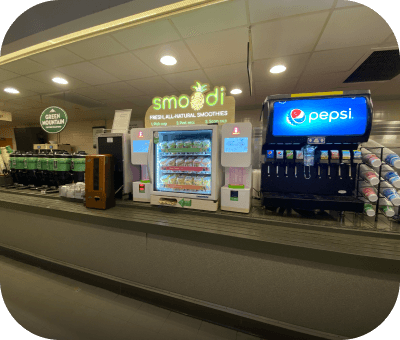
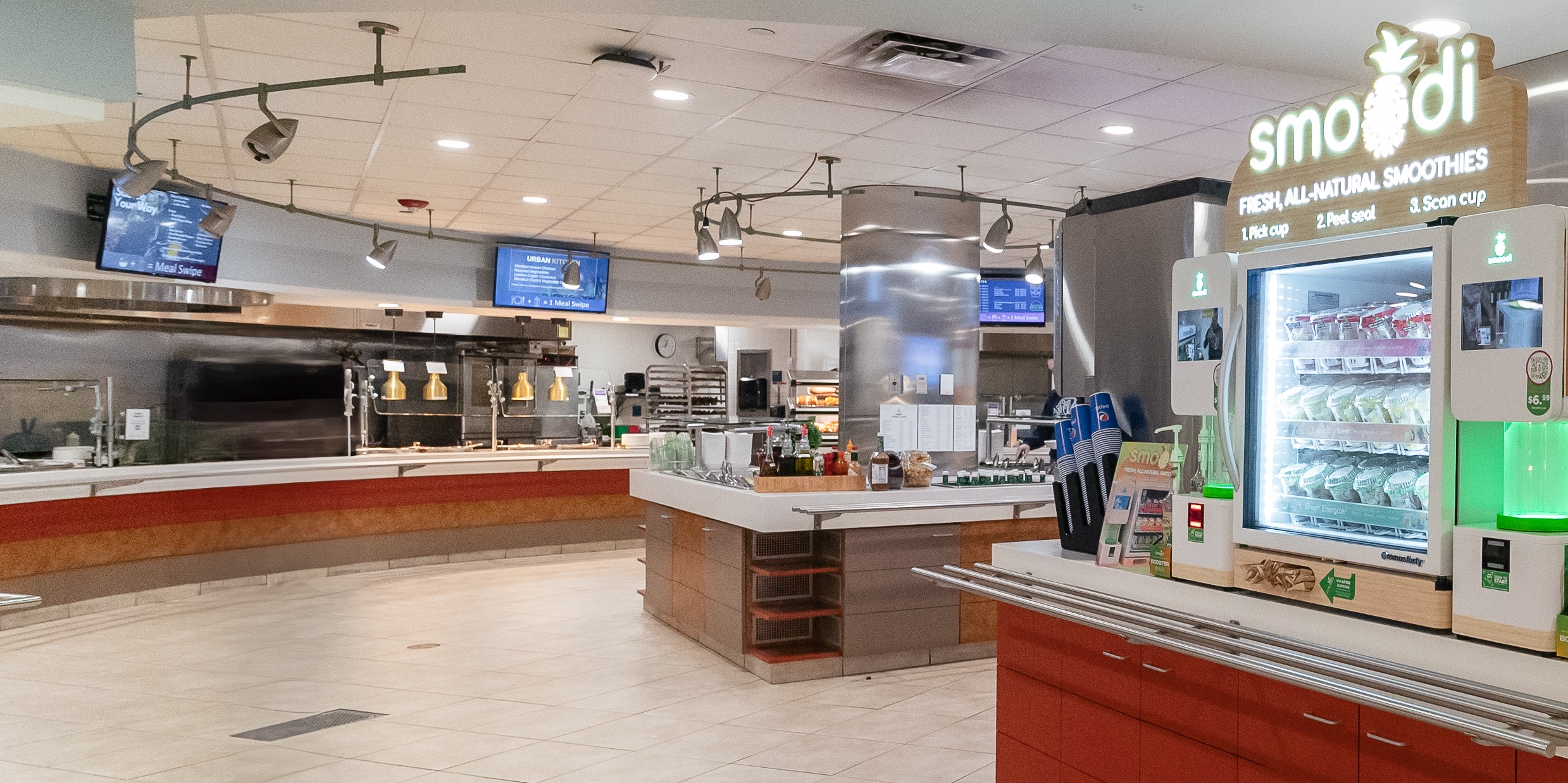
Smoodi's automated smoothie machines provide hospital food programs with a practical tool for expanding nutrition access across the facility. Each smoothie is made from individually quick frozen (IQF) real fruit cups blended with water only. There are no syrups, concentrates, or artificial ingredients. This clean ingredient profile means every smoothie delivers measurable nutritional value from whole fruit sources.
The booster bar adds functional supplements that directly support malnutrition care goals. Protein powder supports muscle maintenance in at-risk patients. Collagen supports tissue health. These add-on options allow clinical nutrition teams to recommend specific smoothie and booster combinations as part of documented nutrition care plans, creating a traceable link between beverage program usage and malnutrition intervention.
"It's been a day and a half and we've sold over 1,000 pieces. It's been great. Install was very fast. Our guys love it."
— Hector Ortiz, Food Service Operations Manager, Baptist Health
Smoodi machines require approximately 40 inches of floor space and connect to a standard 120V outlet along with water, sanitizer, and drain connections. This compact footprint allows hospitals to place nutrition access points in cafeterias, waiting areas, staff break rooms, and outpatient lobbies without major renovation. For high-volume hospital campuses, multiple machines can be installed side by side to serve peak demand periods.
Extending Nutrition Access Beyond the Tray Line
Traditional hospital nutrition programs focus primarily on tray-line meals delivered to patient rooms. While tray service is essential, it represents only a portion of the nutrition interactions that occur in a hospital each day. Staff members working 12-hour shifts need convenient access to nutritious food. Visitors spending hours in waiting areas need options beyond vending machines. Outpatients arriving for procedures need pre- and post-care nutrition.
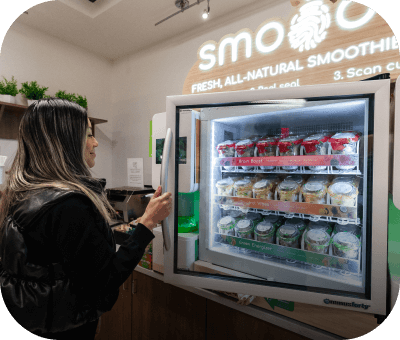
Smoodi's self-service format addresses these gaps without requiring additional labor. The machine blends each smoothie in under 60 seconds and self-cleans between every use. No dedicated staff is needed to operate or maintain the machine during service hours. This zero-labor model is particularly valuable in hospital environments where foodservice staffing is already stretched thin.
The sealed IQF fruit cups have a shelf life of up to two years, eliminating the spoilage risk that limits fresh fruit programs in hospital settings. Distribution through Dot Foods provides reliable supply chain access. These operational characteristics make it feasible to maintain smoothie stations in locations throughout the hospital campus, not just in the main cafeteria.
Preparing for the 2028 Reporting Deadline
Hospital food program leaders evaluating their readiness for mandatory malnutrition reporting should consider several practical steps:
- Audit current nutrition screening workflows to ensure all adult inpatients are captured under the expanded 18+ age criteria
- Evaluate food and beverage access points across the facility to identify gaps in nutrition availability outside the main cafeteria
- Assess current staff capacity for nutrition assessment, diagnosis, and care plan documentation
- Identify opportunities to add nutrient-dense food and beverage options that support documented nutrition interventions
- Review equipment and space requirements for expanding nutrition access to waiting areas, break rooms, and outpatient areas
With over 300 locations across the US and more than 2 million smoothies served, Smoodi has demonstrated its reliability in high-volume healthcare environments. Founded at the Harvard Innovation Labs, Smoodi was built to deliver genuinely healthy beverages at scale without adding labor or operational complexity.
Hospitals preparing for mandatory malnutrition reporting need practical, scalable solutions that fit within existing operational constraints. Smoodi provides nutrient-dense, real-fruit beverages with functional booster options in a format that requires no staff, no kitchen buildout, and no fresh ingredient management. Operators can explore lease options starting at $299 per month or purchase outright starting at $14,999. Visit getsmoodi.com/get-started for more information.
Ready to bring Smoodi to your location?
Join hundreds of operators delivering fresh, automated smoothies with zero labor.
Get Started