How Do Pre-Portioned Ingredients Cut Foodservice Costs?
Food-away-from-home prices are up 3.7% in 2026, and wholesale costs remain 31% above pre-pandemic levels. Pre-portioned ingredients give operators a proven way to control costs, reduce waste, and deliver consistent quality.
Foodservice operators face a cost environment that has not eased since the pandemic. Food-away-from-home prices increased 3.7% in 2026, and wholesale food costs remain 31% above pre-pandemic levels. For operators running on margins that were already thin, every dollar of waste, every over-portioned serving, and every spoiled ingredient represents profit that disappears before it reaches the bottom line.
Portion control has always been a best practice in foodservice. What has changed is the urgency. A review of 114 restaurants across 12 countries found that operators save $7 for every $1 invested in reducing kitchen food waste. The return is clear. The challenge is execution: relying on human consistency in portioning is inherently unreliable, especially in high-turnover environments where new employees are constantly learning the job.
Why Are Food Costs Still Rising in 2026?
Several factors are keeping food costs elevated. Supply chain disruptions from recent years have not fully resolved. Labor costs continue to rise, adding pressure at every stage from farm to distribution to kitchen. Transportation and energy costs remain above historical norms. And consumer demand for higher-quality, cleaner ingredients drives up the cost of the inputs operators need to stay competitive.
For operators, the response cannot be simply raising menu prices. Price sensitivity among consumers is real, and there is a ceiling beyond which higher prices reduce traffic. The more sustainable path is reducing the cost of producing each serving without compromising quality. This is where portion control and pre-portioned ingredients become critical.
How Much Does Over-Portioning Actually Cost?
Over-portioning is one of the most underestimated sources of waste in foodservice. It happens every day, in every kitchen, with every employee who scoops a little extra or pours a little too much. Individually, each over-portion seems trivial. At scale, the numbers add up quickly.
Consider a simple example. If a smoothie recipe calls for 8 ounces of fruit and an employee consistently uses 9 ounces, that 12.5% overage means the operator is giving away one free serving for every eight sold. At 20 servings per day, that is 2.5 free servings daily, or roughly 75 extra servings per month. At $2.50 per serving in ingredient cost, the monthly waste from a single item is approximately $188. Multiply that across a full menu, and over-portioning can cost thousands of dollars monthly.
The problem is compounded by inconsistency. Different employees portion differently. Morning shifts may be more careful than evening shifts. New hires portion differently than experienced staff. Without pre-portioned ingredients, every serving is a variable, and variability is the enemy of cost control.
What Makes Pre-Portioned Systems More Predictable Than Manual Prep?
Pre-portioned ingredients remove the human variable from the equation. Every serving contains exactly the same amount of each ingredient, regardless of who is working, what time of day it is, or how busy the shift has been. This predictability delivers three specific benefits.
First, cost per serving becomes fixed and knowable. When every fruit cup contains the same measured amount, operators can calculate their food cost percentage with precision. There is no need to audit portion sizes, retrain employees on scooping technique, or absorb the cost of over-generous servings.
Second, product quality becomes consistent. Customers receive the same product every time. This consistency builds trust and repeat purchases, which is especially important in environments like hospitals, universities, and corporate offices where the same customers return daily.
Third, inventory management simplifies dramatically. When each serving equals one unit of pre-portioned ingredients, tracking usage is straightforward. Operators know exactly how many servings remain in stock, can forecast reorder timing accurately, and eliminate the guesswork that leads to over-ordering (and subsequent waste) or under-ordering (and lost sales).
How Do Pre-Portioned Ingredients Reduce Spoilage Waste?
Fresh ingredients spoil. This is an unavoidable reality for any foodservice operation that relies on produce, dairy, or other perishable inputs. The USDA estimates that foodservice operations generate 22 to 33 billion pounds of food waste annually in the United States. A significant portion of this waste comes from ingredients that expire before they are used.
Pre-portioned, shelf-stable ingredients fundamentally change this dynamic. When ingredients have extended shelf lives, the window for using them stretches from days to months or even years. There is no Monday morning delivery of fresh fruit that must be used by Friday. There is no end-of-week waste audit revealing hundreds of dollars in spoiled berries and bananas.
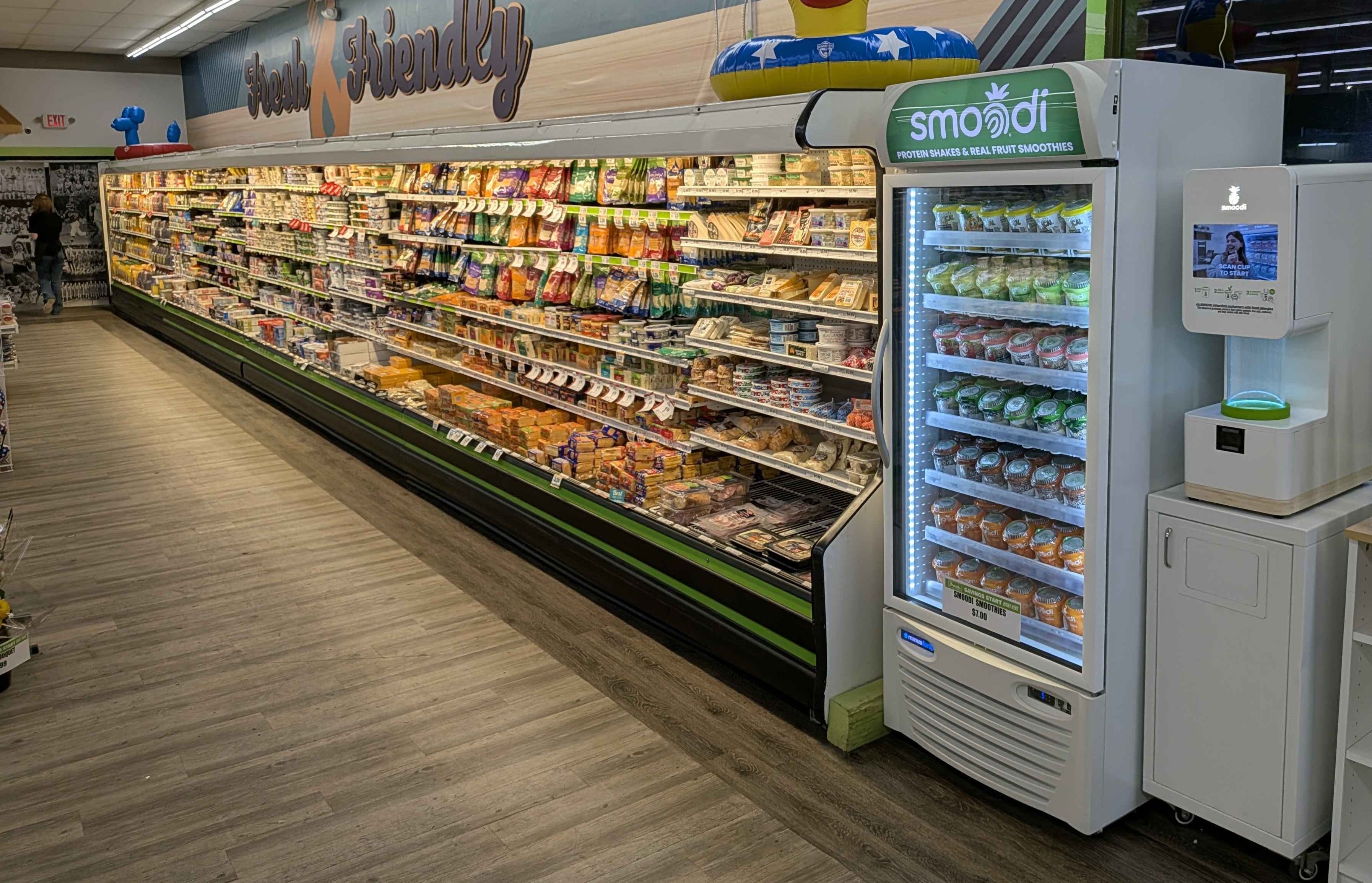
Smoodi's individually sealed IQF fruit cups have a shelf life of up to 2 years. This means operators can stock sufficient inventory without worrying about expiration pressure. During slow weeks, cups remain viable. During busy weeks, additional stock can be ordered through Dot Foods distribution without emergency procurement surcharges. The sealed, individual packaging also eliminates partial-use waste: there are no open containers of cut fruit losing freshness on a prep line.
How Does Smoodi Apply the Pre-Portioned Model?
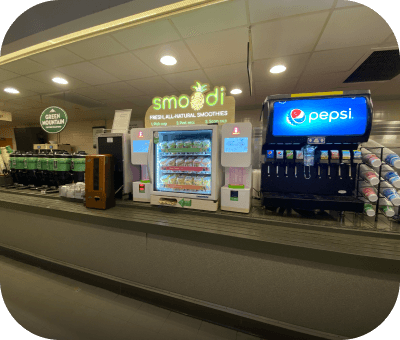
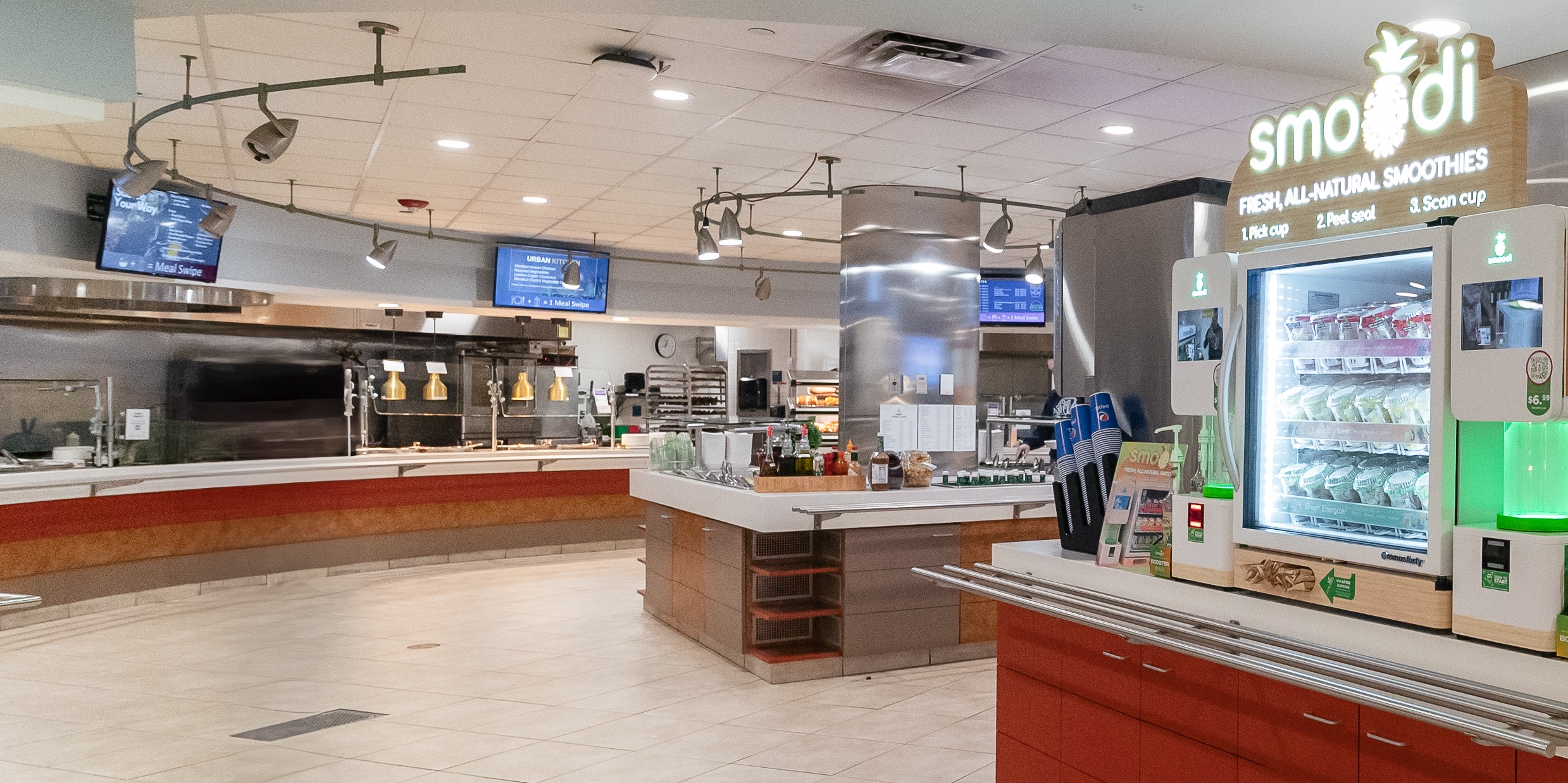
Smoodi's automated smoothie station represents a complete implementation of the pre-portioned ingredient model. Every smoothie uses exactly one IQF fruit cup, blended with water only. There are no syrups, concentrates, or artificial ingredients. The cup is the portion. One cup equals one smoothie. There is zero waste from over-pouring, incorrect measurements, or unused prep.
Because the machine is fully self-service and self-cleaning between every use, there is no kitchen labor involved in the preparation process. No employee handles the ingredients beyond loading sealed cups into the machine. This removes both the portioning variability and the labor cost that traditional beverage programs carry.
The result is a beverage program with predictable, per-serving economics. Operators know exactly what each smoothie costs to produce, exactly what margin they earn at their chosen retail price, and exactly how many servings remain in inventory. For operators managing food cost pressures across their entire operation, this level of predictability in even one menu category provides meaningful relief.
"The investment into smoodi has been phenomenal. We broke even in the first couple of weeks."
— Linda Thacker, Director of Dining Services, Maryville University
What Should Operators Look for in Pre-Portioned Ingredient Systems?
Not all pre-portioned systems deliver the same value. When evaluating options, operators should consider several factors.
- Ingredient transparency: Can the operator and the customer see exactly what is in each portion? Whole fruit is more transparent than concentrate or syrup blends.
- Shelf life: Longer shelf life reduces spoilage risk and allows more flexible inventory management.
- Distribution reliability: Ingredients sourced through established distributors like Dot Foods offer consistent supply and simplified ordering.
- Equipment integration: The best pre-portioned systems pair with equipment that automates the preparation process, removing labor as well as portioning variability.
- Cost predictability: Fixed per-serving ingredient costs allow operators to calculate food cost percentages with confidence.
Smoodi meets all five criteria. The machine occupies approximately 40 inches of floor space. Operational leases start at $299 per month, and outright purchase is available at $14,999. Smoodi was founded at Harvard Innovation Labs and now serves more than 300 locations across the United States, with over 2 million smoothies delivered.
To see how pre-portioned, automated smoothie economics compare to your current beverage costs, visit getsmoodi.com/roi. For a consultation on adding a zero-waste smoothie program, visit getsmoodi.com/get-started.
Ready to bring Smoodi to your location?
Join hundreds of operators delivering fresh, automated smoothies with zero labor.
Get Started