How Is Preventive Nutrition Reshaping Corporate Dining?
Corporate cafeterias are shifting from convenience-led to nutrition-led programs. Preventive and functional nutrition is becoming the defining trend in workplace dining for 2026.
The question driving corporate dining strategy in 2026 is no longer whether to offer food, but whether the food program actively improves employee health outcomes. Compass Group identifies preventive and functional nutrition as the defining shift in corporate cafeterias. Zerocater reports that corporate cafeteria menus now highlight nutrient-dense ingredients with the explicit goal of supporting energy and cognitive focus. This is not a rebrand of the same cafeteria offerings. It represents a fundamental change in how corporate dining programs measure success.
The shift from convenience-led to nutrition-led dining is accelerating for three reasons: rising employer investment in preventive health, changing employee expectations around food quality, and growing evidence that workplace nutrition directly affects productivity and retention.
Why Are Employers Investing in Preventive Nutrition?
Wellsteps (2026) reports that a majority of benefits brokers see increased employer investment in preventive health programs. The logic is straightforward: preventing health issues is less expensive than treating them. Employers who provide access to nutritious food at work reduce the downstream costs associated with chronic conditions linked to poor diet, including cardiovascular disease, Type 2 diabetes, and metabolic syndrome.
Nutrium (July 2026) reports that food-related benefits are gaining renewed relevance as rising grocery prices affect employee health. When the cost of healthy food at the grocery store increases, employees are more likely to default to cheaper, less nutritious options. Organizations that provide healthy food at the workplace close this gap without requiring employees to spend more of their own income on nutrition. Some organizations are exploring partnerships with nutritionists to improve access to healthy meals as part of their benefits infrastructure.
McKinsey's Future of Wellness survey found that 50 percent of consumers now purchase functional food products, a figure that rises to 66 percent among Gen Z and millennials. For corporate employers competing for younger talent, the food program is no longer a background amenity. It is part of the value proposition that prospective employees evaluate when choosing between offers.
What Does a Nutrition-Led Dining Program Look Like?
A convenience-led cafeteria optimizes for speed, variety, and low cost per serving. A nutrition-led cafeteria optimizes for nutrient density, functional ingredients, and measurable health outcomes. The differences are visible in menu design, ingredient sourcing, and how the program is communicated to employees.
Menu Design
Nutrition-led programs structure menus around functional benefits rather than food categories. Instead of organizing options as entrees, sides, and drinks, leading programs organize by outcome: energy, recovery, focus, and immunity. Each menu item includes visible nutritional information that emphasizes micronutrients, protein content, and functional ingredients rather than just calorie counts.
Ingredient Sourcing
The ingredient strategy in nutrition-led programs prioritizes whole foods, minimal processing, and transparency. Programs are moving away from concentrates, syrups, and artificial additives in favor of ingredients that employees can identify and understand. This shift is driven by employee demand: surveys consistently show that ingredient transparency is a top three factor in food purchase decisions for employees under 40.
Communication
Nutrition-led programs actively educate employees about the functional benefits of available food options. Signage, digital displays, and internal communications explain why specific ingredients were chosen and what health outcomes they support. This educational component transforms the cafeteria from a service point into a wellness touchpoint, reinforcing the employer's investment in employee health.
Where Do Functional Beverages Fit in Corporate Dining?
The National Restaurant Association's What's Hot 2026 report identifies healthier functional beverages as the number one trend in foodservice. In corporate dining, functional beverages serve as the most accessible entry point for a nutrition-led program because they require minimal infrastructure, deliver measurable nutritional value, and are consumed daily by a large percentage of employees.
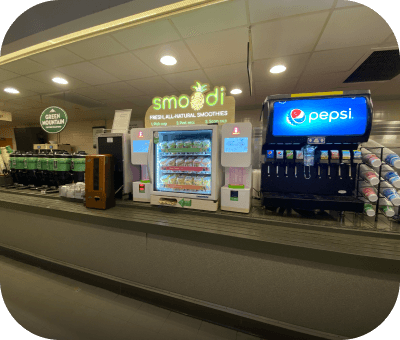
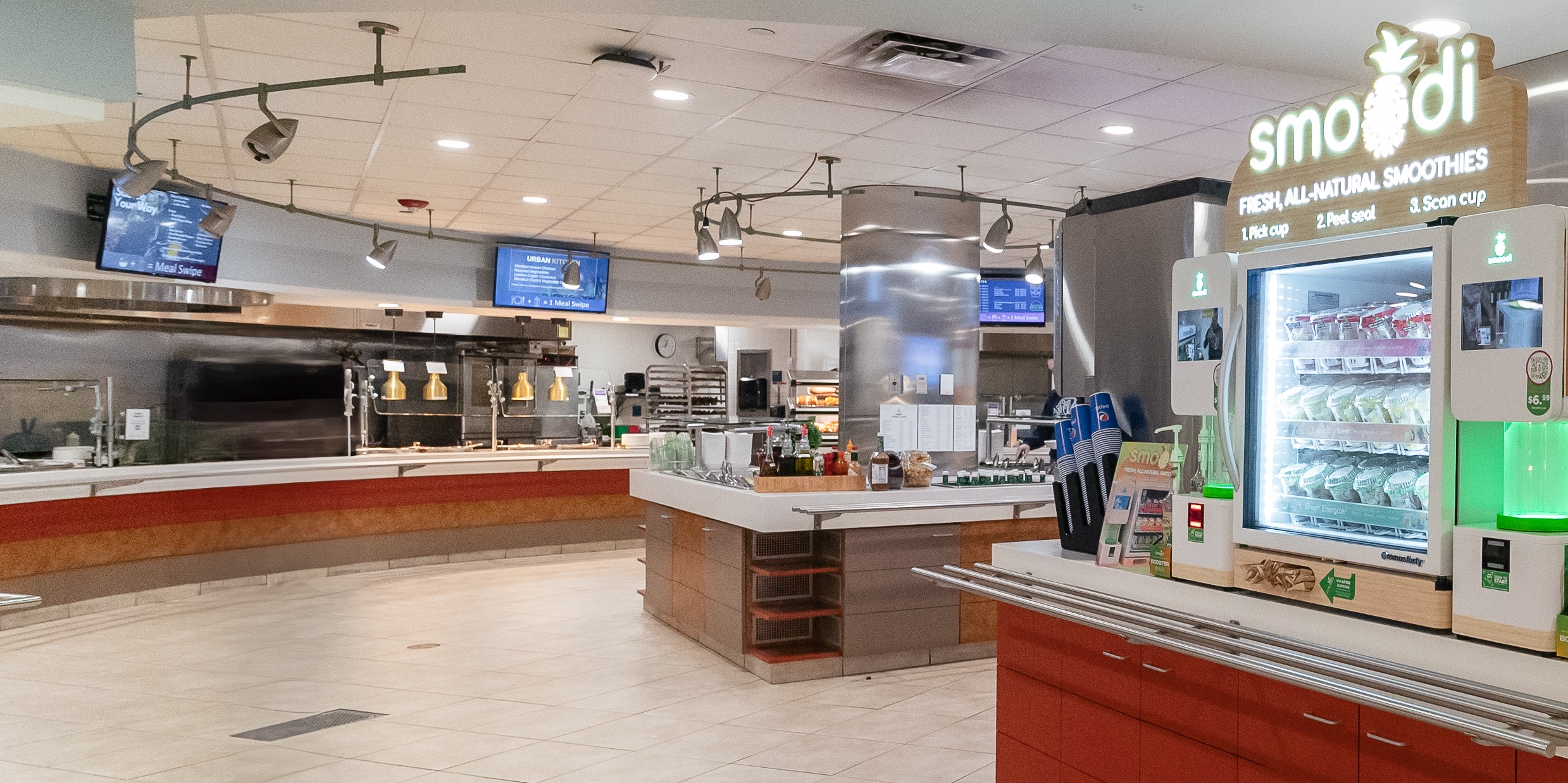
A functional beverage program does not require a full kitchen renovation or a staffed nutrition bar. It can be deployed alongside existing cafeteria operations or as a standalone station in a break room, lobby, or common area. For employers who want to signal a commitment to preventive nutrition without overhauling their entire food program, a functional beverage station delivers immediate, visible impact.
How Does Smoodi Support Corporate Nutrition Programs?
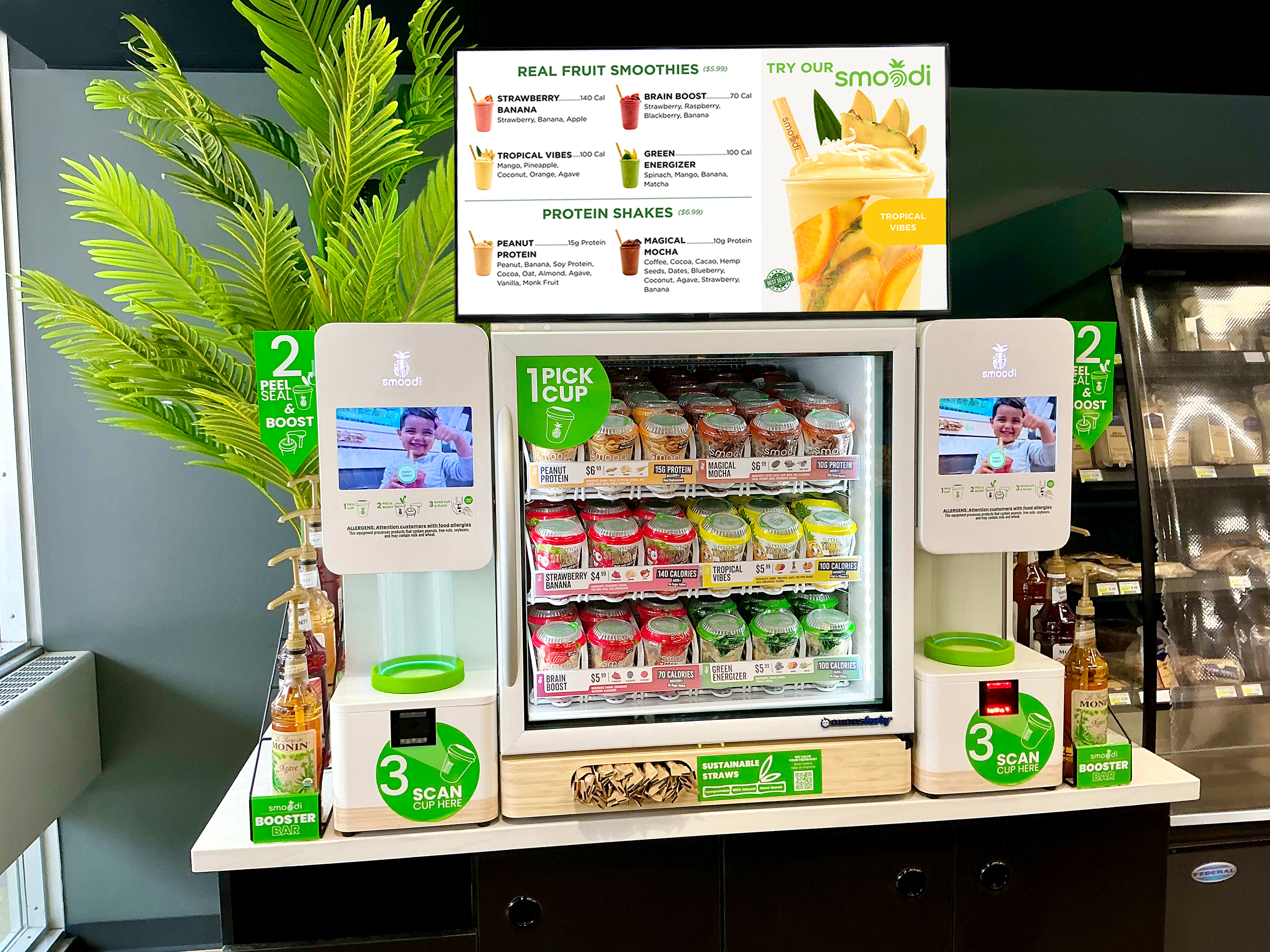
Smoodi's automated smoothie machine delivers the nutritional profile that corporate wellness programs require, in a format that requires no labor, no food preparation, and no specialized staff. Each smoothie is made from IQF (individually quick frozen) fruit cups blended with water only. No syrups, concentrates, or artificial ingredients. The booster bar offers protein powder, collagen, and other functional supplements, enabling employees to customize each smoothie for their specific nutritional goals: post-workout recovery, midday energy, or daily fruit intake.
"smoodi is hands down the number one perk at our headquarters. Fresh, healthy, and zero effort on our end."
— Katherine Berman, Workplace Experience Manager, Toast
The machine blends a fresh smoothie in under 60 seconds and self-cleans between every use. It occupies approximately 40 inches of floor space, fitting into a break room, cafeteria, or common area without construction. The operational lease starts at $299 per month for a 48-month term, with a purchase option at $14,999. For corporate wellness budgets, this represents a predictable monthly expense that delivers daily nutritional value to every employee with access.
"We were looking for ways to give our employees healthier options - smoodi was the answer. It tastes great, our team loves it."
— Eric Rose, President & COO, Shoreham Bank
Smoodi operates in more than 300 locations across the United States, with over 2 million smoothies served. The company was founded at Harvard Innovation Labs. IQF fruit cups have a shelf life of up to two years and are distributed through Dot Foods, integrating with existing corporate foodservice supply chains.
What Is the Business Case for Nutrition-Led Dining?
The business case for preventive nutrition in corporate dining rests on three measurable outcomes.
- Reduced healthcare costs: employers who invest in preventive nutrition programs report lower claims costs over a three to five year period, driven by reductions in chronic conditions associated with poor diet
- Improved retention: food amenities are consistently ranked among the top three workplace perks by employees, and nutrition quality is increasingly the differentiator within that category
- Higher daily productivity: employees who eat nutrient-dense food during the workday report better afternoon energy and cognitive focus, reducing the productivity dip that occurs after lunch in most office environments
The shift from convenience-led to nutrition-led corporate dining is not a trend that will reverse. As more employers adopt preventive nutrition programs, the baseline expectation for food quality in corporate settings will continue to rise. Employers who establish nutrition-led programs now will have an advantage in talent acquisition and retention as this expectation becomes standard.
Corporate wellness leaders and facility managers interested in adding functional nutrition to their workplace can explore options at getsmoodi.com/get-started.
Ready to bring Smoodi to your location?
Join hundreds of operators delivering fresh, automated smoothies with zero labor.
Get Started