Why Is Smoothie Demand Surging at Fitness Facilities?
The global wellness economy exceeds $5.6 trillion, and fitness nutrition is the fastest-growing segment. With 50 percent of consumers now purchasing functional food products and high-protein meals ranking as the top dining preference, fitness facilities face a historic revenue opportunity in smoothie and nutrition programs.
The global wellness economy now exceeds $5.6 trillion, and fitness and nutrition represents its fastest-growing segment. This growth is not abstract. It is showing up in the daily purchasing decisions of gym members, wellness studio clients, and recreational facility visitors who increasingly expect functional nutrition options at the point of exercise. For fitness facility operators, this shift creates a revenue opportunity that extends well beyond membership dues. Smoothie and nutrition programs are becoming a defining amenity that differentiates leading facilities from competitors that offer only equipment and floor space.
What Is Driving the Demand for Smoothies at Fitness Facilities?
Three converging consumer trends are driving smoothie demand at fitness and wellness facilities to historic levels.
First, the functional food movement has reached mainstream adoption. McKinsey's Future of Wellness survey found that 50 percent of consumers now purchase functional food products, meaning foods chosen specifically for health benefits beyond basic nutrition. Among Gen Z and millennial consumers, who represent the largest gym-going demographic, that figure rises to 66 percent. These consumers do not view a post-workout smoothie as a treat. They view it as a functional recovery tool, and they seek out facilities that make it available.
Second, high-protein has become the dominant dietary preference. The Chartwells 2026 Campus Dining Index reports that high-protein meals rank as the number one dining preference at 28 percent, up 36 percent year over year. The National Restaurant Association data shows that high-protein breakfast demand has grown 400 percent since 2010. This preference carries directly into the fitness environment, where members actively seek protein-enriched options within the post-workout recovery window.
Third, smoothies specifically have emerged as the most requested beverage category. The Chartwells data shows smoothies at 45 percent as the top requested campus beverage, ahead of coffee, juice, and energy drinks. While campus dining and fitness facilities serve different populations, the preference data reflects a generational shift toward fresh, blended, functional beverages that applies across both settings.
What Revenue Opportunity Do Smoothie Programs Create?
Frozen beverage programs deliver gross margins of 70 to 80 percent, significantly higher than most food and beverage categories. For fitness facilities that currently generate revenue solely from memberships, personal training, and group classes, a smoothie program creates an entirely new revenue stream from an audience that is already on-site and already motivated to purchase.
The revenue potential extends beyond the per-smoothie transaction. Facilities with quality nutrition programs report higher member satisfaction, stronger retention rates, and increased referral activity. Members who build a post-workout smoothie into their routine develop a deeper habit connection with the facility itself. The smoothie becomes part of the workout experience, not an afterthought.
Facilities that have historically operated juice bars or smoothie counters have seen these benefits, but the traditional staffed model creates significant operational challenges. A dedicated smoothie bar requires a trained employee during all operating hours, fresh ingredient procurement and storage, daily cleanup, and management oversight. For many facilities, the labor and management costs of a staffed juice bar consume the margin that makes the program worthwhile.
Why Is the Post-Workout Window So Important?
Exercise science research consistently identifies the 30 to 60 minutes following intense exercise as the optimal recovery window. During this period, the body is primed to absorb protein for muscle repair and carbohydrates for glycogen replenishment. Consuming a protein-enriched smoothie made from real fruit during this window supports recovery more effectively than waiting until the next regular meal.
For facility operators, the post-workout window creates a concentrated demand spike. Members finish their workouts, walk past the nutrition station, and want a smoothie immediately. Speed matters: a member who has to wait five minutes in line will skip the purchase. A member who can get a fresh smoothie in under 60 seconds will buy one routinely.
The timing requirement also means that the nutrition station must be operational during all facility hours, including early morning, midday, and evening. Staffing a juice bar across all these hours is expensive. An automated, self-service solution that operates across all dayparts without attendant labor addresses the timing challenge without creating a proportional cost increase.
What Do Members Expect from a Facility Nutrition Program?
Today's fitness facility members have specific expectations for on-site nutrition that reflect broader consumer trends.
- Real, whole-food ingredients with no syrups, concentrates, or artificial additives
- Protein and functional supplement options (protein powder, collagen, greens) available as add-ons
- Speed of service under 60 seconds, matching the pace of a quick-service environment
- Clean-label transparency: members want to know exactly what is in their smoothie
- Self-service convenience that does not require waiting for a staffed counter
- Variety across flavors and nutritional profiles to avoid menu fatigue
Facilities that meet these expectations build loyalty. Facilities that offer only vending machines or packaged protein bars miss the opportunity entirely. The gap between what members expect and what most facilities provide represents the core revenue opportunity.
How Does Smoodi Support Fitness Facility Nutrition Programs?
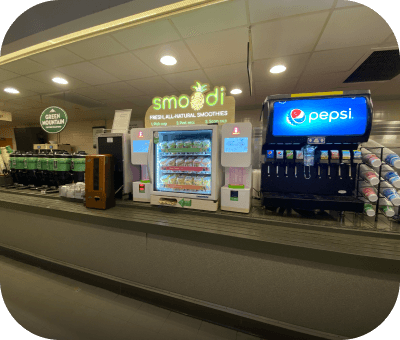
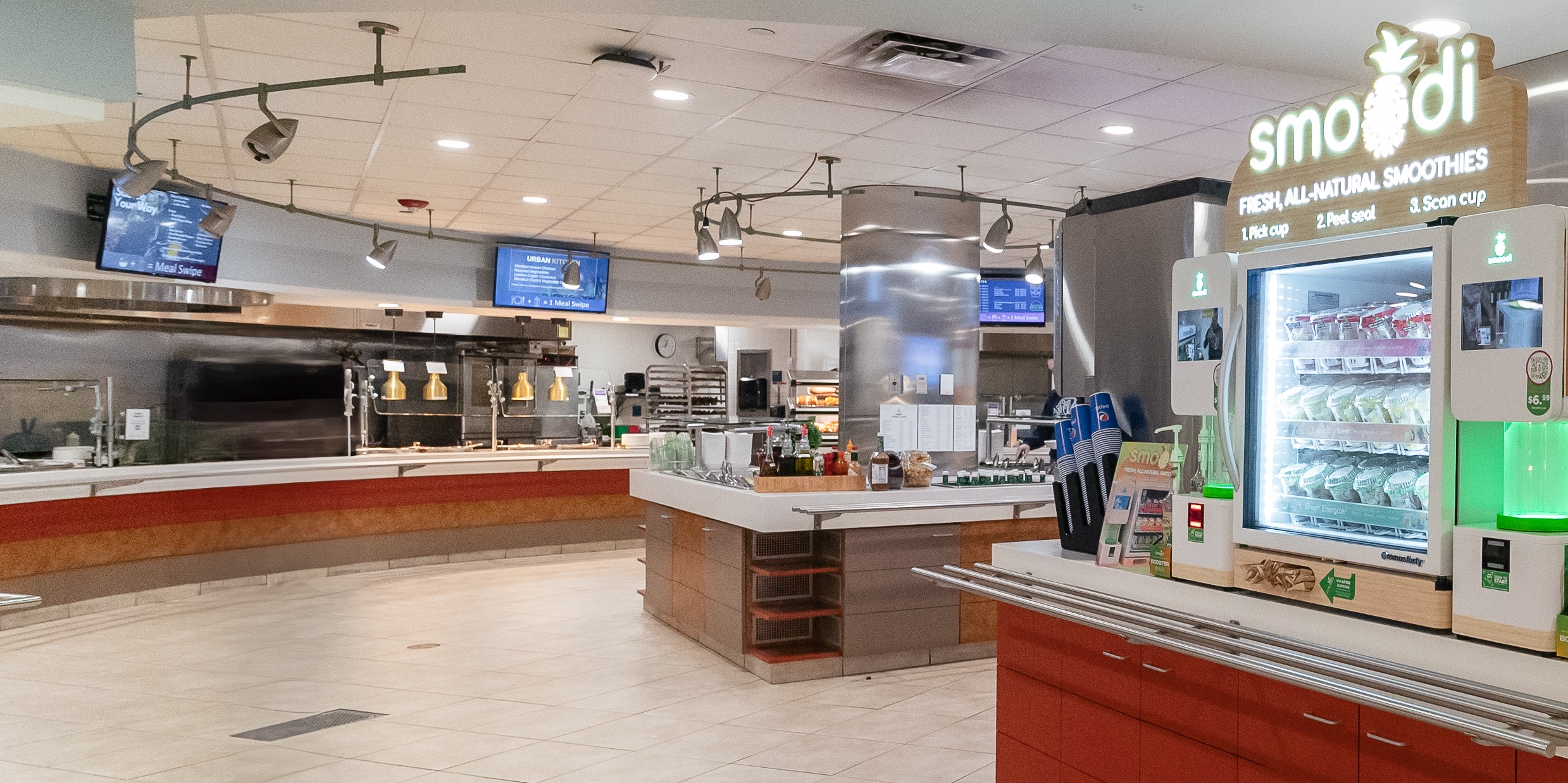
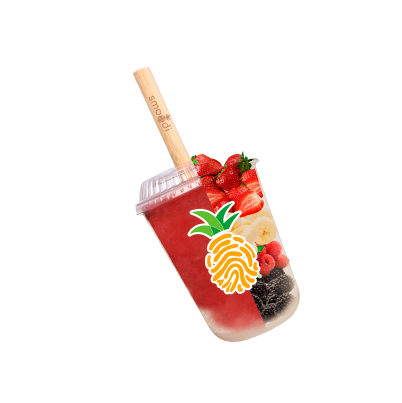
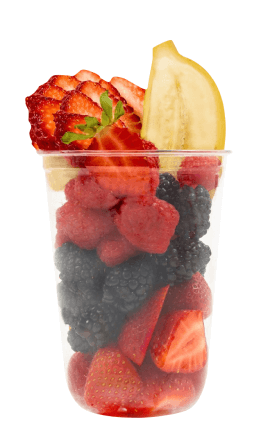
Smoodi's automated smoothie machine was built for high-traffic, time-sensitive environments like fitness facilities. Each smoothie starts with IQF (individually quick frozen) real fruit cups blended with water only. No syrups, concentrates, or artificial ingredients. The booster bar offers protein powder, collagen, and other functional supplements that members can add to customize their recovery drink. The machine blends a fresh smoothie in under 60 seconds and self-cleans between every use, operating across all facility hours without dedicated staff.
"I have been looking to add a smoothie bar for years but did not want to deal with the labor and food waste. Having smoodi in our facility is a huge benefit for our members."
— Adam Healy, General Manager, Waverly Oaks Athletic Club
Smoodi operates in more than 300 locations across the United States, with over 2 million smoothies served. The company was founded at Harvard Innovation Labs. IQF fruit cups have a shelf life of up to two years, eliminating the spoilage that makes fresh fruit programs costly and unpredictable. Cups are distributed through Dot Foods. The operational lease starts at $299 per month for a 48-month term, with a purchase option at $14,999. The compact design requires approximately 40 inches of floor space. For high-traffic facilities, multiple machines can be installed side by side, blending simultaneously to handle post-class and peak-hour demand.
Fitness facility operators looking to turn their facility into a complete wellness destination can explore options at getsmoodi.com/get-started.
Ready to bring Smoodi to your location?
Join hundreds of operators delivering fresh, automated smoothies with zero labor.
Get Started