What Should Theme Parks Know About Healthy Food Demand?
Food and beverages account for nearly 30 percent of theme park revenue, with the theme park F&B market reaching $34.4 billion in 2026. Parks that add healthy, self-service options are meeting a growing guest expectation.
Food and beverages account for nearly 30 percent of theme park revenue. The theme park F&B market is projected to reach $34.4 billion in 2026, making it one of the most significant revenue streams for park operators alongside admissions and merchandise. Yet the food experience at most parks has not kept pace with how consumers eat in the rest of their lives. Guests who choose whole foods, functional beverages, and clean-label products at home do not abandon those preferences when they walk through a park entrance. Parks that recognize this shift and respond with healthier options are capturing guest spending that currently leaves the park entirely.
Why Are Theme Park Guests Asking for Healthier Options?
The traditional theme park food model was built around indulgence: fried foods, sugary drinks, oversized portions, and novelty items. That model still generates revenue, but the guest demographic has shifted. Today's park visitors include parents who monitor their children's sugar intake, fitness-conscious adults who do not want a single park visit to derail their nutrition goals, guests with dietary restrictions who need options beyond the standard menu, and a Gen Z cohort that rates clean ingredients and transparency as top food priorities.
Social media has amplified this shift. The hashtag #ThemeParkHealthySwaps reflects a growing consumer conversation about making better food choices at parks. Guests are actively seeking and sharing alternatives to traditional park fare. Parks that offer those alternatives earn organic social media exposure. Parks that do not offer them become the subject of complaints and workaround videos.
The family spending dynamic adds financial weight to the health trend. A family of four visiting a major theme park may spend $80 to $150 on food during a single visit. Parents who find no acceptable healthy options for their children may reduce their overall food spending at the park, pack their own meals, or leave the park to eat elsewhere. Every dollar spent outside the park on food is revenue the operator forfeited by not providing the options guests wanted.
What Are the Operational Challenges of Healthy Food at Parks?
Theme parks face unique operational constraints that make traditional healthy food programs difficult. Seasonal staffing means many parks operate with temporary employees who require rapid training and have limited food preparation skills. High guest volume during peak periods demands speed of service that complex food preparation cannot support. Multiple food stations spread across large properties create management and supply chain challenges. Perishable ingredients require cold-chain logistics across the entire park footprint.
These constraints explain why most parks default to pre-packaged, shelf-stable, and heat-and-serve food items. The operational model favors simplicity and speed over nutritional quality. Adding a staffed smoothie bar or juice station at a theme park requires hiring and training additional seasonal employees, maintaining perishable inventory across potentially dozens of locations, ensuring consistent preparation quality from temporary staff, and managing waste from unused fresh ingredients on slow days.
The economics often do not work. A staffed smoothie station that operates only during peak season with temporary employees may not generate enough margin to justify the labor, training, and waste costs. This is why healthy beverage options at most parks are limited to bottled water, packaged juice, and branded sports drinks, all of which carry high wholesale costs and thin margins compared to fountain drinks.
How Can Parks Add Healthy Beverages Without Adding Complexity?
The solution for theme parks is the same solution that has worked across other high-traffic, variable-demand venues: self-service automation with shelf-stable ingredients. An automated smoothie station addresses every operational constraint that makes traditional healthy food programs impractical at parks.
- Zero staff required eliminates the seasonal hiring, training, and management burden. The machine operates independently regardless of how many temporary employees are available on a given day.
- Self-cleaning between every use eliminates the food safety risk that comes with high-volume preparation by untrained temporary staff.
- IQF (individually quick frozen) fruit cups with a shelf life of up to two years solve the perishable inventory problem. No cold-chain logistics across the park. No waste from unused fresh ingredients on slow days. Cups stored at the station are ready when demand arrives.
- A compact footprint of approximately 40 inches of floor space allows placement at existing food courts, near ride exits, at splash pad areas, and in family zones without requiring construction or renovation.
- Sub-60-second service time matches the speed expectations of guests who are between rides and activities. No waiting for a staffed preparation, no line slowdowns from custom orders.
Where Should Parks Place Healthy Beverage Stations?
Placement drives revenue at theme parks more than almost any other factor. The right location captures impulse purchases from guests who are already in a buying mood. For healthy beverage stations, the highest-performing locations align with moments when guests are most receptive to a refreshing, nutritious option.
Near water attractions and splash pads, guests are active, warm, and thirsty. A fresh fruit smoothie positioned at the exit of a water ride or adjacent to a splash area captures both hydration demand and the desire for a healthy treat. At family zones and children's play areas, parents are making food decisions for their children. A station offering real-fruit smoothies with no added sugar gives parents an option they feel good about, replacing the default of a sugary slush or fountain drink.
At park entrances and exits, guests arriving may want a quick, energizing start to their day. Guests leaving may want a refreshing close to a long visit. Near fitness or sports-themed attractions, the health association is natural and the purchase occasion is intuitive. In food courts alongside traditional offerings, a healthy option expands the appeal of the entire food court by giving every group at least one option for the health-conscious member.
How Does Smoodi Fit the Theme Park Model?
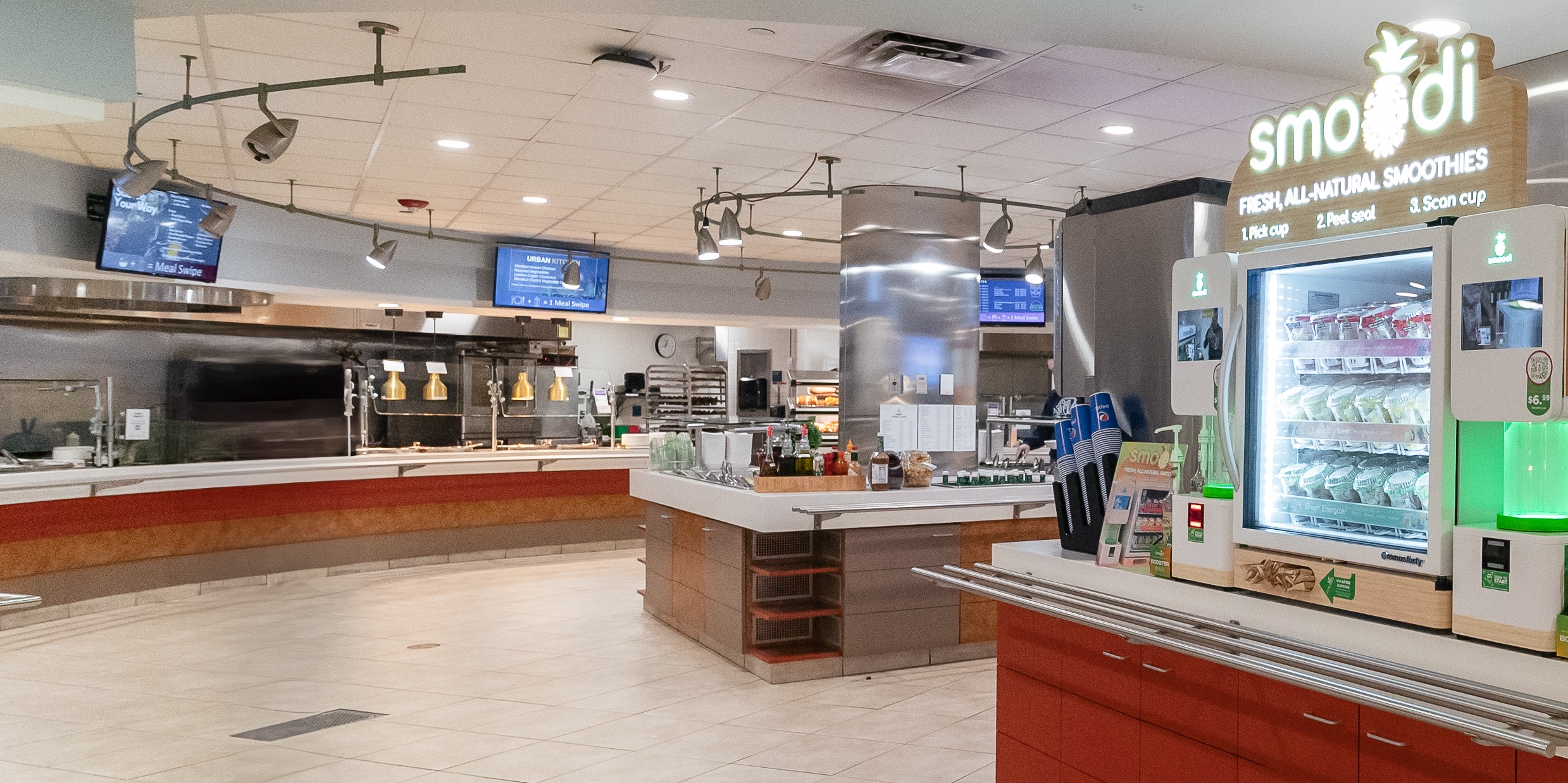
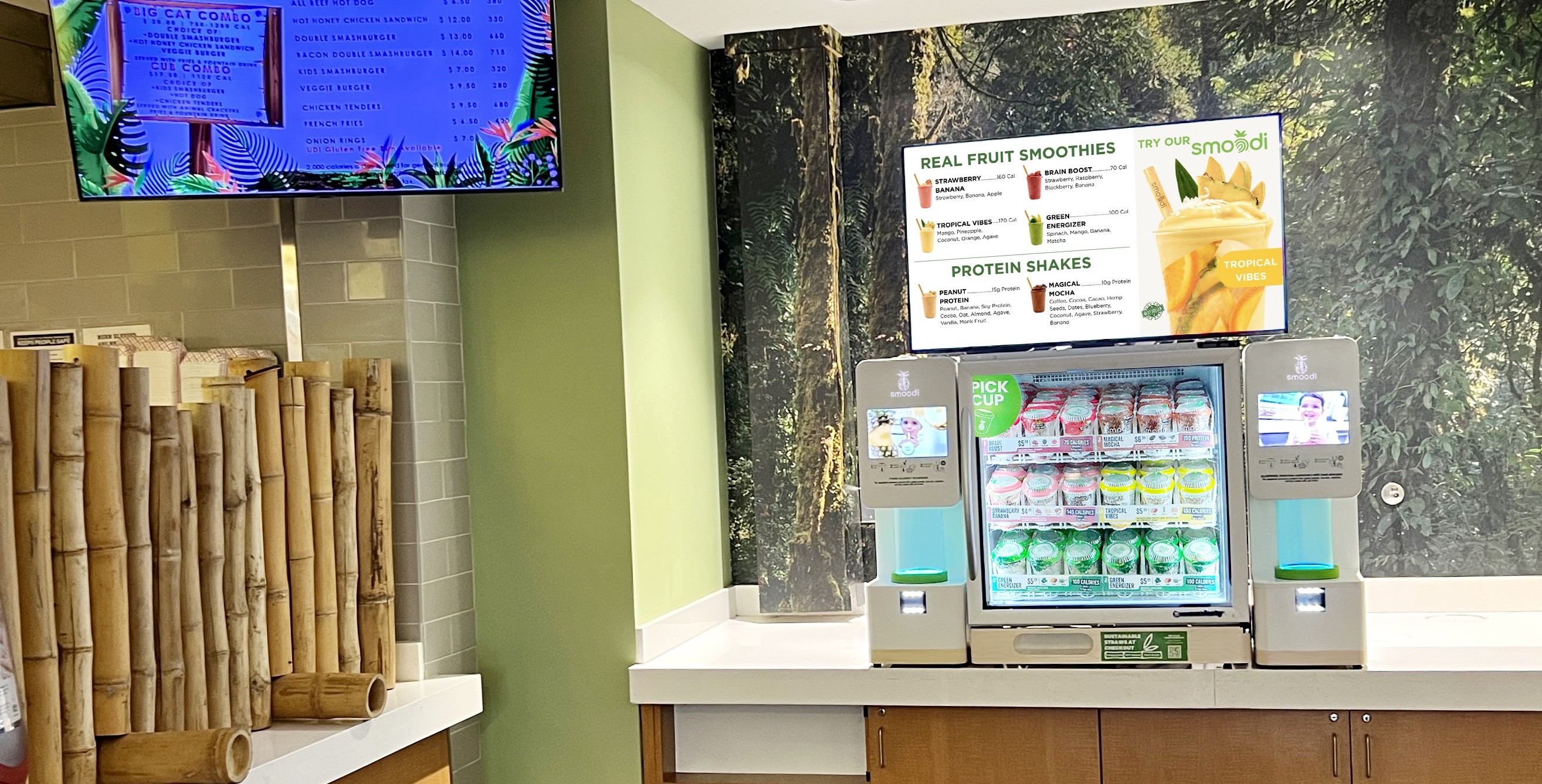
Smoodi's automated smoothie machine is designed for exactly the operational profile that theme parks require. Each smoothie is blended from IQF real fruit cups with water only: zero syrups, zero concentrates, zero artificial ingredients, zero added sugar. The self-service format requires no staff, eliminating the seasonal labor challenge. The machine self-cleans between every use, maintaining food safety without manual intervention.
"It's been a day and a half and we've sold over 1,000 pieces. It's been great. Install was very fast. Our guys love it."
— Hector Ortiz, Food Service Operations Manager, Baptist Health
IQF fruit cups have a shelf life of up to two years, so parks can stock stations at the beginning of the season without worrying about expiration. Distribution is through Dot Foods. The compact design requires approximately 40 inches of floor space and a standard 120V outlet with water connection. Multiple machines can be installed side by side at high-traffic locations to handle peak demand, matching the throughput of larger equipment in a fraction of the footprint.
Smoodi operates in more than 300 locations across the United States, with over 2 million smoothies served. The company was founded at Harvard Innovation Labs. The operational lease starts at $299 per month for a 48-month term, with a purchase option at $14,999. Theme park and attraction operators exploring healthy, self-service beverage options can learn more at getsmoodi.com/get-started.
Ready to bring Smoodi to your location?
Join hundreds of operators delivering fresh, automated smoothies with zero labor.
Get Started