How Are Universities Overhauling Dining for Fall 2026?
Multiple universities are making structural dining changes for fall 2026, moving toward flexible meal plans, wellness-focused menus, and retail-style access points that reshape how campus foodservice operates.
Fall 2026 is shaping up to be one of the most active periods for campus dining transformation in recent memory. Universities across the country are not making incremental adjustments to their meal programs. They are restructuring how dining is delivered, funded, and experienced. From expanded all-you-care-to-eat service to entirely new foodservice partnerships, the changes underway signal a broader shift in what students, parents, and administrators expect from campus food programs.
For campus dining directors and foodservice operators evaluating their fall lineup, these transitions offer a roadmap. The common thread across every major overhaul is clear: flexibility, wellness positioning, and value-priced retail options that complement traditional meal plans. Understanding what peer institutions are doing provides actionable context for operators planning their own programs.
What Is Driving Campus Dining Overhauls in 2026?
Several forces are converging to push universities beyond routine menu updates. Student expectations have shifted meaningfully in the past two years. Today's incoming class grew up with on-demand food delivery, customizable ordering apps, and a cultural emphasis on clean eating. They expect campus dining to offer the same level of choice, transparency, and dietary accommodation they find off campus.
At the same time, universities are competing harder for enrollment. Dining quality has become a recruitment differentiator, with prospective students and parents evaluating food programs during campus tours. Institutions that fall behind on dining experience risk losing applicants to competitors with stronger wellness and food offerings.
Rising food costs and labor challenges add urgency to the operational side. Operators need to deliver better experiences while controlling costs, which is pushing many toward self-service models, automation, and partnerships that reduce labor dependency without sacrificing quality.
How Are Specific Universities Adapting for Fall 2026?
William and Mary: Expanding All-You-Care-to-Eat Service
William and Mary is expanding to full all-you-care-to-eat daily service for fall 2026, adding capacity at peak dining periods and introducing more flexible Dining Dollars that students can spend across retail locations on campus. The expansion addresses a common student complaint at many universities: limited seating and long wait times during lunch and dinner rushes. By adding capacity and flexibility simultaneously, the university is tackling both access and choice.
Kent State University: Curated Meal Plans with Retail Value
Kent State is launching carefully curated meal plans for fall 2026 that include increased Declining Balance allocations and value-priced retail options. The shift reflects a growing recognition that students do not eat on a fixed schedule. Traditional meal plan structures that require students to swipe into a dining hall at set times are losing relevance. Kent State's approach gives students more purchasing power at retail food locations across campus, which aligns with how students actually eat: in between classes, late at night, and on the go.
Binghamton University: Full Provider Transition
Binghamton University is making one of the most significant changes of the fall cycle by transitioning to Chartwells Higher Education with a completely redesigned Bearcat Dining program. The new program is built around variety, wellness, and inclusivity, with an emphasis on dietary accommodations and transparent ingredient sourcing. A full provider transition of this scale signals that the university viewed its previous dining structure as fundamentally insufficient for current student expectations.
The Shift from Meal Plans to Retail-Style Access
The most consistent pattern across these overhauls is the move away from rigid meal plan structures toward flexible, retail-style access. Universities are increasing Declining Balance allocations, adding more retail dining locations outside the main dining hall, and creating food access points in residence halls, recreation centers, student unions, and academic buildings.
This shift has practical implications for foodservice operators. When dining is concentrated in a single hall with set hours, operators control the experience through menu planning and staffing schedules. When dining is distributed across dozens of retail locations with extended hours, operators need equipment and programs that can function with minimal staffing at satellite locations.
Self-service stations that require no dedicated labor become essential infrastructure in this distributed model. A smoothie station in a recreation center, a nutrition kiosk in a residence hall lobby, or a grab-and-go option in a student union all extend the dining program's reach without proportionally increasing labor costs.
Where Automated Beverage Programs Fit the New Model
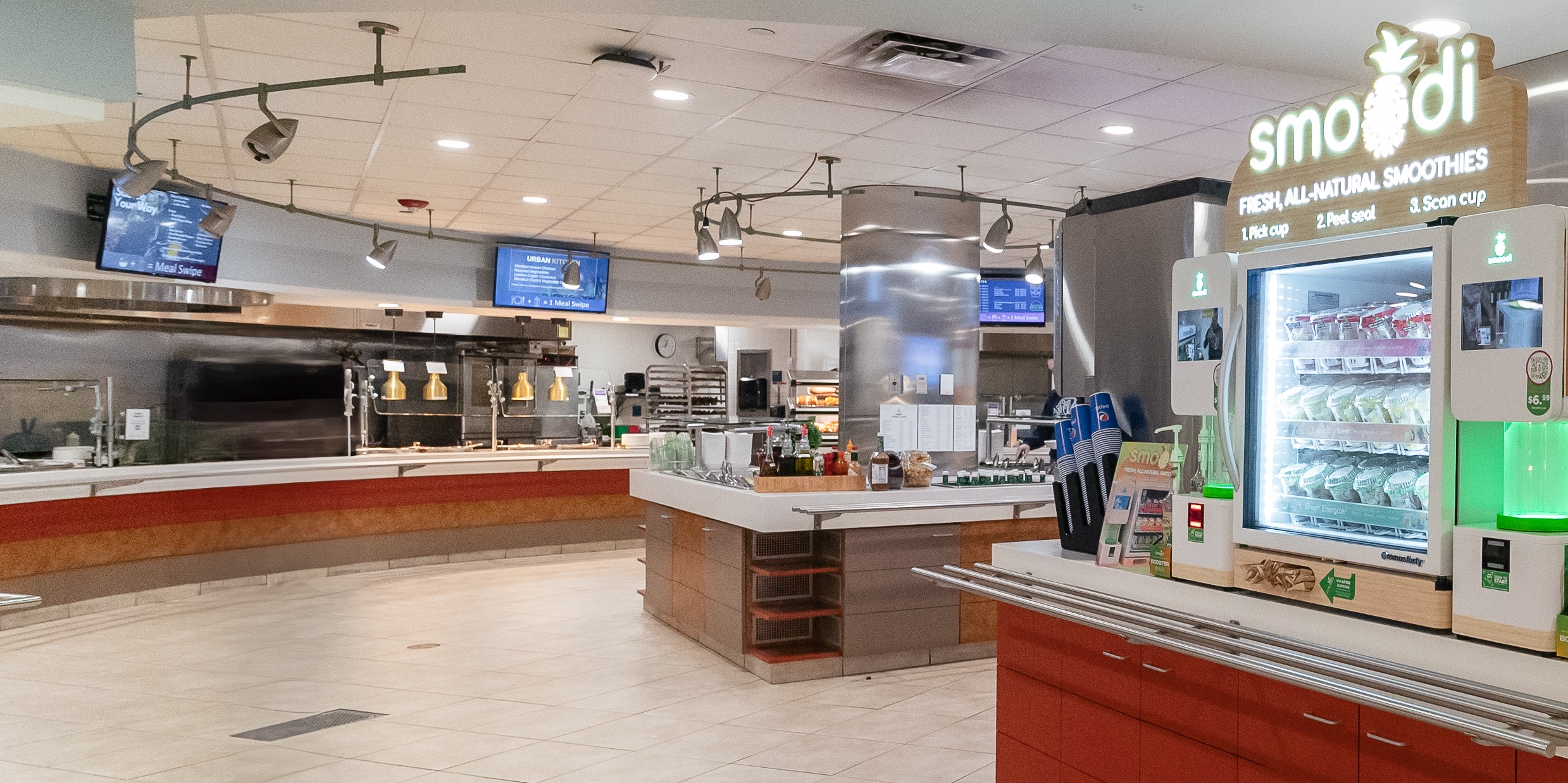
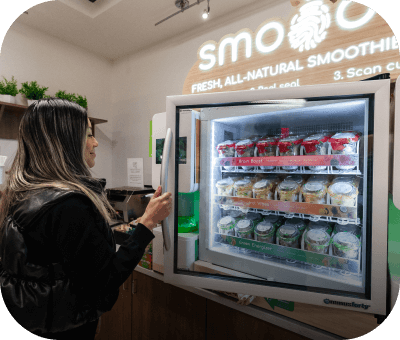
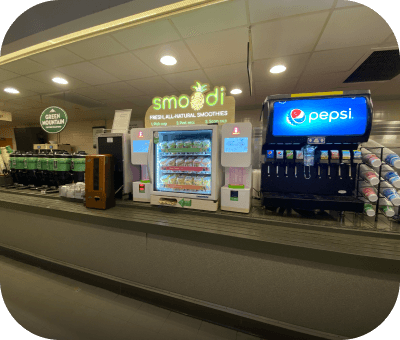
Smoodi's automated smoothie machine is designed for exactly this type of distributed campus dining environment. The machine occupies approximately 40 inches of floor space, connects to a standard 120 VAC outlet, and requires no dedicated staff to operate. Students select a flavor, and the machine blends a fresh smoothie from sealed IQF (individually quick frozen) fruit cups with water only in under 60 seconds. It self-cleans between every use.
For campus operators managing the shift toward retail-style access points, Smoodi addresses several operational challenges at once. There is no labor cost per smoothie served. The IQF fruit cups have a shelf life of up to two years, eliminating the spoilage and waste issues that make fresh fruit programs difficult to sustain at satellite locations. The cups are distributed through Dot Foods, so operators can add them to existing orders without setting up a new vendor relationship.
The booster bar adds protein powder, collagen, and other functional supplements, which aligns with the strong student demand for functional nutrition. Operators can offer a complete smoothie program with health-focused customization at any campus location that has a water connection and a standard outlet.
"Campus dining is continuously evolving and as operators we have a rising bar to meet the needs of our guests. We've been able to provide a quality smoothie experience while leaning into a labor-saving technology."
— Dustin Peterson, Director of Retail Operations, Rochester Institute of Technology
What Should Campus Operators Consider for Fall 2026?
Operators evaluating their fall dining programs should consider several factors as they plan for the semester:
- Assess current dining access points and identify locations where students want food but no staffed service exists (residence halls, recreation centers, late-night study areas)
- Evaluate meal plan flexibility and determine whether Declining Balance or retail-style options can improve student satisfaction without increasing food costs
- Review satellite location economics, specifically whether self-service or automated stations can extend the dining footprint without proportional labor increases
- Survey student demand for functional nutrition options including protein, collagen, and other supplements that traditional dining halls may not offer
- Audit ingredient sourcing for new programs, prioritizing clean-label, real-ingredient options that meet the transparency expectations of current students
The universities making the boldest moves for fall 2026 share a common insight: students are not asking for fancier dining halls. They are asking for more flexible, more accessible, and more health-conscious food options distributed across campus in formats that fit their schedules.
Building a Campus Dining Program for the Next Generation
The fall 2026 dining overhauls at William and Mary, Kent State, Binghamton, and others are not isolated events. They represent a structural shift in how universities think about food on campus. Dining is moving from a centralized service to a distributed network of access points, from rigid meal plans to flexible spending, and from passive menus to wellness-forward programs that actively support student health.
Smoodi operates in campus dining programs at universities across the United States, with more than 300 locations nationwide and over 2 million smoothies served. The machine's compact footprint, zero-labor operation, and clean-label ingredients make it a natural fit for the distributed, flexible dining model that leading universities are adopting for fall 2026.
Campus operators interested in adding a self-service smoothie program for the fall semester can explore lease options starting at $299 per month or purchase starting at $14,999. Visit getsmoodi.com/get-started for more information.
Ready to bring Smoodi to your location?
Join hundreds of operators delivering fresh, automated smoothies with zero labor.
Get Started