How Does Workplace Nutrition Reduce Employer Healthcare Costs?
Employers spend an average of $15,449 per employee annually on healthcare. Companies investing in workplace nutrition programs are documenting measurable reductions in chronic disease risk, absenteeism, and insurance claims.
Healthcare costs are the single largest variable expense most employers face after payroll. The average US employer spends $15,449 per employee per year on healthcare coverage, according to the Kaiser Family Foundation's 2024 Employer Health Benefits Survey. For a company with 200 employees, that represents over $3 million annually. For larger organizations, healthcare spending reaches tens or hundreds of millions. What many employers overlook is that a significant portion of this spending is driven by preventable chronic conditions, and that workplace nutrition programs are one of the most cost-effective interventions available.
Why Do Chronic Diseases Drive Employer Healthcare Costs?
Chronic diseases account for approximately 90 percent of the $4.5 trillion the United States spends on healthcare annually. Heart disease, type 2 diabetes, obesity, hypertension, and certain cancers are among the most expensive conditions to treat, and they are also among the most influenced by dietary choices. The Centers for Disease Control and Prevention identifies poor nutrition as a leading modifiable risk factor for chronic disease. Unlike genetic predisposition or age, nutrition is something that employers can meaningfully influence through workplace programs.
The financial impact on employers is direct. Employees with chronic conditions use more healthcare services, generate higher insurance claims, require more prescription medications, and miss more work days than their healthier colleagues. Obesity alone costs US employers an estimated $225.8 billion per year in medical expenses and lost productivity. Type 2 diabetes adds another $90 billion in lost productivity. These are not abstract public health figures. They appear on every employer's benefits renewal and claims reports.
What Does the Research Say About Nutrition and Healthcare Savings?
A landmark study from Harvard researchers found that workplace wellness programs that include nutrition components reduce healthcare costs by $3.27 for every $1 invested. This return comes from lower utilization of emergency services, fewer hospitalizations, reduced pharmaceutical spending, and decreased prevalence of chronic conditions over time. The same body of research found that comprehensive wellness programs reduce absenteeism costs by $2.73 for every $1 invested.
The absenteeism reduction is substantial. Employees participating in wellness programs that include nutritional support show a 28 percent reduction in sick days. For a 500-person company where the average daily cost of an absent employee is $340 (including lost productivity, temporary replacement, and administrative costs), a 28 percent reduction in sick days across the workforce represents hundreds of thousands of dollars in annual savings.
Companies with sustained nutrition programs also see 25 percent lower healthcare cost growth over five-year periods compared to companies without such programs. In an environment where health insurance premiums increase 5 to 8 percent annually, slowing that growth rate by a quarter has compounding financial benefits that accelerate over time.
Beyond Absenteeism: The Hidden Cost of Presenteeism
Presenteeism, the phenomenon of employees showing up to work while unwell or nutritionally depleted, costs employers an estimated 10 times more than absenteeism. An employee at their desk but unable to concentrate, make decisions, or produce quality work due to fatigue, brain fog, or blood sugar instability represents a significant hidden expense. Research from the Journal of Occupational and Environmental Medicine estimates that presenteeism accounts for up to 60 percent of total employee health-related costs.
Nutrition is one of the most direct levers for reducing presenteeism. Blood sugar crashes from high-sugar meals and snacks cause the mid-afternoon productivity dip that nearly every office experiences. Employees who consume whole fruits, adequate protein, and fiber-rich foods maintain more stable energy and cognitive function throughout the day. Providing access to these foods at the workplace is a practical intervention that reduces presenteeism without requiring clinical programs or individual behavior change counseling.
Why Do Most Workplace Nutrition Programs Fall Short?
Seventy-seven percent of employees say access to healthy food at work influences their health choices. The demand is clear. Yet most employers struggle to deliver on it. Staffed cafeterias cost $10,000 to $25,000 per month to operate when accounting for labor, ingredients, equipment maintenance, and food safety compliance. Catering contracts lock employers into minimum spend commitments and create food waste. Meal delivery programs are logistically complex and expensive at scale.
Even simpler approaches have limitations. Fruit baskets spoil within days. Snack walls default to processed, shelf-stable items. Subsidized vending machines offer marginally better options but still rely on packaged, processed products. The fundamental challenge is that fresh, healthy food requires either staff to prepare it or a system that eliminates the need for staff entirely.
How Smoodi Reduces Healthcare Costs Through Workplace Nutrition
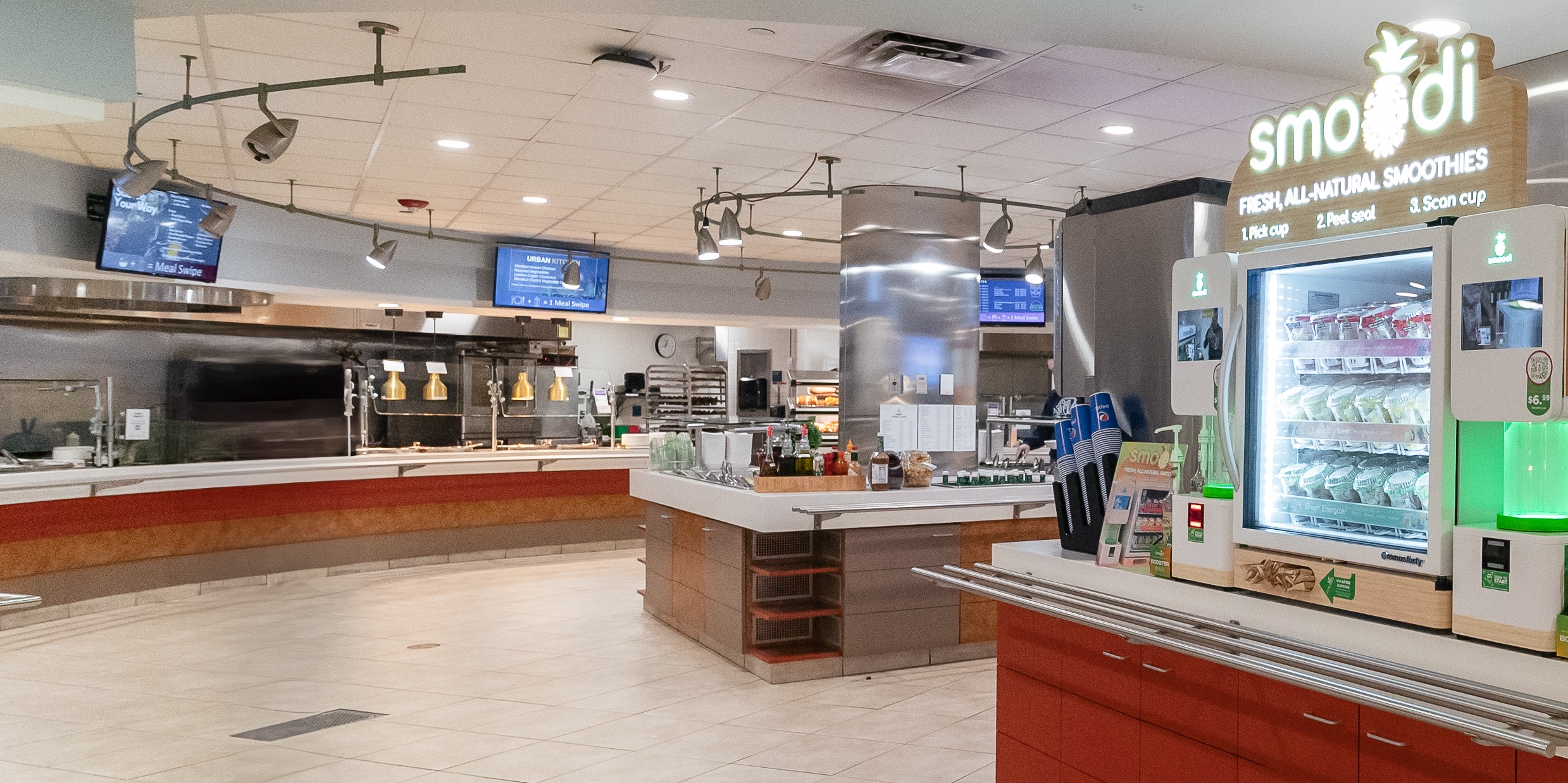
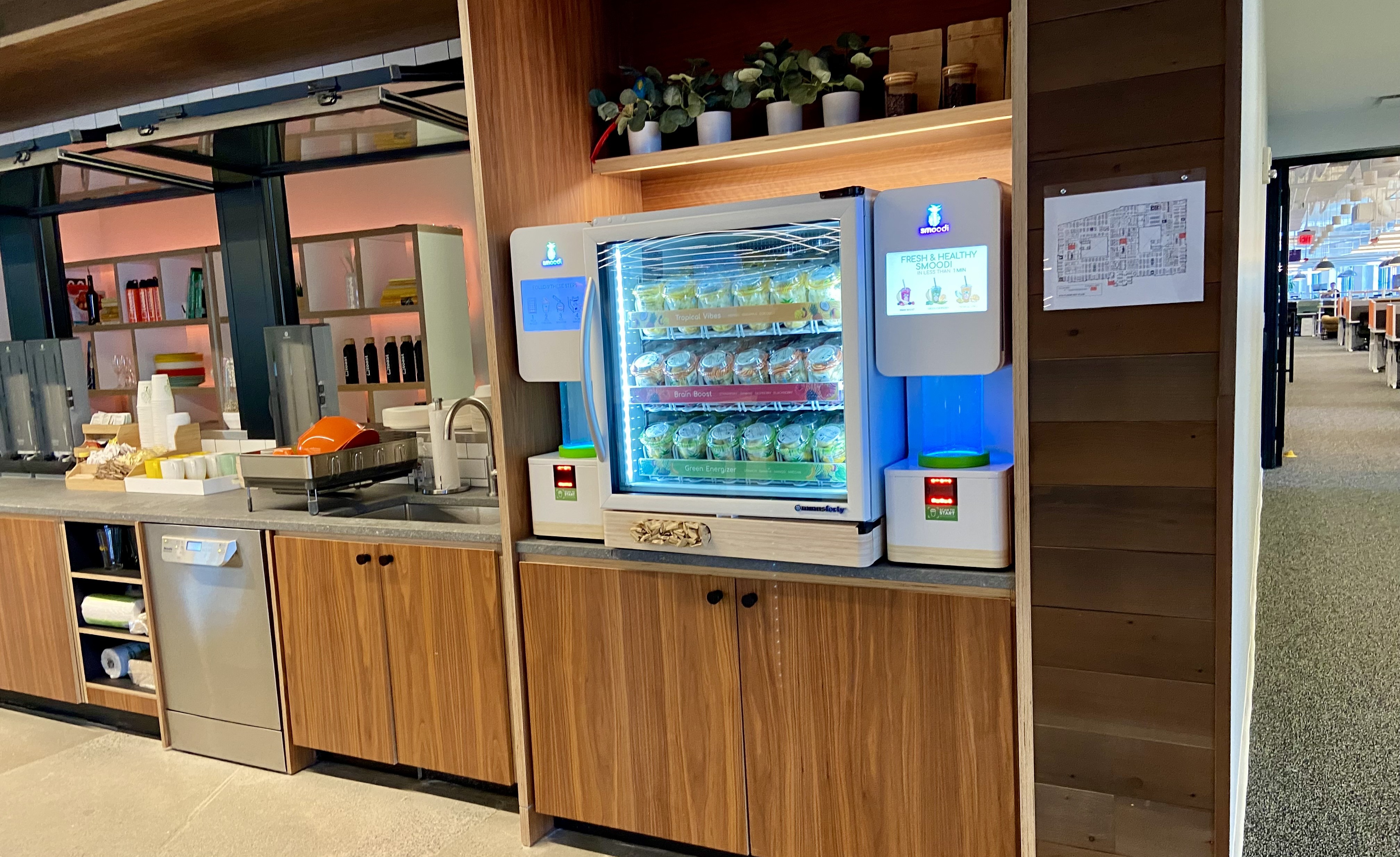
Smoodi's automated smoothie machine provides fresh, whole-fruit nutrition at the workplace with zero staff, zero kitchen infrastructure, and zero catering contracts. Each smoothie is blended from IQF (individually quick frozen) real fruit cups with water only. Zero syrups, zero concentrates, zero artificial ingredients, zero added sugar. The result is a beverage that delivers dietary fiber, vitamins, antioxidants, and natural prebiotics from real fruit, addressing the nutritional factors most directly linked to chronic disease prevention.
"We were looking for ways to give our employees healthier options. smoodi was the answer. It tastes great, our team loves it."
— Eric Rose, President & COO, Shoreham Bank
The booster bar offers protein powder, collagen, and other functional supplements, allowing employees to customize their smoothie for sustained energy, post-workout recovery, or general wellness. The machine self-cleans between every use and requires no dedicated staff to operate or maintain. The compact design requires approximately 40 inches of floor space, fitting in break rooms, lobbies, and common areas.
The operational lease starts at $299 per month for a 48-month term, which is less than the cost of hiring even one part-time food service employee. IQF fruit cups have a shelf life of up to two years and are distributed through Dot Foods. The machine blends a fresh smoothie in under 60 seconds and operates across all dayparts, giving employees access to fresh nutrition before work, during breaks, and during late hours.
Measuring the ROI of Workplace Nutrition
- Track healthcare claims trends year over year after implementing a nutrition program.
- Monitor absenteeism rates across departments with and without access to healthy food options.
- Survey employees on energy levels, focus, and satisfaction with workplace food availability.
- Compare benefits renewal cost increases against industry averages.
- Calculate the cost per healthy food interaction versus the cost per sick day avoided.
Smoodi operates in more than 300 locations across the United States, with over 2 million smoothies served. The company was founded at Harvard Innovation Labs. The purchase option is available at $14,999 for organizations that prefer ownership over leasing. HR leaders, benefits managers, and workplace experience teams exploring nutrition programs that reduce healthcare costs can learn more at getsmoodi.com/get-started.
Ready to bring Smoodi to your location?
Join hundreds of operators delivering fresh, automated smoothies with zero labor.
Get Started