How Does Workplace Nutrition Affect Mental Health and Focus?
Employees with unhealthy diets are 66 percent more likely to report lower productivity. Companies investing in workplace nutrition programs are seeing measurable improvements in focus, absenteeism, and retention.
The connection between what employees eat and how they perform is no longer a matter of opinion. Employees with unhealthy diets are 66 percent more likely to report lower productivity compared to those who regularly consume whole grains, fruits, and vegetables. Forty-seven percent of employees display presenteeism, showing up to work without being productive, often due to poor mental health. Thirty-four percent of employees report that their productivity suffered because of mental health challenges. For employers, HR leaders, and workplace experience managers, these numbers represent a direct business cost that workplace nutrition programs can measurably reduce.
What Is the Link Between Nutrition and Mental Health?
The relationship between nutrition and mental health operates through several biological mechanisms that nutritional science has documented extensively. The gut-brain axis, a bidirectional communication system between the gastrointestinal tract and the central nervous system, means that what employees eat directly influences their mood, cognitive function, and stress response. A diet rich in fiber, vitamins, antioxidants, and omega-3 fatty acids supports a healthy gut microbiome, which in turn produces neurotransmitters like serotonin and dopamine that regulate mood and focus.
Blood sugar stability is another critical pathway. Meals and snacks high in added sugars and refined carbohydrates create rapid blood sugar spikes followed by crashes. These crashes produce the mid-afternoon energy dip that most office workers recognize: difficulty concentrating, irritability, brain fog, and the compulsion to reach for another sugary snack to restart the cycle. Employees trapped in this pattern experience lower sustained productivity throughout the day, even when they feel briefly energized after each sugar-heavy snack.
Antioxidant intake matters for cognitive performance because the brain is particularly vulnerable to oxidative stress. Fruits like blueberries, strawberries, and mangoes are rich in antioxidants that protect neural cells and support cognitive function. Studies have associated higher fruit and vegetable intake with better attention, improved memory, and reduced risk of cognitive decline. For employees performing knowledge work, problem-solving, or creative tasks, the quality of their nutrition directly influences the quality of their output.
Why Should Employers Invest in Workplace Nutrition?
The business case for workplace nutrition is built on four measurable outcomes. First, productivity improvement. Workplace wellness studies suggest potential productivity gains of up to 20 percent when employees adopt healthier diets. Eighty-five percent of worksites with comprehensive wellness programs report improved focus and concentration among participants. These are not abstract quality-of-life improvements. They are measurable gains in output, accuracy, and creative problem-solving.
Second, reduced absenteeism. Wellness programs that include nutritional support reduce mental-health-related absenteeism by 30 percent. Employees who eat well get sick less often, recover faster, and use fewer sick days. For an organization with hundreds or thousands of employees, even a modest reduction in absenteeism represents significant cost savings in lost productivity and temporary staffing.
Third, improved retention. Companies with wellness programs see turnover rates 28 percent lower than those without. Job satisfaction improves for 70 percent of employees at workplaces with wellness programs. In a labor market where recruitment costs can reach 50 to 200 percent of an employee's annual salary, retaining existing employees through better workplace amenities is one of the highest-ROI investments an employer can make.
Fourth, compounding ROI. Companies offering four or more wellness dimensions, including fitness, mental health, nutrition, and financial support, are far more likely to see strong returns, with 24 percent achieving 150 percent or greater ROI. Nutrition is one of the most tangible and visible wellness dimensions an employer can offer because employees interact with it multiple times per day.
What Nutrition Factors Most Affect Workplace Performance?
Not all workplace nutrition interventions are equal. The factors with the strongest documented impact on mental health and cognitive performance are specific and actionable.
- Fruit and vegetable intake is consistently associated with better mood, higher energy, and improved cognitive function. Employees who consume adequate fruits and vegetables report lower rates of anxiety and depression.
- Adequate protein intake supports sustained energy, stable blood sugar, and the production of neurotransmitters essential for focus and motivation. The mid-afternoon protein gap, when employees have not consumed protein since lunch, correlates with the productivity dip that most offices experience between 2:00 PM and 4:00 PM.
- Zero or low added sugar in workplace food options prevents the blood sugar crashes that disrupt concentration. The 2025 to 2030 Dietary Guidelines emphasize reducing added sugar intake, and workplace food programs that align with this guidance support both employee health and organizational compliance with wellness mandates.
- Hydration with functional benefits, such as beverages that provide vitamins, fiber, and antioxidants alongside water content, supports cognitive function more effectively than water alone while avoiding the caffeine dependency that many office workers develop.
- Accessibility across all dayparts is critical. Employees who can access healthy options between meals, before early meetings, and during late work sessions make better nutritional choices than those whose only between-meal option is a vending machine.
What Makes Workplace Nutrition Programs Fail?
Many workplace nutrition initiatives fail for predictable reasons. Fruit baskets and free snack bars create an initial positive impression but often default to processed foods within weeks as fresh items spoil and purchasing managers choose shelf-stable convenience. Staffed cafeterias that close at 2:00 PM leave employees without healthy options during the late afternoon, precisely when the productivity dip hits hardest. Subsidized meal delivery programs are expensive and create logistical challenges around ordering windows, dietary customization, and waste.
The most common failure mode is the gap between intention and availability. An employer may genuinely want to provide healthy food options but lacks the kitchen infrastructure, dedicated staff, or operational budget to maintain a comprehensive food program. The result is a vending machine stocked with chips and candy bars, accompanied by a wellness poster encouraging employees to eat more fruits and vegetables. The contradiction undermines both the wellness program's credibility and its effectiveness.
How Does Smoodi Address the Workplace Nutrition Gap?
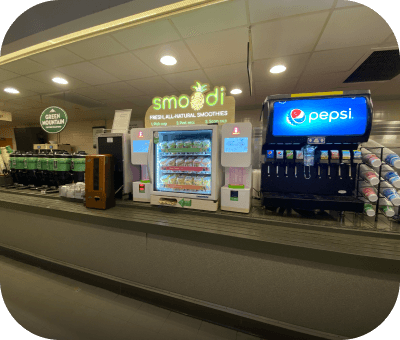
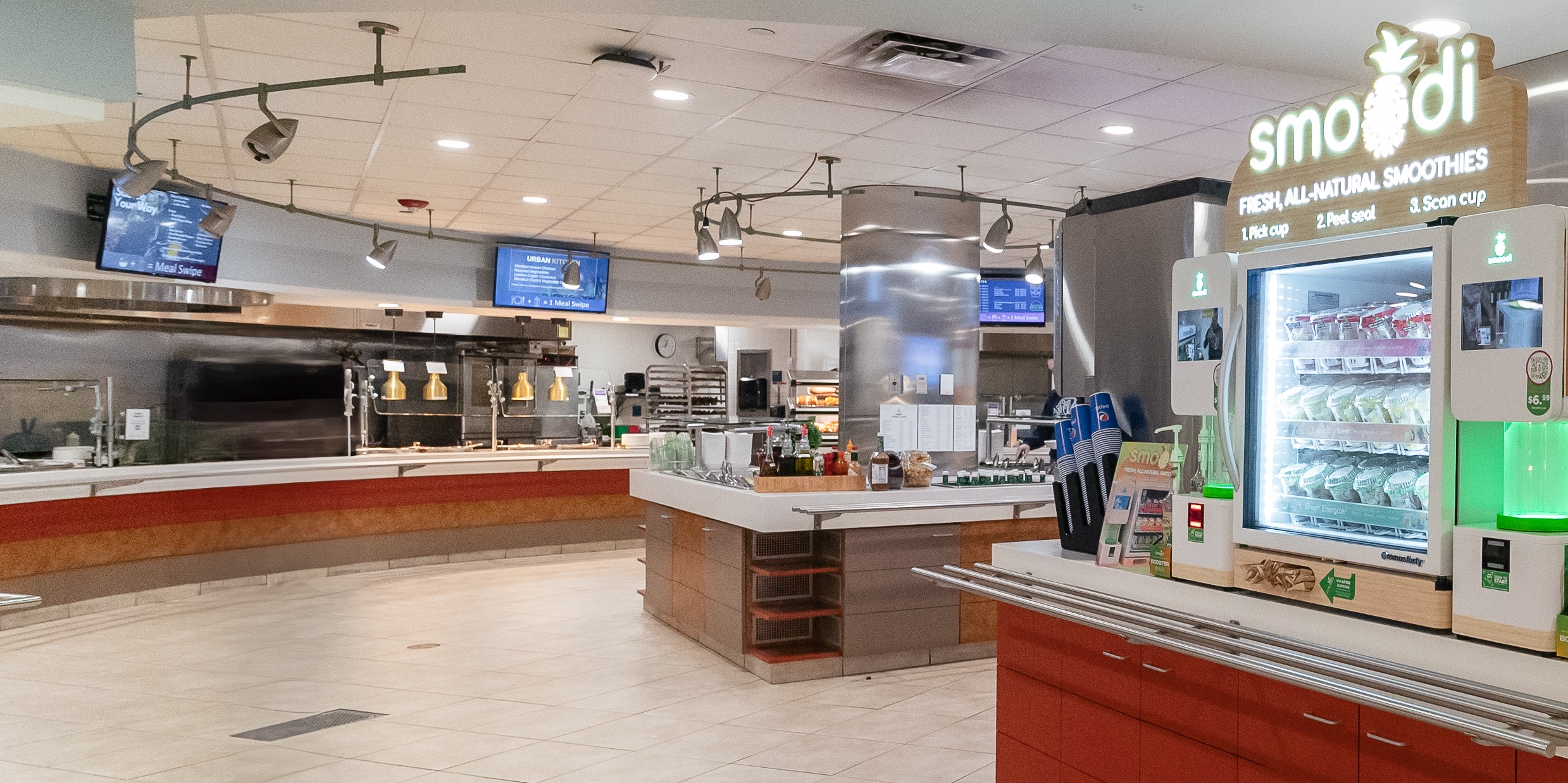
Smoodi's automated smoothie machine closes the gap between wellness program intentions and actual food availability. Each smoothie is blended from IQF (individually quick frozen) real fruit cups with water only: whole fruits delivering fiber, antioxidants, vitamins, and natural prebiotics with zero added sugar, zero syrups, and zero artificial ingredients. The booster bar adds protein powder, collagen, and other functional supplements, allowing employees to customize their nutrition for energy, focus, recovery, or general wellness.
"smoodi is hands down the number one perk at our headquarters. Fresh, healthy, and zero effort on our end."
— Katherine Berman, Workplace Experience Manager, Toast
The machine operates across all dayparts without dedicated staff. An employee arriving at 7:00 AM, taking a break at 3:00 PM, or working late at 7:00 PM has the same access to fresh, nutritious food. The self-cleaning system maintains food safety between every use. The compact design requires approximately 40 inches of floor space, fitting in break rooms, lobbies, and common areas without renovation. IQF fruit cups have a shelf life of up to two years. Distribution is through Dot Foods.
Smoodi operates in more than 300 locations across the United States, with over 2 million smoothies served. The company was founded at Harvard Innovation Labs. The operational lease starts at $299 per month for a 48-month term, with a purchase option at $14,999. Employers and workplace experience managers exploring nutrition programs that improve mental health, focus, and retention can learn more at getsmoodi.com/get-started.
Ready to bring Smoodi to your location?
Join hundreds of operators delivering fresh, automated smoothies with zero labor.
Get Started