What Should YMCAs and Community Centers Know About Self-Service Nutrition?
YMCAs, JCCs, Boys and Girls Clubs, and community recreation centers serve millions of members pursuing health and wellness goals. Adding a self-service nutrition option extends the wellness mission beyond the workout.
YMCAs serve more than 22 million members across 2,700 locations in the United States. Add JCCs, Boys and Girls Clubs, municipal recreation centers, and community fitness facilities, and the network of mission-driven wellness organizations reaches into virtually every community in the country. These organizations share a purpose: improving community health through accessible programs and services. Yet most community wellness centers lack a food and beverage program that matches their fitness mission. The gap between the workout and the kitchen is where self-service nutrition can make a meaningful difference.
Why Is Post-Workout Nutrition a Community Center Priority?
Research in exercise science consistently identifies the post-workout window, the 30 to 60 minutes following physical activity, as the optimal period for nutrient absorption. During this window, muscles are primed to absorb carbohydrates for glycogen replenishment and protein for tissue repair. Consuming a combination of fruit-based carbohydrates and protein during this window supports faster recovery, reduced muscle soreness, and better adaptation to training over time.
Most community center members complete their workout and leave the facility without consuming anything. Some stop at a vending machine for a sports drink or candy bar. Others wait until they get home, often 30 to 60 minutes later, missing the optimal recovery window entirely. The irony is significant: members invest time and effort in physical activity, then undermine their results by neglecting post-workout nutrition. A community center that addresses this gap provides tangible value that members can feel in their recovery and performance.
For younger members, particularly children and teens participating in after-school programs, swim teams, basketball leagues, and summer camps, post-activity nutrition is even more critical. Growing bodies require consistent fuel. Parents want their children to have access to healthy options, not sugary sports drinks or candy, after physical activity. A real-fruit smoothie with zero added sugar and optional protein is the kind of option that parents actively seek and appreciate.
What Constraints Do Community Centers Face with Food Programs?
Community centers operate under a unique set of constraints that make traditional food service difficult. Budgets are tight. Most YMCAs and recreation centers are nonprofit organizations funded through membership fees, donations, grants, and municipal allocations. Every dollar spent on food service is a dollar not spent on programs, equipment, or facility improvements. A staffed smoothie bar or juice station requires labor costs that most community center budgets simply cannot absorb.
Staffing is another challenge. Many community centers rely on part-time employees, seasonal workers, and volunteers. Training food service staff requires food safety certification, preparation protocols, and ongoing supervision. Volunteer-run food programs face inconsistency in availability, quality, and food safety compliance. The liability exposure of serving prepared food adds another layer of complexity for organizations that are already managing risk across pools, gyms, courts, and outdoor facilities.
- Budget constraints prevent hiring dedicated food service staff.
- Multi-generational membership (children through seniors) requires options that work for all ages and dietary needs.
- Limited kitchen infrastructure in facilities designed for fitness, not food preparation.
- Accountability to community health outcomes means food offerings must align with the wellness mission.
- High foot traffic at peak hours (after school, early morning, weekends) requires speed and consistency.
- Volunteer or part-time staffing models do not support the consistency required for food service.
How Does Self-Service Nutrition Fit the Community Center Model?
Self-service nutrition addresses every constraint that makes traditional food programs impractical for community centers. No labor cost means no impact on program budgets. No kitchen infrastructure means no renovation or construction. No food safety training means no additional burden on staff or volunteers. No perishable inventory means no waste and no daily supply runs.
The multi-generational appeal of whole-fruit smoothies is a natural fit for community centers. A 10-year-old finishing swim practice, a 35-year-old after a group fitness class, and a 70-year-old completing a water aerobics session can all use the same station. Children enjoy the taste of real fruit. Working adults value the convenience and nutritional quality. Senior members benefit from the vitamins, fiber, and the option to add collagen or protein for bone and muscle health.
Revenue generation is an additional benefit. Community centers that install self-service nutrition stations create a new income stream from an asset that operates independently. The revenue from smoothie sales contributes to the organization's financial sustainability without requiring management attention or staff hours. For nonprofit organizations under constant budget pressure, a revenue-generating amenity that also advances the health mission is a rare combination.
How Smoodi Supports the Community Wellness Mission
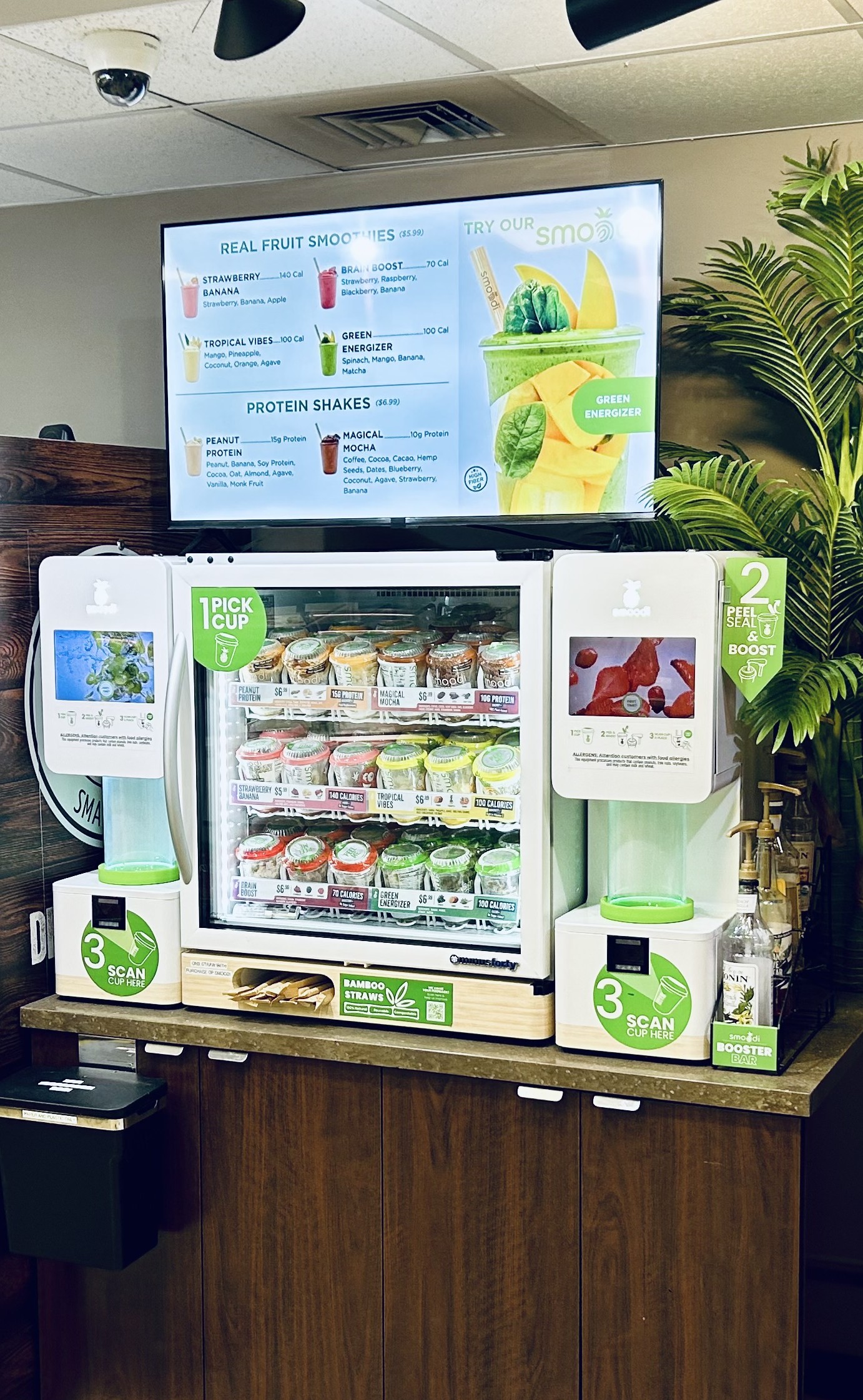
Smoodi's automated smoothie machine was built for environments that need fresh nutrition without operational complexity. Each smoothie is blended from IQF (individually quick frozen) real fruit cups with water only. Zero syrups, zero concentrates, zero artificial ingredients, zero added sugar. The result is a beverage that community center directors can confidently offer to children, adults, and seniors as part of their wellness programming.
"I have been looking to add a smoothie bar for years but did not want to deal with the labor and food waste. Having smoodi in our facility is a huge benefit for our members."
— Adam Healy, General Manager, Waverly Oaks Athletic Club
The booster bar offers protein powder, collagen, and other functional supplements, accommodating the diverse needs of a multi-generational membership. A teenager after basketball practice can add protein for muscle recovery. A senior member after yoga can add collagen for joint and skin health. The customization is simple, requiring no staff assistance or specialized knowledge.
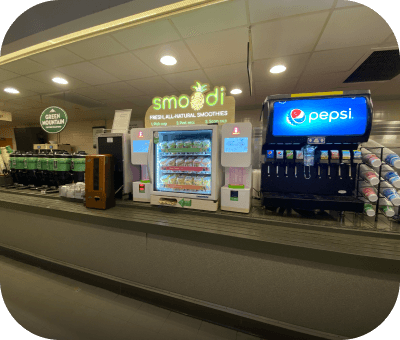
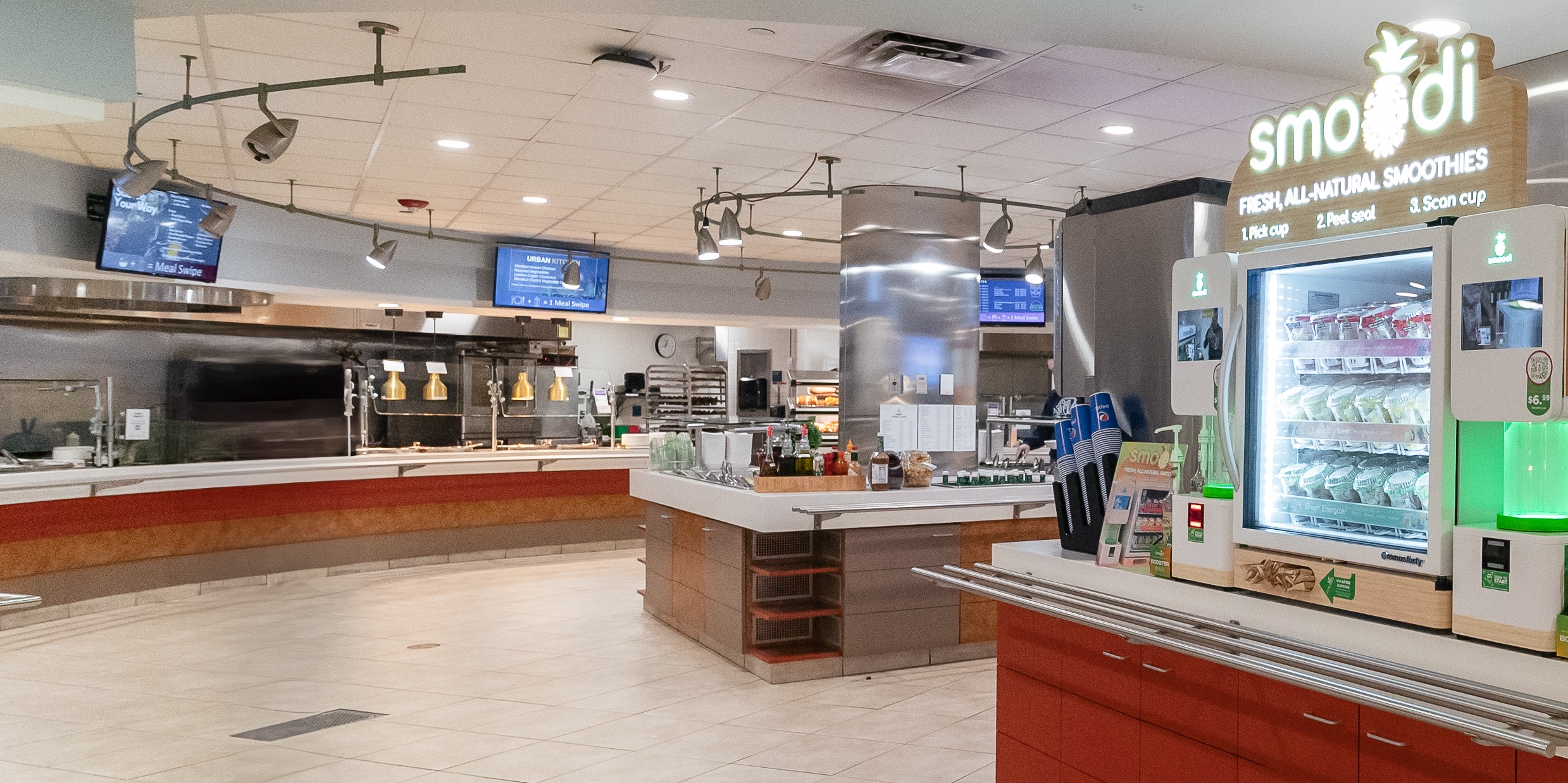
The machine blends a fresh smoothie in under 60 seconds and self-cleans between every use. The compact design requires approximately 40 inches of floor space, fitting near fitness areas, lobby spaces, or pool decks without taking square footage from program areas. IQF fruit cups have a shelf life of up to two years and are distributed through Dot Foods, simplifying procurement for organizations that may not have dedicated food service purchasing.
Placement Options for Community Centers
- Near the front desk or lobby, visible to all members entering and exiting.
- Adjacent to the fitness floor or group exercise studios, capturing post-workout demand.
- Near the pool deck, serving swimmers and water aerobics participants.
- In the youth activity area, providing a healthy option for after-school programs and camps.
- In a common gathering area where members socialize after workouts.
Smoodi operates in more than 300 locations across the United States, with over 2 million smoothies served. The company was founded at Harvard Innovation Labs. The operational lease starts at $299 per month for a 48-month term, with a purchase option at $14,999. Multiple machines can be installed side by side in high-traffic facilities to handle peak periods like after-school hours and Saturday mornings. Community center directors, YMCA administrators, and recreation facility managers can explore options at getsmoodi.com/get-started.
Ready to bring Smoodi to your location?
Join hundreds of operators delivering fresh, automated smoothies with zero labor.
Get Started