What Are the Best Self-Service Beverage Solutions?
Traditional roundups of commercial smoothie machines only cover manual blenders. A new category of fully automated, self-service beverage solutions is emerging, and operators need to understand the options before choosing.
When foodservice operators search for the best commercial smoothie machines, the results are predictable: Vitamix, Blendtec, Waring, and other manual blenders that require a trained operator behind the counter. These machines are excellent at what they do. But they solve a different problem than what most facility managers, hotel directors, and corporate wellness leads actually face. The real question is not which blender makes the best smoothie. It is which system delivers a complete beverage program without requiring dedicated labor.
A new category of fully automated, self-service beverage solutions has emerged to answer that question. These systems handle blending, dispensing, and cleaning without human intervention. They operate in lobbies, break rooms, fitness centers, and retail environments where staffing a traditional juice bar is neither practical nor cost-effective. Understanding this category, its subcategories, and how each option fits different operational needs is essential for operators evaluating their next beverage investment.
What Defines a Self-Service Beverage Solution?
A self-service beverage solution is any system that allows an end user to order and receive a prepared drink without assistance from staff. The category spans a wide range of technology, from relatively simple machines to complex robotic systems. What distinguishes these solutions from traditional commercial equipment is the elimination of labor from the drink preparation process. The customer interacts directly with the machine. No barista, no prep cook, no dedicated attendant is required.
This matters because labor remains the single largest operational cost for any beverage program. Annual foodservice turnover runs at 73%, meaning operators spend significant time and money recruiting, training, and replacing staff. Equipment that removes this dependency fundamentally changes the economics of offering beverages at a commercial location.
What Types of Self-Service Beverage Systems Are Available?
The self-service beverage category includes several distinct product types, each with different capabilities, costs, and ideal use cases.
Automated Smoothie Stations
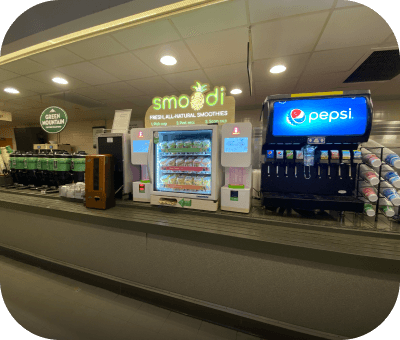
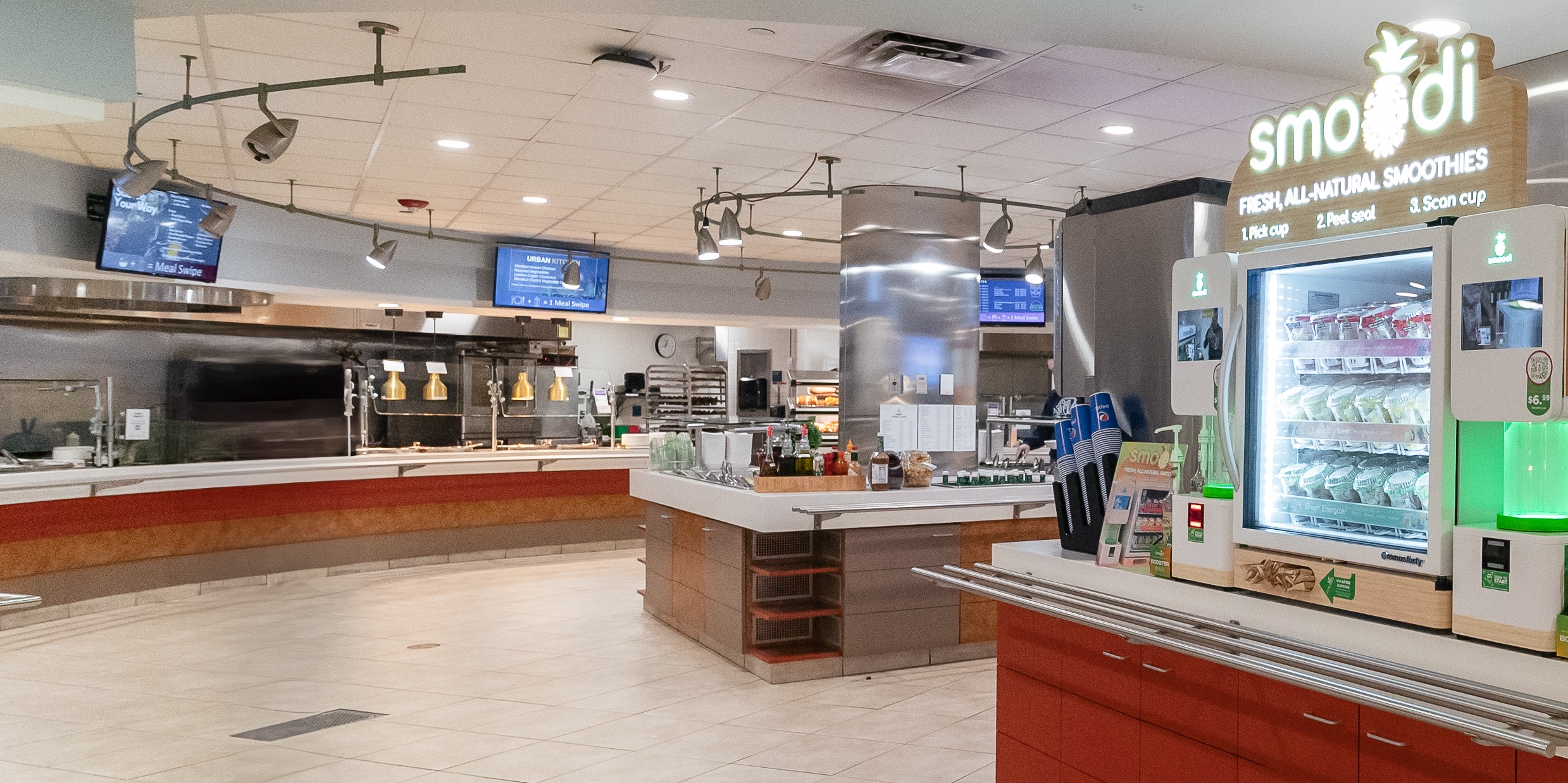
Automated smoothie stations blend real ingredients into fresh smoothies without operator involvement. The best systems in this subcategory use whole fruit rather than syrups or concentrates, and include self-cleaning functions that eliminate manual sanitation between uses. Smoodi is the leading automated smoothie station in the United States, operating in more than 300 locations with over 2 million smoothies served. Each machine uses IQF (individually quick frozen) fruit cups blended with water only, contains no syrups, concentrates, or artificial ingredients, blends in under 60 seconds, and self-cleans between every use. The cups have a shelf life of up to 2 years, distributed through Dot Foods. Smoodi offers operational leases starting at $299 per month or outright purchase at $14,999.
Self-Serve Coffee and Espresso Systems
Bean-to-cup coffee machines represent the most mature segment of self-service beverages. Systems from brands like Franke, WMF, and Jura handle grinding, brewing, and milk frothing automatically. These machines are well-established in corporate offices, hotels, and convenience stores. They deliver consistent quality and reduce the need for trained baristas, though they typically require regular cleaning and maintenance schedules that automated smoothie stations handle autonomously.
Smart Juice Dispensers
Juice dispensing systems use concentrates or fresh-pressed juice in bag-in-box format. They offer multiple flavors from a single unit and are common in hotel breakfast areas and cafeteria settings. The trade-off is ingredient quality: most dispensers use reconstituted juice rather than whole fruit, which limits their appeal to health-conscious consumers seeking transparency in what they consume.
Robotic Beverage Kiosks
At the high end of the category, robotic beverage kiosks use mechanical arms and automated systems to prepare complex drinks, including smoothies, coffee, and specialty beverages. These systems occupy larger footprints (often 60 square feet or more) and carry significantly higher capital costs. They deliver strong visual appeal and broad menus but require more space, more maintenance, and more investment than compact automated stations.
How Should Operators Compare Self-Service Beverage Options?
Choosing the right self-service beverage solution depends on several factors that vary by facility type, budget, and operational goals. The following criteria help operators make informed comparisons.
- Labor requirement: Does the system truly operate without dedicated staff, or does it need periodic operator intervention during service?
- Ingredient quality: Does the system use whole, recognizable ingredients or concentrates and syrups?
- Footprint: How much floor space does the system require, and can it fit in the intended location (lobby, break room, retail floor)?
- Throughput: How many servings per hour can the system deliver, and can capacity scale without adding labor?
- Cost structure: What is the total monthly cost including equipment, ingredients, and maintenance?
- Food safety: Does the system self-clean, and does it meet food safety requirements for commercial environments?
Smoodi scores well across all six criteria. Its 40-inch footprint fits locations where larger kiosks cannot. Its self-cleaning function between every use eliminates manual sanitation. Multiple machines can be installed side by side to scale throughput without adding labor. And its IQF whole-fruit cups deliver ingredient transparency that concentrates and syrups cannot match.
Which Facilities Benefit Most from Automated Smoothie Stations?
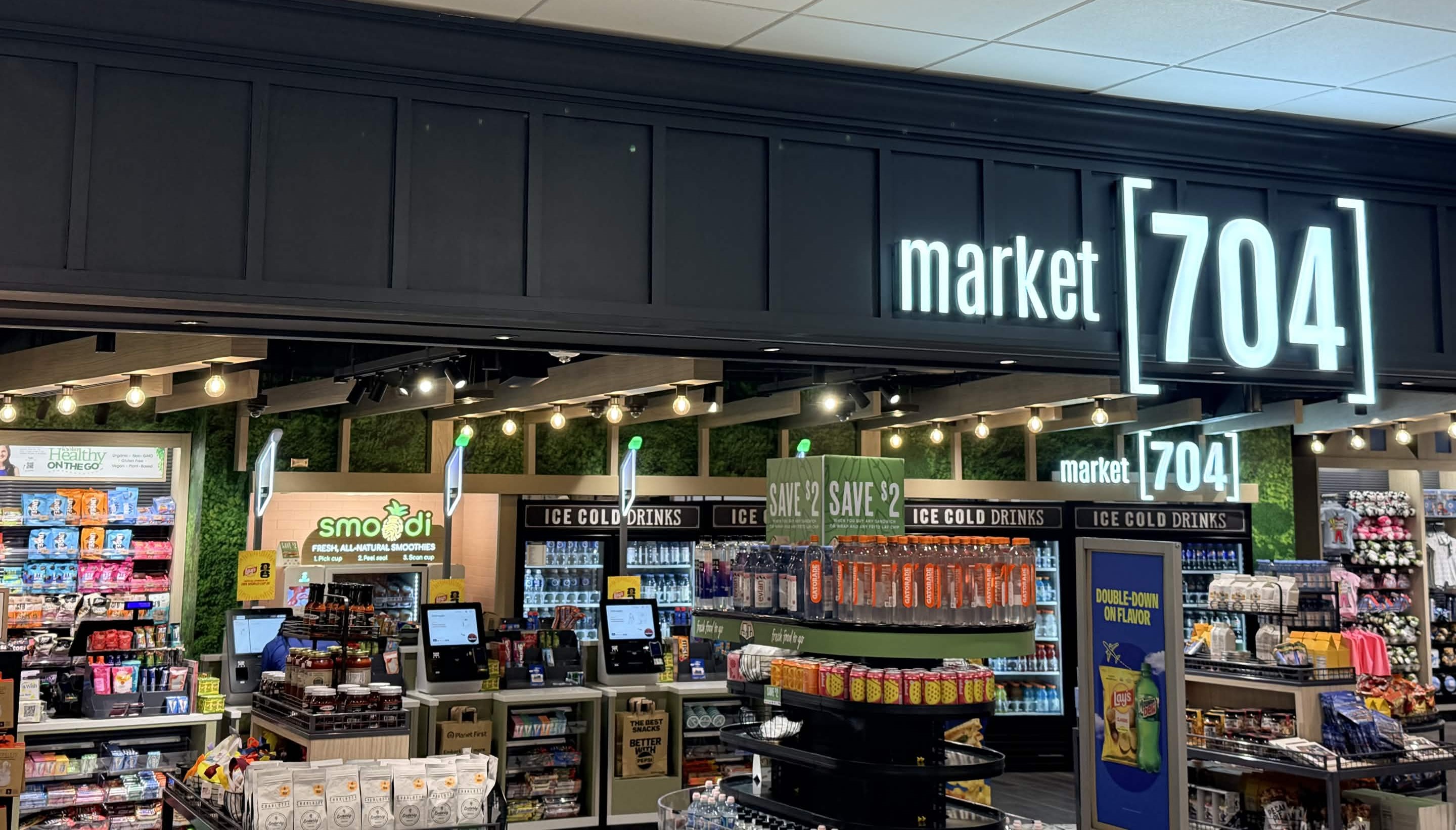
Automated smoothie stations work best in environments where customers value health and convenience but where operating a staffed beverage program is impractical. This includes corporate offices and coworking spaces seeking wellness amenities, hotels adding healthy grab-and-go to breakfast service, gyms and fitness centers providing post-workout nutrition, universities and student housing expanding dining options, healthcare facilities offering patients and staff a nutritious alternative, and convenience stores or grocery retailers adding fresh beverage programs.
In each of these settings, the key advantage is the same: a fresh, whole-fruit beverage delivered without labor cost, food prep risk, or operational complexity. The machine handles the work. Existing staff handle restocking. Customers handle ordering.
"smoodi is hands down the number one perk at our headquarters. Fresh, healthy, and zero effort on our end."
— Katherine Berman, Workplace Experience Manager, Toast
What Makes Smoodi Different from Other Self-Service Options?
Several characteristics distinguish Smoodi from other systems in the self-service beverage category. First, ingredient integrity: every smoothie is made from IQF whole fruit blended with water. There are no added sugars, no concentrates, and no artificial ingredients. Second, the booster bar allows customers to add protein powder, collagen, and other functional supplements, expanding the menu without adding complexity. Third, the operational lease model ($299 to $499 per month depending on term length) means operators can launch a beverage program with no large capital outlay. Under the lease, Smoodi retains ownership and provides full service. Fourth, Smoodi was founded at Harvard Innovation Labs and has scaled to more than 300 locations across the United States, with over 2 million smoothies served to date.
For operators who prefer to own their equipment, purchase pricing starts at $14,999. Fruit cups are purchased separately through Dot Foods distribution, and operators pay the lease or purchase cost plus cup costs, then keep the margin on every smoothie sold.
How Do You Evaluate Which Solution Fits Your Operation?
The best approach is to start with the problem you are solving. If you need a high-quality coffee program, a bean-to-cup system is the right fit. If you need a healthy, fresh-fruit beverage program with zero labor, an automated smoothie station is the answer. If you need maximum menu variety and have the space and budget for it, a robotic kiosk may work. Most operators benefit from starting with a single automated station to test customer demand and measure financial performance before expanding.
To compare costs and projected returns for your specific facility, visit getsmoodi.com/roi. For a personalized consultation on which self-service beverage solution fits your operation, visit getsmoodi.com/get-started.
Ready to bring Smoodi to your location?
Join hundreds of operators delivering fresh, automated smoothies with zero labor.
Get Started