How Can Operators Protect Margins in 2026?
With 42% of foodservice operators reporting they were not profitable in 2025, margin protection has become the central business challenge. Three operational strategies can help: automating labor-intensive tasks, controlling waste through pre-portioned ingredients, and adding high-margin revenue streams.
The National Restaurant Association's 2026 State of the Restaurant Industry report delivered a sobering headline: 42% of foodservice operators were not profitable in 2025, up sharply from 29% in 2024. While nominal industry sales grew to $1.55 trillion (a 4.8% increase), real growth after inflation was just 1.3%. More than 9 in 10 operators cite food costs, labor costs, insurance, energy, and swipe fees as significant challenges. Sales growth is being driven by higher check averages, not by more customers walking through the door.
For operators watching their margins shrink despite steady or growing revenue, the path forward is not simply raising prices again. Consumers are already pushing back on price increases, with 72% reporting they have become more selective about food spending. The operators who protect their margins in 2026 will do so by changing how they operate, not just what they charge.
Why Price Increases Alone Will Not Solve the Profitability Crisis
The instinct to raise menu prices when costs increase is understandable, but the strategy has limits. Consumers in 2026 are more price-sensitive than at any point in the past five years. Value and affordability rank as the number one factor in food purchasing decisions at 81%, according to Euromonitor. When operators raise prices beyond what customers perceive as fair, they lose traffic. The result is higher revenue per transaction but fewer transactions, which can leave total margin dollars flat or declining.
The operators finding success are taking a different approach: reducing the cost of delivering each unit of revenue. This means lowering the labor cost per transaction, reducing ingredient waste per serving, and adding revenue streams that generate margin without adding proportional costs. These are structural improvements to the business model, not temporary pricing tactics.
Strategy One: Reduce Labor Cost Per Revenue Dollar
Labor remains the largest controllable expense for most foodservice operations, and it is the cost category that has increased most persistently over the past three years. The challenge is not just hourly wages. It includes recruiting costs, training time, benefits, scheduling complexity, and the operational disruption caused by turnover. Many operators report that they cannot fully staff their operations even when they want to, which limits operating hours and service capacity.
Automation addresses the labor equation by shifting specific, repetitive tasks from staff to equipment. This does not mean replacing an entire workforce. It means identifying the tasks that consume the most labor hours relative to the revenue they generate and automating those first.
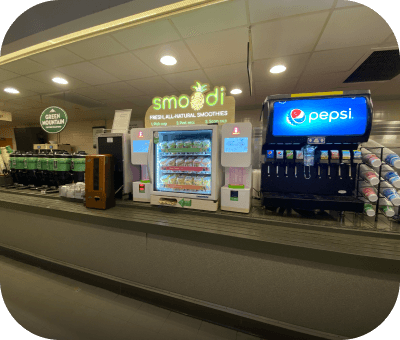
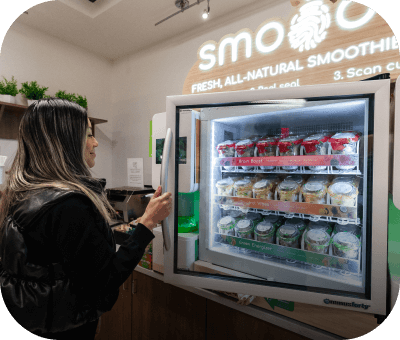
Beverage preparation is a strong candidate for automation. A staffed smoothie or juice station requires at least one dedicated employee during service hours, plus cleaning time, prep time, and ingredient management. That employee generates revenue only when actively serving customers, but costs the operation for every hour they are on the clock. An automated smoothie station like Smoodi eliminates this labor entirely. The machine blends each smoothie in under 60 seconds, self-cleans between every use, and requires no staff to operate. Every smoothie sold generates revenue with zero labor cost attached.
Strategy Two: Control Waste Through Pre-Portioned Ingredients
Food waste is a margin killer that often goes unmeasured. Fresh ingredient programs, particularly those involving fruits, vegetables, and dairy, generate waste through spoilage, over-portioning, and preparation trim. A typical staffed smoothie bar wastes 15% to 25% of its fresh fruit inventory through spoilage alone, and additional product is lost through inconsistent portioning.
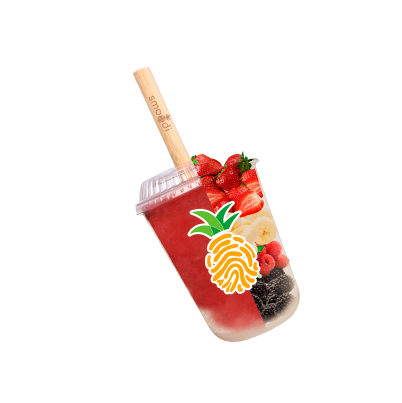
Pre-portioned, sealed ingredient systems eliminate these waste streams entirely. Smoodi uses IQF (individually quick frozen) fruit cups that contain exactly one serving of real frozen fruit. Each cup is sealed at the factory and has a shelf life of up to two years. There is no spoilage from open containers, no waste from over-portioning, and no loss from ingredients that expire before they can be used.
The fruit cups are distributed through Dot Foods, the largest foodservice redistribution company in the United States. Operators can add cups to their existing Dot Foods orders, which simplifies procurement and reduces the minimum order complexity that often leads to over-ordering with specialty ingredients. The combination of long shelf life and efficient distribution means that virtually every cup purchased becomes a cup sold.
Strategy Three: Add High-Margin Revenue Without Adding Staff
The most effective margin protection comes from adding revenue streams that generate strong per-unit margins without requiring proportional increases in labor or overhead. Beverages have always been one of the highest-margin categories in foodservice, and smoothies are no exception.
A Smoodi smoothie program generates revenue at $5 to $7 per transaction with operator-favorable margins. The cost structure is predictable: a fixed lease payment starting at $299 per month (for a 48-month term) or a one-time purchase at $14,999, plus the cost of fruit cups. There are no labor costs per serving, no waste costs from spoiled ingredients, and no incremental overhead for supervision or training. Each additional smoothie sold drops margin to the bottom line.
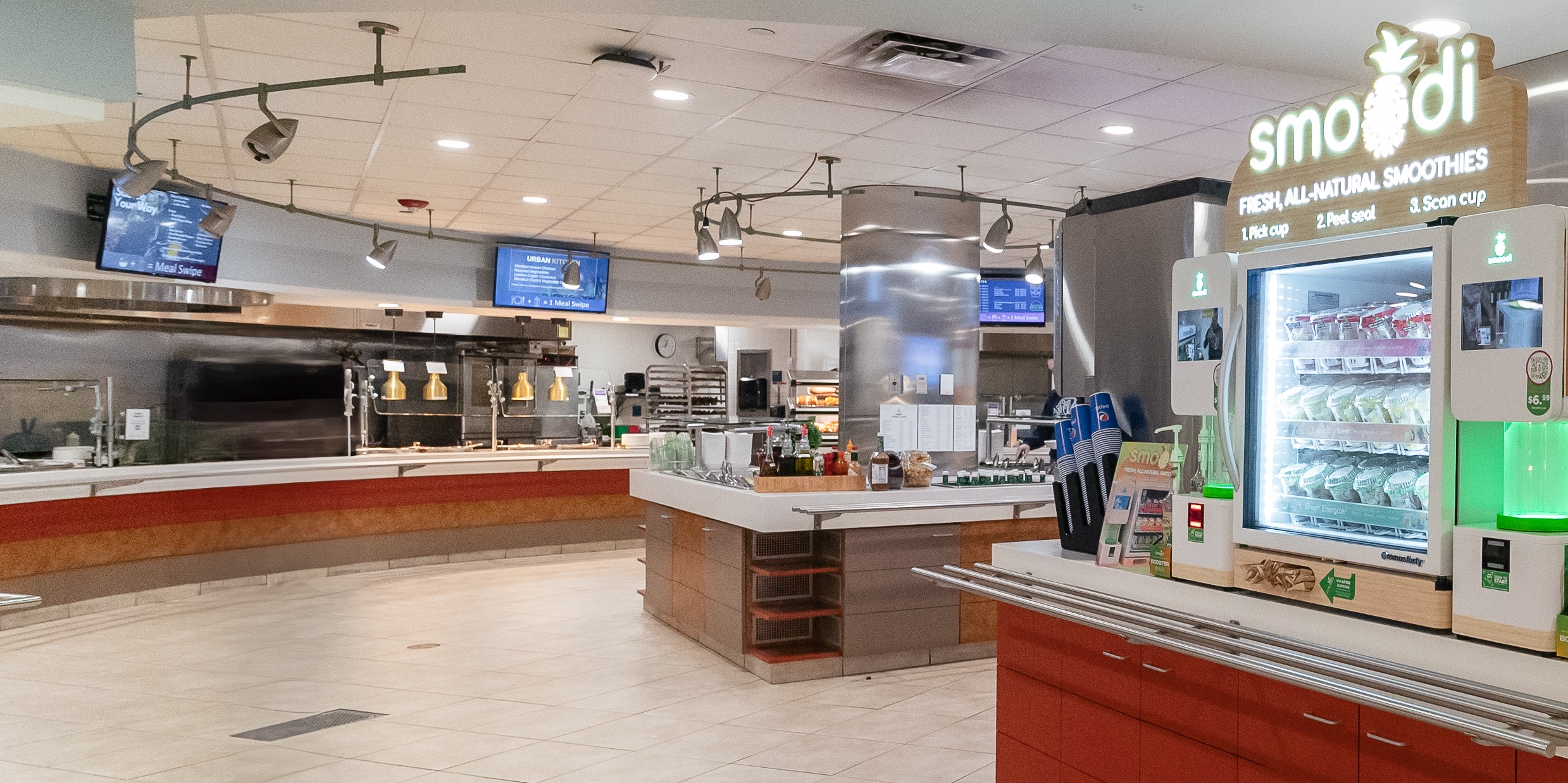
The booster bar adds another margin layer. Customers who add protein powder, collagen, or other functional supplements to their smoothie increase the transaction value without increasing the operator's labor or complexity. For facilities already experiencing foot traffic (cafeterias, lobbies, break rooms, fitness areas), a Smoodi machine captures revenue from people who are already on site.
"The investment into smoodi has been phenomenal. We broke even in the first couple of weeks."
— Linda Thacker, Director of Dining Services, Maryville University
How the Three Strategies Work Together
Each strategy individually improves margins, but the real impact comes from combining all three. When an operator automates a beverage station (eliminating labor cost), stocks it with pre-portioned sealed ingredients (eliminating waste cost), and prices it at a healthy margin (generating incremental revenue), the financial impact compounds.
Consider a location that serves 50 smoothies per day. With a staffed smoothie bar, the operator pays for at least one full-time employee, plus fresh fruit procurement, cold storage, cleaning supplies, and waste disposal. With Smoodi, the operator pays a monthly lease and the cost of fruit cups. The difference in cost per serving can be substantial, and it scales linearly: the more smoothies sold, the wider the margin advantage.
This is why the 42% unprofitability figure is not just a warning. It is an opportunity for operators who are willing to rethink how specific parts of their operation are structured. The operators who emerge from 2026 with healthy margins will not be the ones who simply raised prices. They will be the ones who found ways to deliver quality products at lower operating cost.
Taking the Next Step
Smoodi operates in more than 300 locations across the United States, serving over 2 million smoothies with zero labor cost per serving. The machine connects to a standard 120 VAC outlet, occupies approximately 40 inches of floor space, and self-cleans between every use. For operators evaluating their margin protection strategy, a smoothie program offers a concrete, measurable improvement to the cost-to-revenue ratio.
Operators can calculate the specific ROI for their facility at getsmoodi.com/roi, or explore lease and purchase options at getsmoodi.com/get-started.
Ready to bring Smoodi to your location?
Join hundreds of operators delivering fresh, automated smoothies with zero labor.
Get Started