How Can Beverage Programs Increase Average Transaction Revenue?
US foodservice sales are expected to reach $1.55 trillion in 2026, with functional beverages driving premium pricing. Learn how adding a self-service smoothie program can boost average transaction value.
US foodservice sales are expected to reach $1.55 trillion in 2026, and operators across every segment are looking for ways to increase revenue without proportionally increasing costs. Beverage programs represent one of the most effective strategies for achieving this goal. Beverages typically offer higher margins than food items, require less labor to prepare, and integrate into existing service models with minimal operational disruption.
Why Beverage Programs Drive Revenue Growth in Foodservice
Beverages hold a unique position in the foodservice revenue equation. Unlike food items that require kitchen capacity, skilled preparation, and complex supply chains, beverages can be added to existing operations with relatively low infrastructure investment. More importantly, beverages serve as natural add-on purchases that increase average transaction value without requiring customers to fundamentally change their buying behavior.
When a customer purchases a meal and adds a beverage, the transaction value increases while the incremental operational cost remains low. This dynamic makes beverages one of the highest-margin categories in foodservice. For operators looking to grow revenue, improving beverage attachment rates is often more efficient than adding new food menu items.
The functional beverage category amplifies this effect. Consumers increasingly view functional beverages, including smoothies, wellness drinks, and nutrient-enhanced options, as premium products worth paying more for. This willingness to pay a premium for perceived health value creates pricing power that standard beverages do not enjoy.
Functional Beverages and Premium Pricing Power
The functional beverage segment has experienced consistent growth driven by consumer demand for products that deliver health benefits beyond basic hydration. Wellness beverages, in particular, command premium pricing because consumers associate them with tangible health outcomes such as improved energy, immune support, and nutritional supplementation.
Several factors contribute to the premium pricing potential of functional beverages:
- Perceived health value: consumers willingly pay more for beverages they believe support their health goals
- Ingredient quality: real fruit, natural ingredients, and recognizable components justify higher price points
- Customization: the ability to add boosters like protein or collagen increases both the perceived value and the actual transaction price
- Convenience: ready-to-consume formats that save time carry a convenience premium
- Experience: the act of watching a fresh smoothie being blended creates an experiential element that enhances perceived value
Non-alcoholic beverages are also growing among younger generations who are reducing alcohol consumption but still seeking interesting, flavorful, and premium drink options. This demographic shift creates additional demand for high-quality beverage alternatives in foodservice settings.
Beverage Add-Ons and Average Transaction Value
The most powerful revenue impact of a beverage program comes from its ability to increase average transaction value through add-on purchases. Rather than replacing existing revenue, a well-positioned beverage program generates incremental spending from customers who are already committed to a purchase.
Consider the economics of a typical transaction. A customer visits a university dining hall, hospital cafeteria, corporate break room, or convenience store and makes a primary purchase. If a smoothie option is conveniently available and attractively presented, that customer may add a smoothie to their purchase. The incremental revenue from that add-on flows almost entirely to the operator's bottom line because the marginal cost of the smoothie is relatively low.
This add-on dynamic works particularly well for self-service beverage programs because they require no additional staff time per transaction. The customer handles the entire purchase independently, meaning the labor cost of serving that additional beverage is effectively zero. This makes the margin on each add-on sale exceptionally attractive.
How Smoodi Maximizes Beverage Revenue with Zero Staff Cost
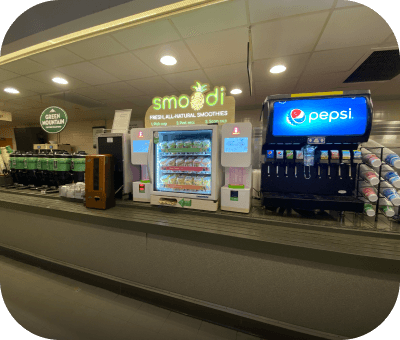
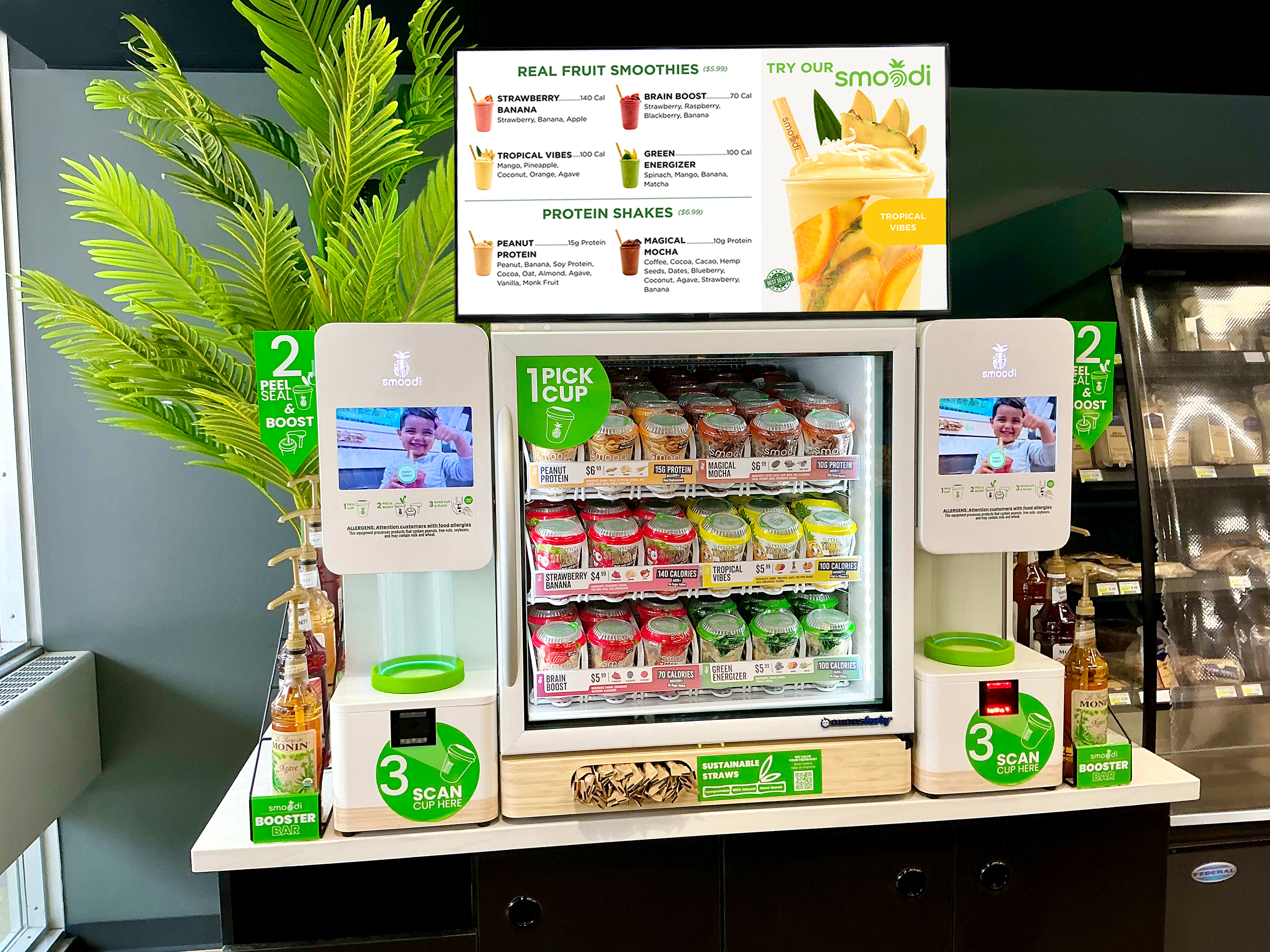
Smoodi's automated smoothie machines are specifically designed to function as revenue-generating add-ons to existing foodservice operations. The self-service model means that every smoothie sold generates revenue without requiring any staff involvement. Customers select their smoothie, the machine blends it in under 60 seconds, and the machine self-cleans between every use in preparation for the next customer.
This zero-staff-cost model fundamentally changes the economics of beverage revenue. In traditional smoothie programs, labor costs consume a significant portion of the revenue generated by each sale. With Smoodi, operators pay only the lease cost and the cup cost, keeping the margin on each sale. This clean cost structure makes it straightforward to calculate ROI and project profitability.
Smoodi's booster bar adds another revenue dimension. By offering protein powder, collagen, and other functional supplements as add-ons to each smoothie, operators can increase the average price per smoothie while giving customers the customization they value. Each booster selection increases the transaction value and improves the customer's perception of the product's health benefits.
"We were looking for quick, healthy options for our customers and smoodi ticked all the boxes. It's quick, self-service, and does the job. The feedback has been great - the lines say it all."
— Jim Launer, President, Spooky Nook Sports
Revenue Across Multiple Verticals
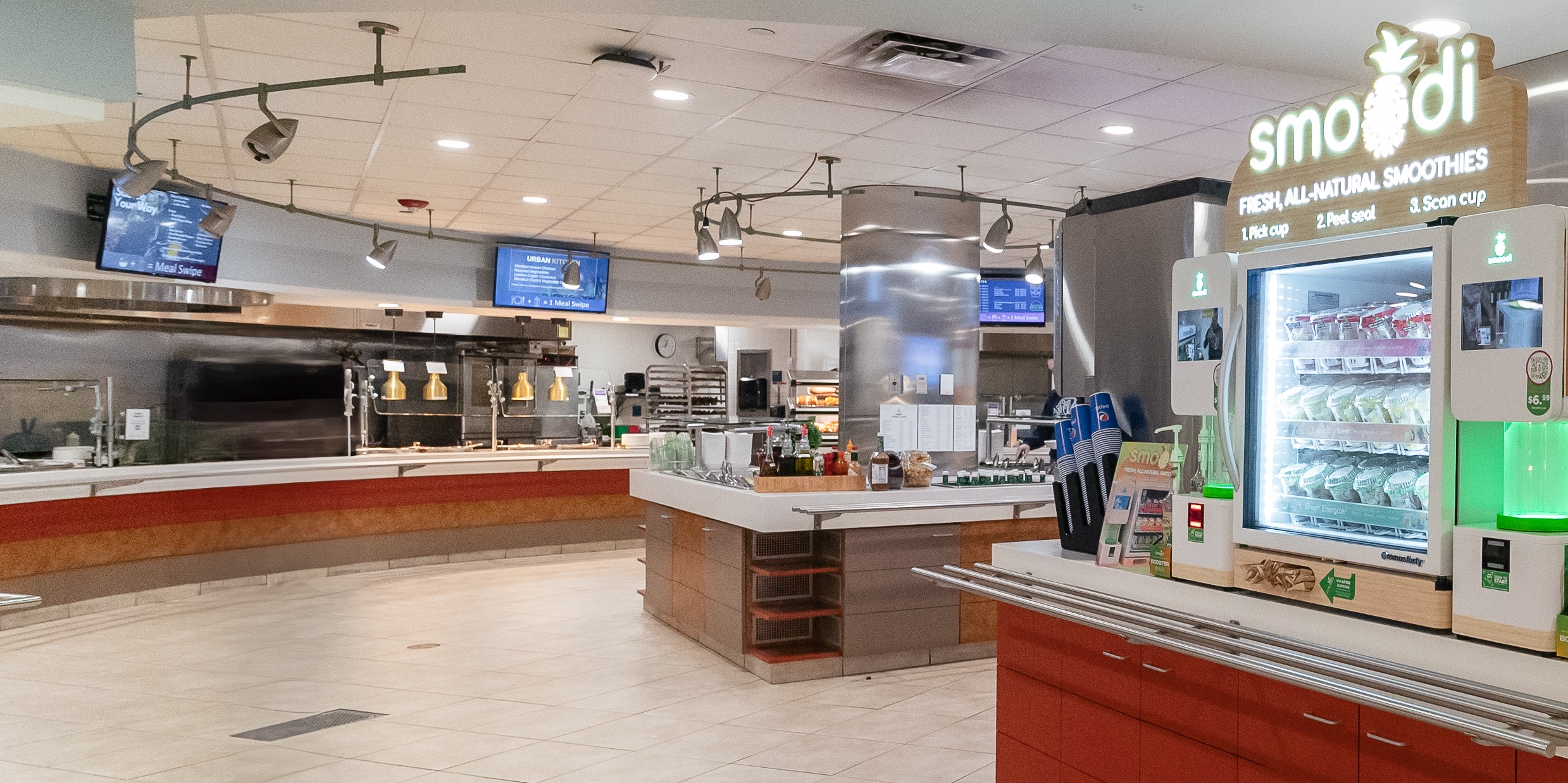
One of the strengths of a self-service smoothie program is its adaptability across different foodservice verticals. The same fundamental value proposition, high-margin incremental revenue with zero staff cost, applies whether the location is a university dining hall, a hospital cafeteria, a corporate office, a fitness center, a hotel, or a convenience store.
In each of these environments, Smoodi works as a complement to the existing food and beverage offering rather than a replacement. The machine's compact footprint, requiring only about 40 inches of floor space, means it can be placed in areas where traditional beverage equipment would not fit. For locations with high demand, multiple Smoodi machines can be installed side by side to serve more customers simultaneously without expanding the overall footprint significantly.
This versatility makes Smoodi relevant to a wide range of operators. Corporate campuses use Smoodi as an employee wellness perk that also generates revenue. Universities position Smoodi in dining halls and student centers where health-conscious students seek convenient nutrition. Hospitals install Smoodi in cafeterias where patients, visitors, and staff want healthy beverage options. Fitness centers and sports facilities use Smoodi to offer post-workout recovery smoothies.
Financial Model and ROI Considerations
The financial model for a Smoodi beverage program is designed for accessible ROI. Operators can choose between an operational lease starting at $299 per month or a one-time purchase starting at $14,999. With the lease model, Smoodi retains ownership of the machine and provides full service, reducing the operator's risk and maintenance burden.
The revenue potential depends on the location's traffic volume and the effectiveness of placement and promotion, but the cost structure is clear and predictable. Operators know their monthly lease cost and their per-cup ingredient cost. Everything above that is margin. This transparency allows operators to set pricing, forecast profitability, and measure performance with confidence.
Because each smoothie is made from IQF fruit cups blended with water only, with no syrups, concentrates, or artificial ingredients, the product quality supports premium pricing. Consumers recognize and value real fruit ingredients, and the visible blending process reinforces the freshness and quality of the product. This perceived value supports price points that deliver strong margins for operators.
Capturing the Beverage Revenue Opportunity
The trajectory of the US foodservice market points to continued growth in beverage revenue, particularly in the functional and wellness categories. Operators who add self-service beverage programs now position themselves to capture this growing demand while establishing customer habits that generate recurring revenue.
Smoodi's approach, combining real fruit ingredients, automated preparation, self-cleaning technology, and a zero-staff operating model, removes the traditional barriers to beverage program profitability. With over 300 locations across the US and more than 2 million smoothies served, the system has proven its ability to generate meaningful incremental revenue across diverse foodservice environments.
Founded at the Harvard Innovation Labs, Smoodi was built to make high-quality smoothie programs financially accessible to operators of all sizes. The fruit cups are distributed through Dot Foods, providing reliable supply chain access nationwide. Operators pay lease and cup costs and keep the margin, creating a straightforward path to beverage revenue growth.
Visit getsmoodi.com to explore how a self-service smoothie program can increase average transaction value and drive incremental revenue at your location.
Ready to bring Smoodi to your location?
Join hundreds of operators delivering fresh, automated smoothies with zero labor.
Get Started