What Should a Modern Breakroom Food Program Include?
The corporate breakroom is undergoing a fundamental transformation. Employers are recognizing that breakroom food is not a discretionary perk but a strategic investment that affects productivity, absenteeism, and talent retention.
The corporate breakroom is undergoing a fundamental transformation. For decades, breakroom food programs consisted of vending machines stocked with chips, candy bars, and sugary beverages. Today, employers are recognizing that the breakroom is not just a place where employees take breaks. It is a strategic investment point that affects productivity, absenteeism, and talent retention. The data supports a shift toward fresh, functional food options, and the employers making that shift are seeing measurable returns.
Why Are Breakroom Food Programs Under Scrutiny?
Several converging trends are forcing employers to rethink what belongs in the breakroom. First, 64 percent of working professionals now seek desk-friendly or quick-service meals during the workday. The traditional vending machine model, built around packaged snacks with long shelf lives and minimal nutritional value, no longer meets this demand. Employees want options that are fast, fresh, and functional.
Second, research from the American Journal of Health Promotion demonstrates that workplace healthy eating initiatives reduce absenteeism by 25 percent. The International Labour Organization reports that proper nutrition enhances workplace productivity by up to 20 percent. These findings are shifting the conversation from what to stock in the breakroom to what food investments produce measurable business outcomes.
Third, the return-to-office movement has made workplace amenities a competitive tool. Employers asking employees to commute to the office need to demonstrate that the in-office experience offers something worth the commute. Food quality consistently ranks among the top amenities employees cite when evaluating their workplace experience.
What Do Employees Want from Breakroom Food?
Employee food preferences have shifted decisively toward clean, functional, and protein-rich options. The old model of chips, cookies, and soda no longer represents what the workforce values. Employees increasingly seek foods that support energy, focus, and physical health throughout the workday.
McKinsey's Future of Wellness survey found that 50 percent of consumers now purchase functional food products, with the figure rising to 66 percent among Gen Z and millennials. These same consumers bring those preferences to work. They want options that deliver protein, fiber, vitamins, and functional benefits rather than empty calories and sugar.
- Fresh fruit and vegetables available throughout the day, not just at lunch
- High-protein options that support sustained energy, such as smoothies and protein-enriched snacks
- Clean-label products with no artificial ingredients, no syrups, and no added sugars
- Quick-service formats that fit into a 10 to 15 minute break window
- Variety and personalization rather than a single static menu
The challenge for employers is that traditional breakroom food programs cannot deliver these options without significant investment in staffing, equipment, and fresh ingredient management. A salad bar requires daily prep and cleanup. A staffed smoothie station requires a trained employee on site. Fresh fruit deliveries require refrigeration and generate waste as items expire.
What Should Operators Evaluate in a Breakroom Solution?
Employers evaluating breakroom food program upgrades should assess potential solutions against five criteria.
First, labor requirements. Any breakroom addition that requires a dedicated employee introduces scheduling, training, and management overhead. In the current labor market, where the National Restaurant Association reports that labor recruitment surged from 18 percent to 33 percent as the top operator challenge in 2026, zero-labor solutions have a structural advantage.
Second, maintenance and cleaning. Breakroom food equipment that requires manual cleaning between uses or end-of-day deep cleaning adds hidden labor costs. Self-cleaning equipment eliminates this burden entirely.
Third, ingredient waste. Fresh produce programs generate waste when items are not consumed before they expire. Solutions that use shelf-stable ingredients with long storage life minimize waste and reduce per-serving costs over time.
Fourth, footprint. Most breakrooms have limited available space. Equipment that fits into a compact area, ideally under 40 inches of floor space, can be added to existing breakrooms without renovation.
Fifth, nutritional value. The solution must deliver genuinely healthy, functional options. Employees recognize the difference between wellness-oriented marketing and real food quality. The food itself must meet the standards employees expect: real ingredients, transparent nutritional profiles, and functional benefits.
How Does Smoodi Fit Into a Breakroom Food Program?
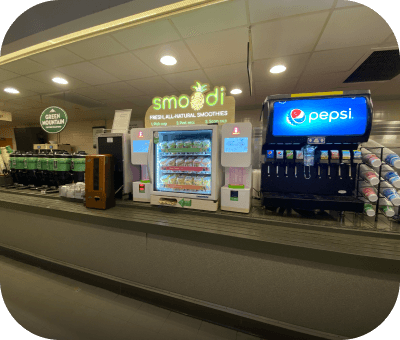
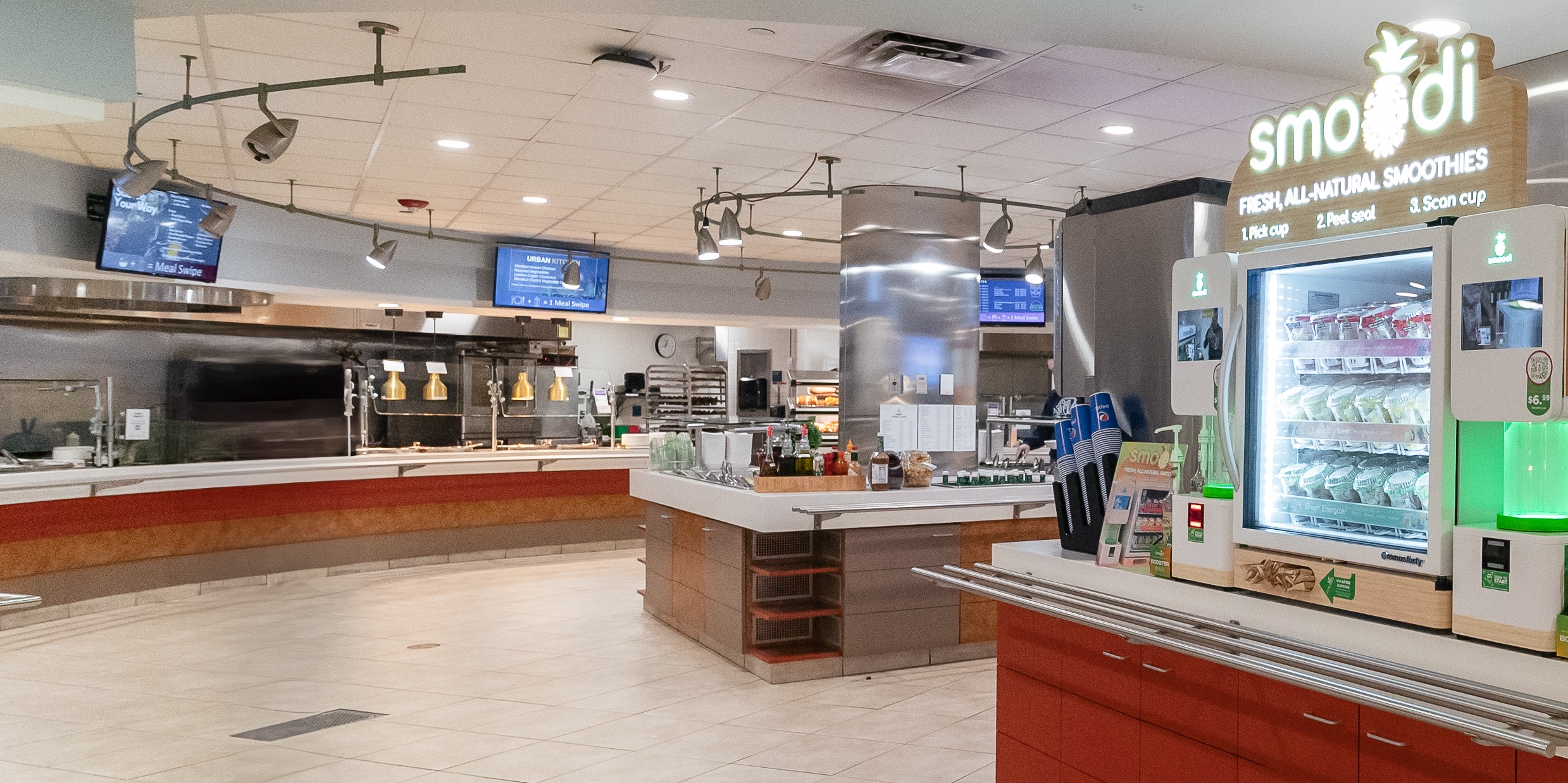
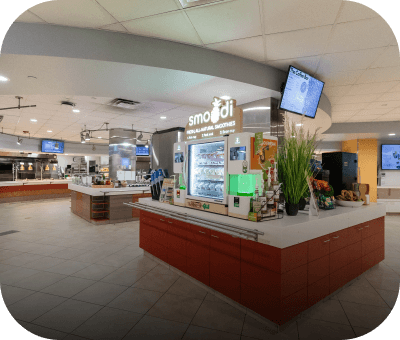
Smoodi's automated smoothie machine was designed for exactly the breakroom use case. Each smoothie starts with IQF (individually quick frozen) real fruit cups blended with water only. No syrups, concentrates, or artificial ingredients. The booster bar offers protein powder, collagen, and other functional supplements. The machine blends a fresh smoothie in under 60 seconds and self-cleans between every use. No staff required.
"smoodi is hands down the number one perk at our headquarters. Fresh, healthy, and zero effort on our end."
— Katherine Berman, Workplace Experience Manager, Toast
The compact design requires approximately 40 inches of floor space, making it feasible to place the machine in virtually any existing breakroom without renovation. Installation requires a standard 120 VAC outlet, a water inlet, a sanitizer inlet, and a drain. IQF fruit cups have a shelf life of up to two years, eliminating the spoilage that makes fresh fruit programs costly and unpredictable.
Smoodi operates in more than 300 locations across the United States, with over 2 million smoothies served. The company was founded at Harvard Innovation Labs. Cups are distributed through Dot Foods. The operational lease starts at $299 per month for a 48-month term, with a purchase option at $14,999. For larger office environments, multiple machines can be installed side by side, blending simultaneously to serve high-traffic break periods.
Employers looking to upgrade their breakroom food program from packaged snacks to fresh, functional nutrition can explore options at getsmoodi.com/get-started.
Ready to bring Smoodi to your location?
Join hundreds of operators delivering fresh, automated smoothies with zero labor.
Get Started